Key Takeaways
- Hitting a power line while digging can cause electric shock, fire, and serious personal injury — every excavation needs marked utilities before any soil is disturbed.
- The first response is to stay in equipment if you’re in contact with the line, clear bystanders to a safe perimeter, and call 911 plus the utility company.
- Calling 811 Call Before You Dig and hiring a private utility locating service together provides the most reliable coverage of public and private underground utilities.
- Ground Penetrating Radar, Electromagnetic Locating, and vacuum excavation give crews the tolerance zone confidence to dig safely around marked utilities.
- Detailed documentation of every utility strike protects against liability claims and supports clean utility repair coordination with the affected utility company.
Power lines run beneath nearly every property in California and Arizona — underground cables for electricity, communication lines, gas pipes, and water mains all share the same buried space. What happens if you hit a power line while digging depends on how fast you respond, whether the lines are marked, and what equipment is in contact with the strike point. The hazards include electric shock, fire, extended power outages across a neighborhood, and substantial property damage liability.
What follows is a breakdown of the immediate risks, the response sequence that protects your crew, the documentation steps that protect your construction project against legal exposure, and the utility locating service habits that prevent the next strike entirely. Util-Locate has handled emergency calls and pre-construction prevention work across Southern California and Arizona since 2001, and the same patterns repeat: the strikes with the worst outcomes share two traits — incomplete utility marking and a slow response after impact.
What Happens If You Hit a Power Line While Digging: Immediate Risks and Hazards
A strike on an underground utility line creates a chain of hazards that develop in seconds. The first is electricity exposure. A damaged electric line can energize the excavator, the trench wall, and standing water nearby. Anyone in contact with the equipment, a metal tool handle, or even wet soil can take a serious electric shock or be electrocuted. The arc flash from a high-voltage strike can also ignite fuel vapors, dry vegetation, or PVC conduit, starting a fire before anyone realizes a line was hit.
Beyond electrical hazards, other buried hazards trigger their own response patterns. The table below summarizes the immediate concern for each utility type and the critical first action.
| Utility Type | Immediate Hazard | Critical Response |
| Electric line / electric cables | Electric shock, arc flash, fire | Stay in equipment; evacuate everyone 35+ feet; call 911 and utility |
| Gas line / gas pipeline | Gas leaks, explosion, asphyxiation | Stop ignition sources; evacuate upwind; call fire department and gas company |
| Water line / water mains | Flooding, trench wall washout, electrical contact risk | Shut off water source if safe; call utility; clear trench |
| Sewer line | Soil contamination, biological hazard | Restrict access; call utility; arrange utility repair |
| Communication cables / fiber optics | Service disruptions to 911, hospitals, banking | Mark location; call telecom utility; high liability exposure |
The longer-term consequences are equally serious. A single power outage from an excavator strike can interrupt service to thousands of households and businesses, with the construction project bearing the cost of restoration. Soil and water contamination from a ruptured gas pipeline or sewer line creates environmental damage that may require formal remediation. And contractor liability follows the project for years — civil claims for service disruptions, personal injury, and property damage can dwarf the original project budget. The cost profile of preventable utility strikes is one of the most underestimated risks in commercial construction.
What Happens If You Hit a Power Line While Digging Without Proper Preparation
The outcome of any utility strike correlates almost perfectly with the preparation that happened before the dig. When utilities are marked, crews are trained on safety protocols, and the right tools are on site, even an accidental impact often ends without injury or extended service disruption. When preparation is skipped, the same impact can trigger evacuations, hospital visits, and six-figure utility repair invoices.
The preparation gap usually comes down to one of three patterns:
- Skipped 811 Call Before You Dig request. The public utility company never marked its lines, so the crew dug blind on lines that 811 would have flagged for free under state guidelines.
- Skipped private utility locating. 811 only marks public utilities up to the meter. Private laterals — irrigation, site lighting, telecoms, and any utility cable on private property past the service point — stay invisible without a private utility locating detection contractor on site.
- Skipped tolerance zone discipline. Even when lines are marked, crews sometimes use mechanical equipment inside the tolerance zone instead of hand tools or hydro excavation. California state guidelines and OSHA standards require a tolerance zone around every marked utility for exactly this reason.
A crew that fails on one of these steps is exposed. A crew that fails on all three is gambling with the safety of every construction worker on site.
Safety Precautions Before Breaking Ground
Effective planning is the difference between a routine excavation and a damage event. Every digging and excavation project should follow the same preparation sequence.
Plan with a utility map. Pull the most current utility map for the parcel from the property owner, the city, and the utility companies. Cross-reference each utility map against site walks — older records often show lines that have shifted, and new utilities may not be on the documents at all.
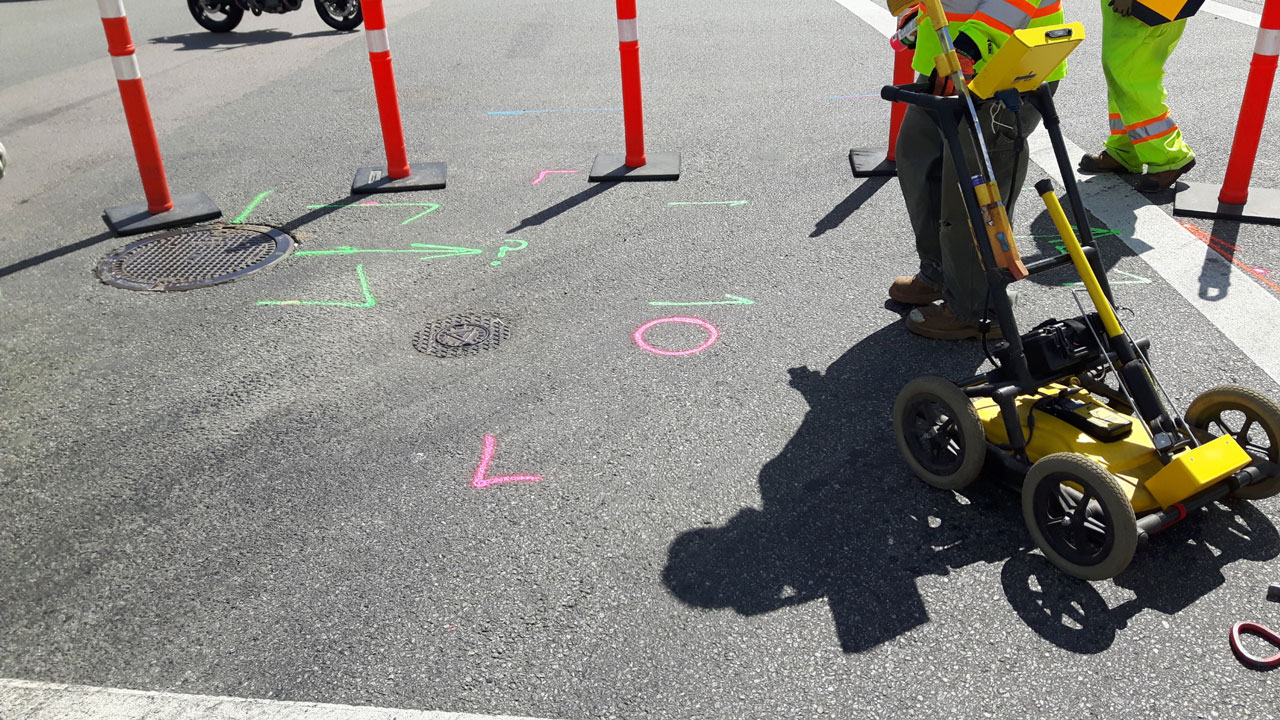
Place your 811 Call Before You Dig request 2–14 business days before digging. California requires a minimum of two working days; other states vary. Wait for line marking to be complete before any soil is disturbed. Line marking colors are standardized: red for electric, yellow for gas, orange for communication, blue for water, green for sewer. Util-Locate’s guide to utility marking colors covers the full system, including paint, flags, and marking tape conventions.
Hire a private utility locating service for everything past the meter. 811 stops at the public service point. Anything beyond — irrigation, site power, security conduit, private sewer laterals, telecoms — needs a private detection contractor with Ground Penetrating Radar, Electromagnetic Locating equipment, Cable Avoidance Tools, and Signal Generators to identify and mark.
Conduct safety training. Every crew member should know how to read line marking, respect the tolerance zone, recognize gas smells and signs of natural gas leaks, and execute the strike response sequence below. Refresher training should run twice a year and include any new safety precautions added since the last session.
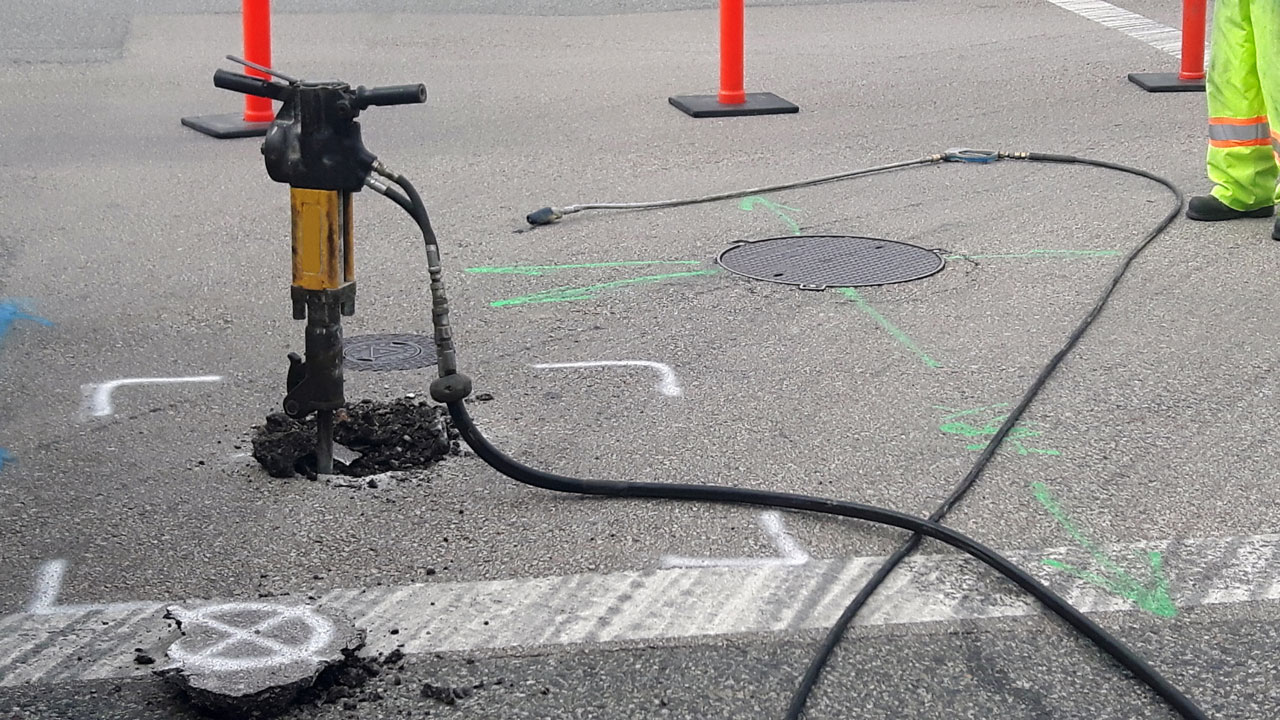
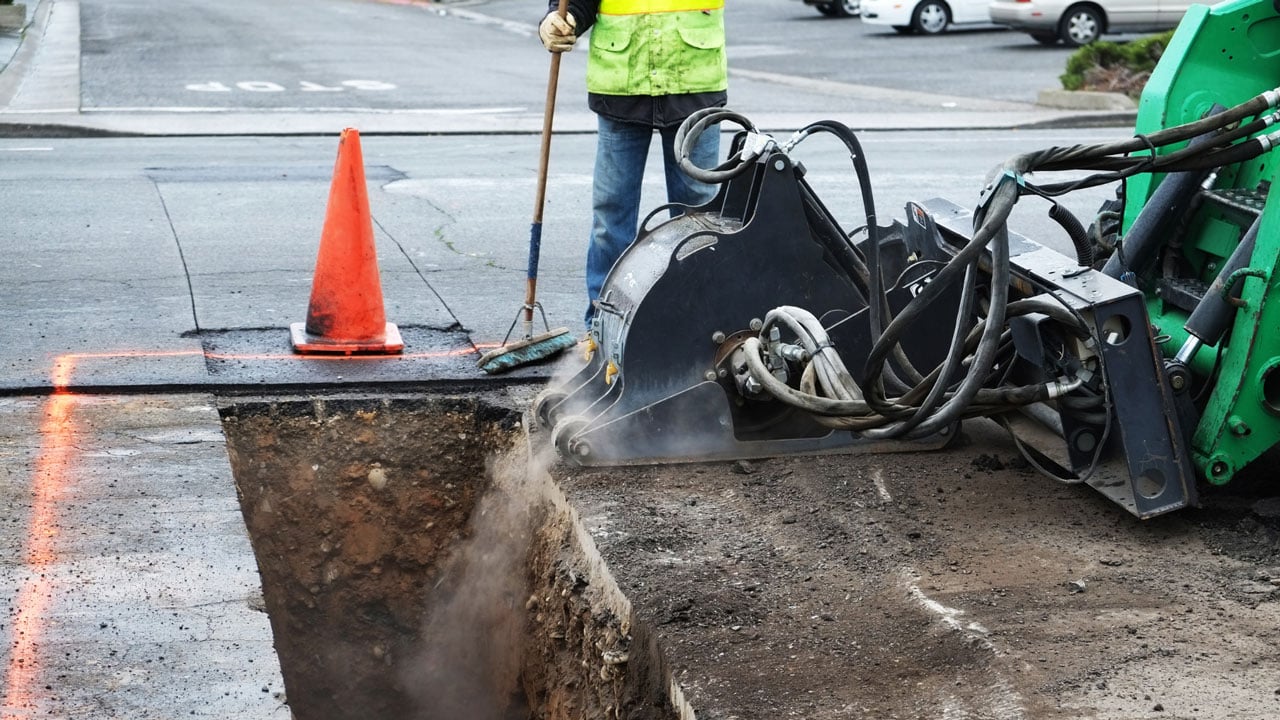
Use the right tools near marked utilities. Inside the tolerance zone (commonly 18–24 inches), switch from mechanical equipment to hand tools or non-destructive methods like vacuum excavation, hydro excavation, or potholing. These methods expose utilities without cutting them, and they’re the standard for working in dense urban corridors, near gas lines, or in confined space conditions.
Verify before you drill. For any work that breaks concrete or drills into walls, run Ground Penetrating Radar over the area first. Embedded conduit, post-tension cable, and rebar look identical from the surface — GPR is the only way to tell them apart.
Step-by-Step Response After Striking an Underground Utility
When an impact happens, the response sequence runs in a fixed order. Skipping steps or reversing them is what turns a utility damage event into a casualty event.
Immediate Actions in the First 60 Seconds
- Hold position and assess. If you’re in equipment and the line is energized, the safest place is inside the cab. Stepping out can complete the circuit through your body. Stay in the equipment, radio for help, and wait for the utility company to confirm the line is de-energized — unless fire forces evacuation. The same rule applies if you uncover exposed wires on foot: back away on a straight path, do not touch anything metal nearby.
- Clear the area of everyone on foot. Move workers, foot traffic, and bystanders to at least 35 feet from the strike point. For high-voltage lines, expand to 100 feet. Establish area security with cones, tape, or a spotter so no one drifts back into the danger zone.
- Identify the utility. Use the marking colors and the visible damage to identify whether the strike involved an electric line, gas line, water line, sewer line, or communication line. The identification drives the next call.
- Call 911 and the utility company. Report the damaged utility line and any injuries or fire. Provide the exact location, the type of utility, the size of the visible damage, and whether anyone is hurt. Stay on the line for instructions. Many states have a dedicated number for the utility company’s 24-hour emergency desk — keep those numbers on every job site.
Coordinating Repairs and Damage Assessment
After emergency services secure the site, the next phase is coordination with the utility owner and damage assessment for insurance and contractor liability purposes.
Communicate fully with the utility company. Provide them with everything — incident time, GPS coordinates, type of utility line, depth, photos, and witness statements. Utility contractors arrive faster when they know what tools and parts to bring.
Document the damage on site. Photograph the strike point from multiple angles, the exposed line, equipment position, marking flags or marking tape (or the absence of them), and any visible property damage. Note the time of every call placed and every responder who arrived. This documentation supports insurance claims, utility repair invoicing, and any later legal review.
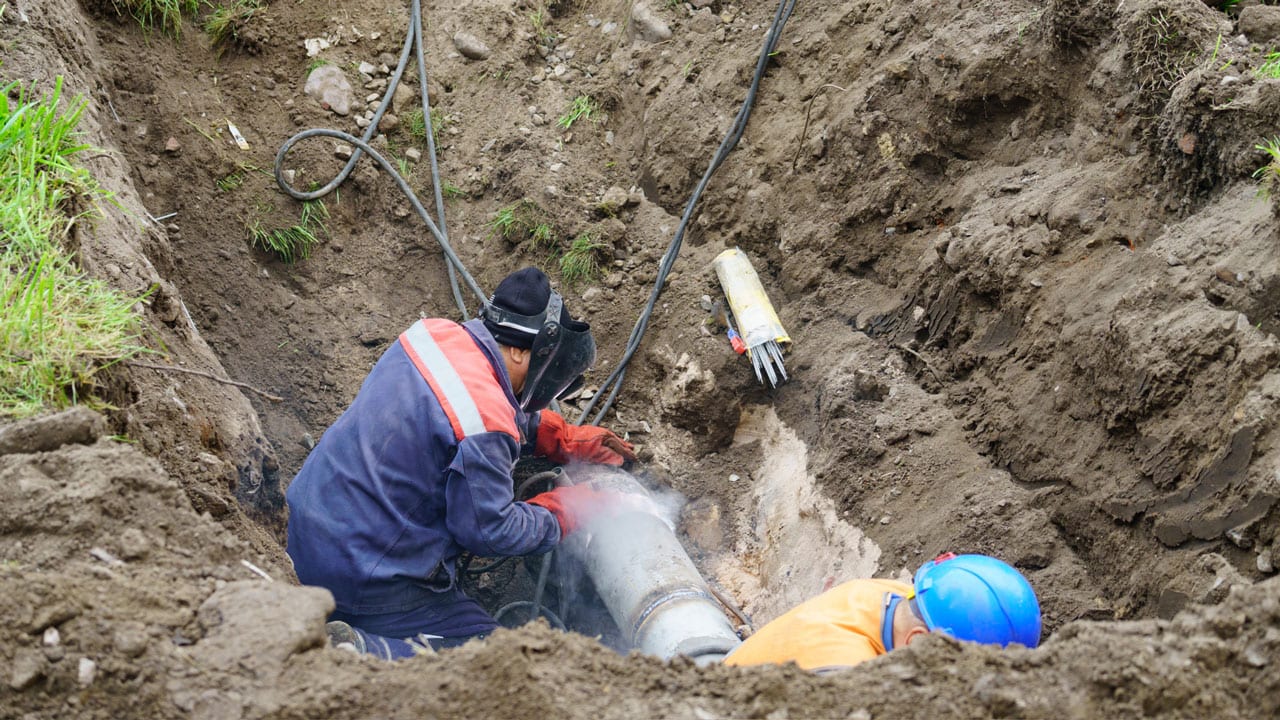
Coordinate utility repair. The utility company handles the actual repair on their lines. Your role is to keep the site secure, hold the area open for their crew, and document the repair work for your project records.
Manage the cost conversation. Utility companies invoice for the repair plus service disruption damages — sometimes service interruption to hundreds or thousands of customers. Insurance may cover part of the damage and repair costs, but coverage depends on whether you complied with state guidelines and 811 Call Before You Dig requirements. A strike on unmarked lines may be covered; a strike on clearly marked utilities often is not.
Documenting an Underground Utility Strike for Insurance and Legal Claims
Good documentation is the difference between a contained incident and a years-long liability case. Every utility strike — even a minor one — should generate a written record that protects the contractor, the property owner, and any worker on site.
Capture these details immediately:
- Exact date, time, and GPS coordinates of the strike
- Type of utility line affected (electric, gas, water, sewer, telecom)
- Depth of the strike and the equipment that made contact
- Photos of the marking, the strike point, the exposed line, and the surrounding area
- All emergency services and utility company contacts placed, with timestamps
- Names and statements of every witness on site
- Copy of the 811 ticket, any private utility locating report, and the utility map used
Organize the record in a single incident file and share it with your insurer, your project legal counsel, and the utility company. If disputes arise about responsibility — and they often do when service disruptions affect third parties — this file becomes the central evidence in the damage assessment.
Preventing Future Utility Strikes
Every strike is a learning event. After the immediate response is closed out, run a debrief that identifies the failure point — whether it was a missed 811 ticket, an unmarked private utility, a crew member working outside the safety protocols, or equipment used inside the tolerance zone. Then update the procedures so the same failure cannot repeat on the next site.
Ongoing prevention comes down to four habits:
Lock in safe digging practices. Every project starts with a utility map, an 811 ticket, and a private utility locating sweep for anything past the meter. No exceptions, even on routine work. California’s framework for safe excavation is summarized in our guide to calling before you dig in California.
Use the right tools. Match the method to the risk. Hand tools and vacuum excavation near marked utilities. GPR before drilling concrete. Video Pipe Inspections for confirming sewer line condition. Specialized equipment is not an upsell — it’s how crews dig safely around buried infrastructure.
Maintain safety training. Run refresher sessions twice a year. Cover line marking colors, tolerance zones, gas smells, response to exposed wires, and the strike response sequence. Pull in the local fire department for an annual joint drill if possible.
Educate the community. Homeowners account for a significant share of utility strikes — fence posts, mailbox installations, tree planting, and irrigation repair all happen without 811 tickets every weekend. Sharing 811 information and basic digging precautions with property owners before backyard work prevents many of these strikes before they start.
For complex sites, sites with confined space access, or sites with infrastructure development running alongside live operations, bring in a private locating partner before the design phase finalizes. Catching a utility conflict on paper is always cheaper than catching it with an excavator bucket.
Dig With Certainty — Schedule a Util-Locate Service Before You Break Ground
Two decades of utility locating across California and Arizona have taught us one thing: every avoidable strike was avoidable. The 811 call, the private locate, the GPR scan, the tolerance zone — each step is small, fast, and inexpensive compared to a single utility damage invoice.
Util-Locate is on call 24/7 for emergency response and pre-construction locating across Southern California, the San Francisco Bay Area, and Arizona. Our certified technicians work to ASCE-compliant standards, deliver real-time on-site data, and provide CAD, KML, and PDF documentation for every project.
Call 1-888-885-6228 to speak with a locating specialist, or request a quote for your next construction project. We answer the phone every day of the year — including the day you’re about to break ground.
Frequently Asked Questions
What should I do first if I hit a power line while digging?
Stay where you are if you’re inside equipment in contact with the line — stepping out can complete the circuit and cause electrocution. Radio for help, keep everyone else 35 feet back (100 feet for high-voltage), and call 911 immediately. The utility company should be called next so they can dispatch crews to de-energize the line and begin utility repair. Never touch the equipment, the line, or the soil around it until the utility company confirms power is off.
Can I be held liable if I hit a marked utility?
Yes — striking a marked utility almost always shifts liability to the excavator, since the marking was there to be respected. California state guidelines and OSHA standards require crews to maintain a tolerance zone around marked utilities and use hand tools or vacuum excavation inside that zone. If you cut a line that was clearly marked, you can be liable for the utility repair, all service disruptions, and any personal injury or property damage caused. Insurance coverage often excludes strikes on marked lines, which is why following safe digging practices matters even after the locate is done.
What’s the difference between 811 and a private utility locating service?
811 Call Before You Dig is a free public service that notifies your local utility companies to mark their lines up to the meter or service point. A private utility locating service — sometimes called a private detection contractor — marks everything past that point, including irrigation, site lighting, security conduit, private sewer laterals, and any utility cable on private property. 811 alone misses a significant share of buried utilities on a typical commercial site, which is why most contractors hire a private locator alongside their 811 request. Util-Locate works as the private side of that pairing across California and Arizona.
How deep are most underground utilities buried?
Depth varies by utility type and local code. Electric lines are typically 24–36 inches deep, gas pipes 18–24 inches, water mains 30–60 inches, and communication cables 18–24 inches. Depth is never guaranteed, though — older lines drift, fill changes elevation, and erosion exposes shallow utilities. That’s why depth assumptions are dangerous and why every dig should use line marking and tolerance zone discipline regardless of how deep a line is supposed to be.
What technology does Util-Locate use to find underground lines?
Util-Locate uses a stack of detection methods matched to the site. Electromagnetic Locating with Cable Avoidance Tools and Signal Generators finds active metallic lines like electric cables, water mains, and steel gas pipes. Ground Penetrating Radar finds non-metallic lines like PVC conduit, fiber optics, and sewer line, and it works for surface and concrete scanning before drilling. Vacuum excavation and hydro excavation expose utilities without cutting them, and Video Pipe Inspections verify the condition of sewer and storm drain lines from the inside. Every method we run produces ASCE-compliant deliverables you can use on the next construction project.