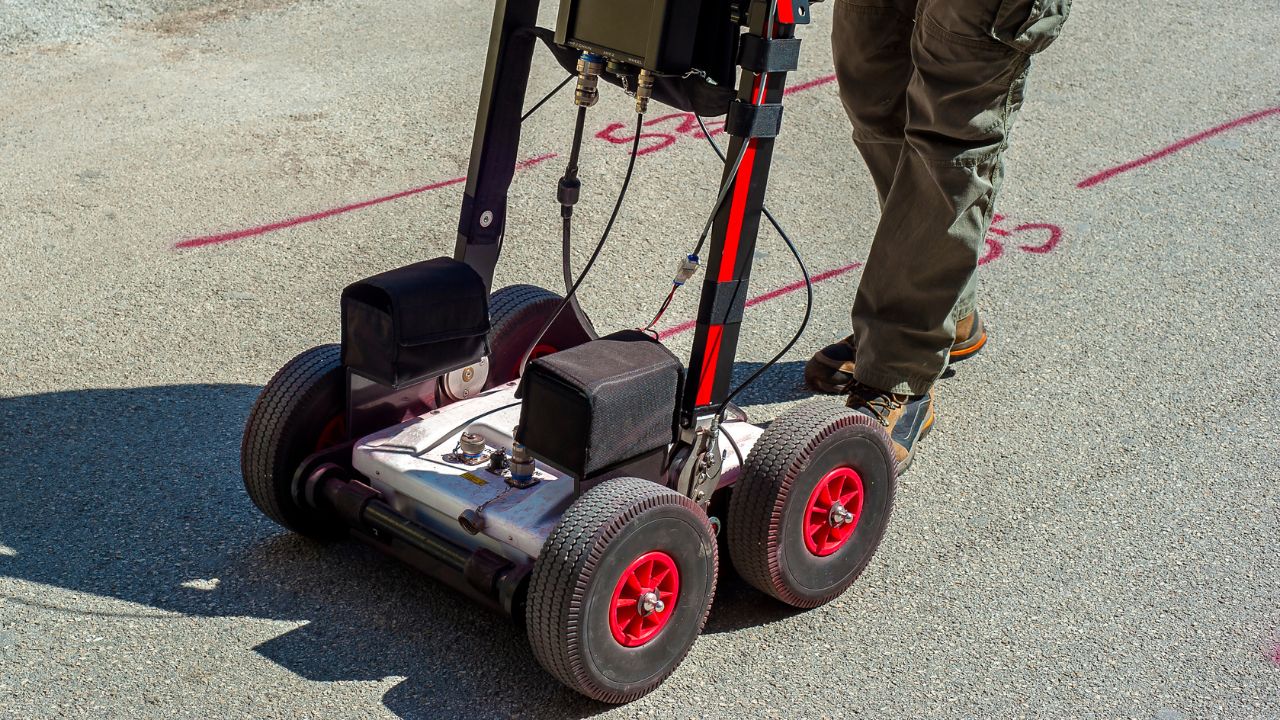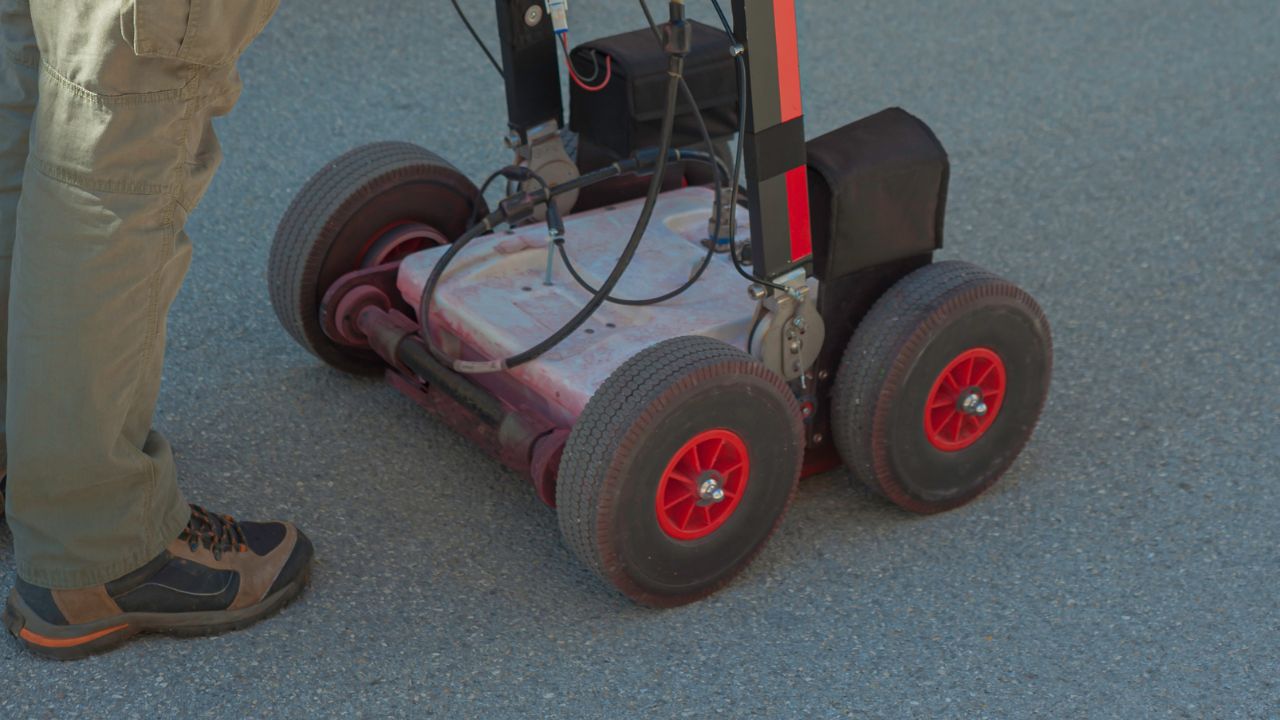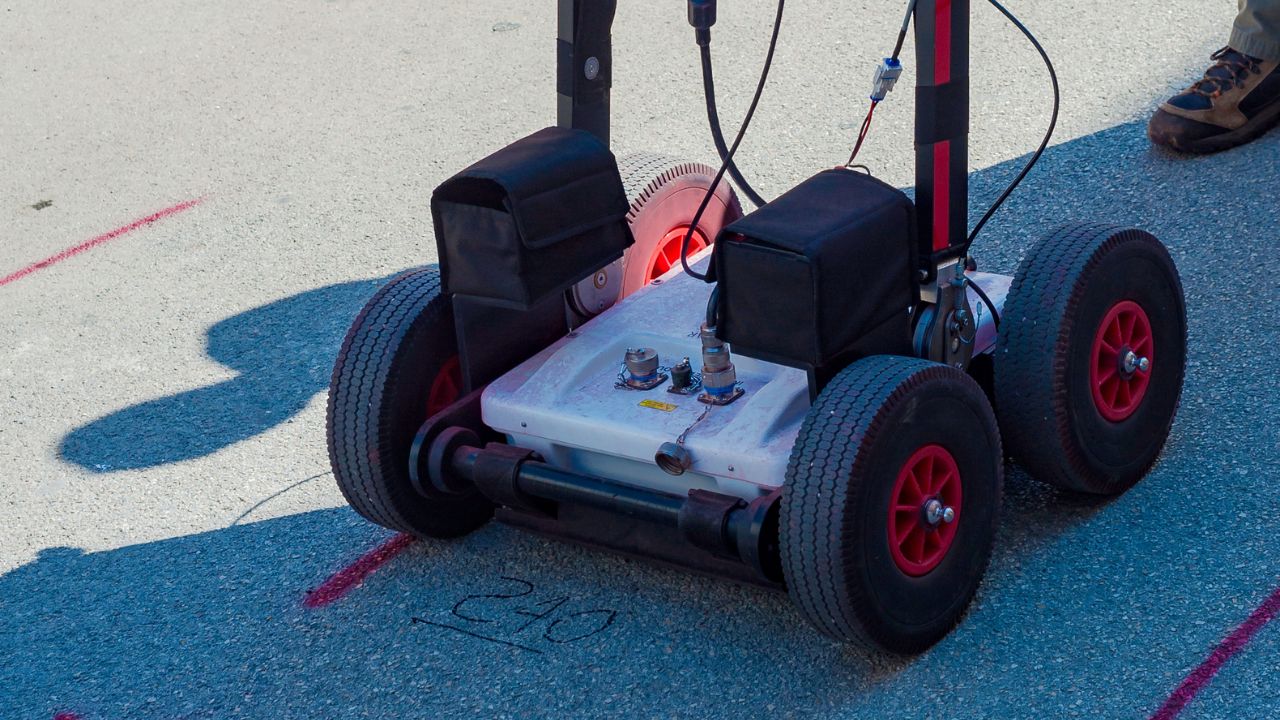
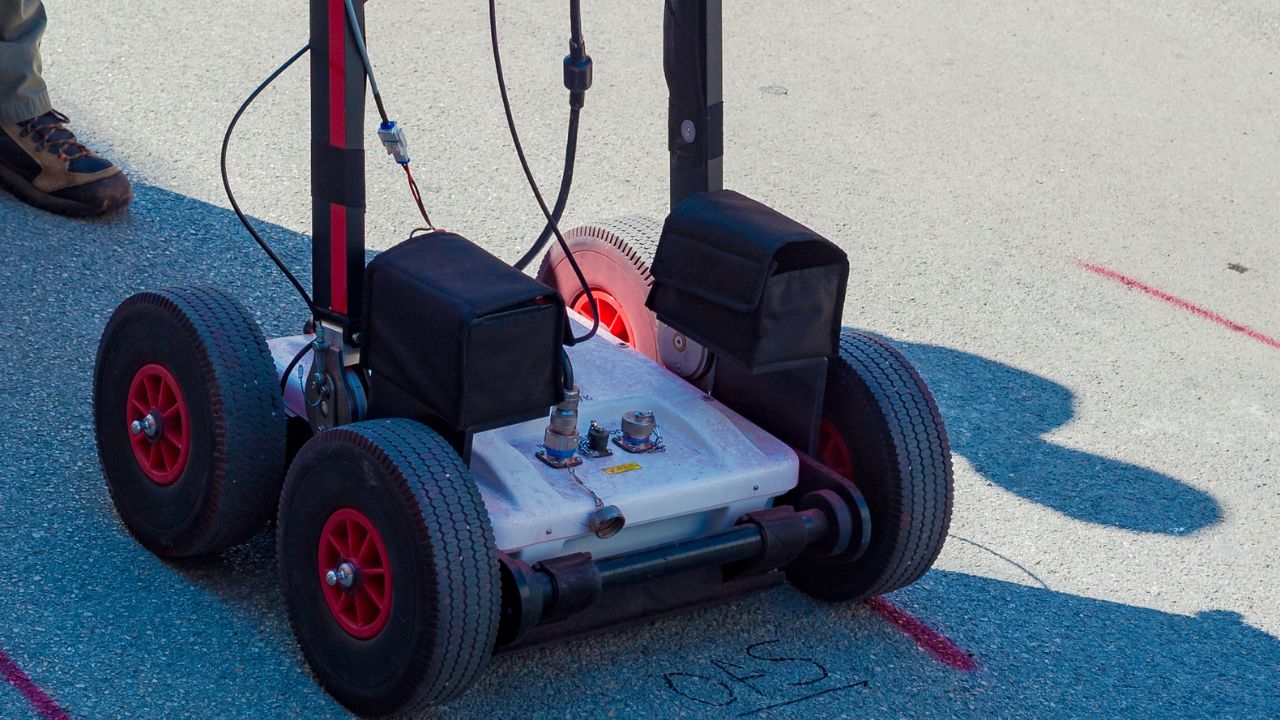
Ground Penetrating Radar and electromagnetic locating represent two dominant subsurface detection methods serving different operational needs and budget considerations. Construction managers face critical decisions when selecting technology for utility mapping, balancing initial equipment investment against long-term detection accuracy and project safety requirements. This analysis examines pricing structures, operational efficiency, and strategic applications to help professionals determine optimal value for specific project conditions.
Key Takeaways
- GPR equipment costs $11,000-$35,000 compared to $3,000-$8,000 for electromagnetic locators, but it detects all utility materials
- Electromagnetic locating only identifies metallic utilities unless additional equipment is purchased for non-metallic pipe tracing
- GPR scanning cost for Los Angeles projects typically justifies a higher investment due to dense infrastructure and strict safety regulations
- Combined technology approaches deliver the most accurate results by using EM for metallic line tracing and GPR for comprehensive detection
- Long-term operational costs depend on project type, site conditions, and the variety of utility materials requiring detection
What Are GPR and Electromagnetic Locating Technologies?
Ground Penetrating Radar and electromagnetic locating serve as primary non-destructive methods for identifying subsurface utilities before excavation. Both technologies operate on fundamentally different physical principles, creating distinct advantages for specific detection scenarios.
How Does Ground Penetrating Radar Work?
Ground Penetrating Radar utilizes high-frequency electromagnetic radio waves to detect anomalies within concrete structures and subsurface environments. GPR transmits radar pulses into the ground and records echoes returning from subsurface boundaries between different materials. Modern GPR scanners provide real-time data directly on integrated screens or tablets for immediate interpretation. GPR emits non-ionizing radio waves similar to cell phones, creating no health risks for operators.
GPR is a non-destructive method requiring access to only one side of a concrete slab. The technology can penetrate depths of 18 to 24 inches, depending on soil conditions and material composition. GPR and EMI technology for locating underground conduits combines electromagnetic principles with advanced signal processing for comprehensive subsurface mapping. Equipment portability allows technicians to scan large areas quickly without excavation.
How Does Electromagnetic Locating Function?
Electromagnetic locating detects the electromagnetic field generated by alternating current flowing along power cables for active utility identification. EM locating works by inducing a specific frequency signal onto metallic pipes using a transmitter. The receiver unit measures signal strength and direction to map the underground path of conductive materials precisely. Technology limitations restrict detection to metallic utilities or non-metallic pipes equipped with tracer wires.
EM locators excel at tracing known metallic utilities over long distances with minimal setup time and operator training. Signal accuracy depends on soil conductivity, utility depth, and interference from adjacent metallic objects. Why use GPR for utility locating becomes relevant when non-metallic utilities require detection beyond EM capabilities. Electromagnetic locating price in LA markets typically reflects lower equipment costs but potential project delays when non-metallic utilities exist.
What Are the Primary Applications of Each Technology?
Concrete investigation represents 28% of the GPR market, driven by construction projects requiring rebar and post-tension cable mapping. Utility detection accounts for 24.25% of GPR market applications across municipal infrastructure and private development sites. Transportation infrastructure accounts for 22% of GPR market usage for highway assessment and bridge deck evaluation. Archaeology and specialized applications make up 25.75% of the GPR market activity.
GPR serves diverse project types from residential excavations to large-scale urban infrastructure development. EM locating dominates metallic utility tracing for telecommunications, power distribution, and natural gas pipeline mapping. Cost-conscious projects with predominantly metallic infrastructure often select EM as the primary detection method. Combined technology approaches deliver maximum accuracy by leveraging each method’s strengths for complete subsurface characterization.
What Are the Key Differences Between GPR and EM Locating?
Detection capabilities and material limitations create fundamental operational differences between GPR and electromagnetic technologies. Understanding these distinctions directly impacts project budgets, timeline planning, and excavation safety outcomes.
What Materials Can Each Technology Detect?
EM locating limits detection to metallic utilities or non-metallic utilities with tracer wire. EM cannot locate non-metallic pipes without additional labor and equipment costs of using a rodder to insert temporary tracing. GPR detects metallic and non-metallic materials, including PVC pipes, concrete conduits, fiber optic cables, and soil disturbances. Material versatility makes GPR essential for urban environments where utility composition varies extensively.
Modern construction increasingly uses non-metallic materials for water, sewer, and telecommunications infrastructure, requiring GPR for complete detection. EM technology provides no indication of non-metallic utility presence, creating potential strike hazards. Utility locating cost comparison must account for secondary detection methods needed when EM fails to identify non-conductive infrastructure. Five factors that affect GPR accuracy include soil moisture, material composition, and signal frequency selection.
How Do Safety Profiles Compare?
GPR safety score reaches 92 out of 100 with no ionizing radiation, minimal training requirements, and zero evacuation protocols. Operators work safely beside active utilities without electrical connection requirements. EM locating requires physical connection to metallic utilities in some applications, creating potential electrical hazards near live power lines. Safety protocols demand careful identification of utility type before inducing signals.
GPR operations continue safely in occupied facilities, including hospitals, schools, and manufacturing plants, without disrupting normal activities. Electromagnetic signals may interfere with sensitive electronic equipment, requiring operational restrictions during scanning. Projects requiring 24/7 utility detection favor GPR due to operational flexibility and minimal safety clearance requirements. Both technologies maintain excellent safety records when operators follow manufacturer guidelines and industry best practices.
What Are Their Typical Equipment Costs?
Handheld GPR price range spans $11,000 to $17,000 for basic concrete scanning units. Cart-based GPR price range extends from $20,000 to $35,000 for advanced utility locating systems with deeper penetration. EM locators’ price range covers $3,000 to $8,000 for professional-grade equipment. EM equipment costs $3,000-$5,000 compared to $11,000-$35,000 for GPR, creating initial purchase price advantages for metallic-only detection needs.
Purchase price differences narrow when considering detection capability gaps requiring multiple technology investments. Rental markets offer GPR equipment at $200-$400 daily compared to $50-$100 for EM locators. Los Angeles construction cost analysis shows higher GPR adoption despite elevated prices due to infrastructure density and regulatory compliance. Utility locating services typically bundle both technologies to provide comprehensive detection coverage.
How Do Operational Methods Affect Cost and Usage?
Operational efficiency directly impacts total project costs beyond initial equipment purchase or rental fees. Setting up requirements, labor hours, and environmental limitations creates variable cost structures between GPR and electromagnetic methods.
What Are the Installation and Setup Requirements?
GPR requires minimal setup, with handheld units operational within minutes after powering on. Operators mark scanning grids, initialize equipment, and begin immediate data collection without utility access. EM locating demands additional setup time to establish physical connection points with metallic utilities. Connection procedures add 15-30 minutes per utility line before effective tracing begins.
Cart-based GPR systems require flat surfaces but operate continuously across large areas. Electromagnetic methods work effectively on uneven terrain where physical access to utility endpoints exists. Setup complexity increases project costs through extended labor hours, particularly when multiple utility types require individual EM connections. Budgeting for underground utilities must account for setup time variations affecting daily scanning productivity.
How Do Labor and Time Influence Cost Efficiency?
GPR operators scan 5,000-10,000 square feet daily, depending on site conditions. Electromagnetic locating traces individual utility lines at 1,000-2,000 feet per hour when clear access exists. Labor costs multiply when projects require both metallic and non-metallic utility detection. Utility potholing provides visual verification when conflicting detection data requires confirmation.
Experienced GPR technicians command $75-$125 hourly rates reflecting specialized training and equipment operation expertise. EM operators charge $50-$85 hourly for metallic utility tracing. Total project costs depend on site complexity, utility density, and accuracy requirements. Utility locating cost comparison shows GPR delivering better value for mixed-material environments despite higher hourly rates through comprehensive single-pass detection.
What Are the Limitations in Different Environments?
GPR signals may become scattered or difficult to interpret in extremely congested concrete slabs containing dense rebar networks. Soil conditions with high clay content or moisture saturation attenuate GPR signals, reducing effective penetration depth. GPR can penetrate depths of 18 to 24 inches in typical conditions, but encounters limitations in highly conductive or wet soils. Rocky terrain, metal debris, and underground storage tanks create reflection patterns complicating subsurface interpretation.
Electromagnetic locating fails completely in areas without metallic utilities or proper tracer wire installation. Signal interference from adjacent power lines, metal fencing, and underground infrastructure creates false readings. Utility locating before digging near gas lines demands multiple detection methods to ensure complete subsurface characterization. Environmental limitations require project managers to evaluate site conditions carefully when selecting appropriate detection technology.
How Do Consumer Preferences Influence Technology Choice?
Decision-making priorities vary significantly between construction professionals, utility companies, and municipal infrastructure managers. Safety considerations, project timelines, and budget constraints create distinct preference patterns affecting technology adoption rates.
Which Factors Rank Highest in Decision Making?
Safety rankings consistently place the highest among construction managers responsible for crew protection and regulatory compliance. Detection versatility follows closely as projects increasingly encounter mixed-material utility infrastructure. Cost considerations influence technology selection but rank lower than safety and detection capability in high-risk urban excavation environments. The speed of results affects project scheduling, with real-time GPR data delivery preferred.
Regulatory compliance drives technology adoption in jurisdictions with strict damage prevention requirements. The cost of utility strikes on San Diego construction projects demonstrates financial consequences far exceeding detection equipment investment. Liability concerns push contractors toward comprehensive GPR scanning despite higher costs. Decision frameworks prioritize technologies delivering documented accuracy for regulatory reporting and insurance requirements.
How Do Safety, Speed, and Versatility Compare?
GPR versatility score reaches 90 out of 100, reflecting the capability to detect all utility materials. EM speed score for metallic lines achieves 85 out of 100 when tracing individual utilities with clear access points. EM ease of use score reaches 80 out of 100 due to simpler operation requirements. GPR requires more extensive operator training but delivers comprehensive results, eliminating the need for multiple detection passes.
Speed advantages favor EM for long-distance metallic utility tracing where infrastructure composition is known. Versatility advantages favor GPR for unknown subsurface conditions requiring complete utility mapping. Combined approaches optimize both speed and versatility by using EM for rapid metallic utility confirmation followed by comprehensive GPR scanning. Technology selection balances operational efficiency against detection comprehensiveness based on specific project risk profiles.
What Role Does Budget Play in Selecting Equipment?
Purchase budgets below $10,000 typically limit options to basic EM locators. Mid-range budgets of $15,000-$25,000 enable handheld GPR purchases for concrete scanning and shallow utility detection. Premium budgets exceeding $30,000 support cart-based GPR systems providing deep penetration and advanced data processing. Equipment financing options expand technology access for smaller contractors.
Rental strategies provide budget flexibility by allocating detection costs directly to specific projects. GPR scanning cost in Los Angeles markets shows rental rates justifiable for projects where strike prevention costs substantially exceed daily equipment rental fees. Service provider contracts eliminate equipment investment entirely by outsourcing detection activities to specialized firms. Advantages of vacuum excavation in urban construction complement detection technologies by providing safe utility exposure following subsurface mapping.
When Should GPR or Electromagnetic Locating Be Used?
Project-specific conditions determine optimal technology selection between GPR scanning and electromagnetic locating. Understanding application scenarios helps construction managers allocate budgets effectively and minimize excavation risks.
What Scenarios Favor GPR Scanning?
Unknown subsurface conditions require GPR scanning for comprehensive utility mapping when infrastructure records are incomplete. Non-metallic utility detection demands GPR technology since PVC pipes, concrete conduits, and fiber optic cables generate no electromagnetic signatures. Concrete investigation projects, including core drilling and saw cutting, depend on GPR for accurate rebar and post-tension cable location. Occupied facility work benefits from GPR’s radiation-free operation, allowing scanning during normal business hours.
Time-critical projects favor GPR for rapid scanning across large areas without requiring individual utility connection points. Complex urban environments with dense utility congestion justify GPR investment through comprehensive detection, reducing strike risk. Post-construction verification uses GPR to confirm that as-built utility locations match design documents.
When Is EM Locating the Better Option?
Known metallic utility tracing over long distances favors EM locating when infrastructure composition and location are documented. Budget-constrained projects with confirmed metallic-only infrastructure select EM technology to minimize detection costs. Active power cable identification requires EM detection methods for live conductor location. Telecommunications and natural gas utilities with comprehensive metallic tracer wire installation use EM locating effectively.
Rural infrastructure projects with simpler utility layouts and predominantly metallic materials justify EM equipment investment. Emergency response situations requiring immediate single-utility location favor portable EM locators. Maintenance operations on known utility corridors use EM tracing to verify precise depth and lateral position.
How Can Both Technologies Be Combined Effectively?
Comprehensive utility surveys employ EM locating first to rapidly trace documented metallic utilities, establishing known subsurface infrastructure baselines. GPR scanning follows EM work to identify non-metallic utilities and verify EM findings. Sequential deployment maximizes efficiency by using each technology’s strengths while compensating for individual limitations. Data correlation between technologies increases confidence in utility locations and reduces excavation risk.
Project specifications increasingly require multi-method verification before critical excavations near high-value infrastructure. Combined technology approaches provide defensible documentation for regulatory compliance and liability protection. Cost justification for dual-method detection comes from strike prevention savings substantially exceeding incremental detection expenses.
How Do Market Trends and Adoption Patterns Impact Costs?
Geographic variations and demographic patterns significantly influence detection technology pricing structures and availability across regional construction markets. Understanding adoption trends helps project managers anticipate cost variations when planning excavation activities.
What Are Regional Variations in Technology Use?
The global GPR market, valued at USD 457.32 million in 2025, reflects growing adoption across construction and infrastructure management sectors. The GPR market, projected to reach USD 882.67 million by 2034, demonstrates sustained demand growth. GPR market expanding at a CAGR of 7.58% outpaces general construction industry growth. North America leads global adoption with 38.31% market share, driven by stringent excavation safety requirements.
The EM utility locator market, valued between USD 841 million and USD 950 million in 2024, shows mature market stability. Regional pricing variations reflect equipment availability, local regulatory requirements, and competitive service provider density. Urban markets command premium pricing for both GPR and EM services due to infrastructure complexity.
How Does Demographic Adoption Affect Demand?
Construction industry TAMI reached an average score of 6.6 in 2023, indicating moderate technology adoption. TAMI is projected to hit 8.4 in 2024, demonstrating accelerating technology acceptance driven by younger professionals. Generational differences show professionals aged 18-45 adopting GPR and advanced detection technologies substantially faster than workers over 60 years.
Workforce transitions toward digitally native professionals increase demand for real-time data delivery and integrated detection technologies. Training program expansion in construction technology programs exposes new professionals to GPR capabilities early. Professional certification programs increasingly incorporate GPR operation training, standardizing technology knowledge.
What Role Does Infrastructure Density Play?
High-density urban environments justify premium GPR investment through elevated utility strike consequences and complex subsurface conditions. Infrastructure age variation in cities creates mixed-material utility environments where older metallic systems coexist with newer non-metallic installations. Property values and business interruption costs in metropolitan areas substantially exceed those in rural locations, making thorough subsurface investigation economically justified.
Suburban development areas show moderate infrastructure density with mixed adoption between basic EM and comprehensive GPR approaches. New development zones with recent utility installations favor basic EM detection when infrastructure records accurately document metallic utility locations. Infrastructure renewal projects in aging urban cores generate sustained GPR demand for pre-construction utility verification.
What Are the Cost Implications of Choosing GPR vs EM Locating?
Financial analysis extends beyond initial equipment purchase to encompass operational expenses, hidden costs, and long-term ownership considerations. A comprehensive cost comparison helps construction managers evaluate true project expenses and return on investment.
How Do Purchase and Rental Prices Compare?
Handheld GPR units cost $11,000-$17,000 for new equipment providing basic concrete scanning and shallow utility detection. Cart-based GPR systems range $20,000-$35,000 delivering advanced features including deeper penetration and sophisticated data processing. Basic EM locators cost $3,000-$8,000 for professional-grade equipment. Rental rates for GPR equipment span $200-$400 daily compared to $50-$100 for EM locators.
Weekly rental rates offer 20-30% discounts compared to daily rates for extended projects. Monthly rental programs provide 40-50% savings versus daily rates. Lease-to-own arrangements allow equipment costs to convert toward eventual purchase. Used equipment markets offer 40-60% discounts on GPR systems with careful evaluation of remaining useful life.
What Are the Hidden or Additional Costs?
Training expenses for GPR operation range from $1,500 to $3,000 per operator for comprehensive certification programs. Software licensing fees for advanced GPR data processing add $500-$2,000 annually. Calibration and maintenance costs accumulate $500-$1,500 annually for GPR equipment. Insurance premiums increase 15-25% for contractors offering detection services.
Data storage and management systems require investment in hardware and software infrastructure for project documentation. Vehicle modifications for cart-based GPR systems add $2,000-$5,000 for secure mounting and power supply integration. Backup equipment needs or service agreements prevent project delays when primary detection equipment fails.
How Do Long-Term Operational Costs Differ?
GPR equipment depreciation follows 5-7 year schedules with technological advances requiring periodic upgrades. EM locator longevity extends 10-15 years with minimal technological obsolescence. Battery replacement costs accumulate $200-$500 annually for rechargeable power systems. Component replacement, including antennas, cables, and receivers, adds $1,000-$3,000 every 3-5 years for high-use GPR equipment.
Staff training updates cost $500-$1,000 annually per operator maintaining certifications. Fuel and vehicle expenses for mobile detection services add substantial operational costs. Insurance and bonding requirements for detection service providers increase operational overhead, particularly in high-risk urban markets. Technology obsolescence risks favor rental or service provider approaches over purchase for occasional users.
Integrated Cost and Technology Insights for GPR and Electromagnetic Locating
Strategic technology selection balances detection capabilities against project budgets and infrastructure complexity for optimal subsurface characterization. GPR provides comprehensive material detection and safety advantages, justifying higher investment for unknown conditions and mixed-material environments. Electromagnetic locating delivers cost-effective metallic utility tracing when the infrastructure composition is known.
Professional construction managers increasingly adopt combined approaches using both technologies to maximize detection accuracy while controlling project costs. Service provider partnerships eliminate equipment ownership burdens while ensuring access to current detection technology and trained operators. Util-Locate brings 20+ years of subsurface detection expertise to construction projects throughout Southern California, combining GPR and electromagnetic technologies for comprehensive utility mapping.
Get Accurate Subsurface Detection Without the Equipment Investment
Choosing between GPR and electromagnetic locating does not have to mean buying, training, and maintaining either system yourself. Util-Locate brings both technologies to your site, so you get comprehensive utility detection matched to your project conditions and budget, without the cost of ownership. Our certified technicians combine GPR and EM methods to map metallic and non-metallic utilities with 97% accuracy, giving you the clear subsurface picture you need before excavation begins. Schedule your service online or contact us to discuss your project and get a quote.