GPR, EM, Or Both? Choosing The Right Utility Locating Technology In San Diego

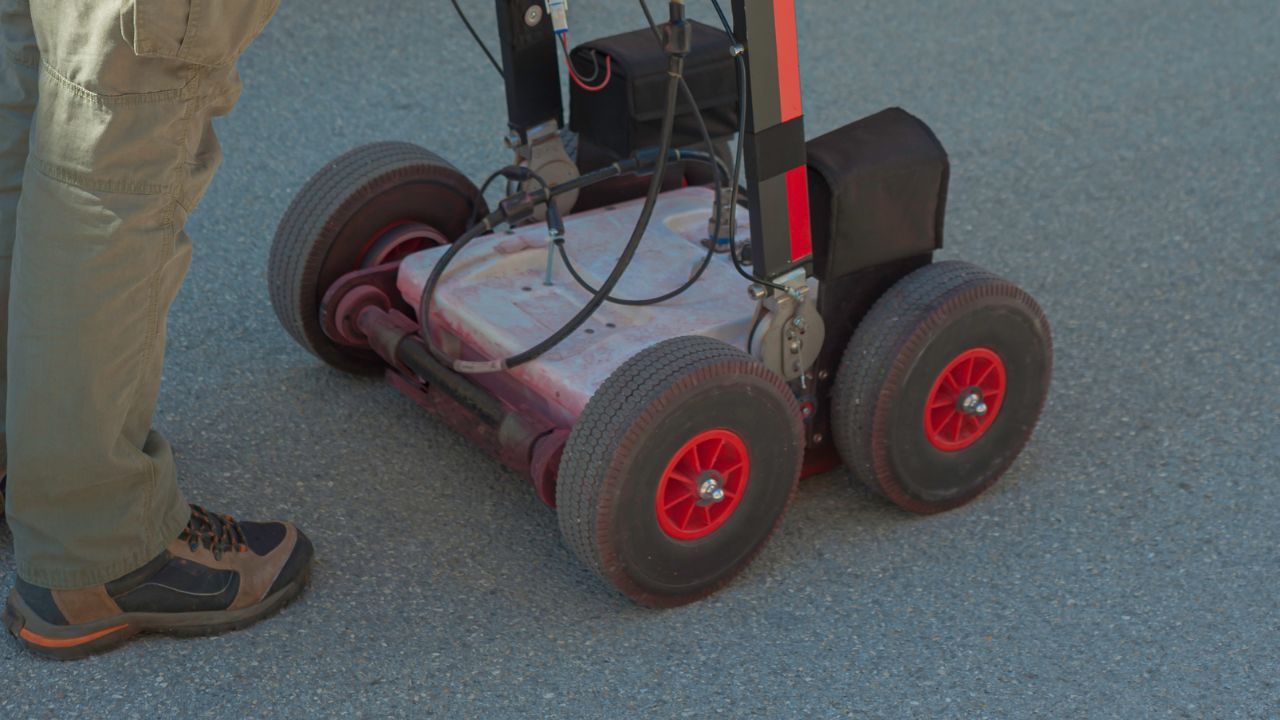
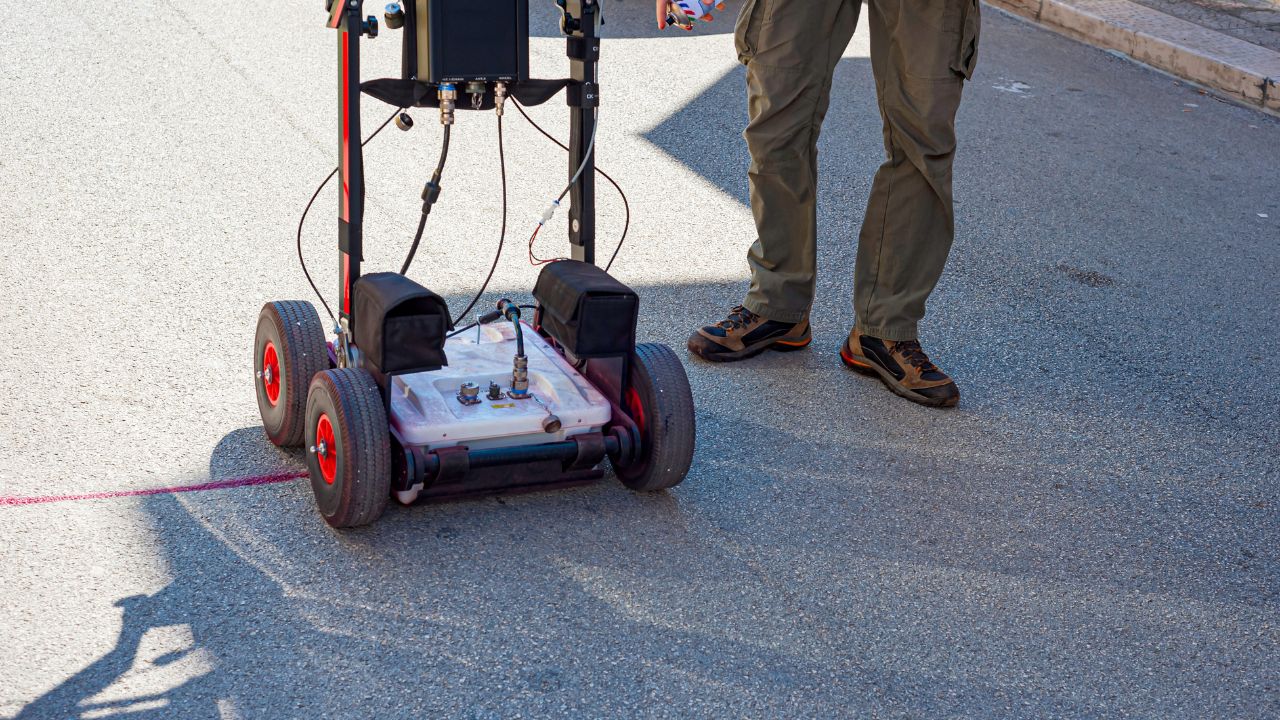
Utility locating

Key Takeaways

  • .No single technology is sufficient: San Diego’s coastal clay soils (GPR rated 2/5), extensive PVC infrastructure (EM rated 30% accuracy), and urban congestion (EM rated 2/5) require a combined approach as industry standard
  • Soil conditions determine technology effectiveness: East County’s dry, sandy soils favor GPR (rated 5/5); coastal areas favor EM (rated 4/5) for metallic utilities; downtown concrete-heavy zones require GPR for scanning but EM for deep metallic tracing
  • Detection accuracy varies by utility type and depth: GPR achieves 98% PVC accuracy but drops to 40% at 15-20 feet depth; EM achieves 98% metallic accuracy and maintains 85% at 15-20 feet but only 30% PVC accuracy
  • Combined approach costs 20-30% more but eliminates blind spots: A single utility strike costs $50,000 to over $1 million, far exceeding the premium for dual-technology services that provide comprehensive detection
  • Local market confirms combined standard: San Diego contractors (GPRS, Util-Locate, CPL Detection, ART Locating) all offer both technologies; SDG&E requires EM-detectable markers on PVC conduits because EM alone is insufficient

San Diego’s utility infrastructure presents a unique challenge: coastal clay soils that limit Ground Penetrating Radar effectiveness, extensive PVC conduit networks invisible to Electromagnetic locators, and dense urban congestion where signal interference creates blind spots. The question isn’t whether GPR or EM is “better”, it’s which technology fits your specific site conditions, and when you need both to eliminate strike risk.

This guide provides the technical specifications, cost analysis, and soil-specific performance data you need to make informed decisions for San Diego County projects. Whether you’re planning downtown excavation, East County development, or coastal infrastructure work, understanding how these technologies perform in local conditions determines whether you detect every utility or face a costly strike.

What Does “Utility Locating” Actually Mean On A San Diego Jobsite?

Utility locating identifies the position and depth of underground infrastructure before excavation. In San Diego, this process is critical due to the region’s dense urban utility networks, mix of legacy and modern infrastructure, and variable soil conditions from coast to inland. The stakes are high: utility strikes cost $50,000 to over $1 million, depending on the type of utility damaged and the project disruption.

The two primary technologies are Electromagnetic (EM) locator and Ground Penetrating Radar (GPR). Each technology detects different utility types with varying accuracy depending on material, depth, and soil conditions.

What Utilities You Should Expect in San Diego and How They’re Typically Detected

Utility Type Common Material Detectable by EM? Detectable by GPR? Detection Accuracy
Metal pipes/cables Steel, copper, cast iron Yes (98% accuracy) Yes (95% accuracy) Excellent for both
PVC pipes PVC, HDPE Only with tracer wire (30% accuracy) Yes (98% accuracy) GPR required
Fiber optic cables Glass fiber, non-metallic Only with tracer wire (25% accuracy) Yes (95% accuracy) GPR required
Concrete-embedded utilities Varies Limited (40% accuracy) Yes (90% accuracy, penetrates up to 18″) GPR superior
Mixed/congested areas Multiple materials Moderate (60% accuracy, signal bleed-over) Good (85% accuracy) Combined approach best

Note: San Diego Gas & Electric (SDG&E) requires EM-detectable marker balls on non-metallic PVC conduits as a workaround, confirming that EM alone cannot detect these utilities.

Why Records And Surface Clues Can Still Be Wrong

Case Example: 1401 Imperial Avenue, Downtown San Diego During a Phase II Environmental Site Assessment at this downtown redevelopment site, EM successfully identified eight metallic anomalies but could not determine their nature or depth. GPR was then deployed, providing critical depth data (approximately 4 feet) and imaging that identified one anomaly as a probable Underground Storage Tank (UST). This demonstrates the standard workflow: EM for broad metallic screening, GPR for detailed characterization and non-metallic detection.

Common reasons utility records fail:

  • As-built drift – Construction deviates from design drawings
  • Undocumented repairs – Emergency fixes bypass formal documentation
  • Abandoned lines – Old utilities left in place without record updates
  • Missing tracer wire – Non-metallic lines installed without detectable markers
  • Utility congestion – Overlapping infrastructure creates confusion and increases the risk of false positives and missed utilities

What Is EM (Electromagnetic) Locating, And What Is It Best At?

EM locating excels at tracing metallic utilities quickly and cost-effectively, particularly at significant depths. It’s the go-to technology for known metal pipes and cables where depth capability matters more than precision.

How EM Locating Works In Plain Language

EM locators detect magnetic fields generated by alternating current (AC) flowing through conductive utilities. This current can be passive (naturally present in live electrical cables) or actively induced by a transmitter, either directly connected to the utility or inductively applied from the surface.

The technology requires a conductive path, making it primarily effective for metallic pipes and cables. Non-metallic lines can only be traced if they have tracer wire installed or if a detectable sonde is pushed through them. EM’s major advantage is depth capability: it can detect utilities up to 50 feet deep with a magnetometer and maintains 85% accuracy at 15-20 feet depth.

EM Strengths And Limitations

Strength Limitation
98% accuracy on metal utilities Cannot detect non-metallic without tracer wire (30% PVC, 25% fiber optic)
Excellent depth capability (up to 50 ft, maintains 85% accuracy at 15-20 ft) Signal bleed-over in congested urban areas (rated 2/5)
Cost-effective equipment (<$10,000) Depth measurements are estimates (rated 3/5 vs GPR’s 5/5)
Easier operation and training (rated 4/5, ~$500 certification) Ineffective for concrete scanning (rated 2/5)
Less affected by soil moisture (rated 4/5 for clay, 4/5 for coastal conditions) Poor performance in mixed/congested areas (60% accuracy)

What Is GPR (Ground Penetrating Radar) Locating, And What Is It Best At?

GPR utility locating San Diego projects is essential for detecting non-metallic utilities and scanning concrete structures. It provides superior depth accuracy and performs best in dry, sandy, or rocky soils, making it ideal for San Diego’s inland and East County areas.

How GPR “Sees” Subsurface Targets

GPR transmits high-frequency radio waves into the ground and analyzes the reflected signals. Reflections occur when the radio waves encounter changes in dielectric properties between subsurface materials, allowing GPR to detect both metallic and non-metallic objects, soil layers, and voids.

The technology involves a critical trade-off: lower frequencies penetrate deeper but offer lower resolution, while higher frequencies provide high-resolution detail at shallower depths. GPR’s depth accuracy is often within inches (rated 5/5) compared to EM’s estimates (rated 3/5). However, GPR does not inherently identify utility type without additional context or confirmation.

GPR Strengths and Limitations

Strength Limitation
98% PVC accuracy, 95% fiber optic accuracy, 90% concrete-embedded accuracy Severely limited in coastal clay soils (rated 2/5)
Superior depth accuracy (rated 5/5, often within inches) Poor coastal/high-moisture performance (rated 2/5)
Excellent in dry/sandy/rocky soils (rated 5/5 for sandy soil) Depth penetration is limited to “as little as a few feet” in high-conductivity clay
Concrete penetration up to 18 inches (rated 5/5) Accuracy drops significantly at depth (70% at 8-15 ft, 40% at 15-20 ft)
Better urban congestion handling (rated 4/5) Higher equipment cost ($14,000-$100,000+)
Detects non-metallic utilities invisible to EM Requires skilled interpretation (training $795-$1,295)

How Do San Diego Ground Conditions Change GPR vs EM Outcomes?

San Diego County’s diverse geology creates distinct performance zones for utility locating technologies. Soil and site condition considerations are paramount: coastal areas with high-conductivity clay soils severely limit GPR effectiveness, while dry inland areas provide ideal conditions. Urban congestion and concrete-heavy environments add further complexity.

The USDA Ground-Penetrating Radar Soil Suitability Map of California shows that the urbanized coastal strip of San Diego has low to moderate GPR potential due to high-conductivity clay and moisture content. These conditions cause rapid signal attenuation, limiting GPR depth penetration to just a few feet. Conversely, EM performance remains relatively stable across soil types, though it faces challenges in very dry, non-conductive soils and can experience accuracy distortion in heterogeneous ground.

Technology Effectiveness Across San Diego Soil Zones

Zone GPR Effectiveness EM Effectiveness Recommendation
Coastal (High Moisture Clay) 2/5 4/5 EM Primary + GPR for non-metallic

High-conductivity clay severely limits GPR depth penetration per USDA Soil Suitability Map

Downtown Urban (Concrete Heavy) 4/5 3/5 Combined GPR + EM

GPR superior for concrete scanning; EM experiences signal interference from congestion

Central Valley (Mixed Soil) 3/5 4/5 EM Primary + GPR as needed

Balanced soil conditions; EM cost-effective for initial screening

East County (Dry Sandy) 5/5 3/5 GPR Primary

Ideal conditions for GPR; EM signal weakens in dry, non-conductive soils

North County (Rocky Terrain) 4/5 2/5 GPR Primary

GPR works well in rocky conditions; EM challenged by geological heterogeneity

How Do You Choose GPR, EM, Or Both For A San Diego Project?

Technology selection depends on utility type, soil conditions, project depth, and site congestion. The decision tree is straightforward: if you know the utility material and soil type, you can select the optimal technology. If either is unknown, default to a combined approach.

Technology Selection By Scenario

Scenario Recommended Technology Detection Accuracy Why
Metal utilities in dry/sandy soil EM Only 98% Cost-effective with excellent depth capability
PVC/fiber optic utilities GPR Required 98% PVC, 95% fiber EM achieves only 30% PVC and 25% fiber optic accuracy
Coastal/high-moisture areas EM Primary + GPR for non-metallic EM 4/5 in clay, GPR 2/5 GPR severely limited in high-conductivity coastal clay
Downtown/congested zones Combined GPR + EM GPR 85%, EM 60% in congestion GPR handles congestion better; EM needed for deep metallic utilities
Concrete scanning/coring GPR Only 90% concrete-embedded Penetrates up to 18 inches; EM ineffective in concrete
Unknown/mixed utilities Combined GPR + EM Comprehensive detection Industry best practice per local San Diego market
Deep utilities (>15 ft) EM Primary 85% at 15-20 ft GPR achieves only 40% accuracy at very deep range

When Combining Both Is The Default Best Practice

The San Diego utility locating market has converged on a combined dual-technology approach as the industry standard. Local contractors, including GPRS, Util-Locate, CPL Detection, and ART Locating all offer both technologies, reflecting market recognition that neither alone is sufficient. The multi-method approach benefits are clear when analyzing real-world project outcomes.

Why is combined standard:

  • Cost-benefit analysis: The initial premium of 20-30% for combined services is minimal compared to single utility strike costs of $50,000 to over $1 million
  • San Diego-specific challenges: Coastal clay soils with low GPR potential, urban congestion affecting EM accuracy, and SDG&E’s PVC infrastructure requiring GPR detection
  • Proven workflow: The 1401 Imperial Avenue case demonstrates the standard approach, EM for broad metallic screening, then GPR for depth characterization and non-metallic detection
  • High-risk scenarios: Utility crossings, mixed materials, tight clearances, directional drilling, and unknown utility configurations all require comprehensive detection

What Are The Cost Differences Between GPR And EM In San Diego?

GPR represents a significantly higher capital investment but provides capabilities that EM cannot match. EM is more cost-effective for known metallic utilities at depth. The decision between purchasing, renting, or outsourcing depends on project volume and frequency.

Equipment And Service Cost Comparison

Cost Category GPR EM Combined
Equipment Purchase $14,000–$100,000+ <$10,000 Both technologies required
Daily Rental $190 $50 N/A
Training per Operator $795–$1,295 ~$500 N/A
San Diego Service Rates (per hour) $250–$285/hr Lower rates Premium 20-30% over single technology
Small Project (1-2 hours) $500 $285 $650
Full Day (8 hours) $2,500 $1,200 $3,200
Cost per Linear Foot (2000 ft project) $2.20 $0.90 $2.80
ROI Timeline 2-3 years for high-volume users 2-3 years for high-volume users N/A

Equipment purchase is cost-effective when: Projects require frequent utility locating (2-3+ times per month). For occasional users, rental or third-party services remain more economical.

What Are The Most Common Mistakes When Choosing GPR vs EM?

The three most costly mistakes are: (1) using EM alone for non-metallic infrastructure, (2) using GPR alone in coastal areas or at depth, and (3) assuming a “clean scan” means zero risk. Each mistake significantly increases strike probability. Recognizing these red flags in utility locating helps avoid costly errors.

EM-Only Mistakes That Increase Strike Risk

Using EM alone misses the majority of non-metallic utilities and creates dangerous blind spots in San Diego’s infrastructure:

  • Cannot detect non-metallic utilities: Only 30% PVC accuracy and 25% fiber optic accuracy without tracer wire
  • Missing SDG&E infrastructure: PVC conduits and polymer concrete handholes are invisible to EM without marker balls
  • Signal bleed-over in congestion: Rated 2/5 for urban congestion handling where EM signals inductively couple to adjacent lines
  • Poor mixed-area performance: Only 60% accuracy in mixed/congested areas compared to GPR’s 85%

GPR-Only Mistakes That Increase Strike Risk

Using GPR alone creates blind spots in coastal areas and at significant depths:

  • Severely limited in coastal clay: Rated 2/5 effectiveness with penetration limited to “as little as a few feet” in high-conductivity soils
  • Missing deep utilities: Only 40% accuracy at 15-20 feet compared to EM’s 85%
  • No continuous route tracing: GPR provides cross-sectional views but cannot continuously trace metallic utility routes like EM
  • 1401 Imperial Avenue example: GPR alone could not have detected all eight metallic anomalies that EM found during initial screening

“Clean Scan” Mistakes

A “clean scan” report does not eliminate utility strike risk:

  • Overconfidence without verification: No technology is 100% accurate; critical points require redundant verification
  • Skipping 811/private coordination: Public utility locates (811) and private locating services complement each other, but don’t overlap completely
  • Not verifying critical conflict zones: Crossings, tie-ins, and known congestion areas require focused attention and often multiple passes
  • Cost of single strike: $50,000 to over $1 million,depending on utility type and project disruption, far exceeding the cost of thorough verification

What Are The Most Common San Diego Questions About GPR And EM?

Can GPR Locate Plastic Gas Lines And Conduits?

Yes—GPR can detect PVC at ~98% accuracy (vs. ~30% for EM without tracer wire). For non-invasive gas line detection, the limiting factor is soil: East County dry soils (5/5) are ideal, while coastal clay (2/5) can restrict penetration to only a few feet.
Recommendation: Use GPR inland/East County; in coastal zones, combine GPR + EM (and EM markers where present, like SDG&E marker balls) to avoid blind spots.

Can EM locate a utility with no tracer wire?

Only if it’s metallic. EM is ~98% accurate on conductive utilities, but drops to ~30% for PVC and ~25% for fiber without tracer wire/markers. SDG&E’s use of EM-detectable markers on PVC is a workaround for this limitation.
Alternative: In favorable soils, GPR can locate untraced non-metallic lines (PVC/fiber) reliably.

How accurate is depth?

GPR provides the most precise depth readings (often within inches) but loses accuracy at depth (~70% at 8–15 ft; ~40% at 15–20 ft) and performs poorly in coastal clay. EM depth is more “estimated” but holds up better deeper (~85% at 15–20 ft).

Recommendation: Verify depth at critical points (crossings, drill entry/exit, minimum cover). Use GPR for shallow-to-mid depth precision, EM for deep metallic tracing.

What Should You Do Next To Reduce Utility Strike Risk?

Good results start with good inputs. Before you book a locate, gather the basics so the provider can match the right technology to your site.

What to gather before requesting services

Site conditions

  • Soil zone: coastal clay (GPR limited), downtown concrete/congestion, central valley mixed soils, East County dry sand (best for GPR), North County rocky.
  • Likely utility materials: SDG&E PVC/non-metallic (plan on GPR) vs mostly metallic (EM may be sufficient).
  • Depth needs: GPR is best ~0–8 ft; EM performs better deeper, staying strong at 15–20 ft.

Project details

  • Records/as-builts (assume drift and missing updates)
  • A scope map with excavation limits and conflict areas
  • Excavation method (trenching, coring, directional drilling)
  • List of high-consequence utilities (gas, high-voltage, major fiber)

When to default to combined GPR + EM (and extra verification)

Use both when any of the following apply:

  • High consequences: one strike can cost $50,000 to $1M+
  • Coastal clay: GPR limited, EM needed for metallic + GPR for non-metallic where possible
  • Downtown congestion: EM interference risk; GPR helps, but EM still needed for deep metallic tracing
  • Mixed/unknown utilities: PVC + metallic lines in the same corridor
  • Complex work: crossings/tie-ins, directional drilling entry/exit zones, poor documentation

San Diego providers offering both: GPRS Southern California, Util-Locate, CPL Detection, ART Locating, Sentry Mapping.

Making The Right Choice For San Diego Utility Locating

San Diego’s mix of coastal clay, widespread PVC infrastructure, and dense urban corridors means no single locating method covers everything. GPR is essential for non-metallic lines and concrete scanning, but it loses performance in coastal clay and at deeper depths. EM excels at tracing metallic utilities—especially deep—but can’t reliably find PVC without tracer wire/markers and can struggle in congested areas.

That’s why most San Diego projects are best served by a combined GPR + EM approach: it closes the blind spots for a 20–30% premium that’s small compared to the $50,000 to $1M+ cost of a single strike. Use single-method locating only when conditions clearly support it (e.g., GPR in dry East County soils or EM for deep metallic utilities). When utilities are mixed, unknown, or the consequences are high, dual-technology locating is the safest standard.

Request A Utility Locating Quote

Ready to eliminate utility strike risk on your San Diego project? Contact Util-Locate for expert combined GPR and EM services tailored to your site conditions.

Surface Markings vs. Utility Mapping: Why San Diego Commercial Projects Need More

Subsurface Utility Engineering (SUE) mapping

Key Takeaways

  • 811 markings comply with the law but don’t prevent strikes: Markings show approximate horizontal location only, no depth, no private utilities, 20+ foot deviations common. 94% of strikes result from incomplete data, not excavator error.
  • SUE Quality Levels match accuracy to decisions: QL-D records ($0-$500) for feasibility, QL-B mapping ($1,000-$8,000) for design at ±1 ft, QL-A verification ($700-$1,100/hole) for ±0.04 ft precision. Wrong choice means 10-30x cost increases.
  • ROI is immediate: $15,000 investment prevents $56,000 in strikes, $39,500 net savings with $4.62-$22.21 return per dollar. Pure Water saved $76M; Orion paid $1.26M for bad data.
  • San Diego’s subsurface exceeds map complexity: UUD conversions, ownership changes, and abandoned infrastructure make 811-only insufficient. Accurate data becomes a permanent asset for future development.
  • Systematic verification works: SDG&E cut dig-ins 54.9% despite 50% more activity. The same approach prevents conflicts, eliminates claims, and protects schedules.

The difference between a smooth commercial build and a seven-figure dispute often comes down to one choice: how well you verify what’s underground before you dig. In San Diego, some teams prove what’s possible, SDG&E cut gas dig-ins by roughly 55%, and Pure Water avoided $76M by resolving conflicts in design. Others pay for “paint-only certainty,” like the Mission Beach Orion project: a $1.26M settlement, 159 working days lost, and major productivity hits.

That gap isn’t luck. It’s data quality. 811 markings meet the legal requirement, but they provide approximate horizontal location only, no depth, no private utilities, and deviations that can be 20+ feet. For commercial work involving foundations, deep excavation, shoring, or tie-ins, that’s not enough.

This guide explains when 811 markings are sufficient, when Subsurface Utility Engineering (SUE) mapping is the smarter requirement, and how matching SUE quality levels to project decisions prevents avoidable strikes, claims, and schedule blowups.

What Problem Are We Solving When We Talk About “Surface Markings vs. Utility Mapping” On San Diego Commercial Sites?

Utility strikes cost the U.S. construction industry $30-62 billion annually, with the average incident carrying a $56,000 price tag. The root cause isn’t careless excavation, 94% of strikes result from incomplete or inaccurate subsurface data. San Diego commercial projects face this risk daily, which is why understanding utility locating risk in San Diego is critical for project success.

The Orion Construction case in Mission Beach illustrates the scale of the problem. The City provided maps showing 160 underground utilities. The contractor encountered 324, more than double the expected number. The result: a $1.26 million settlement and 159 working days of delay. This wasn’t an excavation error. It was a data failure.

Standard 811 surface markings provide only an approximate horizontal location. They don’t reveal depth, material, condition, or the private utilities that exist on nearly every commercial site. For projects involving trenching, pile driving, or underground tie-ins, approximation isn’t good enough. 

The gap between what 811 provides and what construction needs creates predictable, expensive failures. Professional utility mapping services close that gap with engineered, surveyed data.

What Do Surface Utility Markings Actually Mean, And Not Mean?

California Government Code 4216 requires excavators to contact DigAlert/811 at least two working days before digging. Failure carries penalties up to $10,000 per violation. As of January 1, 2025, strengthened “positive response” requirements mean you cannot proceed until operators confirm their facility status. But compliance with 811 law doesn’t eliminate risk, it establishes a legal baseline, not engineering certainty. Surface markings show approximate horizontal location only. 

They provide no depth data, no verification of accuracy, and no coverage of private utilities. The limitations of paint-only locates become especially problematic on complex commercial sites where precision matters.

What markings provide What they DON’T provide Risk created What you need instead
Approximate horizontal location Depth information Deep excavation strikes QL-A potholing for depth
Utility-owner facilities only Private utilities (fire, irrigation, site lighting) Striking unmarked site utilities Private as-built research + QL-B
Location within ±24″ tolerance zone Precise position for design Conflicts discovered during construction QL-B for design accuracy (±1 ft)
Snapshot valid ~28 days Updates as site changes Working with outdated marks Re-ticket each phase

Key stat: Over 20% of utilities marked via 811 systems deviate by more than 20 feet from their actual location.

What Is Utility Mapping (SUE), And What Do The Quality Levels Mean?

The American Society of Civil Engineers standard ASCE 38-02 defines four Quality Levels (QL-D through QL-A) for Subsurface Utility Engineering. Each level provides different accuracy and serves different project needs. QL-D relies on existing records, the same data that led to Orion Construction encountering double the expected utilities. QL-C adds surveys of visible features like manholes. QL-B uses geophysical methods (Ground Penetrating Radar, electromagnetic location) to map utilities horizontally and vertically with ±1 foot accuracy. QL-A physically exposes utilities through vacuum excavation, providing ±0.04 feet (roughly half-inch) precision.

The quality level determines what decisions you can confidently make. QL-D supports feasibility studies. QL-B enables design and conflict identification. QL-A verifies critical crossings and provides tie-in data. Choosing the wrong level means either spending money you don’t need to spend, or, more commonly, discovering expensive conflicts during construction when fixes cost 10-30 times more. 

This is why documentation matters for remodels and renovations, having surveyed utility data eliminates guesswork when modifying existing buildings.

Quality Level What it provides Accuracy When to use Cost range
QL-D Desktop records review Unknown (often ±20+ ft) Concept/feasibility only $0-$500
QL-C Records + surveyed surface features Varies Site planning Minimal add to QL-D
QL-B Geophysics (GPR, EM location) ±1 foot horizontal/vertical Design phase; conflict ID $1,000-$8,000
QL-A Physical exposure (vacuum excavation) ±0.04 feet (½ inch) Critical crossings; tie-ins; deep excavation $700-$1,100 per hole

Why Are Surface Markings Alone Not Enough For San Diego Commercial Projects?

A utility mark can be “correct” under 811 standards and still destroy your schedule. The tolerance zone (typically 24 inches on either side of the mark) is wide enough to hide major conflicts. The marks don’t account for depth; a line marked at grade could be 2 feet deep or 12 feet deep. And private utilities, irrigation, site lighting, fire systems, telecommunications equipment, won’t be marked at all because they’re not in public operator databases.

San Diego adds specific complications. Municipal Code §51.312 mandates utility undergrounding in Underground Utility Districts (UUDs), creating conversion zones where overhead and underground systems overlap. Decades of property ownership changes mean incomplete record handoffs. The result is a subsurface environment more complex than maps suggest. 

This complexity underscores the long-term value for property owners who invest in comprehensive utility mapping; accurate subsurface data becomes a valuable asset for future improvements, tenant modifications, and property transactions.

Why San Diego commercial sites have high unknown-utility rates:

  • Underground Utility District (UUD) conversions add complexity with overhead-to-underground transitions
  • Multiple decades of property ownership changes = incomplete record handoffs
  • Private utilities (parking lot lighting, irrigation, fire systems) not in public records
  • Abandoned legacy lines left in place during upgrades
  • Repeated trenching over decades creates unmarked crossings

What Are The Real Consequences Of Relying On Markings-Only?

The difference between adequate utility data and inadequate data is measured in millions of dollars and months of schedule. Two San Diego projects illustrate the extremes. One relied on city-provided maps and paid a seven-figure settlement. The other invested in design-phase conflict avoidance and saved $76 million. Understanding how utility mapping prevents construction delays is essential for every project stakeholder.

Orion Construction (Mission Beach) – The Cost Of Inaccuracy

City maps showed 160 utilities. The contractor encountered 324, more than double the expected number. Productivity collapsed from 75 feet of pipe installed per day to 20-50 feet per day when crews hit unmapped conflicts. The planned 320 working days stretched to 479 days, a 159-day overrun. The financial result: a $1.26 million settlement paid by the City of San Diego to cover delay costs and extra work. This wasn’t a construction failure. It was a data failure with a seven-figure price tag.

Pure Water San Diego – The Value Of Proactive Mapping

The multi-billion-dollar Pure Water Program took the opposite approach. Construction management staff and designers partnered to realign pipelines during the design phase, deliberately routing them away from existing SDG&E infrastructure. This proactive conflict avoidance reduced estimated utility relocation costs from $120 million to $44 million, a $76 million cost avoidance. 

The strategy worked because the team had accurate subsurface data before committing to a design. They engineered solutions to avoid conflicts rather than discovering them with a backhoe.

Cost category Example from San Diego Typical range How QL-B/QL-A prevents it
Claims/settlements Orion: $1.26M $50K-$2M+ Accurate data eliminates differing conditions claims
Project delays Orion: 159 days Weeks to months Conflict resolution in design phase
Emergency repairs Utility strike restoration $4K-$15K per incident QL-A verification prevents strikes
Redesign mid-construction Pure Water alternative: $76M avoided $15K-$50K+ QL-B identifies conflicts before bidding
Productivity loss Orion: 67% drop in install rate $2K+ per hour of standby Known conflicts = maintained productivity

How Do Markings And Mapping Compare Across Project Phases?

The value of surface markings versus utility mapping changes dramatically depending on the project phase. During design, 811 markings provide zero value; they’re not surveyable data and can’t inform engineering decisions. During excavation, they’re legally required but insufficient without verification. The optimal approach layers methods based on the decision being made.

SDG&E’s gas utility program demonstrates what systematic verification achieves. From 2019 to 2023, the dig-in rate dropped 54.9%, from 2.46 to 1.11 incidents per 1,000 tickets, despite a 50% increase in excavation activity. This wasn’t luck. It was the result of proactive damage prevention programs that went beyond basic 811 compliance.

Project phase Surface markings value Mapping (SUE) value Recommended approach
Design (SD/DD) None – too inaccurate QL-B identifies conflicts for design solutions QL-B comprehensive
Permitting/bidding None – not surveyable data QL-B data supports permit drawings & accurate bids QL-B deliverables in bid package
Pre-construction Reference only QL-A at known conflicts before mobilization Update QL-B + targeted QL-A
Foundation/shoring Required by law (811) QL-A mandatory at each conflict Both: 811 + QL-A verification
Utility tie-ins Required by law (811) QL-A mandatory at connection points Both: 811 + QL-A before cutting

Success metric: SDG&E achieved 54.9% reduction in gas dig-in rate (2.46 to 1.11 per 1,000 tickets) from 2019-2023, despite 50% increase in excavation activity, proof that proactive programs work.

What Does “More Than Markings” Look Like In Practice?

“More than markings” is a layered approach: start with broad, low-cost research and add precision only where the consequences justify it. QL-D establishes the baseline, QL-B maps utilities accurately enough for design, and QL-A confirms critical conflicts where there’s no room for error.

The deliverable should be surveyed, CAD/BIM-ready utility data, not just field paint, with metadata (quality level, method, date, and required verification points) so designers and field crews know what’s confirmed and what still needs potholing before excavation.

What’s The ROI, And When Does It Pay For Itself?

Utility mapping usually pays for itself by preventing the first conflict. On a typical $10M San Diego commercial project, a full SUE approach (QL-B plus targeted QL-A) costs about $15,000 versus an average $56,000 utility strike, roughly $39,500 in net savings if it prevents one incident.

Industry ROI ranges of $4.62–$22.21 returned per $1 invested align with local results like Pure Water San Diego’s $76M in avoided costs by identifying and resolving conflicts during design. The tradeoff is simple: pay a predictable upfront cost or absorb unpredictable mid-construction costs and delays.

When Is Markings-Only Acceptable vs. When Do You Need Mapping?

Markings-only can be sufficient for shallow, low-consequence work where hand-digging is practical and an unexpected utility won’t materially impact safety, schedule, or cost. The moment excavation becomes deeper, structural, or requires tie-ins, surface markings stop being decision-grade information.

In San Diego’s dense commercial corridors, especially downtown, redevelopments, and Underground Utility District areas, utility congestion, legacy lines, and incomplete records make mapping a risk-control step, not an optional upgrade, particularly for schedule-sensitive sites like hospitals, data centers, and occupied buildings.

How Do You Select A Mapping Partner And Scope Deliverables?

Not all utility locating services are equal. Traditional “locating” marks the ground with paint and provides no engineered deliverable. Subsurface Utility Engineering (SUE) produces surveyed, CAD-integrated data with quality levels, metadata, and limitations clearly documented. The procurement language matters, vague specifications produce vague results. Define exactly what you’re buying: ASCE 38-02 compliance, specific file formats, coordinate systems tied to project control, and metadata that includes verification method, date, and confidence rating for each feature.

Red flags indicate you’re buying basic locating dressed up as engineering. If the proposal doesn’t reference ASCE 38-02 quality levels, doesn’t include a CAD deliverable, or makes overconfident accuracy claims without physical verification (QL-A), you’re not getting utility mapping, you’re getting expensive paint on the ground. Why documentation matters for remodels becomes clear when you compare a paint-only locate that washes away in the first rain to a permanent CAD file that serves the property for decades.

Procurement language to include:

  • Explicit ASCE 38-02 compliance for quality levels
  • Specific deliverables: CAD format, layer structure, coordinate system
  • Metadata requirements: method, date, confidence rating, depth accuracy per feature
  • Limitations disclosure required (what was NOT surveyed and why)
  • QA/QC process defined (peer review, spot verification)

Red flags you’re buying locating (not mapping):

  • No quality levels or ASCE standards mentioned
  • No CAD/GIS deliverable, just field paint/flags
  • No metadata or limitations section
  • Overconfident depth claims without QL-A verification (“accurate to 2 inches from GPR”)
  • No survey control or tie-in to project benchmarks

What Should San Diego Commercial Teams Do Next?

The path forward is straightforward: standardize utility mapping in project specifications, budget appropriately, and integrate the data into field operations. Add QL-B as the minimum requirement for design phases and QL-A verification at known conflicts before excavation. For most San Diego commercial sites, comprehensive SUE costs $8,000-$15,000, a fraction of the cost of a single utility strike or one week of schedule delay.

Verify Underground Utility District status early. San Diego Municipal Code §51.312 imposes mandatory undergrounding requirements that affect project scope and cost. Establish triggers for re-verification: when phasing changes, when schedule delays exceed 90 days, or when site conditions change. Most importantly, brief field crews daily on SUE findings. Accurate data only prevents strikes if the crew operating the excavator knows where the conflicts are and where hand-digging is mandatory. Contact a qualified utility locating provider to start the process.

Immediate action steps:

  • Add SUE to standard specs: Require QL-B minimum for design; QL-A at critical conflicts
  • Budget appropriately: $8K-$15K for comprehensive SUE on typical commercial site
  • Verify UUD status early: Check San Diego Municipal Code §51.312 for undergrounding requirements
  • Standardize deliverables: Define CAD format, metadata, quality level requirements in RFP
  • Establish refresh triggers: Re-verify when phasing changes or after 90+ day delays
  • Brief the field: Integrate SUE findings into daily crew briefings; mark hand-dig zones

Key takeaway: San Diego has proven proactive damage prevention works (SDG&E’s 55% strike reduction). The question is not whether you can afford to invest in mapping, it’s whether you can afford another Orion Construction scenario ($1.26M settlement, 159-day delay) when a $15K SUE investment could have prevented it.

The Cost Of Knowing vs. The Cost Of Guessing

The evidence is unambiguous: utility mapping isn’t an expense, it’s insurance with a guaranteed positive return. San Diego has proven the model works. SDG&E’s 55% strike reduction and Pure Water’s $76 million in avoided costs demonstrate what systematic subsurface verification achieves. The Orion Construction case demonstrates the alternative: $1.26 million settlements and 159-day delays when you guess instead of know.

Every San Diego commercial developer now faces a binary choice. Invest $8,000-$15,000 in QL-B and QL-A verification during design and pre-construction, or accept the statistical probability of a $56,000 utility strike with cascading schedule and cost impacts. The limitations of paint-only locates are well-documented. The long-term value for property owners who invest in comprehensive utility mapping extends beyond the immediate project; accurate CAD deliverables become permanent assets for future tenant improvements, expansions, and property transactions.

The question isn’t whether you can afford utility mapping. The question is whether you can afford to proceed without it when the data proves that inadequate subsurface information is the root cause of 94% of utility strikes. Start with three actions: add QL-B to design-phase specifications, budget appropriately for comprehensive SUE, and verify UUD status before finalizing project scope. The cost of accurate data is a fraction of the cost of discovering you didn’t have it.

Request A Utility Locating Quote

Ready to protect your next San Diego commercial project from utility conflicts? Contact Util-Locate for ASCE 38-02 compliant subsurface utility engineering that delivers the data your project needs before the first shovel hits the ground.

What Should Be Included In A Professional Utility Locating Quote?

professional utility locating in San Diego


Key Takeaways

  • Quality Level Is Non-Negotiable: Demand ASCE 38-22 QL-B minimum (±1.5 ft accuracy) for standard projects and QL-A (±6 in accuracy) for work within California’s 24-inch tolerance zone. Vague quotes without Quality Level specifications cannot be properly evaluated.
  • 811 Only Covers 40% of Utilities: The free DigAlert service marks public utilities but leaves you liable for the 60% that are private, including sewer laterals, irrigation, pool lines, and service connections that cause most residential strikes.
  • San Diego Geology Demands Specialized Approach: Coastal clay (>15% content), inland caliche hardpan, and hillside rock terrain require multi-frequency GPR and site-specific methodology; generic approaches fail in these challenging conditions.
  • Insurance Protects Against $56,000 Average Strikes: Verify $1-2M General Liability AND $1-2M Professional Liability (E&O) coverage, the $300-500 quote savings from uninsured contractors exposes you to catastrophic financial risk.
  • ROI Justifies Professional Service: Industry data shows $4.62-$22.21 saved for every $1.00 invested in professional locating, choosing the lowest quote to save $200-300 risks $1,500-$100,000+ in strike repair costs and project delays.

A professional utility locating quote is a risk management document that protects both parties and defines project expectations. It must follow ASCE 38-22 Standard guidelines, specify quality levels, detail methodologies, and transparently break down costs. The investment delivers measurable returns: studies show $4.62 saved for every $1.00 spent on proper utility locating, while typical utility locating risk in San Diego results in residential strike repairs costing $1,500-$2,300.

San Diego presents unique challenges requiring specialized approaches. The region’s diverse geology, from coastal clay to inland caliche to hillside rock, affects equipment performance and pricing. Local regulations include California’s Dig Safe Act, City and County permitting requirements, SDG&E underground construction standards, and Coastal Development Permit compliance for properties near the ocean. Quotes for professional utility locating in San Diego must address these region-specific factors while maintaining transparency and industry standards.

What Must The Scope Of Work Define To Prevent Pricing Ambiguity?

A clear scope of work prevents disputes and ensures accurate pricing. The quote must specify exactly what’s included, what methods will be used, and what the client will receive. Vague scopes lead to change orders, project delays, and cost overruns.

Essential Scope Elements

Element What Must Be Specified San Diego-Specific Considerations
Work Area Address, boundaries, square footage or linear feet City vs County jurisdiction affects permitting requirements
Utilities Included Public (SDG&E, City Water, SDCWA) vs Private (irrigation, pool lines, laterals) 60% of utilities are private, not covered by 811
Quality Level ASCE 38-22 QL-A, QL-B, QL-C, or QL-D with accuracy standards QL-B (±1.5 ft) standard; QL-A (±6 in) for tolerance zone work
Methods GPR frequency, EM capabilities, vacuum excavation scope Multi-frequency GPR needed for clay/caliche soils
Deliverables Field marking, CAD/GIS formats, reports, photos, coordinate system State Plane Zone 6 (NAD83) standard for San Diego
Timeline Field days, deliverable turnaround, 811 coordination 2 working days minimum for DigAlert (811)

California law requires DigAlert (811) contact at least 2 working days before excavation, but this free service only covers public utilities. Sixty percent of utility lines are private, beyond the meter and not marked by 811. These include sewer laterals, irrigation systems, pool equipment lines, and private electric services. The deliverables checklist should clearly specify formats and coordinate systems to ensure compatibility with your project plans.

California’s legal tolerance zone is 24 inches on either side of any utility; only QL-A verification provides the ±6 inch precision required for safe work within this zone.

San Diego Geological Challenges Affecting Methods And Pricing

San Diego’s diverse geology directly impacts locating effectiveness and cost. Quotes must address site-specific soil conditions:

  • Coastal clay soils: Reduce GPR effectiveness when clay content exceeds 15%; wet winter conditions reduce GPR depth 50-70% vs. dry summer
  • Caliche layers (inland): Hardpan at 6-10 inches depth causes signal scattering; potholing requires a jackhammer (+10-20% cost)
  • Hillside terrain (>25% slope): Hand-carried equipment, safety measures required (+25-50% premium per Steep Hillside Guidelines)
  • Seasonal moisture: Water dielectric constant ~81 vs. 3-5 for dry soil; optimal season June-October, challenging December-March

What Quality Level Is Being Priced And What Does It Mean?

Quality Level determines accuracy, methodology, and cost. ASCE 38-22 defines four levels from basic records review to precise physical verification. The quote must explicitly state which level is being provided; without this, comparison is impossible. Understanding accuracy expectations helps you select the appropriate level for your project risk tolerance.

ASCE 38-22 Quality Levels And Costs

Quality Level Method Accuracy When Used San Diego Cost Range
QL-D Records review only Not verified Preliminary planning only $200-$500
QL-C Records + visible features survey Variable Early design phase $300-$800
QL-B GPR + EM surface geophysics ±1.5 ft horizontal Most projects, standard Residential: $300-$1,500

Commercial: $1,000-$5,000+

QL-A Vacuum excavation verification ±6 in horizontal, ±1 ft vertical Within tolerance zone, critical conflicts +$150-$400 per pothole

QL-B is the most common quality level for construction projects, providing horizontal position within ±1.5 feet through non-destructive surface geophysics. QL-A is the only method providing the ±6 inch precision required for California’s 24-inch tolerance zone. The San Diego County Water Authority explicitly states that utility locations on plans are “approximate,” making professional field verification essential.

The benefits of Subsurface Utility Engineering include avoiding costly strikes through precise location data. Typical pothole counts: ADU projects 2-4, pool installations 3-6, commercial developments 10-30.

How Should Pricing Be Structured And What Factors Influence Cost?

Transparent pricing requires itemization by project scope, quality level, and site complexity. San Diego’s 2024 construction boom, with 3,991 ADU units permitted (27% of all housing), has standardized pricing for common project types.

San Diego Project Types And Typical Costs

Project Type Typical Cost Range Key Factors Common Add-Ons
ADU Construction $400-$800 (QL-B)

$900-$2,000 (+ QL-A)

Private utilities, separate electric meter (24″ depth requirement) Potholing at service entry points
Pool Installation $300-$700 (QL-B)

$750-$1,900 (+ QL-A)

Deep excavation (6-10 ft), private gas/electric lines 3-6 potholes for conflict verification
Hillside Grading $800-$1,600 (QL-B)

$1,400-$3,600 (+ QL-A)

Rocky terrain, access limits, geotechnical report requirements Hand-carried equipment, extended time
Commercial Urban $2,500-$7,000 (QL-B)

$5,500-$15,000 (+ QL-A)

High utility density, abandoned lines, traffic control Comprehensive SUE, engineering report
Coastal Property $1,000-$2,000 (QL-B)

$1,600-$4,000 (+ QL-A)

Coastal Development Permit documentation, sandy/clay soils Enhanced reporting for CDP application

Most new ADUs require separate SDG&E electric meters with 24-inch minimum trench depth, driving the need for comprehensive utility locating services. Repair costs justify the investment: residential utility strikes cost $1,500-$2,300, while fiber optic strikes range from $10,000-$100,000+.

Pricing Factors and Premiums

  • Location premiums: Urban core +20-40%, hillside/steep slope +25-50%, coastal zone +10-25% (CDP documentation)
  • Service level: Expedited (2-3 days) +25-50%, emergency (24-48 hours) +50-100%
  • Soil challenges: Clay/caliche/rock conditions +10-25% due to reduced GPR effectiveness
  • Minimums: $300-500 project minimum, $200-400 re-mark minimum
  • Unit rates: $0.10-$0.50 per sq ft for large areas; benchmark GPR rate $250/hour
  • Vacuum excavation: $150-$300 per pothole (soft soil), $250-$400 (caliche/rock)

What Are The Critical Red Flags vs. Quality Indicators In Quotes?

Distinguishing professional service providers from inadequate ones requires systematic evaluation. Red flags indicate potential liability exposure, incomplete work, or hidden costs. Quality indicators demonstrate professional standards, transparency, and risk mitigation. 

Red Flags vs. Quality Indicators

Category RED FLAGS (Avoid) QUALITY INDICATORS (Seek)
Standards No ASCE 38-22 or QL mentioned Explicit QL specification with accuracy standards
Insurance No insurance mentioned or <$1M coverage $1-2M General Liability + $1-2M E&O + Workers Comp
Pricing Vague lump sum, no itemization Itemized breakdown: mobilization, labor, equipment, deliverables
Technology “Utility locating” with no method details Specific: “400 MHz GPR + multi-frequency EM + potholing at conflicts”
Certifications No professional credentials NULCA certified, ASCE membership, equipment certifications
Experience No San Diego references or portfolio Local project references, understanding of SDG&E/SDCWA requirements
Limitations Implies 100% accuracy guarantee Honest disclosure: non-metallic challenges, soil constraints, depth limitations
Timeline Same-day service for complex sites Realistic: 5-10 days + 2-day 811 wait; expedited available at premium

Industry standard: No method can guarantee 100% accuracy. Professional contractors acknowledge limitations, this honesty protects both parties. NULCA (National Utility Locating Contractors Association) certification indicates professional training and adherence to competency standards established since 1996. The technology used should be explicitly detailed in the quote, including GPR antenna frequencies and EM locator capabilities.

Detection Limitations That Must Be Disclosed

Professional quotes must honestly address technology limitations:

  • Non-metallic utilities: PVC water/sewer requires GPR; fiber optic without tracer wire may be undetectable
  • Soil constraints: Clay >15% attenuates GPR signals; wet winter reduces depth 50-70%; caliche causes scattering
  • Interference: Power lines, rebar in concrete (>6″ thick prevents GPR penetration), dense duct banks
  • Depth uncertainty: QL-B depths are estimates (±2-3 ft); only QL-A potholing provides verified depth (±1 ft)

Reinforced concrete exceeding 6 inches thick and asphalt exceeding 8 inches thick significantly reduce GPR penetration, requiring alternative methods or access points.

How Do 811 and Private Locating Differ In San Diego?

The free 811 service (DigAlert) marks public utilities but leaves property owners responsible for private lines, 60% of all utilities. Professional private locating fills this critical gap with verified accuracy and comprehensive documentation.

811 vs. Private Locating

Aspect 811 (DigAlert) Professional Private Locating
What’s Covered Public utilities: SDG&E, City/SDCWA water, public sewer, Cox in ROW Private laterals, irrigation, pool/spa lines, owner infrastructure
Cost Free (ratepayer funded) $300-$5,000+ depending on scope
Wait Time 2 working days minimum 3-10 days typical (plus 811 wait if needed)
Deliverables Paint/flag marking only, 28-day validity Marking + CAD/GIS + reports + verification as specified
Accuracy Approximate location ASCE 38-22 QL-B (±1.5 ft) or QL-A (±6 in) as specified
Liability Excavator liable for strikes within tolerance zone Professional locator carries $1-2M E&O insurance

San Diego County Department of Public Works requires the DigAlert ID number cited before excavation permits are valid, making 811 compliance mandatory. However, 811 marking doesn’t eliminate the need for private locating; it’s the starting point, not the complete solution.

What Questions Should You Ask And How Do You Evaluate Competing Quotes?

Thorough intake prevents scope gaps and ensures comparable quotes. Ask detailed questions before requesting quotes to receive accurate, apples-to-apples proposals. Comparing quotes requires weighted criteria beyond price alone.

Pre-Quote Intake Checklist

  • Scope: Exact address, boundaries (map/dimensions), City vs County jurisdiction
  • Utilities: Which types (electric, gas, water, sewer, telecom, irrigation)? Public vs private?
  • Site conditions: Surface type (pavement/dirt/slab), terrain (flat/hillside/coastal), soil type if known
  • Access: Badging, escorts, traffic control needs, working hours (day/night/weekend)
  • Deliverables: Mark-only or mapping (CAD/GIS)? Coordinate system requirements?
  • Timeline: Target field date, deliverable deadline, rush needs, 811 coordination

Quote Comparison Framework

Evaluation Criteria Weight What to Assess
Price 20% Within market range? Too low = red flag
Quality Level 20% QL specified? Accuracy standards match project needs?
Insurance 15% $1-2M GL + $1-2M E&O minimum? COI offered?
Experience 15% San Diego projects? Similar scope? Local geology knowledge?
Technology 10% Multi-frequency GPR? EM capabilities? Potholing for QL-A?
Deliverables 10% Format matches needs? Turnaround realistic?
Communication 10% Responsive? Professional? Detailed answers?

ROI Calculation: $4.62 to $22.21 saved per $1.00 spent on locating. Choosing the lowest quote to save $200-300 risks $1,500-$100,000+ strike costs. Utility strikes cost the U.S. approximately $30 billion annually. The Common Ground Alliance reported 213,792 damages in 2022, with 67% attributed to locator error and 14% to missing or incomplete markings, emphasizing the critical importance of selecting a quality provider over the cheapest option.

What Legal And Safety Terms Must Be Included?

Legal and safety provisions protect both parties and establish clear accountability. These terms define liability limits, insurance requirements, and regulatory compliance obligations that govern the relationship. Clear documentation and liability provisions prevent disputes while setting realistic expectations.

Required Legal and Safety Elements

  • Insurance: GL $1-2M, E&O $1-2M, Workers Comp (CA statutory), COI within 3 days of award
  • Safety: PPE compliance, site induction attendance, traffic safety (MUTCD standards if in ROW)
  • Limitations: Non-metallic detection challenges, soil/interference constraints, no 100% guarantee
  • Liability: Limited to fees paid or cost of re-survey (industry standard); client responsible for hand-digging within tolerance zone
  • Coordination: SDG&E Underground Construction Standards compliance, SDCWA coordination if near water infrastructure

Professional liability insurance is essential because utility strike costs average $4,000 but can reach $56,000 per incident when including repair, project delays, and business interruption. The limitation of liability clause, standard in the industry, reflects the reality that subsurface conditions contain inherent uncertainties that no technology can completely eliminate.

What Should Happen After Quote Acceptance?

Pre-mobilization coordination ensures efficient field work and prevents delays. Both parties must complete specific tasks before the locator arrives on site.

Pre-Mobilization Requirements

  • Access confirmed: Site accessible on scheduled dates, escorts arranged, badging processed (2+ weeks for secured sites)
  • 811 coordination: DigAlert ticket obtained 2+ working days before field work, ticket number provided
  • Records provided: As-builts, prior surveys, utility owner contacts shared with contractor
  • Safety cleared: Induction scheduled (if required), site-specific PPE requirements confirmed
  • Approvals in place: Traffic control coordinated (if needed), shutdown windows confirmed

The optimal locating season in San Diego is June-October, when dry soil conditions maximize GPR effectiveness. Wet winter months (December-March) reduce GPR effectiveness 50-70%, potentially requiring alternative methods or project rescheduling for best results.

The Non-Negotiables In A San Diego Utility Locating Quote

Must-Have Elements:

  • ASCE 38-22 Quality Level (QL-B minimum, QL-A for critical work)
  • Insurance: $1-2M GL + $1-2M E&O + Workers Comp
  • Itemized pricing with clear scope (area, utilities, methods, deliverables)
  • Technology specifications (GPR frequency, EM capabilities, potholing approach)
  • San Diego factors addressed (geology, SDG&E/SDCWA coordination, City/County jurisdiction)
  • Honest limitations disclosure (no 100% guarantee, soil constraints)
  • Realistic timeline (5-10 days + 2-day 811 minimum)

At $4.62+ saved per $1.00 spent, professional utility locating is the highest-ROI investment in any excavation project. Don’t choose on price alone; evaluate on quality, insurance, experience, and value. A $500 savings on a low-quality quote can cost $2,000-$100,000+ in strikes and delays.

Request quotes meeting these standards. Verify NULCA/ASCE credentials, adequate insurance, and San Diego-specific experience. Remember: in utility locating, the cheapest option is almost never the best value.

Request A Utility Locating Service Quote

Ready to protect your San Diego project with professional utility locating? Contact Util-Locate today for a comprehensive locating quote that meets ASCE 38-22 standards and addresses your site-specific challenges.

Why The Lowest Utility Locating Quote Is Often The Riskiest Choice

subsurface utility locating

Key Takeaways

  • Low-bid utility locating creates false savings; the typical $20K-$25K cost reduction routinely becomes $200K-$500K+ in strike damages, delays, and liability claims.
  • Locating quality directly correlates with strike risk; professional SUE (QL-B/A) reduces strike probability by 70-85% compared to surface-only or single-method approaches.
  • Liability gets transferred back to contractors; low-bid providers use disclaimers, insurance caps, and vague contracts to shield themselves while leaving GCs exposed to full financial consequences.
  • Legal precedent demands higher standards; courts increasingly reject surface markings as adequate care, establishing contractor liability even when utilities are marked (Titan Earthwork doctrine).
  • Risk-adjusted value beats lowest price; when strike probability is factored in, professional SUE saves $34K-$56K on average mid-size projects despite higher upfront costs.

Commercial construction operates on thin margins. Every line item faces scrutiny. Competitive bidding drives subcontractor selection. But when it comes to subsurface utility locating, the lowest utility locating quote is almost always the highest risk. Low bids don’t just reduce service quality; they incentivize scope reductions that create catastrophic downstream costs, transferring liability directly back to general contractors and owners.

The numbers are stark: 167,000 utility strikes occurred in the U.S. in 2023. Nearly 50% happened because utilities were not located or were mislocated. Combined locating failures, facilities not marked (14.43%), plus facilities marked inaccurately (7.23%), account for 21.66% of all strikes, second only to failure to call 811. The total societal cost: $30 billion annually. Every strike is preventable. Most stem from a single procurement decision: choosing price over precision.

This article examines why the low-bid approach to utility locating consistently fails, how contractors and owners unknowingly assume massive liability, and what decision framework actually delivers best value when risk is properly accounted for.

What Does “Utility Locating” Actually Mean?

Not all locating services are equal. The spectrum ranges from free 811 surface marking to comprehensive Subsurface Utility Engineering (SUE). These aren’t variations of the same service; they’re fundamentally different products with vastly different risk profiles. Understanding utility locating quality differences is the first step to avoiding catastrophic mistakes.

Service Level What’s Included What’s Missing Typical Cost Strike Risk
Surface-only 811 marking Paint/flags, horizontal location estimate, single-method EM Depth data, non-metallic utilities, CAD, documentation, verification $0-$500 18-28%
Low-bid private locating (QL-D/C) Surface marks, basic records check, minimal field time Multi-method verification, QA/QC, CAD deliverables, depth confirmation $5,000-$12,000 15-25%
Professional SUE (QL-B/A) Multi-method field investigation, CAD deliverables, depth data, QA/QC, sealed report None, comprehensive scope $25,000-$50,000 3-8%

Surface-only markings cannot detect non-metallic utilities, PVC water lines, fiber optic cables, concrete conduits. Single-method electromagnetic (EM) locating is blind to anything non-conductive. Without CAD deliverables, there’s no design coordination and no permanent record. Without depth data, excavation is a gamble. The Connecticut electrocution case proves the point: utilities marked 7 feet 8 inches from actual location, $2 million jury verdict, worker permanently disabled.

The False Economy: How Low Bids Create Massive Hidden Costs

The $20,000 “savings” from choosing low-bid locating routinely costs projects $200,000 to $500,000+ in strikes, delays, and damages. The math is brutal and consistent across project types. The utility strike prevention ROI from professional services proves decisive when risk is properly calculated.

Metric Low-Bid Locating Professional SUE Impact
Upfront cost $8,500 $32,000 Appears to save $23,500
Strike probability 18-28% 3-8% 3-9x higher risk
Average strike cost $450,000 $450,000 Same consequence if it happens
Risk-adjusted cost $81,000-$126,000 $13,500-$36,000 Hidden risk multiplier
True total cost $89,500-$134,500 $55,500-$78,000 Professional SUE saves $34,000-$56,500

The indirect costs tell the real story. Repair costs are just the beginning; indirect and social costs run 29 times direct repair costs. Schedule delays trigger liquidated damages. Insurance claims spike premiums 20-50% for years. Unreliable location data creates a $50-100 billion annual drag on the U.S. economy. Meanwhile, professional SUE delivers documented ROI of $4.62 to $22.21 for every dollar spent. For contractors seeking San Diego private utility locating services, understanding this cost multiplier is critical to project success.

How Low-Bid Providers Achieve Low Prices (Scope Shortcuts):

  • Surface-only methods can’t detect non-metallic utilities
  • Single-method approach (EM only) misses plastic, fiber, and concrete
  • No QA/QC or verification steps
  • No CAD deliverables or permanent documentation
  • Liability disclaimers + insurance caps at service fee amount
  • No depth verification, forces blind excavation

How Risk Gets Transferred Back To You

Low-bid locators know their service is inadequate. They protect themselves with contractual mechanisms designed to shift every dollar of liability to the general contractor and owner. You think you’re buying risk reduction. You’re actually buying a risk assumption.

Liability Transfer Mechanisms in Low-Bid Contracts:

  • Accuracy disclaimers: “Marks are estimates only; not warranted accurate.”
  • Liability caps: Limited to service fee ($5K-$10K) against $500K+ strike costs
  • No Professional Liability insurance: Only General Liability, which doesn’t cover professional errors
  • No standards compliance: Don’t reference ASCE 38, so no measurable quality baseline
  • Broad indemnification: Contractor must hold locator harmless

The legal precedent is unforgiving. In Titan Earthwork, LLC v. City of Federal Way (403 P.3d 884), the court held the contractor strictly liable for damaging underground utilities, even though utilities were marked through the one-call system. The ruling established the “red flag doctrine”: contractors cannot blindly rely on utility markings when circumstances suggest they may be incomplete or inaccurate. Courts increasingly expect professional-grade subsurface investigation as the standard of care. Utility mapping helps planning for smarter projects by providing verified data that meets legal standards.

What this means: Even with 811 compliance and paint on the ground, the GC carries full liability when strikes occur. The low-bid locator walks away with their $8,500 fee. The contractor pays for emergency repairs, project delays, liquidated damages, worker injuries, OSHA violations, insurance claims, and years of litigation. The $23,500 “savings” becomes a $500,000 loss. Every time.

Real-World Consequences: Case Examples

Theory becomes reality when excavators hit the ground. These cases aren’t outliers; they’re patterns repeated daily across commercial construction sites. The common thread: inadequate locating creates consequences that dwarf any initial cost savings.

Case 1: Connecticut Electrocution, $2M Verdict

Commercial water line replacement, Naugatuck, Connecticut, June 2019. The contractor followed protocol: called 811, waited for a professional locator, received surface markings. The excavator bucket cut an underground power line. Worker Keven Shepard, 56, suffered severe electric shock in the trench. The investigation revealed the power line was marked 7 feet 8 inches from its actual location.

Eversource Energy had contracted the U.S. Infrastructure Company (USIC) through the 811 system. The utility claimed the contractor had “complete control” and should have “taken necessary precautions.” The jury disagreed. They found the utility and its locator negligent for failing to adequately mark underground facilities. Verdict: $2 million for permanent nerve and muscle damage, injuries to back, hips, knees. The worker can no longer perform his job.

Key lesson: Statutory compliance doesn’t equal safety. Even with 811 notification and contracted professional locators, inaccurate markings create catastrophic liability. The verdict represents only personal injury, project delays, emergency response, and litigation costs are additional.

Case 2: Urban Redevelopment, $510K In Damages

Mid-rise commercial building, dense urban area. The GC selected low-bid locating at $8,500, saving $23,500 versus professional SUE. The project immediately encountered three strikes in six weeks:

  • Week 2: Unmarked telecommunications conduit bank, not detected by surface-only EM locating. Emergency stop-work order. 5-day delay, $85,000 repair.
  • Week 4: Non-metallic water line missed by single-method approach. 7-day delay, flooding damage.
  • Week 6: Abandoned gas line not in utility records, requiring environmental remediation. Major redesign, 23-day total project impact.

Total cost: $510,000+ in liquidated damages ($10K/day), emergency repairs, re-mobilization, engineering redesign, legal fees, and insurance premium increases. The initial $23,500 “savings” created a cost multiplier of 21.7x. Professional SUE would have identified all three conflicts pre-excavation through comprehensive multi-method investigation and records research. Design could have been adjusted. Zero strikes, zero delays. Net savings: $486,500. This is precisely how utility mapping prevents construction delays, by identifying conflicts before excavation begins.

The broader data confirms these aren’t isolated incidents: 64% of contractor strikes involve utilities located more than 2 feet outside the marked area. Over 20 years of documented cases: $1.7 billion in property damage, thousands of injuries, hundreds of deaths, all preventable through adequate subsurface investigation.

What Should Be Non-Negotiable In Your Scope

A locating contract without enforceable specifications is a blank check for risk. Before price comparison, define what you’re actually buying. These minimum requirements separate professional investigation from liability transfer.

Minimum Requirements to Reduce Risk:

Scope Definition:

  • Written boundary map showing exact investigation area
  • Explicit list of utility types included (and excluded)
  • Method disclosure (EM + GPR minimum for comprehensive work)
  • Deliverables specified: CAD format, photo log, field notes

Verification Requirements:

  • Multi-method verification where needed (EM + GPR, not EM alone)
  • Conflict resolution process when field doesn’t match records
  • Daylighting triggers: when test pits required (depth conflicts, high-consequence utilities, drilling operations)

Accountability:

  • Professional Liability (E&O) insurance: $1M+ minimum
  • ASCE 38 compliance with stated Quality Level (QL-B minimum for complex sites)
  • Sealed engineering report (professional takes responsibility)

Critical callout on depth data: If depth is NOT provided, it must be stated explicitly and risk managed through hand digging or test pit verification. Never assume depth is included if not specified. Horizontal location without depth data forces blind excavation, the exact condition that causes strikes. Contractors searching for cheap utility locating options in San Diego often discover these scope gaps only after strikes occur.

How To Compare Quotes Without Missing Hidden Risk

Price comparison without standardized scope is meaningless. A $10,000 quote for surface-only marking isn’t comparable to a $35,000 quote for comprehensive SUE, they’re different products with different risk profiles. Follow this process to make apples-to-apples comparisons that reveal true value.

5-Step Apples-to-Apples Comparison:

  1. Standardize Scope for All Bidders
    • Same boundary, same utilities, same deliverable requirements
    • Forces comparable pricing instead of scope manipulation
  2. Require Method and Deliverable Disclosure
    • What equipment? Where will each method be used?
    • What format is CAD? What documentation is provided?
  3. Verify Insurance and Standards
    • Request certificates: Professional Liability AND General Liability
    • Confirm ASCE 38 compliance in writing with stated Quality Level
  4. Normalize Pricing
    • If Provider A includes CAD ($4K) but Provider B doesn’t, add Provider B’s CAD upcharge
    • Compare total cost for equivalent scope, not cherry-picked base fees
  5. Score on Quality, Not Just Price
    • Weight: Technical approach (40%), qualifications (30%), insurance/standards (20%), price (10%)
    • Choose highest quality score that meets minimum requirements

Calculate Risk-Adjusted Value: Quality score ÷ (Price ÷ $10K)

  • Low-bid with weak scope = low quality score ÷ low price = poor value
  • Professional SUE = high quality score ÷ higher price = best value

The lowest price doesn’t win when you account for the cost of failure. A $12,000 service with 25% strike probability carries $112,500 in expected loss. A $35,000 service with 5% strike probability carries $22,500 in expected loss. The “expensive” option saves $90,000 in risk-adjusted cost. Smart procurement maximizes value, not the lowest initial outlay.

Red Flags That Should Stop The Award

Some quotes aren’t just low, they’re designed to fail. These warning signs indicate a provider plans to deliver minimal work while maximizing legal protection. Any single item should disqualify the bid.

Deal-Breakers in a Low-Bid Quote:

  • Refuses written scope boundaries/exclusions
    • Preserves the ability to claim “that wasn’t included” after a strike occurs
  • No CAD or depth data with no mitigation plan
    • Can’t coordinate design; can’t verify clearances; no permanent record for future work
  • No Professional Liability insurance or refuses proof
    • Zero financial accountability for professional errors and omissions
  • No ASCE 38 or standards reference
    • No measurable quality baseline; “locating” becomes undefined and unenforceable
  • Vague contract language (“marking only,” “as requested,” “not responsible for accuracy”)
    • Liability avoidance without a defined process or deliverables
  • Unrealistic turnaround (48 hours for a complex urban site)
    • Either planning minimal work or missing the deadline, both create project risk

These aren’t negotiable points; they’re fundamental requirements for a service that actually reduces risk. A provider unwilling to define scope, demonstrate capability, or accept accountability isn’t selling locating services. They’re selling liability transfers disguised as a low price.

When Is The Low-Cost Option Acceptable?

Limited scenarios exist where basic locating approaches are reasonable, but only with explicit safeguards that compensate for reduced scope. Accept lower cost only when limitations are documented and field-level risk controls are mandatory.

Acceptable Scenarios:

  • Greenfield sites, low congestion, shallow work (<3 ft depth)
  • Strong recent as-built records with field verification
  • Non-critical utilities, low consequence of strike (irrigation, landscape lighting)

Required Safeguards Even for Basic Work:

  • Written scope limits + explicit exclusions (states what IS and ISN’T included)
  • Photo log and field notes (minimal documentation creating accountability)
  • Trigger-based daylighting plan (depth >3 ft, within 10 ft of gas/electric)
  • Remark policy (marks refreshed every 14 days or after weather events)
  • Hand digging protocols within tolerance zone (±24 inches of any mark)
  • Basic Professional Liability insurance (even if lower limits than complex projects)

Critical point: You can accept a reduced scope if limitations are explicit and field-level safeguards compensate for missing verification steps. You cannot accept vague, undocumented, unaccountable service, regardless of site conditions. The difference between “basic” and “inadequate” is transparency and risk management planning, not price.

The Best-Value Rule Of Thumb

Core principle: If the quote for utility locating is low because it removes verification, documentation, CAD/depth data, or accountability, risk goes up exponentially, not linearly.

Best Value Formula:

  • Match investigation rigor to project risk (greenfield ≠ urban infill)
  • Demand transparency (written scope, method disclosure, deliverables list)
  • Verify accountability (E&O insurance + ASCE 38 compliance)
  • Evaluate risk-adjusted cost, not sticker price

The data proves the value: Professional SUE delivers ROI of $4.62 to $22.21 per dollar spent. Net savings average $34,000 to $56,500 on typical mid-size commercial projects. Strike risk reduction: 70-85% compared to low-bid approaches. These aren’t projections; they’re documented outcomes across thousands of projects.

Contractors who consistently deliver on time and on budget treat utility locating as core risk management, not a procurement commodity. They understand that the “expensive” quote is usually half the true cost when risk is properly factored in. The lowest price is only the right price when scope, accountability, and safeguards are equal. They rarely are.

Don’t gamble with your project timeline and budget. Get professional subsurface utility engineering that actually reduces risk. Contact Util-Locate for a comprehensive scope proposal that prioritizes certainty over cheap bids.

Red Flags To Watch For When Comparing Utility Locating Quotes In San Diego

utility locating quotes San Diego

Key Takeaways

  • 811 compliance doesn’t eliminate risk. California 
  • processed 2.4 million 811 tickets in 2023, yet PG&E alone reported 1,300 strikes. Private utilities, service laterals, and irrigation remain unmarked.
  • Surface markings provide zero-depth information. Quality Level C shows only approximate horizontal position. Without subsurface validation (QL-B or QL-A), you’re excavating based on guesswork.
  • San Diego’s coastal soils block GPR signals. Saltwater-saturated ground renders Ground Penetrating Radar ineffective. Professional quotes acknowledge this limitation and specify fallback methods.
  • Professional Liability (E&O) insurance is the qualification filter. If a locator doesn’t carry E&O coverage, it’s because they know their work won’t stand up to scrutiny. No E&O = automatic disqualification.
  • ROI of professional locating: $4.62–$22.21 per dollar spent, A $1,000 premium for QL-B with CAD deliverables vs. a $56,000 average strike cost means professional services pay for themselves by preventing a single incident.

San Diego contractors face a hidden minefield: utility locating quotes San Diego providers deliver that look similar but produce vastly different results. The difference between a $500 quote and a $1,500 quote isn’t just price; it’s the gap between surface-only paint marks and survey-grade engineering data. With California utility strikes averaging $56,000 in costs and penalties reaching $100,000 for violations, choosing the wrong locator doesn’t save money; it transfers catastrophic liability directly to you. 

This guide reveals the four critical red flags that separate professional utility locating services from high-risk providers, using ASCE 38-02 standards, California regulations, and San Diego’s unique coastal soil challenges to help you evaluate quotes objectively and protect your project.

Why Does Your Utility Locating Quote Actually Matter?

The difference between a $500 quote and a $1,500 quote isn’t the price; it’s the utility locating risk transfer. Inadequate utility locating shifts catastrophic financial and legal liability directly to you. In California’s high-density underground infrastructure environment, that risk is quantifiable and severe.

What’s Really At Stake When Utilities Are Only “Approximately” Identified?

High-impact consequences:

  • Utility strikes cost $56,000 on average (including physical damages, service interruptions, and lost labor)
  • Project delays of up to 6 weeks following a single strike
  • Financial penalties up to $100,000 for knowing violations under California Government Code §4216.6
  • Fatalities and injuries (California gas damage caused 2 deaths, 13 injuries between 2010 and 2016)
  • Annual gas product losses of $2.1 million from excavation damage in California
  • Legal liability through subrogation claims from utility companies

Early warning signs your site needs more than 811:

  • Dense utility corridors from San Diego’s Utilities Undergrounding Program
  • Coastal locations with saltwater-saturated soils that block GPR signals
  • Prior undocumented repairs or modifications
  • Missing as-builts from original construction

What’s The Difference Between Damage Prevention Marking And Design-Grade Utility Data?

Understanding What You’re Actually Buying

Service Type Purpose Methods Accuracy Deliverables Best For
811 DigAlert Prevent strikes during excavation EM of public utilities Approximate horizontal only; no depth Paint marks Homeowner, minor dig
Private Locating Find unmarked/private utilities EM + GPR + visual Improved coverage; depth estimates Photos, sketch, basic report GC, site work, pools, ADUs
SUE (QL-B/QL-A) Design-grade engineering data QL-B: GPR/EM surveyed to ±0.2 ft; QL-A: Vacuum excavation to ±0.1 ft (30mm) Survey-grade precision CAD/GIS tied to State Plane, comprehensive report, metadata Engineers, complex projects, directional boring

Key insight: ROI of professional SUE services: $4.62–$22.21 for every dollar invested. You cannot compare a $500 “marking only” quote to a subsurface utility engineering quote for $1,500 with QL-B CAD deliverables; they are fundamentally different services.

What Does 811 Cover In San Diego, And What Critical Gaps Remain?

California law requires calling 811 at least two working days before excavation. But compliance doesn’t eliminate risk; 811 only marks public utilities to the property line. Everything beyond that point is your responsibility.

What 811 Typically Marks vs. What Remains Your Responsibility

The 811 Gap Analysis

Utility Type 811 Marks It? Often Private/Unknown? Your Risk
Gas (SDG&E) Yes – to meter Yes – service laterals Must call 811 minimum 2 working days before digging (CA Gov Code §4216.2)
Electric (SDG&E) Yes – to disconnect Yes – site lighting, secondary Onsite meeting required if within 10 feet of high-voltage
Water/Sewer (City) Yes – to property line Yes – private laterals City serves 2.3M customers; high density
Irrigation Rarely Yes – almost always private Undetectable without GPR; coastal soils block GPR
Communications Yes – trunk lines Yes – fiber, data, low-voltage Dense due to Undergrounding Program

Critical gap: In 2023, California processed 2.4 million 811 tickets, yet PG&E alone reported 1,300 strikes from failure to call 811. Even with 811 compliance, private utilities remain unmarked.

When You Must Add Private Locating After Calling 811

Project types requiring private locating in San Diego:

  • Pool/spa installation (deep excavation, multiple crossings)
  • ADU construction (new foundations, service laterals)
  • Directional boring or horizontal drilling
  • Coastal San Diego sites where GPR is ineffective due to saltwater soils
  • Older neighborhoods with the Utilities Undergrounding Program complexity
  • Projects with prior undocumented work or utility modifications

Red Flag #1: Missing Scope Details And Vague Proposals

Vague scope language isn’t just unprofessional; it’s a liability transfer mechanism. When the proposal doesn’t define boundaries, methods, or deliverables, you’re signing a contract with no enforceable standard. The locator can claim they “did what was asked” while leaving critical utilities unmarked. A complete utility locating scope of work is your only protection.

What Scope Clarity Actually Looks Like vs. Dangerous Ambiguity

Vague vs. Professional Scope

Element RED FLAG Wording PROFESSIONAL Wording
Area “Entire property” “APN XXX-XXX-XX per attached site plan; 0.5 acres”
Utilities “All utilities” “Water, sewer, gas, electric, comm, irrigation. Excludes: landscape lighting <24V”
Methods “Standard methods” “EM + GPR; coastal soil limits GPR, EM primary for metallic utilities”
Quality Level Not mentioned “Quality Level B per ASCE 38-02: ±0.2 ft vertical, ±2 ft horizontal”
Deliverables “Standard deliverables” “Dated photos, CAD (DWG, State Plane Zone 6), written report within 72 hours”
Limitations Not mentioned “GPR ineffective in saltwater-saturated coastal soils; non-metallic utilities require potholing”

Non-negotiable scope must-haves:

  • Exact area boundaries (parcel number or site plan reference)
  • Utilities explicitly included AND excluded
  • Methods specified with San Diego soil limitations acknowledged
  • ASCE 38-02 Quality Level stated (QL-A/QL-B/QL-C)
  • Deliverable formats and timelines
  • Change-order triggers are defined upfront

Red Flag #2: Surface-Only Markings Without Subsurface Validation

Surface markings are not utility locations; they’re hypotheses. Without subsurface validation, you’re excavating based on guesswork. In San Diego’s complex geology and dense infrastructure, that’s a liability you can’t afford. When getting quotes for professional GPR utility locating service in San Diego, one must acknowledge San Diego’s coastal soil limitations.

Why Paint Marks Alone Create False Confidence

Surface markings (Quality Level C) only show approximate horizontal position; they provide zero depth information. The 2019 Valencia, CA water main break was caused by contractors’ lack of accurate depth data. Current locating methods often cannot provide accurate vertical information without subsurface validation.

Detection Method Limitations in San Diego

Method Works For San Diego Limitation When Verification Required
EM (Electromagnetic) Metallic utilities (steel, copper, cast iron) Signal interference in congested corridors from Undergrounding Program Dense areas; depths >5 ft
GPR (Ground Penetrating Radar) Non-metallic (PVC, HDPE) Saltwater-saturated coastal soils block signals almost entirely Any coastal site; assume GPR may fail
Visual/QL-C Surface features (manholes, valve boxes) No subsurface validation; no depth Always, never excavate on QL-C alone
Potholing (QL-A) All utility types Labor-intensive; spot-check only Critical crossings; directional boring; coastal sites

Critical fact: QL-B provides 2-foot horizontal tolerance; QL-A achieves ±0.1 ft (30mm) precision through vacuum excavation.

What “Multi-Method Approach” Must Include For San Diego Sites

Required method combinations:

  • EM + GPR together (not one or the other) with documented switching criteria
  • Acknowledge coastal soil GPR failure and state fallback (EM only, or recommend potholing)
  • Equipment calibration dates (annual calibration industry standard)
  • Potholing (QL-A) is available for conflict resolution at critical crossings
  • Process for weak/uncertain signals (flag area, document as “Low confidence,” recommend verification)

Red Flag #3: No CAD Deliverables Or Depth Data

If you can’t import the locate into your design software, it’s worthless for engineering and planning. A quote without CAD deliverables or depth data isn’t a utility locate; it’s temporary paint that disappears when you need it most.

What Professional Deliverables Must Include

Deliverables Checklist With Consequences

Deliverable Required For Format/Standard If Missing
Dated photos Liability protection; dispute resolution JPG with metadata, timestamp Cannot prove mark placement if disturbed
Depth data Excavation planning ±0.2 ft (QL-B) or ±0.1 ft (QL-A) Risk of strike; see Valencia water main case
CAD/GIS file Design integration; ASCE 38-02 compliance DWG/SHP, State Plane Zone 6 Cannot integrate with engineering workflows
Written report Professional Liability insurance requirement Methods, limitations, QA/QC, confidence levels No documentation of what was actually done
Limitations page Risk management Honest disclosure (e.g., “GPR ineffective coastal”) False confidence in incomplete data

Critical requirement: Professional Liability (E&O) insurance requires documented methods and limitations; if the quote doesn’t mention a report, the locator may not have E&O coverage.

Why “Marking Only” Quotes Hide The True Cost

Understanding private utility locator pricing requires comparing total delivered value, not just the initial quote:

  • “Marking only” at $500: Paint on ground, no permanent record; if marks fade in 2 weeks, re-mobilization is $500+ more
  • “Private locate” at $800: Marks + photos + sketch; usable for planning but not survey-grade
  • “QL-B with CAD” at $1,500: Marks + photos + CAD tied to State Plane + report; prevents $56,000 average strike cost

ROI calculation: A $1,000 premium for professional deliverables vs. a $4,000 direct repair cost (average per strike) = 4:1 return if it prevents just one incident.

Red Flag #4: No Proof Of Insurance Or Standards Compliance

Insurance isn’t overhead; it’s proof of professionalism. A locator without Professional Liability (E&O) insurance is a locator who knows their work won’t stand up to scrutiny. When they miss a utility, you pay.

What Insurance Requirements Actually Protect You

Insurance Requirements and Why They Matter

Coverage Type California Minimum Why It Matters Red Flag
General Liability $1M per occurrence, $2M aggregate Covers third-party property damage, bodily injury from strikes COI not provided or expired
Professional Liability (E&O) $1M minimum Covers missed utilities, incorrect depth, flawed CAD deliverables Not mentioned (major red flag)
Workers’ Compensation Mandatory by 2026 Protects against employee injury claims Not current or claimed exempt without proof
Contractor License Bond $25,000 State requirement License not verified via CSLB

Critical fact: Many California agencies now require E&O insurance for SUE work, treating it as a specialized design discipline like engineering or surveying.

What Standards Compliance Means In Practice

Standards verification checklist:

  • ASCE 38-02 Quality Levels explicitly referenced in quote
  • CGA Best Practices compliance (particularly APWA color code, tolerance zone, documentation)
  • NULCA or equivalent training for field personnel (verify “qualified person” per CAL/OSHA Title 8, Section 1541)
  • California Government Code §4216.2 compliance (2-day notice, delineation, tolerance zone hand-digging)
  • Equipment calibration (annual for EM locators; 4:1 accuracy ratio standard)

Warning sign: Vendor pushes you to skip 811 or claims “811 is always enough, both violate California law or ignore the 1,300 PG&E strikes despite 811 compliance.

How To Compare Quotes Apples-To-Apples

A lower price means nothing if the scope is incomparable. The $500 quote and the $1,500 quote might be for entirely different services. Use objective criteria to force standardization, then compare costs.

The Quote Comparison Grid

Apples-to-Apples Scoring Matrix

Criterion Vendor A Vendor B Vendor C
Scope defined (boundaries, utilities, exclusions)? ☐ Pass ☐ Fail ☐ Pass ☐ Fail ☐ Pass ☐ Fail
Methods (EM+GPR) with coastal soil limits noted? ☐ Pass ☐ Fail ☐ Pass ☐ Fail ☐ Pass ☐ Fail
Quality Level stated (QL-A/B/C)? ☐ Pass ☐ Fail ☐ Pass ☐ Fail ☐ Pass ☐ Fail
Deliverables itemized (photos, CAD, report, timeline)? ☐ Pass ☐ Fail ☐ Pass ☐ Fail ☐ Pass ☐ Fail
Insurance: GL + E&O + WC? ☐ Pass ☐ Fail ☐ Pass ☐ Fail ☐ Pass ☐ Fail
Fees transparent (mobilization, revisit, standby)? ☐ Pass ☐ Fail ☐ Pass ☐ Fail ☐ Pass ☐ Fail
Limitations documented honestly? ☐ Pass ☐ Fail ☐ Pass ☐ Fail ☐ Pass ☐ Fail
Total Price $_____ $_____ $_____

Decision rule: Any quote that fails 2+ criteria is automatically disqualified regardless of price.

Hidden Fees That Distort The “Cheapest” Quote

Fee Triggers to Audit

Fee Type Red Flag Wording Professional Wording How to Cap
Mobilization “Included” (but revisits aren’t) “$250 one-time; includes 1 revisit within 30 days” State total included visits
Standby “Billed as incurred” “Standby $150/hr; max 1 hour without approval” Cap hours; require approval
Revisits Not mentioned “One revisit within 30 days included; additional $500” Define window and pricing
Change orders “TBD” or “negotiated later” “Added area: $300/1,000 SF; added utilities: $200 each” Fixed rates in original quote

Reality check: A “$700” quote that becomes $1,400 after mobilization ($250), one standby hour ($150), and one revisit ($400) is worse than a transparent $1,200 all-inclusive quote.

Critical Questions To Ask Before Signing Any Quote

The vendor’s answers reveal competence and honesty faster than any credential. These six questions expose inadequate providers immediately; professionals answer without hesitation.

What ASCE 38-02 Quality Level will you achieve, and what’s the accuracy tolerance?

  • Good answer: “QL-B: ±0.2 ft vertical, ±2 ft horizontal using EM and GPR surveyed to State Plane Zone 6”
  • Bad answer: “We’re very accurate” (no standard, no tolerance)

How do you handle San Diego’s coastal soil conditions that block GPR?

  • Good answer: “GPR limited in saltwater soils; we default to EM for metallic utilities and recommend potholing for non-metallic”
  • Bad answer: “Our GPR works everywhere” (ignores documented limitations)

What happens if you find a conflict or weak signal?

  • Good answer: “Flag area, document as ‘Low confidence, recommend potholing,’ provide QL-A quote”
  • Bad answer: “That doesn’t happen” or “We’ll figure it out”

What deliverables will I receive, in what format, and when?

  • Good answer: “Dated photos (24 hrs), CAD DWG file State Plane Zone 6 (72 hrs), written report with limitations (5 days)”
  • Bad answer: “Standard deliverables” or “Report available on request”

Can you show me a sample CAD file and report from a similar project?

  • Good answer: Provides professional samples immediately
  • Bad answer: Hesitates, declines, or shows unprofessional work

What insurance do you carry, and can you provide a current COI?

  • Good answer: “$1M/$2M GL, $1M E&O, current WC; COI provided upon request”
  • Bad answer: “We’re insured” (no specifics, no COI offered)

When To Upgrade To Higher-Quality Utility Data

Quality Level A costs more upfront but prevents catastrophic losses. At $500–700 per pothole (typical San Diego mobilization minimum), verifying 3 critical crossings costs $1,500–2,100. Compare this to: $56,000 average strike cost, 6-week project delay, and $10,000–$100,000 California penalties for violations. ROI: $4.62–$22.21 per dollar spent on SUE. A $2,000 QL-A investment could prevent $10,000–$45,000 in losses.

ROI Calculation For QL-A Verification

When to pay for QL-A potholing:

  • Directional boring or horizontal drilling (must know precise depth and alignment)
  • Deep cuts >5 feet (QL-B depth estimates less reliable)
  • Coastal San Diego sites (GPR ineffective; EM provides horizontal only)
  • Dense Utilities Undergrounding Program corridors (multiple crossing points)
  • Critical facilities (hospitals, data centers, high-voltage where strike = catastrophic)
  • High liability exposure (fiber to major business; damage >$100,000)

Don’t Buy Ambiguity

The utility locating industry has a fundamental problem: quotes that look similar on the surface can represent wildly different services, standards, and risk profiles. A $500 quote and a $1,500 quote aren’t competing offers, they’re often entirely different scopes disguised by vague language. When you sign a contract without clear scope, defined deliverables, and transparent fees, you’re not saving money. You’re transferring catastrophic financial and legal liability to yourself while believing you’ve bought protection.

Three non-negotiables for any quote:

  • Clear Scope:
  • Exact area (parcel number)
  • Utilities included AND excluded
  • Methods with San Diego coastal soil limitations acknowledged
  • ASCE 38-02 Quality Level stated
  • Defined Deliverables:
  • Photos, CAD/sketch, report with timelines
  • Depth data (±0.1 ft or ±0.2 ft tolerance)
  • Limitations documented
  • Transparent Fees:
  • Mobilization, revisit, standby rates stated
  • Change-order triggers defined
  • Insurance: GL + E&O + WC verified

When To Walk Away

Automatic disqualification triggers:

  • Scope vague (“all utilities” without exclusions)
  • No Quality Level mentioned
  • Single method only (EM or GPR, not both) for San Diego
  • No deliverables list or “TBD” pricing
  • No E&O insurance or COI refused
  • Blanket exclusions (“not responsible for any inaccuracies”)
  • Absolute guarantees (“100% accurate”, conflicts with standards)
  • Suggests skipping 811 (violates California law)

Final guidance: The $30 billion annual cost of US utility strikes, with California penalties up to $100,000, proves that a $200 difference in quotes is irrelevant compared to strike risk. Choose the quote that gives you confidence to dig safely, not the lowest price on paper.

Need professional utility locating for your San Diego project? Contact Util-Locate for transparent quotes with defined scopes, Quality Level guarantees, and complete CAD deliverables.

The Real Cost Of Utility Strikes On San Diego Construction Projects

utility strikes that can be prevented

Key Takeaways

  • The average gas line strike costs $73,900, with emergency response ($53,900) dwarfing the physical repair ($3,000). Telecommunications strikes can exceed $200,000 when business downtime is factored in.
  • Professional utility locating delivers a 2,856% ROI, a $2,500 investment in GPR and potholing prevents a single $73,900 gas strike. Industry data confirms $4.62 saved per $1 spent on prevention.
  • California law shifts liability to contractors who skip verification steps, no 811 ticket, faded marks without remark requests, or mechanical excavation in the tolerance zone (facility width + 18″ each side) creates automatic liability, regardless of utility owner errors.
  • Project delays compound costs exponentially. San Diego’s Mission Beach case study shows how inaccurate utility records caused a 159-day delay, $1.26 million settlement, and 62-73% productivity loss (75 ft/day → 20-50 ft/day).
  • Documentation determines who pays; courts and Cal/OSHA enforcement boards rely on hard evidence (811 tickets, pre-dig photos, pothole logs, daily mark verification) to assign fault. Without proof, contractors absorb 100% of costs.

Every San Diego excavation project sits on top of a hidden minefield. Beneath the surface lies a congested network of gas lines, electric cables, water mains, sewer pipes, and fiber optic infrastructure, much of it inaccurately mapped or completely undocumented. One wrong dig can trigger a cascade of costs: emergency response fees exceeding $50,000, project delays of 60+ days, Cal/OSHA citations up to $145,000, and insurance claims that haunt your premiums for years. Yet 76% of utility strikes that can be prevented are still happening. 

The difference between a catastrophic incident and a zero-strike record comes down to three factors: documentation discipline, tolerance-zone enforcement, and professional verification. This article provides San Diego contractors and developers with a data-driven framework to quantify their exposure, understand California’s strict liability rules, and implement field-level controls that deliver measurable ROI.

What Is The Real Cost Of Utility Strikes On San Diego Construction Projects?

Opening context:

  • $30 billion – Annual cost of utility strikes in the United States
  • Telecommunications facilities: 49% of all reported damages [CGA DIRT Report]
  • 76% of damages traced to preventable root causes (failure to notify 811, locator errors, clearance violations)

What Counts as Damage in California?

A “utility strike” is any contact with underground infrastructure, from minor coating damage to complete ruptures. California law (Gov. Code §4216) requires reporting all contact regardless of severity. A backhoe scrape that barely nicks a gas line’s protective coating today can corrode into a catastrophic leak in six months. The state’s zero-tolerance reporting standard exists because “minor” strikes are unpredictable time bombs. Understanding utility damage liability California regulations is critical for every contractor.

Utility Strike Cost Snapshot by Type

Utility Type Average Total Cost Biggest Cost Driver Who Pays First
Gas $73,900 Emergency response ($53,900 for single 6″ line) Contractor (via GL or direct billing)
Electric $15,000-50,000 Outages ($8,851/min data center; $137-427/min SMB) Contractor (utility subrogation)
Water/Sewer $500-5,000 Flooding + contamination remediation Contractor
Telecom/Fiber $25,000-200,000 Downtime ($5,600/min = $336,000/hr) + splicing ($45-75/splice) Contractor (40-50% recovery typical)

Why Do Utility Strikes Keep Happening On San Diego Projects?

Despite decades of 811 awareness campaigns, utility strikes San Diego contractors face persist due to systemic failures in records, field verification, and production culture.

Three Systemic Causes:

  1. Records are incomplete or inaccurate: San Diego’s Mission Beach project encountered 324 utilities where only 160 were documented, causing a 159-day delay and $1.26 million settlement. Productivity dropped from 75 ft/day to 20-50 ft/day.
  2. Field conditions change: On-time locate delivery rates hover around 50% in some states. Marks fade, utilities shift, and weather destroys paint.
  3. Production pressure overrides verification: Crews dig ahead of potholing, work outside ticket areas, or skip remark requests to hit schedule milestones.

Most Preventable Root Causes:

  • No/late 811 ticket
  • Dig area not white-lined correctly
  • Marks not verified or maintained
  • Tolerance zone violated (mechanical excavation within facility width + 18″ on each side)
  • Poor spotter/communication
  • Scope drift beyond ticket area
  • Failure to request remark when marks destroyed

What Are California’s Pre-Excavation Rules And Key Deadlines?

California Government Code §4216-4216.24 establishes mandatory procedures. Non-compliance triggers civil penalties up to $100,000 and direct liability for all repair costs.

Core Requirements:

Requirement Timeline Penalty for Non-Compliance
Contact DigAlert (811) Minimum 2 working days before digging (max 14 calendar days advance) $10,000 (negligent) to $100,000 (willful with gas escape)
White-line dig area Before submitting ticket No positive response = no legal start
Verify positive response Before excavation starts Work without response = automatic violation
Tolerance zone controls Always (facility width + 18″ each side) No mechanical excavation; hand/vacuum only
Remark if needed Immediately when marks fade/destroyed Proceeding with invisible marks = liability

When to Require an Onsite Meeting:

  • High-pressure gas (>60 psi) or high-voltage electric (>12kV) within 10 feet
  • 4+ utilities in the conflict zone
  • Conflicting records or prior strike history
  • Deep excavations (>10 feet) in congested areas

What Does A Strike Actually Cost? (Beyond The Repair Bill)

The invoice from the utility company is just the beginning. Understanding the complete cost of utility strike incidents reveals that strikes trigger a cascade of costs that accumulate across every project function, from idle crews to insurance premiums that spike for years.

Direct Costs:

  • Emergency response: $4,685 for 1 hour (PG&E case) to $53,900 (gas line)
  • Repair: $3,000-3,500 average; $410,000-700,000 for major transformers
  • Vacuum truck: $375-475/hour
  • Potholing: $200-600/hole

Indirect Costs That Compound Fast:

  • Crew downtime: $96/hour (estimated crew cost including burden)
  • Project delays: 2-60 days, typical range
  • Liquidated damages: $2,000-10,000/day on San Diego public works
  • Lost productivity: Mission Beach example: 75 ft/day → 20-50 ft/day (62-73% productivity loss)
  • Insurance premium spikes: GL claims history affects renewals for 3-5 years

Delay Scenario Examples:

Severity Delay Duration Total Impact*
Minor (telecom nick) 2 days ~$18,000
Moderate (water main) 7 days ~$72,000
Major (gas line) 21 days ~$215,000
Catastrophic (multiple utilities) 60 days ~$650,000+

*Includes repair + downtime + liquidated damages at $5,000/day

Long-Tail Costs:

  • EMR increases (workers’ comp claims)
  • Bonding/prequalification scrutiny
  • Strained utility relationships
  • Lost bid opportunities

These construction delays that utility strikes cause ripples through every aspect of project performance. It is crucial to understand how utility mapping prevents construction delays.

Who Pays, And How Is Fault Determined?

Liability follows documentation. California courts and enforcement boards rely on hard evidence, ticket records, photos, and pothole logs to determine who bears financial responsibility.

Quick Liability Guide:

If This Happened… Typical Liable Party Key Evidence
No 811 ticket Contractor (automatic) Ticket records (or lack thereof)
Ticket but wrong area dug Contractor White-lining photos vs actual dig location
Marks faded/destroyed, no remark Contractor Daily photos, remark request log
Mechanical dig in tolerance zone Contractor Equipment photos, depth measurements
Unmarked utility (private) Property owner As-builts, private utility disclosure
Utility not relocated per schedule Utility owner (CA Gov Code 4215: no LDs to contractor) Coordination correspondence

What Decides Fault Fastest:

  • 811 ticket + positive response confirmation
  • Pre-dig photos (white-lining + mark condition)
  • Pothole logs with depths/locations
  • Daily reports noting mark visibility
  • Incident timeline (minute-by-minute)

Key Legal Point: Under California Government Code Section 4215, contractors cannot be assessed liquidated damages when delay is caused by utility owner’s failure to relocate/protect utilities on public works projects.

First-Hour Response After A Strike

The first 60 minutes determine whether a strike becomes a manageable incident or a legal catastrophe. Immediate safety action and evidence preservation are equally critical.

First 15 Minutes:

  1. Stop all work immediately
  2. Call 911 if gas release, fire, or injury
  3. Contact utility operator (SDG&E, water, telecom)
  4. Evacuate if needed (gas/high-voltage risk)
  5. Preserve the scene (no backfill, no equipment movement)
  6. Assign incident lead (one voice for all communication)

Critical Notifications:

Who When What They Need
Utility operator Immediately Ticket #, location, damage type
Owner/CM Within 30 min Safety status, initial impact estimate
Cal/OSHA Within 8 hours if serious injury/illness Employer info, incident details
DigAlert Within 1 hour Damage report for tracking

Evidence to Capture:

  • Wide/close photos with scale
  • Mark locations and condition
  • Equipment position
  • Witness names
  • Timeline (minute-by-minute)

8-Step Prevention Protocol

Prevention is cheaper than repair, every time. The following protocol converts industry best practices into field-level controls that reduce strike probability from 26% (no prevention) to <5% (full protocol).

  • Budget for Prevention Upfront: Professional utility locating costs $2,500 (GPR + potholing). ROI: 2,856% (single gas strike avoided = $73,900). Industry data: $4.62 saved per $1 spent on locating.
  • White-Line and Control Scope: Photograph delineation. Ticket valid 14 days max. Scope drift = unmarked utilities.
  • Verify Records vs Field Marks: Resolve conflicts before digging. Treat uncertainty as financial risk, not bad luck.
  • Pothole High-Risk Zones: Congested corridors, conflict points, depths >10 feet. Vacuum excavation is mandatory in the tolerance zone.
  • Enforce Tolerance-Zone Controls: No mechanical excavation within facility width + 18″ on each side. Hand tools/vacuum only. Dedicated spotter with stop-work authority.
  • Daily Verification Hold Points: Marks visible? Ticket valid? Positive response confirmed? Crew briefed? No production ahead of verification.
  • Document Everything: Daily photos of marks. Log all remark requests. Record depths, clearances, and exposures. This is your liability defense.
  • Learn from Every Incident: Root cause analysis within 48 hours. Update standards. Share lessons across projects.

When To Bring In Third-Party SUE/Locating? 

Immediately after: (1) near-miss with >12″ mark error, (2) conflicting records (e.g., 324 found vs 160 expected), (3) critical-path exposure with >$50k LD risk. San Diego utility locating services like GPR cost $250-300/hr vs. $73,900 for a gas strike, a clear value proposition.

San Diego ROW Issues That Multiply Costs

Public right-of-way work adds jurisdictional complexity that can triple strike costs. Emergency response in ROW requires traffic control, night shifts, lane closures, and multi-agency coordination, all at premium rates. Understanding underground utility strike costs in different jurisdictions is essential for accurate budgeting.

ROW Cost Amplifiers:

  • Night work limits (premium labor at 1.5-2x; reduced visibility)
  • Lane closure penalties (Caltrans: $10,000/day for overruns)
  • Restoration standards (City of San Diego specific pavement/landscape requirements)
  • Public complaint pressure (political escalation in residential areas)

Jurisdiction Quick Guide:

Jurisdiction Key Difference Watch For
City of San Diego Strict restoration standards Multi-department coordination (Streets, Water, Traffic)
County unincorporated More private utilities, longer response times Private wells/septic not on DigAlert
Caltrans corridors Highest LDs, 24/7 emergency response required $10,000/day penalties; strict TC plans

Cost Multiplier Example: Fiber cut in private site: $25,000. Same cut in ROW: $200,000+ (emergency TC + night shifts + business interruption claims).

What To Track To Measure Strike Costs

You can’t manage what you don’t measure. Tracking strike metrics at the program level reveals patterns, identifies high-risk crews or equipment, and quantifies the ROI of prevention investments.

Essential KPIs:

  • Strikes per 10,000 excavator hours
  • Direct cost per strike (average: $3,500; gas: $73,900)
  • Schedule days lost per strike
  • % strikes with no ticket
  • % strikes in tolerance zone
  • Near-miss count (leading indicator)

How to Calculate Total Cost Per Strike: Direct invoices + internal labor + equipment standby ($96/hr crew cost) + GC extensions + acceleration premiums + productivity loss + claim costs

Red Flags That Trigger Intervention:

  • 3 mark variances >24″
  • 2 near-misses in 30 days
  • Any skipped pothole
  • 20% remark rate

Frequently Asked Questions

What if Utilities Are Mismarked or Unmarked? 

Liability shifts to the utility owner IF contractor followed all protocols (ticket, delineation, positive response, marks maintained). Private utilities = property owner responsibility. Expect 40-50% cost recovery at best.

Can You Backcharge Subs? 

Yes, if sub caused strike and you have proof: ticket, mark photos, daily reports showing briefing. Without documentation, backcharges fail.

What if Utility Delays Repair? 

Document everything. CA Gov Code 4215: no LDs on public works if utility causes delay. Send daily written status requests. Build record for delay claim defense.

30-Day Action Plan

Momentum matters. The following checklist converts this analysis into immediate field-level changes that reduce strike probability within 30 days.

Immediate Actions:

  • Standardize utility risk plan template (required for all projects >$500k)
  • Require pre-dig photo set (white-lining + marks + conditions)
  • Add excavation hold points (daily superintendent sign-off)
  • Enforce 100% positive response checks before work starts
  • Define tolerance-zone prohibition (facility width + 18″ = no mechanical)
  • Adopt the potholing log standard

When to Escalate to SUE/Third-Party:

  • High-congestion corridors (4+ utilities in conflict)
  • Conflicting records or <50% match to field conditions
  • Critical-path exposure (delay >5 days = >$50k LDs)
  • Prior strike history (any site with documented strikes in the past 2 years)
  • Deep excavations (>10 feet) in congested areas

Cost vs Benefit: $2,500 SUE investment prevents $73,900 avg gas strike = 2,856% ROI

Prevention Is The Highest-Return Investment

The real cost of utility strikes extends far beyond repair invoices. San Diego contractors face:

  • Direct costs: $3,500 (average) to $73,900 (gas) per strike
  • Schedule delays: 2-60 days typical, triggering $2,000-10,000/day LDs
  • Productivity collapse: 75 ft/day → 20-50 ft/day (Mission Beach case)
  • Long-tail impacts: Insurance premiums, EMR increases, lost awards

The solution is simple math: Professional locating costs $2,500. A single avoided gas strike saves $73,900. Industry-wide data confirms $4.62 saved per $1 spent on damage prevention.

Adopt the Common Ground Alliance Best Practices (160+ proven practices, free and publicly available), standardize your utility risk plan, and treat subsurface uncertainty as financial risk, not bad luck.

Start today: Budget for GPR scan and potholing services. Enforce tolerance-zone controls. Document everything. Your project’s schedule, budget, and reputation depend on it.

Ready to eliminate utility strike risk on your next San Diego project? Contact Util-Locate for professional utility locating services and protect your schedule, budget, and safety.