Top Utility Locating Services in Los Angeles — A Contractor’s Guide

Professional utility locating service

Key Takeaways:

  • Professional utility locating delivers $4.62 return per $1.00 invested—one of construction’s highest ROI risk management strategies.
  • 60% of U.S. utility lines are private and NOT covered by 811—contractors need both public DigAlert and private locating services for complete subsurface mapping.
  • Vacuum excavation achieves 10x speed, 4x cost savings, and 100x lower damage rates (0.2%) versus hand digging (20.5%) or mechanical excavation (53.9%).
  • California requires 2 working days minimum 811 notice with 28-day ticket validity—work must stop when tickets expire until new clearances obtained after another 2-day wait.
  • Each utility strike costs $56,000 plus 2-3 months downtime with 29:1 total cost ratio when including indirect traffic delays, service interruptions, and legal liability.

Before breaking ground on any Los Angeles construction site, contractors must know what lies beneath. Utility locating identifies underground infrastructure—gas lines, water mains, electrical conduits, fiber optics, and sewer systems—preventing catastrophic damage that can halt projects for months and cost tens of thousands of dollars per incident.


What does “utility locating” mean in construction projects?

Utility locating identifies and maps underground infrastructure before excavation. The industry follows Subsurface Utility Engineering (SUE) standards defined by ASCE 38-22, which establishes four quality levels ranging from basic records research to physical verification.

Quality levels progress from QL-D (existing records only) through QL-C (surface feature surveys) and QL-B (geophysical detection using GPR and electromagnetic tools) to QL-A (physical exposure with precisely surveyed coordinates). Higher quality levels deliver greater accuracy and cost more, but prevent expensive surprises during construction.


Why do Los Angeles contractors need utility locating before excavation?

The numbers tell a stark story. Each utility strike costs an average of $56,000 plus 2-3 months of downtime, according to a 2024 GPRS facility manager study. The true economic impact reaches a 29:1 ratio when accounting for indirect costs like traffic delays, service interruptions, and legal liability versus direct repair expenses.

Despite 39.5 million 811 tickets issued in 2021, the construction industry still experienced 192,745 utility strikes nationwide. These incidents cost the industry $62 billion annually in public utility damages alone—a preventable expense that proper locating eliminates.


How does accurate underground detection prevent costly damage and delays?

Professional utility locating service delivers measurable returns. The landmark FHWA/Purdue study found that strategic SUE deployment yields $4.62 in savings for every $1.00 invested. This ROI comes from reducing change orders by up to 1.9% of total construction costs and cutting project delays by 12-15%, as demonstrated in Virginia DOT data.

The cost-benefit case is compelling: one North Carolina DOT project achieved a $206 return per dollar spent on utility locating. For Los Angeles contractors working on tight schedules and budgets, these savings translate directly to competitive advantage and project profitability.


What Types of Underground Utilities Are Commonly Found in Los Angeles?

Los Angeles construction sites contain a complex web of underground infrastructure spanning over a century of development. Understanding what utilities exist below ground—and recognizing the color-coded marking system—helps contractors avoid the most dangerous and costly strikes.

What buried utilities require detection in commercial and residential sites?

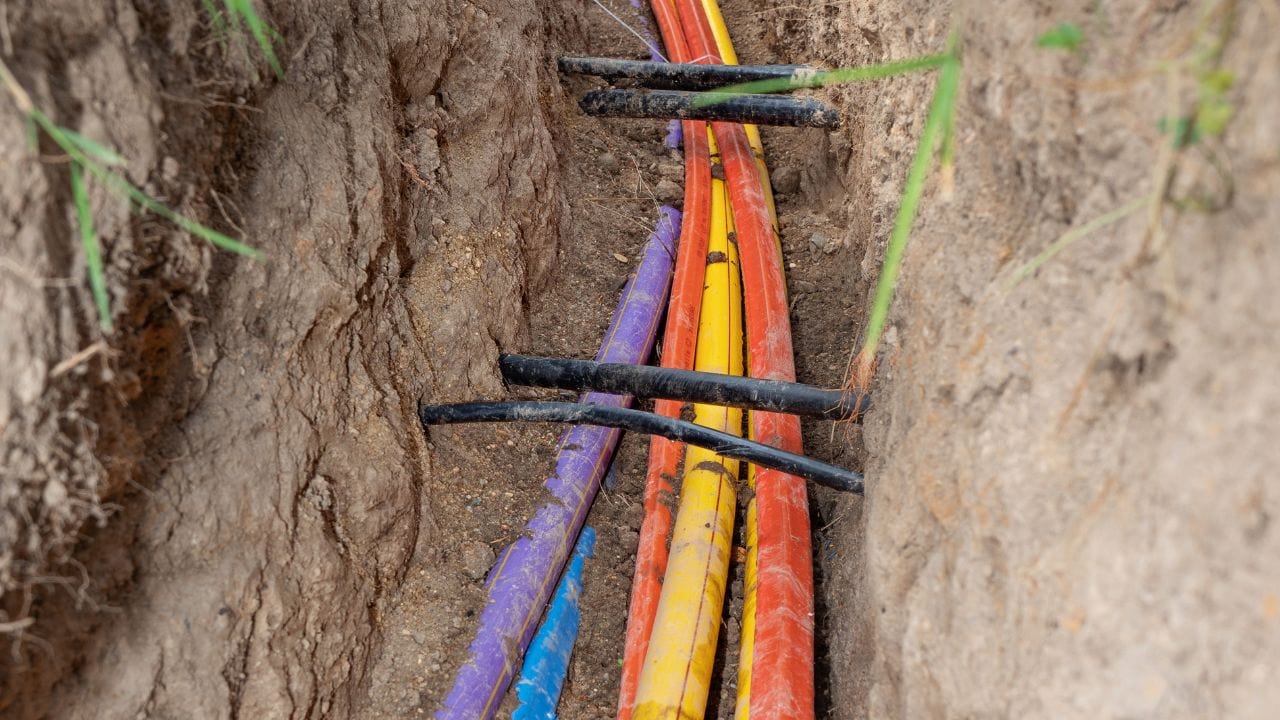
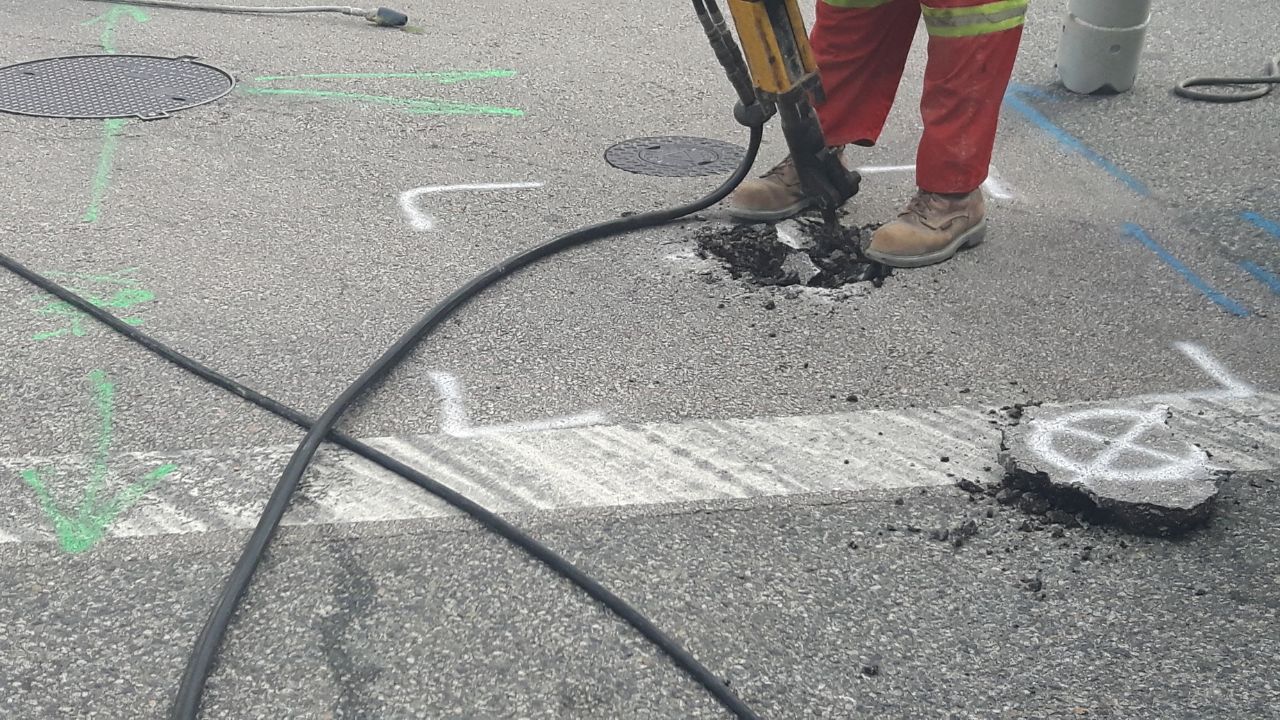
Underground utilities follow a standardized color-coding system that contractors must recognize on every job site. Red marks indicate electric power, cables, and conduits. Yellow identifies gas, oil, and petroleum lines, which account for 40% of damages nationally. Orange marks telecommunications, CATV, and fiber optic lines—the most frequently damaged utilities at roughly 50% of all incidents.

Blue designates water systems, green marks sewer and drain lines, and purple indicates reclaimed water and irrigation infrastructure. Here’s the critical issue: an estimated 60% of U.S. utility lines are private and NOT located by the 811 system. These private lines—including site utilities beyond the meter, private fiber networks, and irrigation systems—require separate private locating services.

Why do older Los Angeles infrastructures complicate mapping accuracy?

Pre-1960s development creates significant challenges for utility mapping. These older areas have less accurate records, more abandoned utilities still in the ground, and undocumented infrastructure changes spanning decades. Downtown Los Angeles and San Diego contain 100+ year-old infrastructure, where original installation records are incomplete or missing entirely.

Modern fiber optic networks now overlay these historic systems, creating shallow and deep utility combinations that complicate detection. Abandoned gas lines, obsolete water mains, and forgotten electrical conduits remain buried alongside active infrastructure, creating false readings and requiring experienced interpretation of locating equipment data.

How do soil conditions and urban congestion affect detection results?

Urban density presents physical obstacles that rural or suburban sites don’t face. Mixed-use commercial and residential zones feature narrow rights-of-way where multiple utilities compete for limited underground space. This congestion makes distinguishing individual lines difficult, especially when utilities run parallel or cross at similar depths.

Limited staging areas, high pedestrian and vehicle traffic, parking restrictions, and confined access points all complicate equipment positioning. Ground Penetrating Radar (GPR) units need clear surface contact and consistent scanning patterns—challenging when working around parked cars, street furniture, and constant foot traffic in busy Los Angeles corridors.


How Do Professional Utility Locating Services Work?

Professional utility locators deploy specialized equipment and trained technicians to map underground infrastructure before excavation begins. These services combine multiple detection technologies with certified expertise to deliver accurate subsurface data that protects projects from costly strikes.

What methods and technologies are used for underground detection?

Professional locators use three primary detection methods, each suited to different utility types and site conditions.

How does Ground Penetrating Radar (GPR) identify non-metallic utilities?

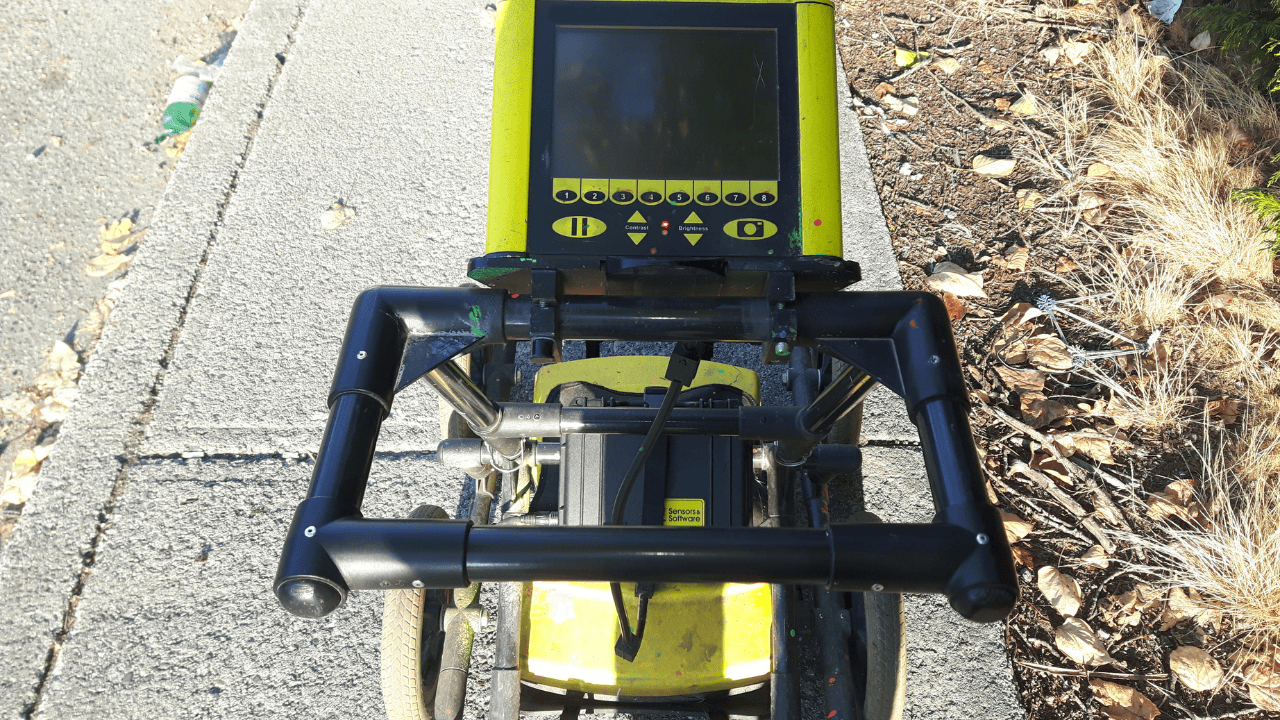
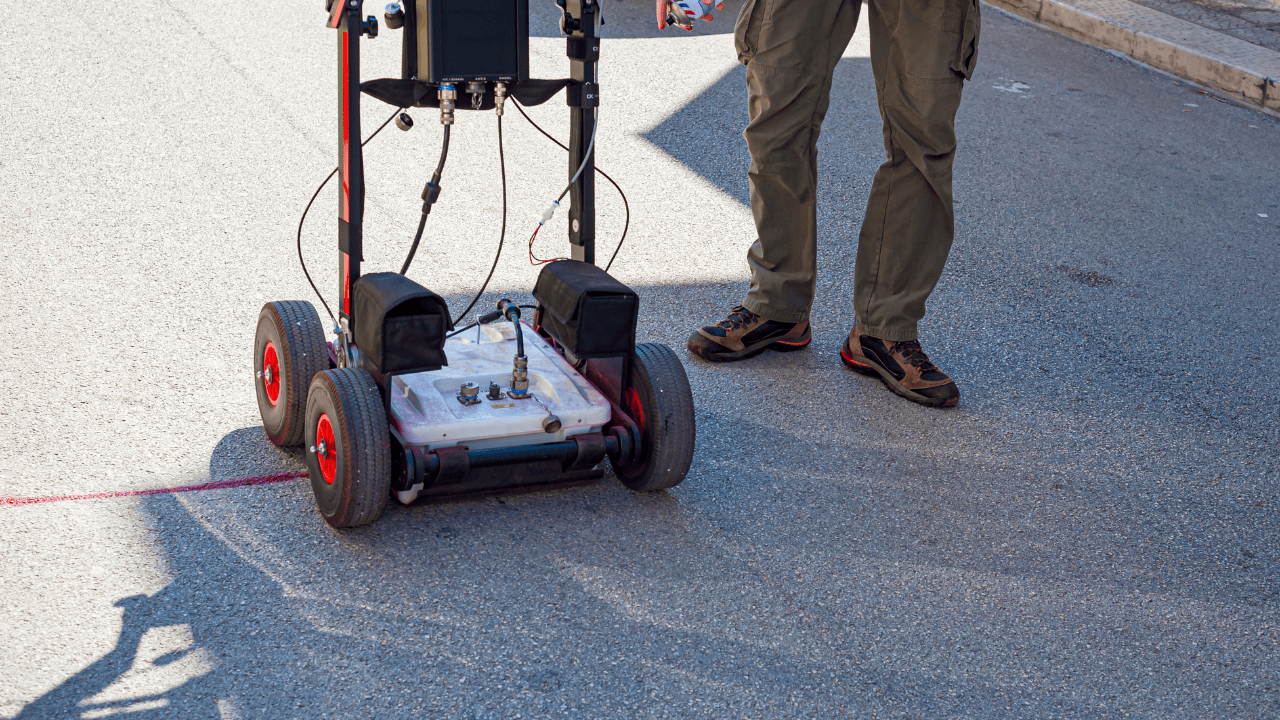
Ground Penetrating Radar sends electromagnetic pulses into the ground and measures reflected signals from buried objects. GPR units, costing $30,000-60,000 per unit, detect both metallic and non-metallic utilities including PVC pipes, concrete structures, and voids that other methods miss. Multiple antenna frequencies allow technicians to adjust detection depth and resolution based on target material and soil conditions.

What does Electromagnetic Induction (EM) detect most accurately?

Electromagnetic locators, costing approximately $5,000 per unit, excel at finding metallic pipes, tracer wire, and active electrical lines. These devices detect electromagnetic fields generated by or induced in conductive materials underground. Industry-standard systems like the Vivax V-loc Pro 3 provide reliable detection of metal utilities that GPR might struggle to identify in certain soil conditions.

When are acoustic or vacuum excavation methods preferred?

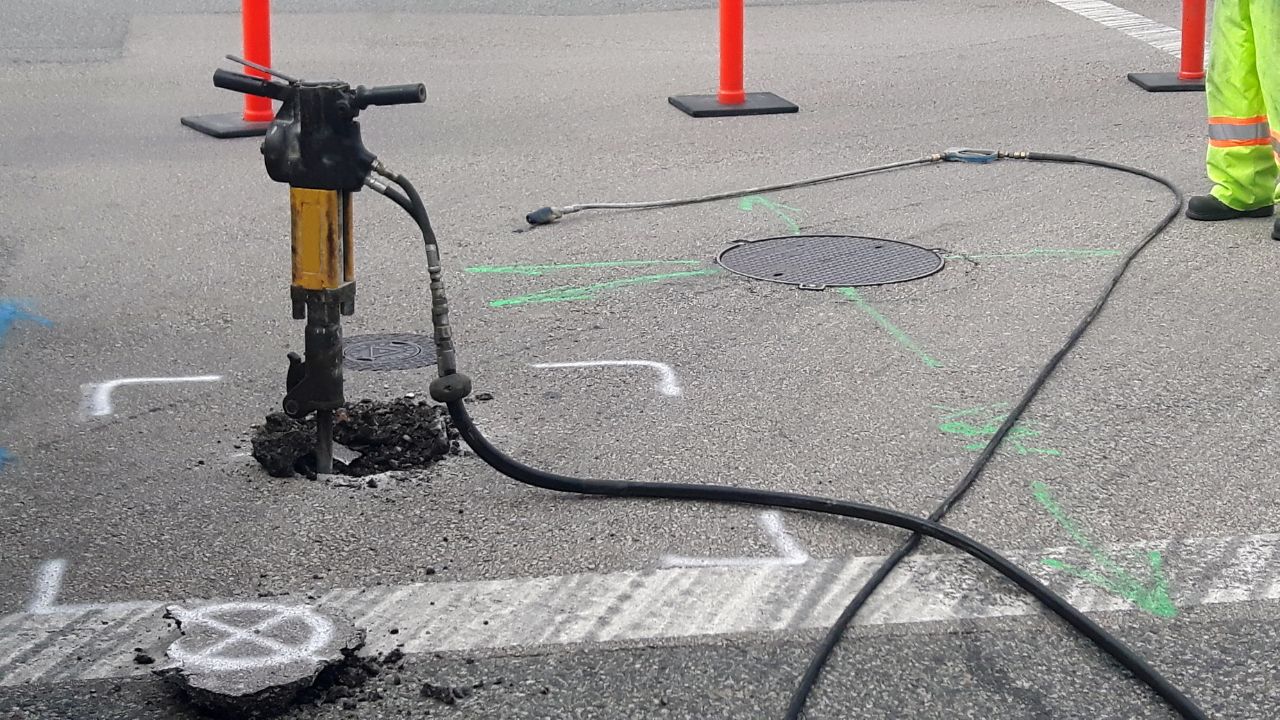
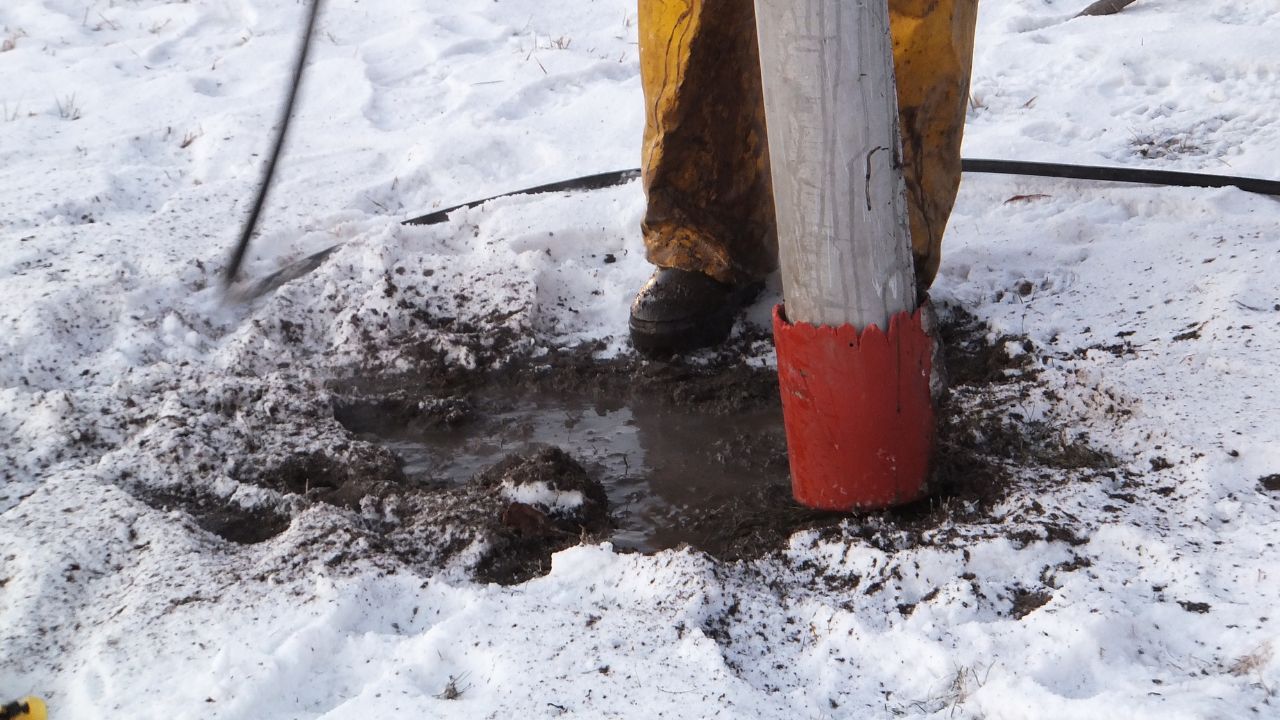
Vacuum excavation physically exposes utilities for verification without the damage risk of mechanical digging. Hydro-excavation proves 10x faster and 4x cheaper than hand digging according to a 2020 PROS Services study. Field trials demonstrate dramatic productivity: hydrovac equipment completed 18 pits per day versus only 4 pits per day with air-vac methods—a 450% productivity increase.

The safety case is equally compelling. CGA 2011 data shows vacuum excavation carries a 0.2% damage rate compared to 53.9% for mechanical excavation and 20.5% for hand tools. When contractors need absolute certainty about utility location, vacuum excavation provides physical confirmation without the strike risk.

How do professional locators interpret and verify subsurface data?

Detection equipment generates raw data that requires expert interpretation. Leading firms like GPRS maintain 99.8%+ accuracy rates backed by financial guarantees—their Green Box Guarantee covers damage costs if their “clear” designation proves wrong.

This accuracy stems from rigorous training standards. SIM-Certified technicians complete 80 hours of classroom instruction plus 320 hours of field training—10 times the industry standard. Professional interpretation of subsurface investigation data separates qualified locators from equipment operators, ensuring contractors receive actionable intelligence rather than ambiguous readings.

What is the difference between public and private utility locating?

The 811 system covers only public utilities, typically to the meter connection point. This leaves a critical gap: 60% of U.S. utility lines are private and not covered by 811 callouts.

Private utilities include customer-owned gas lines beyond the meter, private fiber optic networks, site utilities, irrigation systems, and internal infrastructure on commercial or residential properties. Contractors must hire separate private locating services to map these lines—a step many overlook until an expensive strike occurs. Every Los Angeles project with site utilities requires both 811 coordination and private locating to ensure complete subsurface mapping.


Who Are the Leading Utility Locating Companies in Los Angeles?

Selecting the right utility locating partner directly impacts project safety, timeline, and budget. Los Angeles contractors need providers with proven accuracy, comprehensive technology, and fast response times to avoid the $56,000 average cost of utility strikes.

What qualifies as a “top utility locating company” for contractors?

Top-tier utility locators combine advanced detection technology with certified technicians and documented accuracy rates exceeding 99%. They maintain proper insurance coverage, respond within 24-48 hours, and deliver survey-grade data in multiple digital formats. Most importantly, they stand behind their work with financial guarantees covering damage if their clearances prove incorrect.

What are the hallmarks of a professional locating provider?

Professional locators distinguish themselves through three core capabilities: technology diversity, technician certification, and comprehensive documentation.

Do they offer both EM and GPR detection capabilities?

Full-service providers deploy Ground Penetrating Radar, electromagnetic locators, concrete scanning, 3D laser scanning, and CCTV pipe inspection. Multiple GPR antenna frequencies address different target depths and materials. Electromagnetic locators handle metallic utilities and tracer wire detection that GPR might miss. This technology redundancy catches utilities that single-method approaches overlook.

Are technicians certified under damage-prevention programs?

SIM Certification requires 400 hours total training—80 hours classroom plus 320 hours field experience. NASSCO certification qualifies technicians for CCTV video pipe inspection using 1,000-foot crawlers. OSHA 10/30-hour safety certifications and competent person trenching/excavation credentials demonstrate commitment to worker protection alongside technical expertise.

Do they deliver digital utility maps and data documentation?

Leading providers like GPRS offer GIS-integrated platforms such as SiteMap®, which are provided complimentary with every outdoor location. Deliverables include PDF maps for field use, KMZ files for GPS visualization, and CAD formats for engineering integration. GPS coordinates and survey-grade data collection ensure compatibility with project management systems and as-built requirements.

What companies are most trusted by Los Angeles general contractors?

Trust comes from track records, not marketing claims. Contractors should verify project volume, service coverage, and documented performance before signing contracts.

What industries do they typically serve — construction, engineering, utilities?

GPRS completed 72,000+ projects in 2019 nationwide, with comprehensive service coverage across Los Angeles, Orange, San Diego, Riverside, and San Bernardino counties. AirX Utility Surveyors brings 25+ years of experience since its 1999 founding, marketing itself as “one of California’s first potholing companies.” These firms serve NAICS codes 541370 (Surveying & Mapping Services), 237130 (Power & Communication Line Construction), and 541330 (Engineering Services)—spanning the full spectrum of construction and infrastructure clients.

What do local reviews and case studies reveal about reliability?

GPRS maintains 99.8%+ accuracy across 500,000+ jobs nationwide. Their Green Box Guarantee provides financial backing for their accuracy claims—if GPRS marks a space “clear” for drilling or coring and it’s wrong, GPRS pays for the damage. Response time matters equally: GPRS commits to 24-48 hours from initial contact to having a Project Manager onsite. These measurable performance metrics separate marketing promises from contractual commitments that contractors can enforce.


How Can Contractors Choose the Right Utility Locating Partner?

Choosing a utility locating service provider requires evaluating capabilities beyond price alone. The right provider combines appropriate insurance coverage, proven response times, and technology that matches project complexity—protecting contractors from both utility strikes and liability exposure.

What should you evaluate before hiring a utility locator?

Three critical factors separate qualified professionals from inadequate providers: insurance coverage, service commitments, and verification capabilities.

Do they hold the proper insurance and safety certifications?

Minimum $1M general liability coverage is typical for utility locating services, while SUE and engineering services require $2M+ coverage. Workers compensation for all field personnel is mandatory—verify current certificates before work begins. Certifications like Women-Owned Small Business Enterprise (WOSBE) and Disadvantaged Business Enterprise (DBE) may satisfy contract requirements while indicating established business practices.

Do they provide transparent pricing and service-level agreements?

Established providers commit to 24-48 hour response times from initial contact to onsite mobilization. Same-day emergency response is available at premium rates for time-critical situations. Industry standard for non-emergency private locating runs 1-3 business days. Get these commitments in writing—verbal promises don’t protect project schedules when delays occur.

Do they offer pre-marking verification and follow-up scanning?

QL-B surface geophysics identifies 10-50% more utilities than traditional QL-D or QL-C mapping methods, according to FHWA/Purdue research. Providers offering Green Box Guarantees or similar accuracy verification demonstrate confidence in their work and provide damage coverage if clearances prove wrong. Follow-up scanning and remark services when original marks fade show commitment beyond the initial locate.

How do you compare multiple bids or service proposals?

Budget 0.5-1% of total construction cost for SUE services per FHWA guidance. Compare quality level offerings—QL-A physical verification costs more than QL-B geophysical detection, but high-risk zones justify the investment. Request and review certificates of insurance with limits adequate for your project risk exposure.

Verify response time commitments and technology capabilities match project needs. A low bid from a provider with only electromagnetic equipment won’t help when you need GPR to find PVC lines. Price becomes irrelevant if the locator can’t deliver results when excavation is scheduled to begin.

Should contractors prefer local Los Angeles-based locators over statewide firms?

Local offices—not just dispatch centers—typically provide better service continuity and faster response. Local knowledge of LA-specific coordination requirements with BOE, LADWP, Metro, and Caltrans D7 prevents permit delays and compliance gaps that out-of-area providers might miss.

Statewide firms counter with broader technology capabilities and larger equipment fleets. Networks like GPRS with 300+ Project Managers nationwide provide coverage flexibility when projects span multiple counties or require specialized equipment. The best choice depends on project complexity: simple sites favor local responsiveness, while complex infrastructure projects benefit from extensive resources and proven systems.


How Much Do Utility Locating Services Cost in Los Angeles?

Utility locating costs vary based on site complexity, technology requirements, and service speed. Understanding pricing structures helps contractors budget accurately and compare proposals effectively—while remembering that the $4.62 ROI makes even premium services cost-effective compared to strike prevention.

How do utility locating companies structure their pricing?

Project-based pricing is most common, bundling mobilization, scanning, and reporting into a single quote. This approach provides budget certainty and aligns contractor and locator incentives toward complete detection rather than clock-watching.

Are rates based on time, line length, or total area scanned?

Hourly rates of $100-250/hour apply primarily to hydrovac services, covering equipment and a 2-person crew. Per-acre pricing for SUE QL-B surface geophysics ranges from $2K-10K depending on utility density and site accessibility. Dense urban sites with multiple utilities and limited access command higher rates than open suburban parcels with minimal infrastructure.

How do technology types (GPR vs EM) impact cost?

Equipment cost drives service pricing. Electromagnetic locators running approximately $5,000 per unit cost less to deploy than GPR systems at $30,000-60,000 per unit. More sophisticated technology—GPR, 3D laser scanning, CCTV pipe inspection—commands higher service rates reflecting capital investment and specialized operator training. Sites requiring only metallic utility detection cost less than projects needing comprehensive non-metallic utility mapping.

What’s the average price range for residential vs commercial locating?

Private locating for small sites runs $500-2,000, covering basic EM and GPR scanning of limited areas. SUE QL-B’s typical projects range from $5K-30K, depending on site size and complexity.

Potholing (QL-A physical verification) costs $200-600 per hole for standard 3’×3’×4′ test holes, rising to $500-1,000 for deep excavations or difficult access locations. Comprehensive SUE QL-A programs run $10K-50K+ for targeted approaches at conflict points, scaling to $50K-250K+ for major infrastructure projects requiring extensive physical verification across large sites.

Do emergency or same-day locating services cost more?

Same-day emergency response carries premium rates—typically 50-100% above standard pricing. Standard non-emergency response runs 1-3 business days at regular rates. Established providers like GPRS offer 24-48 hour response as their standard service level, positioning between routine and emergency pricing.

Contractors should weigh emergency premiums against project delay costs. Paying double for same-day service beats absorbing crew downtime, equipment rental, and schedule compression penalties when excavation waits for utility clearance.

What Are the Common Challenges in Urban Utility Locating?

Urban environments present detection obstacles that rural or suburban sites rarely encounter. Dense infrastructure, limited access, and decades of undocumented changes create conditions where even experienced locators struggle to deliver complete subsurface maps.

Why is downtown Los Angeles particularly difficult to map?

Downtown LA contains 100+ year-old infrastructure with shallow and deep utility combinations occupying the same horizontal corridors. Modern fiber optic networks overlay these historic systems, creating signal interference and depth ambiguity that complicates readings.

Narrow rights-of-way provide limited staging areas for equipment positioning. High pedestrian and vehicle traffic requires extensive traffic control that increases costs and restricts scanning windows. Mixed-use commercial, residential, and transit-oriented development density concentrates multiple utility types in confined spaces where distinguishing individual lines becomes challenging.

How do overlapping utilities or abandoned lines affect readings?

Multiple utilities marked at the same location are common in dense corridors where horizontal separation is physically impossible. Abandoned utilities remain physically present—marked with “A” in a circle—generating signals that interfere with active line detection. Conflicting electromagnetic or radar returns occur when utilities run parallel or cross at similar depths.

Dense duct banks and bundled cables complicate individual line identification. A single GPR reflection might represent three separate conduits. Electromagnetic signals from parallel metallic pipes blend together, making it difficult to determine if readings show one large pipe or multiple smaller lines. These conditions require physical verification through test holes to resolve ambiguity.

What can be done to minimize false positives or incomplete detection?

Combine GPR and electromagnetic methods for comprehensive detection—what one technology misses, the other often catches. Verify questionable readings with test holes (QL-A) at critical conflict points rather than making assumptions that prove expensive during excavation.

Review historical records alongside field data for validation. When modern detection contradicts decades-old as-builts, something changed—utilities relocated, abandoned lines left in place, or records were inaccurate from the start. Employ SIM-certified technicians with 400 hours of professional training who can accurately interpret ambiguous readings and recognize when additional verification is necessary.

When should contractors schedule a follow-up scan?

Schedule follow-up scans when original marks fade or disappear—paint wears off, flags get removed, or site traffic obliterates surface markings. California tickets expire 28 days from issuance, requiring new locates even if marks remain visible.

After significant site changes or ground disturbance, re-scan to verify utilities weren’t shifted or damaged during preliminary work. If mark accuracy is questioned or unmarked utilities are discovered during excavation, immediately stop work and request verification scanning. Finding one missed utility suggests others may exist nearby.


Why Investing in Utility Locating Protects Every Los Angeles Project

Utility locating transforms from a regulatory checkbox to a competitive advantage when contractors recognize its dual function: preventing catastrophic strikes while accelerating project delivery. The data proves that subsurface investigation pays for itself multiple times over—making it one of the few construction expenses that consistently reduces total project cost.

What are the key takeaways for contractors and project managers?

SUE delivers consistent 4:1 to 6:1 ROI across multiple independent studies spanning 1999-2021, with individual projects reaching 200:1 returns. The 811 system is necessary but NOT sufficient—60% of U.S. utilities are private and not covered by public locating services. Contractors relying solely on DigAlert leave the majority of subsurface hazards unmapped.

Vacuum excavation demonstrates 10x speed, 4x cost savings, and 100x lower damage rates versus hand digging. These aren’t marginal improvements—they’re order-of-magnitude advantages that fundamentally change project economics. The technology exists, the training standards are established, and the financial case is proven.

How can professional utility locating prevent accidents and fines?

Professional locating prevents a portion of the 192,745 annual utility strikes occurring nationally, according to 2021 CGA DIRT data. It avoids fines up to $50,000 for excavating without valid tickets under CA Government Code 4216.19. Most importantly, it reduces contractor contribution to the $62 billion annual national strike costs, devastating the construction industry.

The 2023 DIRT report reveals excavators face 50-50 odds of NOT being able to start on time due to late utility locates—a 12-state analysis showing half of all projects begin with delays built into the schedule. Professional locating with adequate lead time eliminates this uncertainty, converting utility coordination from a schedule risk into a managed process.

What’s the next step for Los Angeles contractors seeking reliable service providers?

Establish relationships with 2-3 private utility locators before emergencies force rushed decisions. Budget 1% of project costs for SUE and private locating in all upcoming bids—the 4:1 ROI means this investment reduces net project cost rather than adding expense.

Train project managers and superintendents on ASCE 38-22 quality levels and CA Government Code 4216 compliance requirements. Implement vacuum excavation protocols as the preferred method for potholing and tolerance zone verification. These systematic changes separate contractors who treat utility locating as paperwork from those who leverage it for competitive advantage through faster, safer, more profitable project delivery.


Ready to Protect Your Next Los Angeles Project from Costly Utility Strikes?

Every day of delay costs money. Every utility strike threatens schedules, budgets, and safety. The contractors who succeed in Los Angeles’s competitive construction market are those who eliminate subsurface uncertainty before breaking ground—not those who gamble with inadequate locating and hope for the best. Util-Locate brings over 20 years of California utility locating experience to Los Angeles, Orange County, San Diego, and Riverside projects, delivering the ASCE 38-22 quality levels (QL-A and QL-B) that protect your project from the $56,000 average strike cost and 2-3 months of downtime.

Don’t wait until you’re facing fines, delays, or damage claims. Contact Util-Locate today for a project consultation and discover how their comprehensive detection capabilities—Ground Penetrating Radar, electromagnetic locating, and vacuum excavation—can deliver the 4:1 ROI that transforms subsurface investigation from an expense into your most profitable project investment. Your schedule, budget, and reputation depend on knowing what’s underground before your equipment hits the ground.


FAQs

Can private utility locators find non-metallic or fiber-optic lines?

Yes. Ground Penetrating Radar detects non-metallic utilities, including PVC pipes, concrete structures, fiber optic cables, and underground voids that electromagnetic methods miss entirely. This capability is critical because 60% of U.S. utility lines are private and NOT located by the 811 system.

Private locators are required for fiber optic detection, site utilities, and customer-owned infrastructure beyond meters. The 811 system marks only public utilities to the connection point—everything beyond that meter requires private locating services to map safely.

How far in advance should you call before excavation starts?

California law requires a minimum of 2 working days’ notice, NOT including the date of notification. However, experienced contractors allow 7-10 working days for complex projects involving multiple utilities or agency coordination to ensure all responses arrive before excavation begins.

Tickets remain valid for 28 days from issuance. Federal and State holidays don’t count as working days—plan accordingly around holiday weeks to avoid expired tickets and mandatory work stoppages during critical schedule windows.

What’s the difference between public and private utility mapping services?

The 811/DigAlert system covers public utilities only to the meter as a free service with 2-day response requirements. Private locators map all utilities, including private lines, charging $500-$30K depending on project scope and complexity.

Private services deliver in-depth information, GPS coordinates, and survey-grade accuracy that 811 marking doesn’t provide. Private mapping includes site utilities, irrigation systems, private fiber networks, and landscape lighting—infrastructure that the 811 system never locates regardless of how many tickets you submit.

Are there any free locating options available to Los Angeles homeowners?

DigAlert 811 provides free public utility locating to the meter connection point. Call 811 or 1-800-422-4133 for 24/7 service, including holidays, or submit requests online at DigAlert.org or through the DigAlert Direct web app.

Coverage includes Imperial, Inyo, Los Angeles, Orange, San Bernardino, San Diego, Santa Barbara, Riverside, and Ventura Counties. Homeowners still need private locators for site utilities, irrigation lines, and infrastructure beyond the meter—these private lines aren’t covered by the free 811 service.

How often should contractors re-scan during long-term projects?

Re-scan every 28 days when 811 tickets expire—California law mandates renewal with a 2-day work stoppage, no exceptions. Re-scan when marks fade due to weather, traffic wear, or time elapsed, and after significant ground disturbance in work areas.

Re-scan when questioned accuracy occurs or unmarked utilities are discovered during excavation. Before each new excavation phase in different site areas, verify utilities rather than assuming prior scans cover the entire property. Long-term projects spanning multiple months may require 5-10 separate locate cycles to maintain continuous compliance and accurate subsurface data.


Contractor Liability and Utility Damage: Who Pays When Things Go Wrong?

utility damage

Key Takeaways

  • Contractor liability for utility damage depends on the contract and insurance coverage.
  • Underground utility locating services prevent costly strikes and delays on construction sites.
  • General liability insurance typically covers utility damage, but contractors should verify their coverage.
  • Clear contract interpretation and legal advice can help contractors avoid construction disputes over utility damage.
  • Using professional utility locating services ensures compliance with state requirements and reduces performance delays.

In construction, one of the most critical aspects to consider is liability. When things go wrong, especially concerning utility damage, determining who is responsible can be a complicated process. Whether you’re a general contractor or an independent contractor, understanding your responsibilities and insurance requirements is crucial. 

Utility strikes, such as damage to water pipes or gas lines, can result in significant delays, expensive repairs, and legal consequences. 

This article breaks down contractor liability in the event of utility damage and why having the right coverage and reliable underground utility locating services is essential for protecting both your business and your clients.

What is Contractor Liability?

Contractor liability refers to the responsibility a contractor holds when something goes wrong on a construction project. Whether it’s due to faulty workmanship, construction defects, or property damage, contractors are legally responsible for the work they do. This includes the risk of damage to utilities such as power lines, water pipes, or gas lines.

General contractors, as well as specialized contractors, must have general liability insurance and professional liability policies in place to cover potential risks. These insurance policies protect contractors from financial loss if their work leads to property damage or personal injury. However, having the right coverage is just one part of the equation. It’s also important to understand how utility locating services play a role in preventing costly accidents.

Why Utility Strikes Happen and Who Pays for Them?

Utility strikes are a common issue on construction sites, often resulting in water damage, power outages, or even dangerous gas leaks. These strikes typically happen when underground utilities, such as water pipes or gas lines, are unintentionally damaged during excavation or digging. The responsibility for paying for these damages depends on several factors, including contract terms, the nature of the damage, and the contractor’s liability insurance.

If a contractor or subcontractor hits a utility line, they could be held liable for the damage, especially if they did not take proper precautions. In these cases, the insurance coverage a contractor carries is crucial. General liability insurance often covers property damage, but this varies based on the insurance company and the specific insurance policy number.

The Role of Underground Utility Locating Services

One of the most effective ways to prevent utility strikes is to utilize private underground utility locating services. These services help contractors pinpoint the exact location of underground utilities, such as gas lines, water mains, and fiber optic cables, before digging begins. Fast and accurate locating of utilities can significantly reduce the risk of accidental damage and protect your business from costly repairs and legal disputes.

In addition, using professional utility locating services ensures that contractors comply with local state requirements. It also provides peace of mind, knowing that you have taken the necessary steps to avoid strikes that could lead to property damage or personal injury claims.

How Insurance Plays a Role in Utility Damage

When utility damage occurs, the contractor’s insurance coverage can be a lifesaver. General liability insurance typically covers property damage, including damage to underground utilities, but it’s important to read the fine print. Contractors should verify that their insurance policy includes protection for utility strikes.

In cases of significant damage, the insurance carrier may be required to cover the costs of repairs, legal fees, and potential compensation claims. However, if the damage is found to be the result of negligence, the contractor’s employer’s liability or workers’ compensation insurance may come into play.

In addition to general liability, contractors working in certain industries—such as HVAC contractors or roofing crews—may need additional coverage like commercial auto insurance, product liability, or environmental liability insurance. These policies ensure contractors are fully covered for any liability, from defective materials to construction disputes.

Contractor Responsibility and Legal Counsel

Contractors must be aware of the liability clauses in their contracts, which outline their responsibilities in case of utility damage. Clear contract interpretation can prevent misunderstandings and help avoid disputes over who pays for damages. Legal advice is often needed to navigate construction defects, defective materials, and faulty workmanship coverage, ensuring the contractor’s interests are protected.

When utility strikes occur, contractors should immediately consult with an insurance professional to understand their coverage options. Whether you need general liability, workers’ compensation, or commercial insurance, it’s crucial to know what your insurance policy covers before facing utility-related claims.

How Utility Locating Services Help Reduce Liability Risks

Utilizing underground utility locating services is a proactive approach that not only prevents damage but also mitigates liability risks. With services like ground-penetrating radar (GPR) and 3D modeling, contractors can map out the location of utilities accurately. This level of precision helps avoid costly strikes and ensures that your business remains compliant with insurance requirements and local regulations.

In Arizona, utility locating services are essential for reducing performance delays, environmental liabilities, and water damage that can arise from utility strikes. These services help keep the construction process on track, saving both time and money while reducing the chances of construction disputes and legal complications.

Who is Responsible for Utility Damage?

Determining responsibility for utility damage on construction sites depends on the terms of the contract and the specific circumstances. Typically, the contractor or subcontractor performing the work is responsible for any damages caused by their actions, unless they can prove that they took all reasonable precautions, such as hiring a professional utility locating service in Phoenix, AZ.

If the damage is the result of faulty materials or design errors, responsibility may fall on the manufacturer, designer, or architect. In these cases, contractors may seek compensation through their general liability insurance or a claim against the responsible party’s insurance.

Protect Your Construction Business with Expert Utility Locating Services

Accidents involving utility damage can lead to significant financial consequences, property damage, and legal issues. As a contractor, ensuring you have the right insurance coverage and taking proactive steps, such as utilizing private utility locating services, is crucial to protecting your business.

Reach out now to make your next project safer! Call us at (714) 492-1380 if you are in California  or (480) 535-0230 if you are in Arizona for more information or to schedule a consultation! We offer top-tier private underground utility locating services to help you avoid utility strikes and minimize liability. Let us assist you with precise utility mapping and underground locating services that ensure a safe, efficient, and legally compliant construction site.

811 Is Not Enough: Why Contractors Still Need Private Utility Locators

hitting an underground utility line

Key Takeaways

  • The 811 system primarily covers public utilities, leaving private utilities like communication cables and private water lines at risk of damage during excavation.
  • Private utility locators offer advanced technology, such as ground-penetrating radar and electromagnetic sensors, to accurately locate both public and private utilities.
  • Utility mapping services provide detailed site plans with clear utility marks, helping contractors avoid underground infrastructure damage and costly delays.
  • Relying solely on the 811 system can lead to missed private utility easements and infrastructure changes, increasing the risk of accidents.
  • Hiring private utility locating services ensures accurate utility identification, preventing disputes and legal issues related to private underground utility systems.

Every contractor knows that hitting an underground utility line during construction can lead to serious consequences. From costly repairs to safety hazards, utility strikes are a major concern on any construction site. Although the 811 system provides an essential service for locating public utilities, it is not enough. Contractors need the additional support of private utility locating services to ensure their projects stay on track. Let’s dive into why relying on just the 811 system isn’t sufficient, and why private underground utility locating services are a must for modern construction projects.

The Gaps in the 811 System

The 811 system is an excellent starting point for locating public utilities. It helps contractors identify utility lines such as gas lines, sewer lines, and electric lines that are managed by public entities. However, it does not cover private utilities, which are often just as crucial to avoid hitting during excavation. Private utilities, including communication cables, fiber optics, and private water lines, are typically not part of the 811 database. This leaves contractors at risk of damaging underground infrastructure that is vital to the project’s success.

The Need for Fast and Accurate Locating

The key to avoiding utility strikes lies in fast and accurate locating. Utility mapping is a critical tool in construction, ensuring contractors know precisely where underground utilities are before excavation begins. Using advanced locating technology, such as ground-penetrating radar and electromagnetic locators, private utility locators can offer a level of detail that the 811 system simply cannot provide. These private locating firms specialize in pinpointing both metallic and non-metallic utilities that are often missed by the 811 system.

The Role of Private Utility Locators

Private utility locators offer a more comprehensive approach to underground utility locating. These companies use sophisticated methods, such as electromagnetic induction and acoustic detection, to locate utility lines accurately. Their services go beyond what the 811 system can offer by focusing on private utility lines, which are crucial for projects in urban areas. With private underground utility locating services, contractors can ensure that even the most obscure utilities are identified before they cause a problem.

By using electromagnetic sensors and advanced locating technology, private utility locators create detailed site plans that provide clear utility marks for contractors. These marks indicate where utilities are buried, preventing strikes during excavation and allowing contractors to proceed with confidence. Whether you’re working with gas lines, water pipes, or communication cables, private locating services ensure you won’t overlook any vital underground infrastructure.

Why Public Utility Locating Is Not Enough

Public utility lines like gas lines, electric lines, and sewer lines are often marked by the 811 system, but this does not guarantee complete protection. Public utilities are just one part of the puzzle. Private utilities, such as private water lines, fiber optics, and communication cables, are often overlooked, putting your construction project at risk. Moreover, many public utility lines run alongside private utility systems, making it even more important to utilize private locating services to avoid costly mistakes.

The 811 system can miss key details, such as private utility easements or utility systems installed after the last update. Additionally, the public utility locators may not have the latest data on infrastructure changes, leaving gaps in the locating process. To avoid these gaps, contractors need to hire private locating companies to ensure comprehensive coverage of both public and private utilities.

Benefits of Utility Mapping for Contractors

Utility mapping is more than just identifying underground utilities. It’s a crucial step that provides a blueprint for safe excavation. Utility maps created by private utility locators include detailed data on both private and public utilities. These maps help contractors plan their excavation routes carefully, minimizing the risk of hitting utilities.

Moreover, private utility locating services offer the latest in technology, such as utility mapping software, to give contractors the best possible representation of underground systems. With electromagnetic locators, vacuum excavation equipment, and cable locator equipment, contractors can perform safe digs and avoid damaging underground utilities.

How Private Utility Locating Services Help in Construction Projects

Construction projects often involve complex site plans, and private utility locating services play a pivotal role in making these projects safer and more efficient. They provide contractors with the tools and expertise needed to understand underground utility systems, reducing the likelihood of unexpected delays and accidents. Whether it’s through electromagnetic underground utility locating or advanced location mapping, these services ensure that every aspect of your site plan is covered.

In addition to preventing utility damage, private utility locators also assist with legal matters related to utility easements. By accurately identifying the location of private utility lines, contractors can avoid violating any rights or causing disputes with property owners. This helps streamline the construction process, preventing unnecessary legal hurdles.

The Advantages of Hiring a Private Utility Locator

In Arizona, hiring a private utility locator offers numerous advantages for contractors. Firstly, these professionals have specialized knowledge and access to the best technology for utility locating, ensuring the job is done right. Secondly, private utility locators can identify utilities that are not marked on public utility maps, preventing damage to previously uncharted infrastructure.

Furthermore, private utility locators have the expertise to handle complex underground infrastructure systems, ensuring that contractors have access to reliable, accurate data. With a private locating company, contractors are equipped with detailed utility marks and a clear understanding of the underground systems in play.

Secure Your Next Project with Expert Utility Locators

The 811 system is an essential tool for contractors, but it’s not enough to protect your construction project. To ensure safety, efficiency, and accuracy, you need private utility locating services in Phoenix, AZ. These services provide the expertise and advanced technology necessary to locate both public and private utilities, reducing the risk of utility strikes and costly delays.

Don’t leave your construction project vulnerable to utility strikes. Reach out to us today for expert utility locating services that cover every aspect of your site. We specialize in underground utility locating, from gas lines to fiber optics, ensuring your project runs smoothly. Get in touch now for a detailed utility map and secure your next project from potential damage.

For precise utility locating and mapping services, call us at California (714) 492-1380 or Arizona (480) 535-0230. Let us help you avoid utility strikes and keep your project on track!

Why Smart Contractors Always Locate Utilities Before Breaking Ground

utility location before breaking ground

Key Takeaways

  • Locating underground utilities before excavation prevents safety hazards like explosions, electrocution, and environmental damage.
  • Using professional utility locating services, such as Ground Penetrating Radar, ensures accurate detection of gas lines, sewer systems, and electrical cables.
  • Proper utility location services reduce project delays and costly repairs, improving overall efficiency and saving money.
  • Utilizing advanced technology for utility mapping helps contractors plan excavation paths and avoid damaging vital infrastructure.
  • Contractors who use utility locating services enhance safety on-site, protect workers, and build a more reliable reputation with clients.

When it comes to construction, one of the most crucial steps often overlooked is the location of underground utilities. These essential infrastructures—such as gas lines, sewer systems, and water pipes—are buried beneath the surface, making it easy to miss their presence. Contractors who neglect to locate utilities before starting their projects are setting themselves up for potential hazards and costly setbacks.

In this article, we’ll explore why smart contractors always prioritize utility location before breaking ground and how utilizing professional utility locating services helps prevent unexpected disruptions, delays, and safety risks.

The Risks of Ignoring Utility Location

Before breaking ground on any construction site, whether it’s a simple landscaping project or a large excavation, contractors must be aware of the underground infrastructure that lies hidden beneath. Underground utilities, such as gas lines, water mains, and power lines, can pose serious safety risks when disturbed. Striking a utility line can result in everything from utility outages to explosions and environmental damage.

Without the right tools and services, contractors are left in the dark when it comes to accurately identifying the location of these essential systems. That’s why a private utility locating service is critical to ensuring a safe work environment. The last thing any contractor wants is to unintentionally damage a private underground line or fiber optic cable, leading to delays or expensive repairs.

The Importance of Utility Locating Services

Professional utility locating services are designed to prevent accidents and costly damages. These services use a combination of advanced technology and expert knowledge to pinpoint the exact location of underground utilities before any digging begins. Tools like Ground Penetrating Radar (GPR), 3D modeling, and GPS mapping provide contractors with accurate, real-time data on where to dig safely.

For example, Phoenix utility locating services utilize ground-penetrating radar to detect various types of underground utilities such as gas pipes, water lines, and sewer systems. Contractors in Arizona and beyond can avoid damaging power lines, fiber optics, and communication lines by hiring a utility locating service in Arizona. These services offer a level of accuracy that would be impossible with manual digging or basic visual inspection.

How Utility Locating Services Protect Safety

Utility locating goes beyond preventing delays and saving money—it also plays a significant role in safety hazard prevention. Excavation can be a risky business, especially when utilities like high-voltage electric lines or gas lines are involved. A contractor’s ability to locate utilities accurately helps reduce the potential for dangerous accidents, such as electrocution or gas leaks.

When contractors employ private underground utility locating services, they’re not just protecting the project—they’re safeguarding workers and local communities. Utility locators often mark the location of utilities with white paint or other identifiable utility markings so that excavators know exactly where to avoid. This simple step helps reduce the likelihood of accidental damage and keeps construction projects on track.

Types of Utilities Contractors Need to Locate

1. Gas Lines

Natural gas lines are among the most hazardous utilities. A single strike could cause devastating explosions. Contractors need to pinpoint their locations precisely to avoid such risks.

2. Sewer Lines and Water Mains

Damaging water mains can result in sewage leaks or water disruptions. Using utility locating services allows contractors to prevent contamination and water loss during their projects.

3. Power Lines and Electrical Cables

Striking power lines can result in electrocution or fires. With utility location services, contractors can locate and avoid power lines with accuracy.

4. Fiber Optic Cables

Damage to fiber optics can interrupt communication networks. It’s essential to locate these cables before beginning excavation to ensure service reliability.

5. Septic Systems and Irrigation Lines

In rural or agricultural areas, septic systems and irrigation lines are often present underground. Locating these systems helps prevent disruption in water supply or waste management.

How Professional Utility Locating Services Benefit Contractors

1. Reduced Project Delays

Using underground utility locating services prevents interruptions by ensuring contractors can avoid accidental strikes. With accurate maps and data, work can proceed smoothly without delays caused by unanticipated utility hits.

2. Cost Savings

The cost of repairing a damaged utility line can be astronomical. By using a private utility locating service, contractors can avoid these expenses, leading to significant savings in the long run.

3. Increased Safety

Accurate utility detection ensures that the risk of accidents—like hitting gas lines or high-voltage electrical cables—is minimized. This makes for a safer work environment for everyone involved.

4. Enhanced Reputation

Contractors who consistently use utility locating services are seen as more professional, thorough, and reliable. This reputation can translate to repeat business and referrals from satisfied clients.

The Technology Behind Utility Location

Advancements in technology have made utility locating more efficient than ever. Ground Penetrating Radar (GPR) is a non-invasive method that sends electromagnetic pulses into the ground, detecting the depth and location of buried utilities. These readings are then mapped out for contractors to follow, ensuring they stay on course.

Other technologies, like 3D modeling and live dig radar, allow contractors to visualize underground infrastructure before breaking ground. These technologies make the job easier, faster, and more accurate, providing peace of mind for contractors and their clients.

Why Contractors Choose Util-Locate

Util-Locate offers private underground utility locating services in Phoenix, AZ that cover a broad range of underground utilities, including water pipes, gas lines, sewer systems, and more. Our team uses the latest technology, like ground-penetrating radar and 3D modeling, to deliver accurate, real-time data to contractors.

Whether you’re working on a large-scale construction or a small landscaping project in Arizona, utility locating services from Util-Locate provide the safety, accuracy, and efficiency needed to avoid costly mistakes. We offer utility mapping that ensures all utility lines are identified, marked, and avoided, minimizing risk and improving project timelines.

Ready to Keep Your Project Safe and On Track?

At Util-Locate, we understand that accurate utility location is crucial to the success of your project. We are here to help you avoid the safety hazards and costly delays caused by unnoticed underground utilities. Our team of utility locators is ready to assist you with private utility locating services in California and Arizona.

Contact us today for professional utility locating services in California and Arizona. Let us help you break ground with confidence!

The Top 10 Utility Strikes That Could Have Been Prevented

utility strikes can be prevented

Key Takeaways

  • Gas line strikes can lead to dangerous explosions or fires, but accurate utility locating services can prevent such accidents.
  • Sewer line strikes can cause environmental damage, and mapping them before excavation can help avoid costly cleanup.
  • Water main strikes can lead to flooding and delays, but utilizing technologies like 3D modeling and GPS tracking ensures they remain undamaged.
  • Fiber optic cable strikes disrupt communication services, and using CCTV and 3D photogrammetry helps locate these cables accurately.
  • Private underground lines are often overlooked, but hiring private locators helps avoid accidental damage and costly repairs.                  

Utility strikes are a significant safety concern in construction, often leading to costly delays, safety hazards, and environmental damage. These strikes occur when underground utilities like gas lines, water pipes, or electrical lines are unintentionally damaged during excavation or digging. Utility strikes can cause injuries, property damage, and expensive repair costs. Fortunately, many utility strikes can be prevented with proper planning, advanced technology, and the use of professional utility locating services. In this article, we will explore the top 10 utility strikes that could have been avoided and emphasize the importance of using utility locating services to minimize these risks.

10 Underground Utility Damage To Avoid

Utility strikes pose serious risks—they’re expensive, hazardous, and largely avoidable. Below are the ten most common underground utilities that can be prevented by hiring professional utility locators.

1. Gas Line Strikes

Gas line strikes are among the most dangerous utility accidents. Natural gas is highly flammable, and any damage to gas lines can lead to explosions or fires. Accurately locating and marking the exact position of gas lines can help contractors avoid accidents. A private underground utility locating service, equipped with specialized tools like ground penetrating radar, can assist in identifying gas lines deep underground, ensuring safety on the job site. 

In addition, these services can offer real-time data during excavation, allowing contractors to make immediate adjustments if they get too close to the identified gas lines. This proactive approach significantly reduces the likelihood of accidental damage and enhances overall site safety.            

2. Sewer Line Strikes

Sewer lines, often neglected, run beneath many construction sites and pose a risk when disturbed. Damaging a sewer line can lead to raw sewage leaks, environmental contamination, and costly cleanup. By using underground utility locating services, contractors can map sewer lines and prevent strikes that could disrupt both the project and local water systems.

3. Water Main Strikes

Water mains are critical for supplying clean water to homes and businesses. Striking a water main can cause substantial water loss and significant project delays. Utility mapping technologies like 3D modeling, GPS tracking, and live dig radar can pinpoint the exact location of water mains, allowing contractors to avoid damaging them during excavation. In addition, these technologies provide detailed, accurate maps of underground infrastructure, which help contractors plan their excavation paths more effectively. Early detection and precise location of water mains reduce the risk of unexpected delays and the potential costs of repairing water supply systems.

4. Power Line Strikes

Electricity is a dangerous utility to strike, as it can lead to electrocution or fires. Underground power lines are common in urban construction sites, making it essential to locate and mark them beforehand. Professional utility locating services, using advanced techniques like 3D laser scanning, can accurately map the location of these lines, preventing costly accidents.

5. Fiber Optic Cable Strikes

Fiber optic cables are crucial for the communication infrastructure. A fiber optic cable strike can lead to communication breakdowns, affecting local networks. Using advanced utility locating services, such as CCTV video cameras and 3D photogrammetry, can help detect the precise location of fiber optic cables and ensure they remain undamaged during excavation. 

These methods not only pinpoint the exact position of the cables but also provide visual documentation that can be referenced throughout the project. Properly locating these cables before digging helps prevent costly disruptions to essential communication services and ensures the integrity of local networks.

6. Water Pipe Strikes

Water pipes are essential for maintaining clean water distribution. Striking a water pipe can cause flooding and significant construction delays. Accurate utility location is critical to avoid damage to these pipes. Using technologies like GPS units, ground-penetrating radar (GPR), and utility maps can prevent these strikes, saving both time and resources.

7. Irrigation System Strikes

Irrigation systems, particularly in agricultural and landscaping projects, can be vulnerable to damage. Striking an irrigation line can disrupt water flow, causing delays and damage to the surrounding landscape. Private underground utility locating services can map the location of irrigation lines and help prevent these disruptions.

8. Communication Line Strikes

Communication lines are essential for telecommunications, and any damage to them can cause disruptions. These lines are often buried underground, which makes locating them critical to avoiding service interruptions. Utilizing services such as 3D modeling, digital twins, and laser scans can identify communication lines and ensure a smooth construction process.

9. Septic System Strikes

Septic systems contain vital waste management infrastructure. Damage to septic systems can result in costly repairs and environmental contamination. Advanced utility locating services  using methods like GPRS Reality Capture can help contractors avoid damaging septic systems by providing an accurate mapping of their location.

10. Private Underground Lines Strikes

Private lines, such as those for electricity, water, or gas, are often not marked by utility providers. These private lines are frequently overlooked, increasing the risk of accidental damage. If you are in Arizona, by hiring private locators in Phoenix, contractors can ensure these private underground lines are accurately located, reducing the chances of utility strikes and their associated costs.

Prevent Utility Strikes with Expert Locating Services

Utility strikes are preventable with careful planning, proper utility location, and the right tools. Whether it’s gas lines, sewer pipes, or fiber optic cables, using professional utility locating services in California and Arizona can make a significant difference in avoiding accidents and costly repairs. Utility mapping services, such as ground-penetrating radar (GPR), live dig radar, and 3D modeling, ensure that underground utilities are located and accurately mapped before excavation begins.

Before you start your next construction project, make sure to contact us. We offer top-tier private utility locating services to help you avoid utility strikes and keep your worksite safe. Our team in California (714) 492-1380 and Arizona (480) 535-0230 is ready to assist you with precise utility mapping and locating services. Reach out today to make your next project safer, more efficient, and free from utility damage!

Ditch the Guesswork: Leveraging Utility Mapping Data in Site Planning

how utility mapping data can enhance site planning

Key Takeaways

  • Using underground utility locating services ensures fast and accurate identification of critical infrastructure, reducing the risk of utility strikes.
  • Utility mapping technologies like LiDAR, satellite imagery, and remote sensing provide detailed, real-time data for effective site planning.
  • Integrating geospatial data into site selection helps optimize infrastructure management and reduce costly construction delays.
  • Incorporating predictive analytics and AI-driven insights aids in anticipating potential issues and streamlining the development process.
  • Accurate utility mapping is key for future-proofing infrastructure and supporting economic development and community engagement.

Planning a construction site or selecting a location for a retail store requires precision. When it comes to underground utilities, errors in judgment can lead to costly accidents and delays. Fortunately, advances in technology have made it easier than ever to map out the critical underground infrastructure that lies beneath the surface. 

By utilizing underground utility locating services, businesses can mitigate risks associated with utility strikes and ensure a smoother, more efficient planning process. This article will explore how utility mapping data can enhance site planning and streamline the decision-making process.

Why Utility Mapping Is Crucial for Site Planning

Effective site planning requires the integration of multiple data sets, such as geospatial data and infrastructure maps, to ensure accuracy. One crucial piece of this puzzle is understanding where the underground utilities are located. These include fiber-optic cables, water lines, gas pipes, and electrical wiring, all of which are vital for any construction or development project. When these utilities aren’t accurately identified and mapped, the risk of damage increases. This can lead to disruptions, delays, and unforeseen costs that could have been avoided with private underground utility locating services.

The Role of Private Utility Locating Services

Using a private utility locating service offers fast and accurate locating of underground utilities, ensuring that construction projects avoid costly utility strikes. These services leverage advanced technologies, including satellite imagery, LiDAR data, and remote sensing, to pinpoint the exact location of critical infrastructure. 

Utility locating services provide precise and real-time data, allowing for accurate asset identification and asset tracking throughout the project. By having access to this essential data, construction teams can adjust their excavation plans to avoid damaging underground systems, thus reducing the likelihood of delays and safety hazards.

The Power of Geospatial Data in Site Planning

Integrating geospatial data into site selection and property development allows for more informed decisions. Utility mapping provides a detailed overview of underground infrastructure, making it easier to navigate and plan for future developments. 

With spatial records and real-time data, planners can visualize underground assets and anticipate any challenges that may arise. By using location intelligence software and AI-driven analytics, planners can optimize their site selection analysis and make decisions based on accurate, up-to-date information.

Incorporating these tools ensures that the site development process is streamlined and reduces the need for reactive maintenance. Additionally, it helps in infrastructure management by offering detailed records of all underground utilities, which are crucial for asset management over time.

How Utility Mapping Improves Customer Experience

For retail businesses, proper site selection analysis can significantly impact foot traffic and overall customer experience. Utility mapping can help identify locations with the best infrastructure, ensuring a smooth customer experience from the moment they step onto the site. It can also help identify locations that align with a company’s market entry strategy, offering real estate data, retail expansion planning software, and a foot traffic analytics platform to assist businesses in making informed decisions. Knowing where utilities are located ensures that store openings are smooth and free of construction-related delays.

By incorporating accurate infrastructure maps into planning, businesses can also assess the economic development potential of a location. Whether it’s for retail store development or community engagement, proper utility mapping provides a clearer picture of what to expect in terms of construction timelines and costs.

Utility Mapping for Future-Proof Infrastructure

Planning for the future is essential, especially in areas that may see future developments. Whether it’s for broadband infrastructure or fiber network installation, accurate utility data helps guide expansion plans. By mapping utilities, planners can identify areas that may need updates or improvements in the future, ensuring that new systems, such as broadband deployment, are integrated smoothly into the existing infrastructure. Reality capture and deep learning models can assist in mapping infrastructure that needs upgrading, making future upgrades easier and more cost-effective.

Additionally, understanding land boundaries and land-use data is crucial for city planning and site selection. With precise utility maps, planners can ensure that infrastructure development fits within the land’s designated use, saving time and money during the development phase.

Integrating Technology for Better Planning

The combination of satellite imagery, street view imagery, and LiDAR data makes utility mapping even more efficient. By using advanced reality capture techniques and Blyncsy analytics, teams can collect high-quality field data that can be processed and used to plan the layout of a project. Whether the goal is pavement management or asset inventory, leveraging these technologies helps ensure that the infrastructure is mapped with the highest degree of accuracy, thus reducing the chance of errors during construction.

Furthermore, predictive analytics can be used to forecast potential risks associated with utility strikes or infrastructure damage. By analyzing the spatial records and leveraging AI-driven analytics, planners can predict where issues may arise in the future, allowing them to make adjustments ahead of time and avoid costly disruptions.

Take Control of Your Site Planning Today!

Site planning doesn’t have to be a guessing game. With underground utility locating services, you can make more informed decisions, avoid costly utility strikes, and create a safer, more efficient construction process. By incorporating utility mapping and leveraging advanced technologies, you ensure that your projects are built on a solid foundation, both literally and figuratively. At Util-Locate, we provide private underground utility locating services designed to give you fast, accurate, and reliable data to make your next project a success.

Contact us today at California (714) 492-1380 or Arizona (480) 535-0230 to learn more about how our utility locating services can benefit your next project. Let’s work together to make your construction process safer, smoother, and more efficient.