
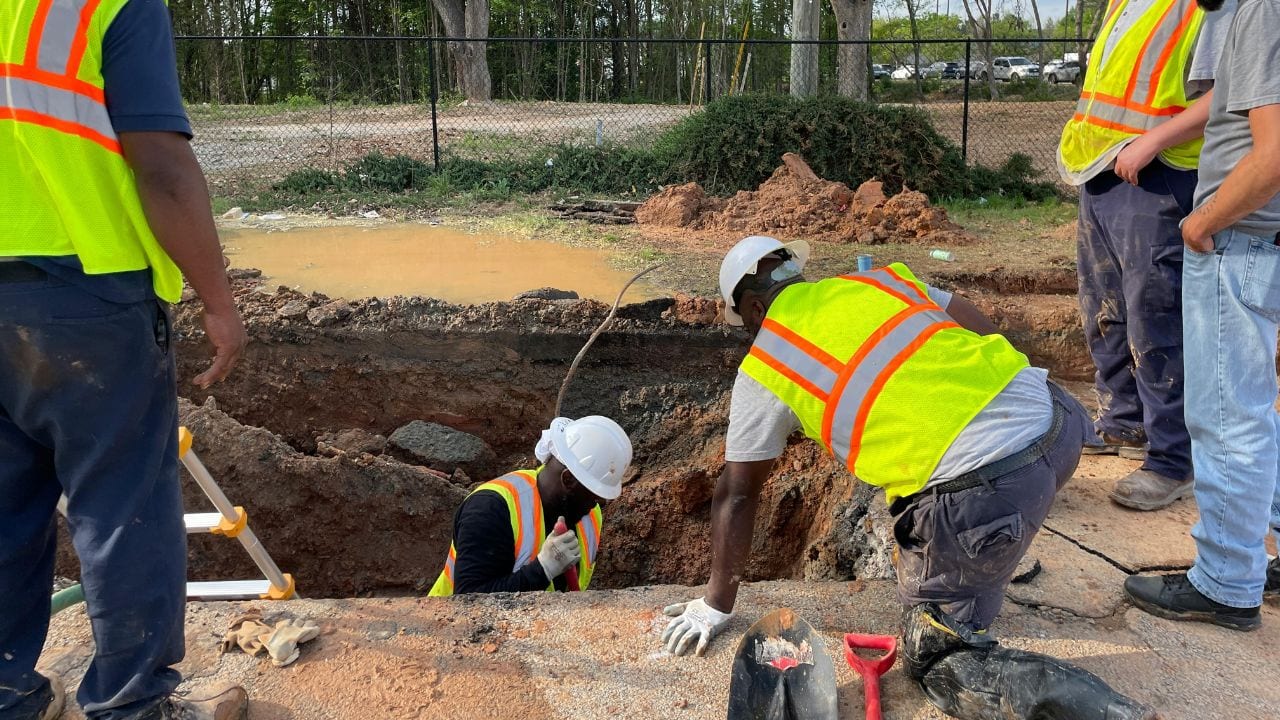
Hydro excavation pricing varies because each project involves different utility congestion, soil density, site access, excavation depth, equipment requirements, and disposal constraints. Providers price total risk and scope, not just the time a crew spends digging. Two jobs with the same hole count can carry very different quotes once soil, traffic control, and slurry hauling enter the picture.
Below, you will find the cost factors that move a quote, how risk management shapes buying decisions, and what details help providers price a job accurately. You will also see how vacuum excavation compares with air and mechanical digging, so you can judge total project value instead of hourly rates.
Key Takeaways
- Hydro excavation pricing depends on scope, equipment, and site conditions, not just hourly rates
- Soil hardness, depth, access restrictions, and disposal requirements significantly affect total project cost
- Physical utility exposure reduces utility-strike risk, redesign delays, and catastrophic project failures
- Complete quotes include mobilization, labor, pothole dimensions, disposal, traffic control, restoration, and documentation
- Buyers should gather project location, utility type, expected depth, site constraints, and deliverable requirements before requesting service
Hydro Excavation Pricing Varies by Site, Not by Flat Rate
Hydro excavation pricing differs by project because soil, utility congestion, access, and verification requirements change from site to site. No flat rate exists because providers must account for mobilization, equipment class, crew size, disposal, and safety protocols.
Industry data places market pricing between $300 and $475 per hour, though rates vary by region and equipment type. Understanding why quotes differ helps buyers evaluate scope instead of assuming every provider offers identical services.
Hydro Excavation Compared With Air and Mechanical Methods
Utility potholing vacuum excavation uses pressurized water and a powerful vacuum to remove soil and debris safely. Air excavation uses compressed air instead of water, which allows spoil reuse in some situations.
Air excavation runs slower in hard or dense soil. Mechanical excavation carries lower equipment costs but raises strike and restoration risk near buried infrastructure. The table compares all three on the factors that shape a quote.
| Method | How It Works | Cost Profile | Typical Use Case |
|---|---|---|---|
| Hydro excavation | Pressurized water cuts soil, vacuum lifts the slurry | Higher hourly rate, plus slurry hauling and dump fees | Congested corridors, depth verification, hard or wet soil |
| Air excavation | Compressed air breaks soil, vacuum lifts dry spoil | Similar hourly rate, lower disposal cost when spoil is reused | Dry, loose soil where backfill reuse is allowed |
| Mechanical digging | Backhoe or excavator bucket removes soil | Lowest equipment cost, highest strike and restoration exposure | Open ground with no buried utilities nearby |
Quotes Reflect Site-Specific Risk and Scope
Each quote reflects site-specific risk, verification scope, and equipment requirements. Honest providers cannot offer flat rates because excavation depth, soil hardness, utility congestion, disposal options, and access constraints all vary.
Method selection depends on soil type, required reach, tank capacity, and water disposal availability. Projects that need emergency response, traffic control, or detailed documentation cost more than a single simple pothole.
Hydro Excavation Pricing Factors That Change Every Quote
Cost factors include mobilization distance, crew size, equipment class, soil, excavation depth, pothole quantity, slurry disposal, restoration, and documentation. Each one changes how much time, water, labor, and disposal capacity the project consumes.
Buyers who understand these factors can request accurate quotes and avoid surprise charges. The table shows what each driver affects and how it moves the final number.
| Cost Driver | What It Affects | Effect on Price |
|---|---|---|
| Mobilization distance | Truck dispatch time and fuel | Fixed charge per trip, higher outside the service area |
| Crew size and shift timing | Labor hours, spotters, flaggers | Night, weekend, and emergency work carry premiums |
| Soil hardness | Water pressure, excavation time | Clay, caliche, rock, and frozen ground raise labor hours |
| Depth and pothole count | Time per hole and slurry volume | Cost rises with each hole and each added foot |
| Slurry disposal | Hauling distance and dump fees | Contaminated material multiplies disposal cost |
| Restoration | Backfill, compaction, asphalt or concrete patch | Hard surfaces add material and a second crew visit |
| Documentation | Depth records, photos, CAD and KML files | Survey-grade deliverables add office and field hours |
Mobilization and Crew Requirements
Mobilization covers dispatch distance, service area coverage, emergency response capability, and minimum job charges. Small projects still need specialized equipment and trained operators, which creates a baseline cost regardless of hole count.
Crew cost depends on operator skill, traffic-control personnel, safety spotters, and after-hours premiums. Night, weekend, and rapid-response work all price above standard business hours.
Soil Type, Depth, and Pothole Dimensions
Loose soil excavates faster than clay, caliche, rock, or frozen ground, which directly affects labor time and water consumption. Asphalt and concrete restoration add material and labor costs once the utility potholing process is complete.
Common applications include utility potholing, trenching, slot trenching, and daylighting to confirm utility depth, size, material, and alignment. Deeper excavations, larger diameter exposures, and multiple test holes increase total project time and slurry volume.
Disposal, Restoration, and Documentation
Slurry is the water and soil mixture removed during hydro excavation, and it must go to an approved disposal site. Contaminated soil limits those options and raises hauling costs sharply.
Restoration covers backfill, compaction, asphalt patching, concrete repair, and cleanup. Deliverables such as depth records, photos, utility maps, and CAD files add value and add reporting time.
Site Conditions and Access Change Crew Time and Equipment
Soil hardness, utility congestion, access restrictions, traffic requirements, and work-window limits affect equipment selection and labor duration. Urban projects cost more than open sites because of parking constraints, lane closures, and coordination.
Providers use these variables to allocate equipment, crew size, and schedule buffer. Accurate site information from the buyer prevents cost overruns.
Soil Hardness and Underground Utility Congestion
Hard soil requires higher water pressure, longer excavation time, and more equipment maintenance than soft ground. Congested utilities or incomplete records raise the risk of contact, which forces slower excavation.
Dense corridors demand extra locating work and closer operator attention. Projects with incomplete records often need exploratory potholing first, which adds time and cost.
Traffic Control and Urban Work Windows
Urban alleys, narrow rights-of-way, parking limits, traffic lanes, campuses, hospitals, airports, and secured areas all create access challenges. Traffic control adds lane closures, flaggers, signage, barricades, and coordination with local authorities.
Restricted work windows such as overnight shifts or weekend-only access raise labor premiums and equipment standby costs. Work during business hours needs extra safety protocols to protect occupants.
Weather Delays and Emergency Response Timing
Rain, snow, and high winds can delay projects or require additional safety measures and equipment protection. Frozen ground increases excavation difficulty and water consumption significantly.
Emergency calls that need immediate response or after-hours mobilization carry premium pricing because of crew availability. Projects with flexible timelines cost less than rush work.
Risk Management Explains the Gap Between Competing Quotes
Risk management protects workers, utilities, schedules, and budgets from the failures caused by utility strikes or trench collapses. Providers who build safety protocols, insurance, and quality verification into their pricing deliver value beyond an hourly rate.
Buyers who focus only on the lowest cost often face higher total project expenses from delays, redesigns, and contractor liability from utility damage. Understanding risk-based pricing helps decision-makers judge true project value.
Utility Strike Avoidance and OSHA Trench Safety Rules
Utility strikes create serious cost implications, delays, relationship damage, injury risk, and in some cases fatalities. According to the CGA 2024 DIRT Report, 196,977 unique damages were reported in 2024 alone.
Trench collapses, or cave-ins, pose the greatest risk to workers in trenching and excavation, according to OSHA. Workers should never enter a trench unless it has been properly inspected, with sloping, shoring, or shielding in place.
ASCE and FHWA Utility Quality Levels
FHWA Subsurface Utility Engineering quality levels include QL-D, QL-C, QL-B, and QL-A designations for utility information accuracy. QL-A is the highest quality level and involves nondestructive exposure of underground utilities for precise plan and profile mapping.
Subsurface Utility Engineering combines civil engineering, surveying, and geophysics to reduce utility conflicts and project delays. Each step up the quality ladder costs more because it demands more fieldwork, as the table shows.
| Quality Level | How Data Is Gathered | Confidence | Relative Cost |
|---|---|---|---|
| QL-D | Records and as-built research only | Lowest; records may be wrong or missing | Lowest |
| QL-C | Records plus surveyed surface features | Low to moderate | Low |
| QL-B | Geophysical locating such as EM and GPR | Moderate to high, horizontal position confirmed | Moderate |
| QL-A | Physical exposure by vacuum excavation, then survey | Highest, depth and material confirmed | Highest |
Insurance, Compliance, and Project Delay Exposure
Excavation and construction stakeholders remained the largest source of damage reports for the third consecutive year, according to CGA data. About 18 percent of excavation reports came from Damage Prevention Institute participants, while 74 percent came from 811 centers.
Telecommunications facilities represented 49 percent of reported facilities damaged, and natural gas facilities accounted for 39 percent. These figures show why insurance, compliance protocols, and damage prevention measures justify higher upfront excavation service rates compared with bare-minimum quotes.
Method and Equipment Choices Move the Final Number
Choosing between hydro, air, and mechanical digging affects equipment costs, excavation speed, soil reuse options, and strike risk. Tank capacity, water pressure, boom reach, and debris capacity determine which projects each unit can handle.
Buyers who understand how to decide between hydro and air excavation can request the most cost-effective method for their soil and site conditions. Equipment choices also drive mobilization costs, disposal requirements, and total project duration.
Cost Differences Between Hydro and Air Excavation
Hydro excavation can cost more upfront than basic digging, and it is used where damage risk, safety risk, or verification requirements are high. Air excavation allows spoil reuse in some cases because dry soil can be returned to the excavation.
Hydro excavation produces slurry that needs off-site disposal, which adds hauling and dump fees. Air excavation runs slower in dense clay, which can raise labor hours despite lower disposal cost.
Mechanical Excavation Risk Near Buried Utilities
Backhoes and excavators work well in open areas with no buried utilities nearby. Close to infrastructure, they carry a higher strike risk because an operator cannot control bucket contact with a buried line precisely.
Hydro excavation provides controlled, non-destructive exposure that reduces damage probability compared with mechanical digging. Projects that need utility confirmation before main construction should weigh vacuum excavation against manual digging to protect existing infrastructure.
Equipment Capabilities and Slurry Disposal
Trailer-mounted units cost less than truck-mounted systems but have limited mobility and smaller tanks. Truck-mounted units offer greater reach, larger debris capacity, and faster mobilization, which raises the hourly rate while cutting total project time.
Slurry disposal cost depends on dump site distance, contaminated soil classification, and whether the material needs special handling or testing.
Details to Include in a Hydro Excavation Quote Request
Gather project address, utility type, pothole count, expected depth, soil conditions, access constraints, work windows, and deliverable requirements before contacting providers. Complete information lets a provider size equipment and crew without repeated revisions.
The same discipline that shapes what should be included in a utility locating quote applies to hydro excavation requests, because both services need clear scope definition. Vague requests produce vague quotes that often exclude critical items and lead to cost disputes.
Project Details That Produce Accurate Pricing
Give the project address and service area so the provider can calculate mobilization distance and equipment availability. Identify the utility being exposed: water, sewer, gas, electric, or telecommunications.
State the number of potholes or approximate trench and slot dimensions. Confirm expected depth and whether prior utility maps, ground-penetrating radar results, or 811 marks already exist.
Utility Locating, Permits, and Documentation Scope
Call 811 where required to mark public utilities before any excavation work begins. Add private utility locating and hydro excavation where project risk, private lines, utility congestion, depth verification, or physical exposure is involved.
811 and DigAlert cover public utilities, but private lines may still sit inside your scope and need separate locating. Specify deliverables such as surface markings, photos, depth records, CAD or KML files, and formal reports to avoid documentation gaps.
Common Quote Exclusions That Raise Final Costs
Low quotes can hide exclusions such as disposal fees, mobilization charges, traffic control, utility locating, documentation, and restoration work. A quote priced below the market can under-scope damage prevention and shift liability exposure onto the buyer.
Use the checklist below to confirm what a quote includes before you sign. Municipal utility projects in particular require documentation and compliance reporting that basic quotes leave out.
| Line Item | Confirm With the Provider | Risk If Excluded |
|---|---|---|
| Mobilization | Trip charge, minimum hours, service area limits | Surprise dispatch fees on small jobs |
| Water supply | Who sources and hauls fill water | Crew idle time and rescheduled visits |
| Slurry hauling and dump fees | Volume allowance and contaminated soil handling | Per-load charges added after the work |
| Traffic control | Flaggers, signage, permits, lane closure plan | Stop-work orders and municipal fines |
| Utility locating | Private locate included or billed separately | Digging without confirmed marks |
| Restoration | Backfill, compaction, asphalt or concrete patch | Open holes and a second contractor invoice |
| Documentation | Depth records, photos, CAD or KML deliverables | No usable record for design or as-builts |
Balancing Price, Risk, and Quality Across Competing Bids
Evaluate total project cost, including delays, utility conflicts, redesigns, and strike liability, instead of comparing hourly rates alone. The lowest rate rarely produces the lowest final cost when hidden exclusions or undersized equipment create downstream problems.
A clear risk assessment in utility mapping helps buyers understand true project exposure and make informed decisions. Providers who price mobilization, disposal, documentation, and safety transparently produce more predictable outcomes than those offering artificially low numbers. Industry benchmarks on the cost of striking underground utilities show how quickly a single incident erases any savings.
The Lowest Hourly Rate Rarely Delivers the Lowest Total Cost
Delay exposure from a utility conflict can cost far more than the gap between two proposals. Low-cost providers may lack proper insurance, run outdated equipment, or skip safety protocols.
Buyers who select on rate alone often face change orders, extended schedules, and quality disputes. Total project value includes risk mitigation, documentation quality, equipment capability, crew experience, and response reliability.
Comprehensive Risk Pricing Protects Budgets and Schedules
Comprehensive pricing puts utility locating, traffic control, insurance coverage, documentation deliverables, and safety compliance into the initial quote. That approach removes surprise charges and gives buyers accurate budget expectations from the start.
Providers who price risk properly allocate enough resources to execute cleanly. Projects with tight deadlines, congested utilities, or regulatory requirements gain the most.
Questions That Separate Complete Quotes From Thin Ones
Ask whether the quote includes mobilization, disposal, restoration, traffic control, permits, documentation, and utility locating. Verify what equipment will arrive on site, including tank capacity, boom reach, and whether hydro or air excavation is proposed.
Ask about insurance coverage, safety protocols, crew qualifications, and emergency response time. Confirm payment terms, change-order policy, and how added depth or unforeseen utilities get billed.
Hydro Excavation Pricing Reflects Scope, Risk, and Documentation
Hydro excavation pricing reflects the work of exposing buried utilities safely while managing soil, access, disposal, and compliance. Buyers who understand the cost factors can request accurate quotes and spot providers who hide essential services behind a low headline rate.
Judging quotes on comprehensive scope rather than hourly rate protects both budgets and project schedules.
Request Hydro Excavation Pricing From Util-Locate
Util-Locate has prevented underground damage since 2001, with certified technicians across Southern California and Arizona. Our crews combine hydro excavation equipment, private utility locating, and ASCE-compliant documentation, so your quote covers the full job.
Send your project address, utility type, pothole count, and expected depth, and we return a quote that itemizes mobilization, disposal, restoration, and deliverables. Emergency crews run 24/7.
Call 1 (888) 88-LOCATE (562283), email [email protected], or request a quote online to speak with a specialist about your site. You can also review our utility potholing and vacuum excavation services before you reach out.
Hydro Excavation Pricing FAQs
Q1. How much does hydro excavation cost per hour?
Industry data places hydro excavation in the range of $300 to $475 per hour, though the figure shifts with region, equipment class, and crew size. Truck-mounted units bill higher per hour but finish faster. Most providers also apply a minimum charge or mobilization fee, so a one-hole job rarely costs one hour of labor. Ask for the itemized scope, not the hourly figure alone.
Q2. What is included in a hydro excavation quote?
A complete quote lists mobilization, labor hours, pothole count and dimensions, water supply, slurry hauling and dump fees, restoration, traffic control, permits, and documentation. It should also state the equipment class arriving on site and the insurance coverage carried by the provider. Anything missing from that list becomes a change order later. Confirm each line before you approve the work.
Q3. Why do hydro excavation quotes vary so much between providers?
Quotes differ because providers scope risk differently. One may include private utility locating, traffic control, and CAD deliverables, while another prices only the digging and bills the rest afterward. Soil hardness, depth, access limits, and disposal distance also change the labor estimate for the same site. Compare the scope line by line rather than the bottom-line number.
Q4. Is hydro excavation cheaper than mechanical digging?
Mechanical digging carries a lower equipment cost per hour, so it looks cheaper on paper. Near buried utilities, it raises strike odds, and one strike can cost more than the whole excavation budget once repairs, fines, and delays are counted. Hydro excavation exposes lines without cutting them, which is why most utility owners require it inside the tolerance zone.
Q5. Does calling 811 replace paying for private hydro excavation?
No. 811 and DigAlert mark public utilities only, and those marks give horizontal position without confirmed depth. Private lines such as site lighting, irrigation, and campus distribution sit outside that scope. Hydro excavation exposes the line, so you know its depth, size, and material before you dig. The two steps work together, and neither replaces the other.
