Oil and gas facilities often combine active pipelines, legacy infrastructure, utility corridors, electrical systems, communications networks, and tight maintenance windows. Confirming what exists underground matters before crews break ground because unplanned utility strikes can trigger safety incidents, service disruptions, environmental exposure, emergency response costs, and project delays. Professional vacuum excavation addresses these risks by physically exposing buried infrastructure without mechanical force.
Vacuum excavation supports safe exposure, verification, documentation, and handoff for energy, utility, and renewable-site work. This non‑destructive digging method removes soil using high-power suction rather than mechanical blades or backhoe buckets, reducing the chance of damaging buried gas lines, electrical conduits, water mains, sewer systems, fiber-optic cables, and unknown or abandoned infrastructure during facility upgrades, pipeline repairs, valve installations, and trenching operations.
Key Takeaways
- Vacuum excavation verifies the physical location, depth, and material of utilities before higher-risk excavation begins
- CGA identifies failure to verify marks by potholing as one of six primary root causes in 2023 utility damage data
- Natural gas accounted for approximately 40% of reported facility damages in CGA 2023 DIRT data
- PHMSA confirms excavation damage can cause deaths, injuries, property damage, and environmental damage
- A layered method combining 811, private locating, GPR, mapping, and potholing fits congested facility conditions better than relying on one technique
What is Vacuum Excavation and How Does It Work?
Key Features of Vacuum Excavation
Vacuum excavation uses high-power suction to loosen soil or other material and remove it through an air vacuum hose. The excavated spoil and debris are stored in an onboard tank for later disposal or backfilling. This process allows operators to work around buried utilities without applying mechanical force that could rupture pipes, sever cables, or damage protective coatings.
Difference Between Vacuum Excavation and Traditional Methods
Traditional excavation methods can damage utilities, endanger workers and the public, and cause supply disruption, lost revenue, negative publicity, customer-service problems, delays, and client relationship damage. Ground-penetrating radar and electromagnetic locating help identify likely utility paths while mapping records findings. Utility potholing then exposes and visually confirms the physical utility location, depth, material, and condition.
Role of Vacuum Excavation in Utility Exposure
Vacuum excavation physically exposes utilities for confirmation rather than replacing all locating and mapping activities. It serves as the final verification step after non-invasive detection methods identify probable utility locations. This visual confirmation allows project teams to measure exact depth, assess utility condition, verify material type, and document clearance distances before authorizing mechanical excavation or directional drilling.
Why is Vacuum Excavation Important for Oil and Gas Facilities?
Risks of Excavation Damage in Oil and Gas Sites
PHMSA confirms excavation damage to pipelines can result in deaths, injuries, property damage, and environmental damage. Mechanical digging in oil and gas environments can create safety incidents, service disruption, environmental exposure, emergency response requirements, facility downtime, and repair costs that exceed initial project budgets. Unplanned utility strikes may also trigger regulatory investigations and public scrutiny.
Common Types of Buried Utilities at These Facilities
Utility investigations at oil and gas facilities may identify sewer lines, storm drains, gas distribution systems, water mains, reclaim lines, fire water systems, communications cables, electrical conduits, low-voltage circuits, abandoned infrastructure, and unknown utilities. Understanding how utility location works becomes essential when multiple systems occupy the same corridor. Gas line detection requires special attention because natural gas accounted for approximately 40% of reported damages in CGA 2023 DIRT data.
| Utility Type | Primary Risk if Struck |
| Natural gas lines | Fire, explosion, evacuation, service outage |
| Electrical conduits | Shock hazard, outages affecting critical operations |
| Water mains and fire water systems | Flooding, pressure loss, fire suppression failure |
| Communications and fiber-optic cables | Data loss and safety-system disruption |
| Sewer lines and storm drains | Environmental release and cleanup costs |
| Abandoned or unknown infrastructure | Unplanned discovery and project delay |
Safety and Compliance Considerations
CGA’s 2023 DIRT Report shows the new CGA Index score was 94, a six-point decline from the 2022 baseline of 100. Six primary damage root causes accounted for 76% of incidents for the third consecutive year. These root causes include failure to notify 811, failure to maintain clearance, facility not marked due to locator error, improper excavation practice, inaccurate marks due to locator error, and excavating before verifying marks by potholing.
| Metric | 2023 Data Point |
| CGA Index score | 94, down from a 2022 baseline of 100 |
| Six primary root causes’ share of incidents | 76% of incidents, third consecutive year |
| Natural gas share of reported damages | About 40% |
| Telecom facilities share of reported damages | Nearly half |
| Odds of an on-time excavation start (811 data) | Roughly 50/50 |
How Does Vacuum Excavation Fit Into Utility Verification Workflows?
Initial Steps: Site Plans, 811 Calls, and Private Locating
Comprehensive verification begins by collecting as-builts, site plans, previous survey records, scope drawings, aerials, and area descriptions. Calling 811 initiates public utility marking for municipal infrastructure. Private utility locating addresses onsite utilities not covered by 811, such as facility-owned systems, industrial service lines, and proprietary infrastructure across oil and gas sites.
Use of Electromagnetic Locating and Ground Penetrating Radar
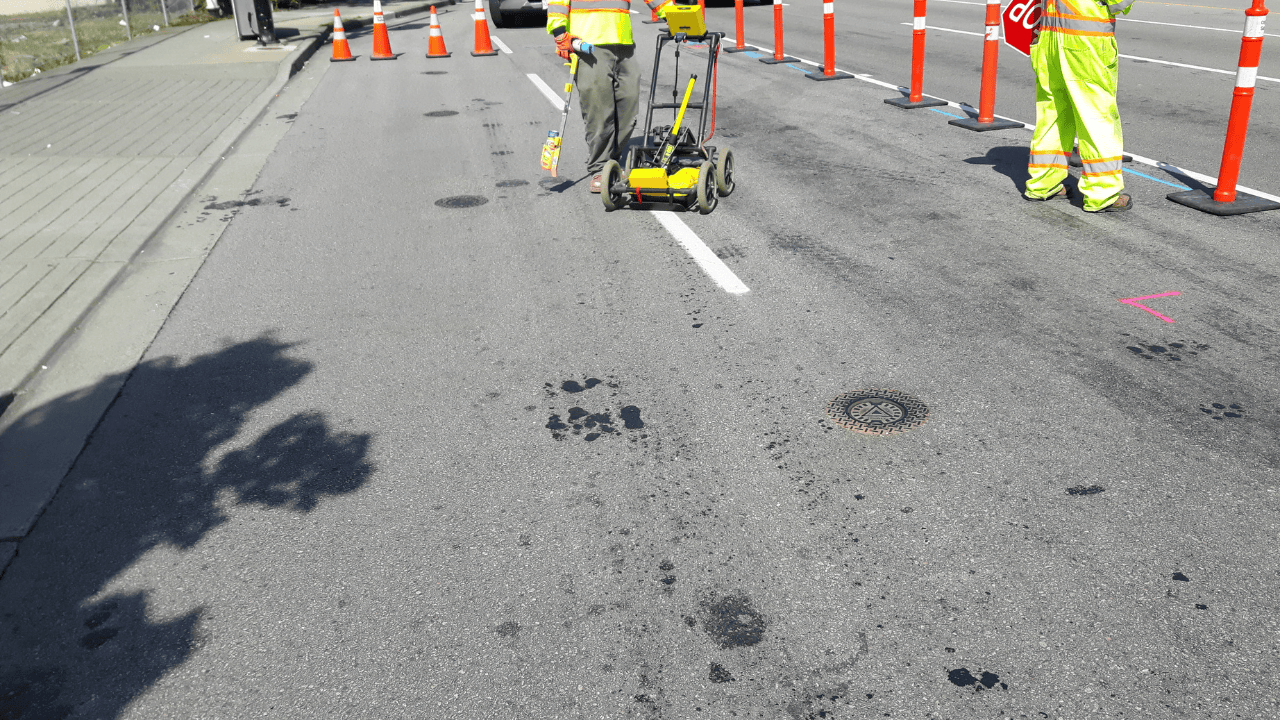
Electromagnetic locating and ground-penetrating radar provide non-invasive detection of buried infrastructure. GPR can detect metallic and non-metallic services including polyethylene water pipes, gas pipes, and fiber-optic cables. Preventing damage to underground utilities requires mapping findings into CAD, PDF, KML, or project documentation formats that construction teams can reference throughout the work.
When and Why to Use Vacuum Excavation for Visual Confirmation
Visual confirmation through vacuum excavation becomes necessary where depth, size, material, or conflict verification is required before mechanical excavation. Potholing confirms the exact position of utilities that electromagnetic or GPR surveys identify as probable. This step reduces uncertainty when tight clearances exist, when legacy documentation does not match field conditions, or when regulatory requirements mandate physical verification before breaking ground.
What Are Typical Use Cases for Vacuum Excavation in Energy and Utility Sites?
Pipeline Tie-Ins, Repairs, and Valve Installation
Pipeline tie-ins, repairs, valve work, and depth verification represent common applications at oil and gas facilities. Exposing existing infrastructure without mechanical contact allows welders, fitters, and inspectors to access connection points safely. Vacuum excavation also supports integrity assessments by revealing pipe condition, coating quality, and corrosion indicators before repair work begins.
Facility Upgrades and Trenching Support Near Utilities
Facility upgrades near buried utilities require trenching support where existing systems must be exposed before digging. Renewable and energy-site utility corridors often feature overlapping electrical, fiber, grounding, water, and drainage systems. Utility locating services identify probable utility paths, while potholing confirms clearance distances before contractors install new infrastructure or expand existing facilities.
Emergency Response and Legacy Documentation Updates
Emergency verification becomes necessary after a suspected strike, leak, washout, or undocumented utility discovery during excavation. Documentation updates ensure legacy plans match field conditions for future maintenance, contractor handoff, and operational planning. The role of utility locating in the utilities industry includes maintaining accurate records that support long-term facility management and reduce risk during recurring site work.
How Do Vacuum Excavation and Other Locating Methods Compare?
| Method | What It Does | Limitation |
| Electromagnetic locating | Traces active conductive lines from the surface | Cannot detect non-metallic pipes without a tracer wire |
| Ground penetrating radar | Detects metallic and non-metallic utilities, voids, and rebar | Accuracy varies with soil type, depth, and site congestion |
| Mechanical excavation | Removes soil quickly with powered equipment | Applies direct force that can rupture pipes or sever cables |
| Vacuum excavation | Removes soil with suction for visual confirmation | Confirms utilities already probed; does not replace locating |
Mechanical Excavation Vs. Vacuum Excavation
Mechanical excavation uses backhoes, excavators, or trenchers that apply direct force to soil and buried objects. Vacuum excavation removes soil with suction, eliminating mechanical contact with utilities. This difference matters when working near pressurized gas lines, high-voltage electrical conduits, or fiber-optic cables where even minor contact can cause failure or safety incidents.
GPR and Electromagnetic Locating Vs. Vacuum Excavation
GPR alone cannot guarantee finding or identifying all buried services because soil conditions, utility depth, material composition, and site congestion affect detection reliability. Nobody can honestly guarantee locating every unknown line because site history, abandoned infrastructure, soil conditions, and nearby services create variables. Electromagnetic and GPR methods identify probable utility locations, while vacuum excavation provides visual proof.
Combining Methods for Effective Damage Prevention
Combining electromagnetic locating, GPR, mapping, and potholing gives a more comprehensive answer than relying on one technique alone. No method guarantees every unknown line, but layered verification reduces risk by cross-checking findings from multiple sources. Common utility strikes that can be prevented often result from skipping verification steps or relying exclusively on incomplete site plans.
What Factors Influence Buyer Decisions for Vacuum Excavation Services?
Safety Records and Emergency Availability
Safety records and emergency availability matter when selecting vacuum excavation providers for oil and gas facilities. Excavators faced roughly 50/50 odds of being able to begin work on time based on late-locate data from 811 centers. Buyers prioritize vendors who respond quickly, work safely around active infrastructure, and provide 24/7 emergency support when unexpected subsurface conditions arise or documentation reveals discrepancies.
Equipment Suitability and Experience with Congested Sites
Equipment suitability and experience with congested sites influence vendor selection for complex energy projects. Util-Locate maintains 97% accuracy for utility lines as deep as 13 feet using calibrated equipment and trained technicians. Buyers evaluate whether providers can navigate tight clearances, work within operational facilities, and adapt to site-specific constraints without disrupting ongoing operations.
Documentation and Deliverables for Project Management
Documentation deliverables support project management, regulatory compliance, contractor coordination, and future facility maintenance. Buyers require CAD files, georeferenced maps, photographic records, and field reports that engineering teams can integrate into as-built documentation. Clear deliverables reduce handoff errors, support permit applications, and provide reference data for subsequent phases or future excavation projects.
What Are the Key Risks That Vacuum Excavation Helps Mitigate?
Utility Strikes and Their Consequences
Six primary root causes of utility damage include failure to notify 811, failure to maintain clearance, facility not marked due to locator error, improper excavation practice, inaccurate marks due to locator error, and excavating before verifying marks by potholing. Telecom facilities accounted for nearly half of reported damages in CGA 2023 data. Natural gas accounted for about 40% of reported damages, emphasizing the importance of verification at energy facilities.
Project Delays, Cost Overruns, and Reputation Damage
Utility strikes cause project delays, cost overruns, and reputation damage that extend beyond immediate repair expenses. Emergency response, regulatory reporting, service restoration, public relations, legal review, and rework consume time and budget. Clients face scrutiny from regulators, stakeholders, and the public when excavation incidents disrupt service or threaten safety, making damage prevention a strategic priority.
Environmental and Public Safety Concerns
Environmental and public safety concerns escalate when excavation damage affects oil and gas infrastructure or energy distribution systems. Pipeline ruptures can release hazardous materials, create fire or explosion risk, and require evacuation or shelter-in-place orders. Electrical strikes may cause outages affecting hospitals, water treatment plants, and emergency services, while communication failures disrupt public safety networks during critical incidents.
Ensure Safe and Verified Utility Exposure with Util-Locate!
Safe and verified utility exposure depends on selecting providers who understand the layered risks at oil and gas facilities. Combining 811 notification, private utility locating services, electromagnetic detection, ground-penetrating radar, subsurface mapping, and vacuum excavation delivers comprehensive damage prevention. This approach addresses the complexity of energy sites where legacy infrastructure, active systems, and unknown utilities coexist within congested corridors.
Util-Locate supports California and Arizona oil and gas facilities, utility projects, and renewable energy sites with precise subsurface verification services. Certified technicians use calibrated equipment to locate, map, and safely expose buried infrastructure before excavation begins. Documentation deliverables support project planning, regulatory compliance, and operational handoff for facilities requiring ongoing maintenance and future expansion.
Contact Util-Locate before breaking ground to schedule utility locating surveys that reduce strike risk and protect your project timeline. Reach the California office at (714) 492-1380, the Arizona office at (480) 535-0230, or call toll-free at (888) 885-6228 for 24/7 emergency support and service scheduling.
Frequently Asked Questions
Q1. Do vacuum excavation services confirm utility locations at oil and gas facilities?
Yes. Vacuum excavation physically exposes a utility after electromagnetic locating or ground-penetrating radar has identified its probable path. Certified technicians use high-power suction to remove soil around the line without applying mechanical force, so crews can see the exact depth, size, and material before excavation equipment moves in. This visual confirmation step is what regulators and safety programs mean when they call for verification by potholing. Skipping it is one of the six primary root causes behind reported utility damage.
Q2. How deep can vacuum excavation confirm a buried utility?
Util-Locate maintains 97% accuracy for utility lines as deep as 13 feet using calibrated equipment and trained technicians. Depth capability depends on soil conditions, utility material, and site congestion, so a site assessment usually precedes any potholing work. Facilities with layered or legacy infrastructure often need more than one exposure point to fully verify clearance. Documentation from each exposure feeds directly into project mapping and as-built records.
Q3. Is vacuum excavation safer than mechanical excavation near active pipelines?
Vacuum excavation removes soil with suction rather than the mechanical force of a backhoe or trencher, which lowers the chance of rupturing a pipe, severing a cable, or damaging a protective coating. PHMSA confirms excavation damage to pipelines can cause deaths, injuries, property damage, and environmental harm, so non-destructive methods are preferred wherever clearance is uncertain. It does not replace locating or mapping; it verifies what those methods identify. Oil and gas sites with active pipelines and legacy infrastructure typically require this extra confirmation step before mechanical digging begins.
Q4. How does vacuum excavation fit into an 811 utility locating process?
Calling 811 starts public utility marking for municipal infrastructure, but private utility locating covers facility-owned systems, industrial service lines, and proprietary infrastructure that 811 does not mark. Electromagnetic locating and ground-penetrating radar then narrow down probable utility paths across the site. Vacuum excavation is the final step in that sequence, physically exposing the utility so crews can confirm depth, material, and condition before authorizing mechanical excavation or directional drilling. Combining these layers reduces the uncertainty that any single method leaves behind.
Q5. What should a facility expect during a vacuum excavation service call?
A crew typically arrives with site plans, prior survey records, and results from any electromagnetic or GPR scans already completed. Technicians use vacuum excavation equipment to expose the target utility, store the removed spoil in an onboard tank, and document depth, material, and condition on-site. Documentation deliverables, including CAD files, georeferenced maps, and field reports, are provided for project management and future maintenance records. Util-Locate supports California and Arizona oil and gas facilities, utility projects, and renewable energy sites with this service, including 24/7 emergency response when unexpected conditions arise.
