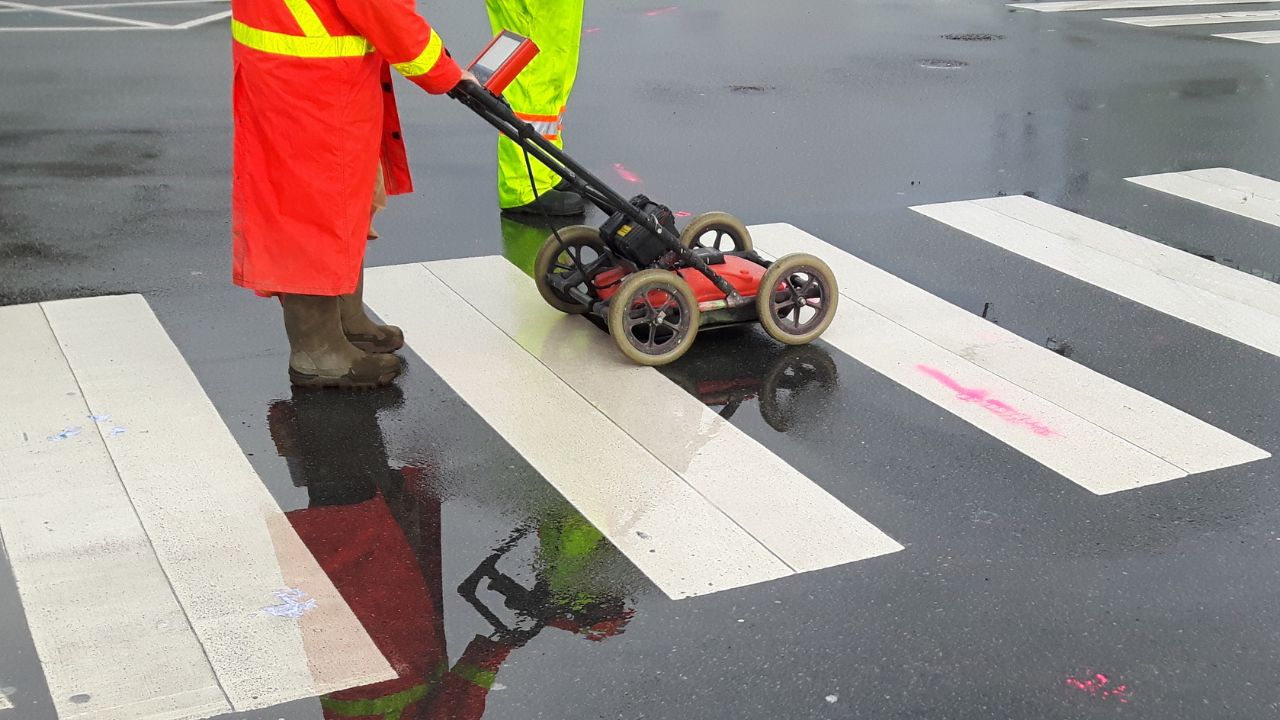
Top Tools and Techniques for Locating Utilities in Cold Weather

utility locating tools

Key Takeaways

  1. Frozen Ground Changes Tool Performance: Utility locating tools lose 50% accuracy in cold-weather excavation. GPR improves while EM locators struggle—underground utility locating needs winter-adapted technology.
  2. Multi-Tool Integration Essential: No single technology works alone. Utility locators combine GPR, EM, GPS, and hydro-vacuum for reliable cold-weather excavation detection.
  3. Pre-Winter Preparation Prevents Failures: Complete underground utility locating before the ground freezes. GPS-tagged markers maintain accuracy when snow buries physical markings.
  4. AI Overcomes Frozen Ground Interference: Machine learning compensates for ice automatically. AI-enhanced utility locating tools improve accuracy while reducing expertise requirements for utility locators.
  5. Hydro-Vacuum Eliminates Strike Risk: Heated water excavation confirms utilities definitively. Non-destructive exposure works in any cold-weather excavation condition regardless of frost depth.

Frozen ground fundamentally alters the physics that standard utility locating tools depend on for underground utility locating accuracy. When soil freezes, its electrical resistivity increases dramatically while conductivity drops—creating conditions that starve electromagnetic utility locators of the ground connection they need to complete signal circuits. Snow and ice form physical barriers between equipment and ground surface, disrupting antenna coupling for GPR systems and obscuring the surface markers that guide cold-weather excavation. Temperature fluctuations compound these challenges by causing ground heaving and pipe contraction, shifting utilities 6-12 inches from their marked positions. The result: utility locating tools calibrated for temperate conditions lose 50% or more of their detection accuracy when winter arrives.

Moisture variations create additional interference for underground utility locating techniques throughout the cold season. High moisture content from melting snow attenuates GPR signals, reducing penetration depth and image clarity just when precision matters most. For electromagnetic utility locators, changing soil moisture alters the electromagnetic field’s shape and strength, producing inconsistent readings that confuse even experienced operators. Frozen ground becomes too hard for standard probe insertion—techniques that work perfectly in summer become physically impossible in cold-weather excavation. Standard utility locating tools aren’t designed for these extreme conditions, which is why professional cold-weather excavation demands specialised equipment and adapted underground utility locating techniques that account for frozen soil physics.

What Are the Main Categories of Cold-Weather Utility Locating Tools?

Professional cold-weather excavation requires specialized utility locating tools that maintain accuracy despite frozen ground interference. The five essential categories below represent the core technologies for underground utility locating in winter conditions. Each tool type offers distinct advantages for specific utility locators working in sub-zero temperatures, and understanding their winter performance guides proper equipment selection for reliable underground utility locating techniques.

Utility Locating Tool Type Primary Functionality Winter Performance Rating
Ground Penetrating Radar (GPR) Sends high-frequency radio waves into the ground to detect metallic and non-metallic utilities through subsurface imaging Excellent – Low moisture content and high electrical resistivity of frozen ground actually improve signal penetration depth and image clarity for underground utility locating
Electromagnetic (EM) Locators Induces current onto conductive utilities; receiver detects electromagnetic field to trace metal pipes and cables Moderate – Reduced soil conductivity weakens signals, but multi-frequency transmitters and advanced filtering overcome frozen ground limitations for utility locators
Hydro-Vacuum Excavation Uses heated water and an industrial vacuum to thaw and remove frozen soil without mechanical contact Excellent – Non-destructive exposure works in any cold-weather excavation condition; eliminates utility strike risk through precise underground utility locating verification
GPS/GIS Integration Systems Collects field data with geographic coordinates; creates 3D maps and permanent digital utility records Excellent – Electronic marking unaffected by snow cover; provides weather-proof underground utility locating documentation when physical markers are buried
AI-Enhanced Signal Processing Machine learning algorithms interpret complex GPR/EM data; filter false positives from frozen ground reflections Excellent – Automatically compensates for ice interference and moisture variations; reduces expertise required for accurate cold weather excavation utility detection

These utility locating tools work most effectively when combined—no single technology solves all underground utility locating challenges in frozen conditions. Professional utility locators deploy multiple tools simultaneously, using GPS/GIS systems to document findings from GPR and EM equipment while AI processing improves real-time accuracy during cold-weather excavation operations.

What Are the Most Effective Tools for Cold Weather Utility Locating?

The three most critical utility locating tools for cold-weather excavation have proven track records in frozen ground conditions. Multi-frequency GPR systems excel where other underground utility locating techniques fail, electromagnetic locators maintain functionality with proper adaptations, and hydro-vacuum excavation provides definitive verification when detection accuracy matters most. Professional utility locators combine these technologies strategically, matching each tool’s strengths to specific site conditions and utility types during underground utility locating operations.

How Do Multi-Frequency GPR Systems Work in Frozen Ground?

Multi-frequency GPR systems dominate cold weather excavation because frozen ground actually improves their performance. These utility locating tools transmit radio waves across frequency ranges from 100-900 MHz, with lower frequencies penetrating deep through frozen soil while higher frequencies provide detailed resolution at shallow depths. The low moisture content and high electrical resistivity of frozen ground reduce signal attenuation—the primary enemy of GPR in summer conditions. This allows radio waves to penetrate deeper and produce clearer subsurface images during underground utility locating operations. Professional utility locators adjust frequency selection based on target depth: 100-200 MHz for utilities buried below frost lines, 400-900 MHz for shallow infrastructure detection in frozen zones.

Challenges remain despite GPR’s winter advantages. Heavy snow cover affects antenna-to-ground coupling, requiring utility locators to clear excavation areas before scanning. The transition zone between frozen and thawed soil creates complex reflections that confuse interpretation—this is where AI-enhanced signal processing becomes essential for accurate underground utility locating. Post-processing software compensates for ice signal distortion and dielectric property changes that vary across job sites. Modern GPR utility locating tools include real-time depth correction algorithms that adjust readings automatically as frozen ground conditions shift. When properly deployed with multi-frequency scanning and advanced processing, GPR provides the most reliable cold-weather excavation detection available.

What Makes Cold-Weather Electromagnetic Locators Essential?

Electromagnetic locators remain essential utility locating tools despite frozen ground challenges because they detect conductive utilities that GPR sometimes misses. These systems consist of a transmitter that induces electrical current onto target utilities and a receiver that traces the resulting electromagnetic field. Active locating connects the transmitter directly to utilities or uses an inductive clamp, while passive locating detects existing fields from live power cables. The functionality makes EM locators indispensable for underground utility locating on metallic pipes and cables, where precise tracing is required during cold-weather excavation projects.

Frozen soil significantly impacts EM locator performance through reduced conductivity that weakens signal propagation. The electrical circuit required for signal completion struggles in frozen ground where utility locators cannot establish proper ground connections. Modern solutions overcome these limitations through multi-frequency transmitters that select optimal frequencies for resistive frozen soil conditions. Advanced filtering algorithms distinguish utility signals from interference created by ice layers and moisture variations. Some sophisticated utility locating tools transmit multiple frequencies simultaneously, providing more complete subsurface pictures during underground utility locating operations. Professional utility locators now deploy specialised grounding equipment designed specifically for cold-weather excavation—establishing connections through ice and frozen soil where standard ground rods fail completely.

Why Is Hydro-Vacuum Excavation the Gold Standard?

  • Non-destructive utility exposure eliminates strike risk—heated water and industrial vacuum remove frozen soil without mechanical contact, providing definitive verification for underground utility locating when detection alone isn’t sufficient for cold weather excavation safety
  • Freeze-proof operation in any winter condition—works effectively at any temperature where utility locating tools struggle; thaws and excavates simultaneously regardless of frost depth or soil type during underground utility locating operations
  • Precise verification utility locators cannot provide alone—exposes exact utility positions, depths, and configurations that detection equipment estimates; confirms underground utility locating accuracy before mechanical excavation begins
  • OSHA-approved method for cold weather excavation compliance—meets federal requirements for exact location determination; provides legal documentation that proper underground utility locating techniques were followed during frozen ground projects
  • Cost-effective despite premium pricing—prevents utility strikes costing $75,000-$500,000+ each; hydro-vac investment pays for itself by eliminating damage that destroys cold-weather excavation budgets and project timelines for utility locators

What Pre-Winter Preparation Techniques Maximize Success?

Successful cold weather excavation begins weeks before the ground freezes. Professional utility locators implement these preparation techniques to maintain underground utility locating accuracy throughout winter. Early planning prevents the detection failures and marking losses that plague contractors who wait until frozen conditions force reactive solutions. These underground utility locating techniques ensure that utility locating tools operate at peak performance when winter arrives.

  • Schedule all underground utility locating before consecutive freezing days—complete detection and marking 2-4 weeks before anticipated frost penetration; utility locating tools achieve maximum accuracy in unfrozen soil before cold-weather excavation challenges begin
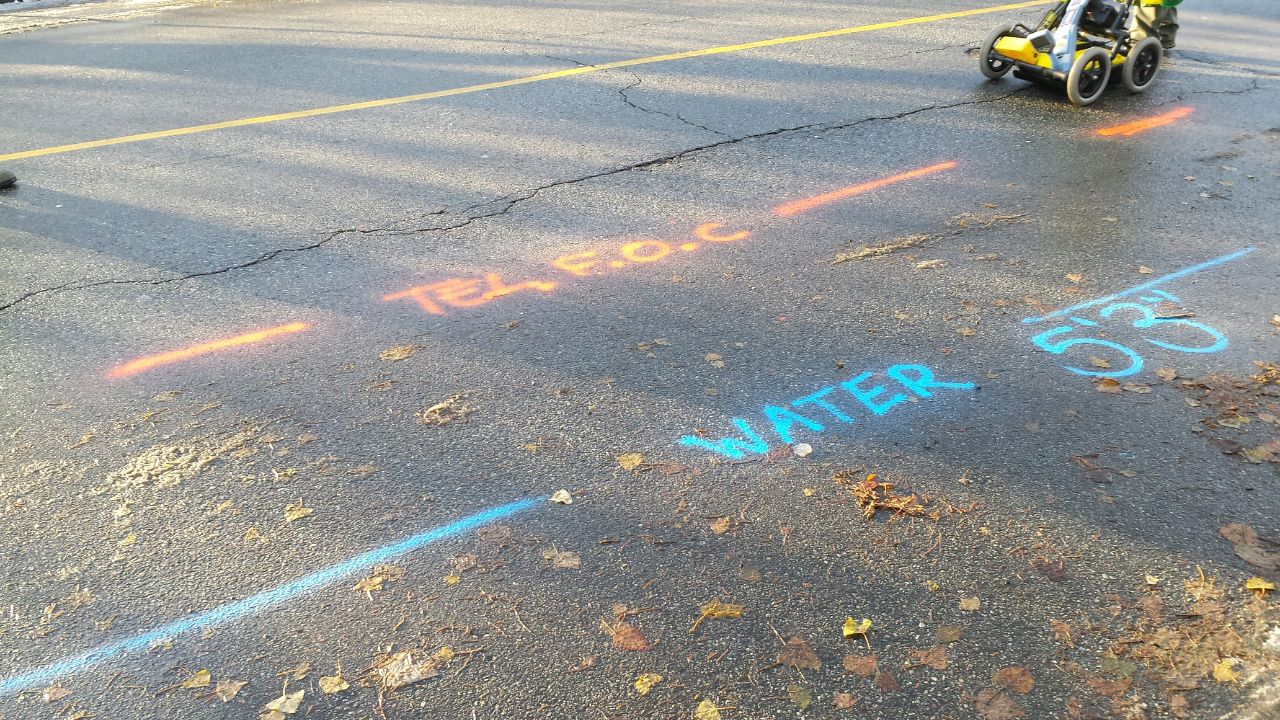
  • Pre-mark sites with high-visibility cold-weather materials—use black paint and taller flags that remain visible against snow; standard color-coded markers disappear under winter conditions, eliminating the visual guides that utility locators depend on
  • Document utility positions with GPS coordinates before snow—create permanent electronic records unaffected by weather; GPS-tagged digital markers provide backup when physical markings buried during cold weather excavation operations
  • Photograph all marking locations for winter reference—visual documentation helps utility locators relocate buried markers; images combined with GPS data ensure underground utility locating accuracy persists despite snow accumulation
  • Install elevated marker systems on snow-free structures—place flags and reflective stakes on posts, fences, or equipment that remain above expected snowfall; maintain visibility for utility locating tools throughout winter
  • Create detailed site maps integrating all detection data—combine GPR, EM locator, and GPS information into a comprehensive GIS database before terrain is obscured; centralized underground utility locating documentation accessible during cold weather excavation regardless of field conditions
  • Verify utility depths relative to expected frost lines—document whether infrastructure sits above, within, or below anticipated frost penetration (18-48 inches); inform which utility locating tools and underground utility locating techniques are required for winter access
  • Establish GIS system access for all stakeholders—ensure excavation crews, utility locators, and project managers can retrieve digital records remotely; real-time data sharing prevents cold-weather excavation delays when physical site access is restricted by weather

What Detection Adjustment Techniques Work in Frozen Conditions?

Standard utility locating tools require significant operational adjustments for accurate cold-weather excavation detection. Professional utility locators modify equipment settings, scanning procedures, and verification protocols to compensate for frozen ground interference. These underground utility locating techniques multiply equipment effectiveness in winter, the difference between successful detection and costly utility strikes during frozen ground projects.

  • Start GPR scans with lowest frequency settings (100-200 MHz)—maximizes penetration through frozen ground layers for deep utility detection; utility locating tools achieve better depth performance in ice-affected soil with lower frequencies during cold weather excavation
  • Increase frequency incrementally for shallow utility resolution—switch to 400-900 MHz when targeting infrastructure within the frost zone; higher frequencies provide the detail underground utility locating requires for precise positioning near the surface
  • Extend dwell time per GPR scan point—frozen ground requires 2-3x longer signal processing than thawed soil; rushing scans reduces underground utility locating accuracy when utility locators need it most during cold weather excavation
  • Use maximum EM locator transmitter power settings—overcome reduced frozen soil conductivity with the highest available output; full power compensates for weak signal propagation that limits utility locating tools in resistive winter conditions
  • Establish multiple ground connections for EM locators—distribute signal through several contact points when a single connection fails in frozen soil; specialized grounding equipment improves underground utility locating reliability for utility locators
  • Deploy multi-frequency EM scanning simultaneously—transmit multiple frequencies at once for a complete subsurface picture; advanced utility locating tools provide comprehensive data that single-frequency systems miss during cold-weather excavation
  • Conduct parallel detection passes 3 feet apart—redundant scanning verifies initial findings and catches utilities shifted by ground heaving; cross-checking improves underground utility locating confidence in freeze-thaw affected zones
  • Compare field readings with pre-freeze GPS coordinates—verify current detections match documented positions; discrepancies indicate ground movement requiring adjusted underground utility locating techniques from utility locators
  • Cross-verify with acoustic detection on pressurized lines—sound propagation works when EM and GPR are challenged by extreme frozen conditions; acoustic utility locating tools provide backup verification during difficult cold weather excavation scenarios
  • Use thermal imaging for shallow warm utilities (0-3 feet)—temperature differential between warm infrastructure and frozen ground enhances detection; thermal cameras supplement primary underground utility locating techniques when utility locators need additional confirmation.

What Equipment Maintenance Ensures Winter Reliability?

Utility locating tools fail catastrophically in cold weather excavation without proper winterization. Equipment designed for temperate conditions experiences power failures, component damage, and accuracy degradation when temperatures drop. Professional utility locators implement comprehensive maintenance protocols before winter, preventing mid-project failures that halt underground utility locating operations and expose sites to utility strike risks during frozen ground conditions.

  • Switch to cold-weather hydraulic and engine fluids rated to -40°F—standard oils thicken and fail in extreme cold; proper fluids maintain utility locating tools functionality throughout cold weather excavation, regardless of temperature extremes
  • Carry 3x normal battery quantity for extended operations—cold reduces battery capacity by 50%; redundant power systems ensure utility locators maintain continuous underground utility locating capability when equipment drainage accelerates
  • Pre-warm batteries to room temperature before installation—cold batteries deliver minimal power even when fully charged; warming maximizes available capacity for utility locating tools during cold weather excavation operations
  • Store equipment in heated environments between uses—prevents cold-soak damage to electronics and extends component life; heated storage maintains utility locating tools at operational readiness for underground utility locating deployments
  • Use insulated carrying cases with chemical warmers—maintains equipment temperature during transport and field breaks; thermal protection prevents utility locators’ detection systems from freezing mid-project during cold weather excavation
  • Monitor battery voltage continuously during operations—cold accelerates power drain, making sudden failures likely; real-time monitoring allows utility locators to replace batteries before equipment shutdown disrupts underground utility locating
  • Calibrate utility locating tools specifically for frozen ground—manufacturer settings assume temperate conditions; winter calibration adjusts sensitivity for ice interference and signal attenuation during cold weather excavation detection
  • Maintain backup equipment on-site for critical projects—redundant utility locating tools prevent project delays when primary systems fail; backup capability is essential for underground utility locating operations where utility locators cannot afford detection gaps in frozen conditions

What Technological Advancements Improve Detection?

Artificial intelligence revolutionizes how utility locating tools interpret complex winter data. Machine learning algorithms like YOLOv5 automatically detect and classify underground utilities from GPR images, filtering the false positives that frozen ground reflections create during cold weather excavation. AI-enhanced signal processing recognizes complex signatures in cluttered environments where ice layers and moisture variations confuse human operators. The technology learns to compensate automatically for transition zones between frozen and thawed soil—the most challenging conditions utility locators face during underground utility locating operations. This significantly reduces the time and expertise required for accurate data analysis, allowing utility locators to deploy underground utility locating techniques that previously demanded years of specialized training. AI systems process data in real-time, providing immediate feedback that guides equipment adjustments and scanning procedures during active cold weather excavation projects.

Geographic Information Systems (GIS) and Global Positioning Systems (GPS) integration transforms underground utility locating from temporary field markings into permanent digital infrastructure maps. Field data collected with precise coordinates uploads instantly to central GIS databases, creating 3D subsurface models accessible to all stakeholders through IoT connectivity. When snow buries physical markers, utility locators retrieve exact positions from GPS-tagged digital records unaffected by weather. Thermal imaging advances now penetrate deeper through frozen soil, detecting warm utilities where the temperature differential is most pronounced in cold-weather excavation conditions. Acoustic detection improvements help frozen ground become denser and more homogeneous—sometimes actually improving sound propagation for pressurized line tracing. 

These complementary utility locating tools work together, with GIS platforms integrating thermal, acoustic, GPR, and EM data into unified underground utility locating systems that utility locators access remotely during winter projects.

Integrated Approach to Cold Weather Utility Locating

No single utility locating tool solves all cold-weather excavation challenges—successful underground utility locating demands integrated technology deployment. Frozen ground creates advantages for GPR systems while hindering electromagnetic detection, requiring utility locators to combine multiple tools strategically. 

Real-world applications prove this approach works in the harshest environments: utility locating companies in Alaska use specialized GPR mounted on sledges to locate Tanana River channels through thick ice, Canadian operators maintain year-round underground utility locating accuracy with multi-frequency systems and GPS integration, and Antarctica projects demonstrate that proper utility locating tools function reliably even in extreme sub-zero conditions. These operations succeed because utility locators understand that frozen ground isn’t just harder soil—it’s a fundamentally different detection environment requiring adapted underground utility locating techniques.

The key is matching specific site conditions to appropriate technology combinations during cold weather excavation planning. AI-enhanced signal processing, multi-frequency sensors, and GIS integration make underground utility locating increasingly precise regardless of season. When utility locators deploy GPR for its frozen ground advantages, supplement with EM locators for conductive utility verification, confirm positions through GPS-tagged digital mapping, and verify critical infrastructure with hydro-vacuum excavation, they create redundant detection systems that compensate for each technology’s winter limitations. This integrated approach—combining advanced utility locating tools with systematic planning and adapted underground utility locating techniques—ensures essential cold weather excavation continues safely and effectively through the harshest conditions.

Get Professional Cold Weather Utility Locating Tools and Expertise

Cold weather excavation demands specialized utility locating tools and experienced utility locators who understand frozen ground physics. Util-Locate delivers comprehensive underground utility locating services with multi-frequency GPR systems, cold-weather rated EM locators, hydro-vacuum excavation capabilities, and AI-enhanced detection—all backed by GPS/GIS integration for permanent digital documentation.

Our utility locators deploy proven underground utility locating techniques specifically adapted for frozen conditions. We maintain full equipment redundancy, cold-weather calibration protocols, and 24-hour emergency response for critical cold weather excavation projects. When standard utility locating tools fail in winter, Util-Locate’s specialized equipment and expertise keep your projects safe and compliant.

Contact Util-Locate today for utility locating services that work in any cold weather excavation condition—protecting your workers, infrastructure, and budget through the harshest winter.
Frozen Ground and Utility Safety: Best Practices for Winter Excavation

utility locating services

Key Takeaways

  1. Frozen Ground Changes Strike Consequences Gas migrates horizontally through frozen soil to buildings—Minnesota explosion killed 4 in 40 minutes. Winter excavation transforms strikes into disasters.
  2. Equipment Loses 50% Accuracy Cold blocks signals, drains batteries. Standard utility locating services fail—underground utility locating needs cold-rated systems for excavation safety.
  3. No Winter Exemptions Exist OSHA requires utility locating services before ALL excavations. Frozen ground doesn’t exempt compliance—violations carry full penalties plus criminal charges.
  4. Hydro-Vacuum Eliminates Strike Risk Heated water thaws to 60 feet without mechanical contact. OSHA-approved—the only method for maintaining excavation safety in frozen ground.
  5. Frozen Soil Kills Without Warning OSHA case: A 2-foot slab crushed a worker. Appears stable but fractures unpredictably. Winter excavation requires 2-hour inspections.

Frozen ground occurs when consecutive days of cold temperatures penetrate the soil, turning moisture into ice and creating a hardened layer that extends from the surface downward. This frost penetration directly threatens utility locating services and excavation safety by altering soil properties, shifting utility positions, and creating expansion pressure on buried infrastructure. Winter excavation becomes exponentially more dangerous because frozen ground conceals structural weaknesses while appearing stable—a deceptive stability that fails without warning during underground utility locating operations.

The physics of freezing transforms routine excavation safety protocols into high-stakes operations. When water freezes, it expands, creating pressure that shifts, cracks, and ruptures buried utilities. Temperature variations cause pipes and cables to contract, moving them away from positions marked during warmer conditions. This combination makes winter excavation particularly hazardous for utility locating services that rely on accurate positioning data.

Critical Frozen Ground Statistics:

  • Frost depth penetration: 18-48 inches, depending on region, soil type, and cold duration—virtually all utility depths potentially affected
  • Groundwater expansion: Approximately 9% volume increase when freezing—creates crushing pressure on pipes and conduits
  • Utility position shifts: 6-12 inches of movement from ground heaving during freeze-thaw cycles—invalidates earlier underground utility locating marks
  • High-risk pipe specifications: Pipes shorter than 750 feet and diameters of 4-24 inches are most vulnerable to freeze-related failures
  • Frost line variables: Soil characteristics, nearby heat sources, and climate determine depth—longer frigid periods create deeper frost requiring specialized winter excavation techniques
  • Burial depth requirements: Water and sewer lines must be buried below the frost line—failure causes immediate burst risk during underground utility locating operations

How Does Frozen Ground Change Underground Utility Behavior?

Frozen ground fundamentally alters how damaged utilities behave, transforming routine strikes into catastrophic disasters. A Minnesota contractor severed a buried natural gas pipeline with digging equipment during winter excavation. He reported the leak to his supervisor but NOT to 911 or the utility company—a fatal error that ignored how frozen ground traps gas. Within 40 minutes, gas migrated through frozen soil into a nearby building and exploded. Four people died. Eleven suffered injuries. Six buildings were destroyed. The contractor’s assumption that frozen ground would contain the leak temporarily proved deadly. Frozen soil prevents gas from dissipating upward into the atmosphere as it does in warmer months. Instead, gas becomes trapped below the frost line and migrates horizontally through soil pathways, accumulating in building foundations and basements with explosive concentrations.

This incident demonstrates why excavation safety protocols during winter require heightened vigilance from utility locating services. Frozen ground doesn’t just make underground utility locating more difficult—it changes the consequences of every strike. Gas that would normally escape harmlessly becomes a weapon. Water that would visibly pool becomes hidden ice. Electrical systems that would spark warnings fail catastrophically. Professional utility locating services understand that winter excavation transforms the behavior of every utility type, demanding different emergency responses and prevention strategies than summer operations.

What Happens to Different Utility Types in Frozen Conditions?

  • Natural gas lines: Frozen ground prevents upward dissipation, forcing gas to migrate laterally through soil pathways directly to building foundations—creates explosive accumulation in basements and crawl spaces within 40 minutes of initial strike during winter excavation
  • Water mains: Freeze within minutes after strikes, hiding leak evidence until ice formations reveal damage—frozen soil prevents immediate ground saturation that utility locating services rely on for rapid detection in warmer seasons
  • Electrical conduits: Become brittle in extreme cold, increasing break severity when struck during underground utility locating—higher amperage releases and more extensive damage require specialized excavation safety protocols
  • Fiber optic and telecommunications: Cables contract in cold temperatures and become vulnerable to breaks from ground movement—shifts of 6-12 inches from freeze-thaw cycles snap lines that utility locating services marked before ground froze
  • Sewer systems: Freeze-thaw expansion compromises pipe integrity at joints—winter excavation near these weakened connections risks catastrophic failures affecting entire neighborhoods
  • Multiple material types in common trenches: Steel, cast iron, ductile iron, clay, polyethylene, PVC, and fiberglass all react differently to frozen conditions—lines stacked vertically in shared trenches multiply strike consequences, requiring comprehensive underground utility locating before any excavation safety clearance

What Are the Primary Hazards of Excavating in Frozen Ground?

Frozen soil kills workers through unpredictable collapse—a hazard that appears stable until catastrophic failure occurs. OSHA Case 201751450 documents a worker crushed to death when a frozen road base slab just 2 feet wide fell during winter excavation. The frozen section appeared solid to the crew and utility locating services on site. OSHA Case 816686 recorded a frozen piece approximately 7 feet long and 2 feet wide breaking loose without warning, pinning an employee against the opposite trench side. Michigan Construction Laborer Fatality Case 109 killed a 50-year-old worker when frozen soil broke off during a March excavation and struck him in the back. December 11, 2001, at a Cecil County dairy farm, a worker was entombed and killed while a second was rescued from a massive trench collapse during winter excavation. These aren’t equipment failures or procedural violations—they’re the inherent behavior of frozen ground that makes excavation safety protocols from warmer months inadequate for winter conditions.

Equipment and Detection Challenges in Frozen Ground:

  • 50% accuracy loss for locating equipment—frozen ground conditions reduce detection reliability for underground utility locating, making strikes more likely even when proper utility locating services are employed before excavation
  • Compact equipment fails completely—frozen soil becomes too hard and dense for standard machinery, requiring specialized high-torque systems or thawing methods before excavation safety can be established
  • Battery capacity drops by half—cold weather reduces power sources to 50% strength, causing mid-project equipment failures that leave winter excavation sites exposed without proper utility verification
  • Standard shoring systems fail—protective equipment designed for soft soil becomes inadequate when frozen ground thaws unevenly during excavation, eliminating excavation safety margins that workers depend on
  • Extended cold exposure increases worker injuries—longer excavation times required for frozen ground multiply hypothermia and frostbite risks, forcing utility locating services to balance worker safety against project completion pressures

What Are the Essential Best Practices for Frozen Ground Excavation?

Preventing frozen ground disasters requires proactive planning before temperatures drop and strict protocols during winter excavation. Professional utility locating services understand that excavation safety in frozen conditions demands different approaches than summer operations—equipment must be winterized, timelines extended, and detection methods adjusted for ice and snow interference. The best practices below separate contractors who complete winter excavation safely from those who contribute to the 213,792 annual utility damages. These protocols protect workers, preserve underground infrastructure, and maintain excavation safety compliance despite frozen ground challenges.

How Should You Assess Frozen Ground Before Excavation?

  • Test frost depth at multiple excavation site points—depth varies by sun exposure and proximity to heat sources, requiring a comprehensive assessment before utility locating services can accurately mark lines
  • Verify consecutive cold days—ambient temperatures must stay cold for several days before the ground fully freezes; surface ice layer forms first, then complete frost penetration occurs
  • Document temperature swing history—variations exceeding 20°F within 24 hours require immediate re-verification of utility positions from underground utility locating because ground heaving shifts infrastructure
  • Identify ground heaving indicators—cracked pavement, shifted surface markers, and uneven terrain signal that utilities have moved from original positions marked by utility locating services
  • Check freeze-thaw cycle frequency—repeated cycles create voids and ice layers within soil that complicate detection accuracy and compromise excavation safety during winter operations
  • Assess soil moisture content before freeze—pre-freeze moisture levels predict thaw behavior and determine appropriate excavation safety protocols for specific site conditions
  • Review the weather forecast for duration—longer frigid periods create deeper frost requiring specialized winter excavation techniques and extended timelines for safe underground utility locating completion

What Pre-Excavation Planning Prevents Frozen Ground Accidents?

  • Schedule utility locating services BEFORE ground freezes—detection accuracy peaks when soil remains accessible; frozen conditions reduce equipment effectiveness by 50% for underground utility locating operations
  • Allocate 23-28 weather delay days into timelines—winter excavation takes significantly longer; adequate buffer time eliminates pressure that drives contractors to skip excavation safety protocols
  • Pre-mark sites with black paint or flags before first snowfall—standard color codes disappear against snow; black markings remain visible for utility locating services throughout winter conditions
  • Plan work during the 10 AM – 2 PM window—the warmest daily period when frost softens slightly; maximizes excavation safety while working within compressed 9-10 hour winter daylight limits
  • Build hydro-vac operation time extensions—thawing and excavation may take 2-3x longer than summer operations; realistic scheduling prevents dangerous rushing during underground utility locating verification
  • Hire additional workers per shift—compensates for shortened daylight hours; maximizes output during safe working conditions without compromising winter excavation safety standards
  • Coordinate emergency shut-off locations with utility companies—establish protocols before starting work; frozen ground gas migration reaches buildings within 40 minutes, requiring immediate response capabilities
  • Pre-position emergency equipment within 100 feet—heaters, blankets, and rescue gear must be immediately accessible; extended winter excavation exposure increases cold-weather injury risk, requiring rapid intervention
  • Use black flags when snow is present—ensures utility locating services markings remain identifiable; snow buries standard markers, eliminating visual guides that excavation safety depends on
  • Contact utility companies within the required 2 business days minimum—federal law mandates notification regardless of frozen ground emergency status; proper underground utility locating cannot be skipped for winter deadlines

What Are the Critical Safety Protocols for Frozen Ground Work?

Worker safety protocols designed for summer excavation fail in frozen conditions. Winter excavation demands enhanced protection for cold-weather injuries and frozen soil collapse risks that standard excavation safety programs don’t address. Professional utility locating services require layered clothing systems, accelerated inspections, and atmospheric monitoring for underground utility locating in frozen ground.

How Do You Protect Workers During Frozen Ground Excavation?

  • Moisture-wicking base layers—digging causes sweating even in cold weather; wet clothing accelerates hypothermia during utility locating services operations
  • Layering systems for flexibility—workers add or remove pieces as conditions change during underground utility locating, without sacrificing warmth
  • Loose-fitting clothing—tight garments restrict movement and create excavation safety risks when escaping hazards during winter excavation
  • Hats, gloves, and earmuffs—reduce bare skin exposure while maximizing dexterity for manual tools during utility locating services verification
  • Chemical hand-warmers on-site—available for any crew member during extended winter excavation in sub-zero conditions
  • 15-minute warming breaks below 0°F wind chill—prevents frostbite and maintains capability throughout underground utility locating operations
  • Heated on-site shelter with medical supplies—emergency warming within immediate access during utility locating services in extreme cold
  • Train on hypothermia and frostbite recognition—winter excavation safety depends on identifying early warning signs before serious injury
  • Buddy system monitoring—continuous observation for cold stress during utility locating services, where workers may not recognize impairment
  • Never rush for deadlines—excavation safety protocols override timelines; cold-weather complications during underground utility locating cannot be compressed

What Trench Safety Measures Are Specific to Frozen Ground?

  • Inspect every 2 hours minimum—frozen ground changes rapidly; daily inspections are inadequate for winter excavation safety during freeze-thaw cycles
  • Watch for frozen slabs detaching—appears stable until failure; OSHA Case 201751450 worker crushed during utility locating services operation
  • Prohibit entry over 4 feet without protection—shoring, shielding, or sloping required; frozen ground failures kill during underground utility locating
  • Verify access/egress within 25 feet—ice makes climbing hazardous; ladders are mandatory for excavation safety in winter excavation
  • Test the atmosphere before entry over 4 feet—oxygen below 19.5% causes unconsciousness; frozen ground creates displacement during utility locating services
  • Monitor ground movement continuously—winter excavation conditions change faster than summer, requiring constant excavation safety vigilance
  • Establish 10-foot exclusion zones—falling frozen debris travels further; protects workers during underground utility locating operations
  • Keep rescue equipment attended—breathing apparatus, harness, stretcher immediately accessible during utility locating services emergencies
  • Install protection before worker entry—frozen ground appears stable but requires mechanical protection regardless of appearance during winter excavation
  • Test communication systems in cold—electronics fail in extreme temperatures; underground utility locating teams need verified backup systems
  • Document daily conditions—proves excavation safety compliance during utility locating services, if accidents occur

What Thawing Methods Ensure Utility Safety in Frozen Ground?

Mechanical excavation near utilities in frozen ground guarantees strikes. Thawing methods transform impenetrable frozen soil into workable ground while maintaining excavation safety. Professional utility locating services select techniques based on frost depth, utility proximity, and timeline. Hydro-vacuum excavation dominates winter excavation because it thaws and removes soil simultaneously while eliminating strike risk.

How Does Hydro-Vacuum Excavation Work in Frozen Conditions?

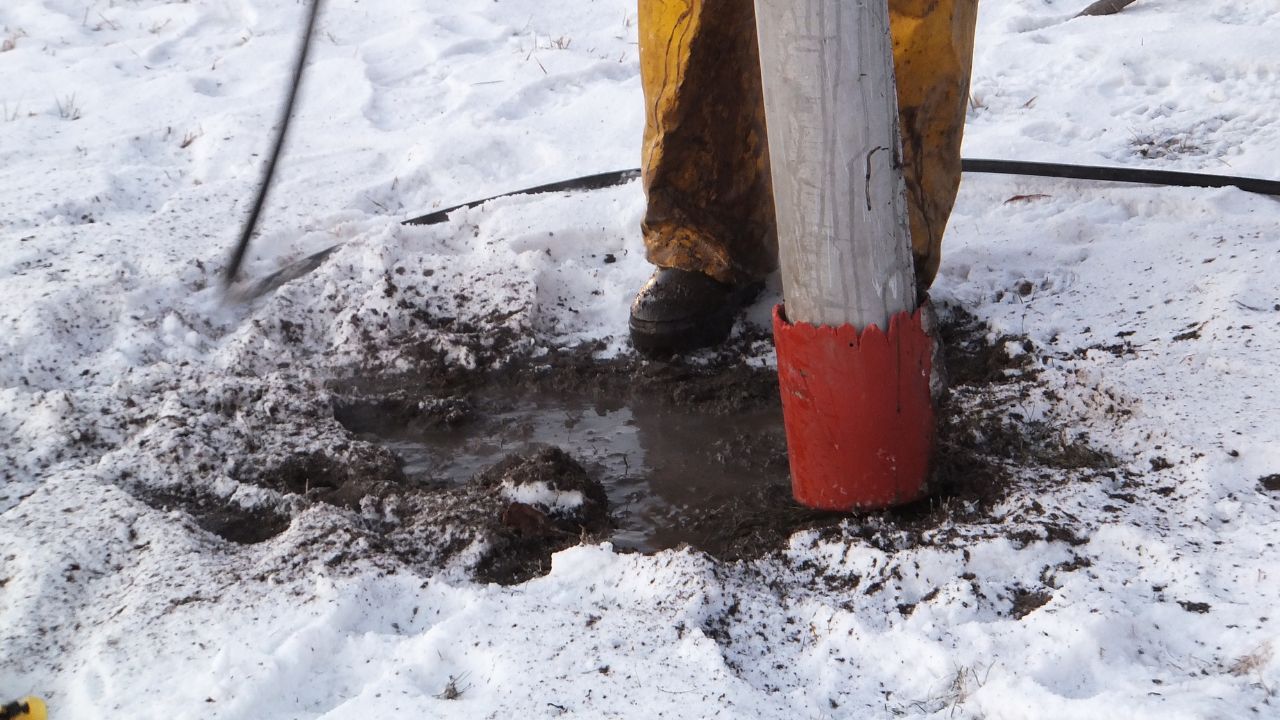
Hydro-vacuum excavation uses high-pressure heated water at 140-180°F directed at frozen soil. The water immediately thaws ice, creating a slurry evacuated through an industrial vacuum in a closed-loop system. This method penetrates any soil type, including completely frozen ground to 60 feet depth. The system operates continuously, allowing utility locating services to expose marked lines without mechanical contact with buried infrastructure during underground utility locating operations.

OSHA 1926.651(b)(3) specifically approves hydro-vacuum excavation for determining exact utility locations. The technique virtually eliminates strikes while maintaining excavation safety compliance. Common Ground Alliance identifies proper exposure using hydro or air excavation as the only true way to verify infrastructure location. Professional utility locating services rely on hydro-vacuum for winter excavation because it works in extreme cold, provides precision navigation around underground utilities, and delivers non-destructive results that mechanical methods cannot match in frozen ground.

What Alternative Thawing Techniques Work for Utility Excavation?

  • Ground heaters (electric/propane blankets)—small excavation areas during utility locating services; extended setup time, best for shallow frost penetration
  • Steam injection—directed thawing for precise utility exposure during underground utility locating; faster than heaters, but requires specialized equipment
  • Heated enclosures—temporary structures for multi-day winter excavation; protect workers and exposed utilities during utility locating services operations
  • Block heaters for engines—prevent equipment starting failures; maintain machinery for excavation safety during frozen ground operations
  • Engine coolant warmers—keep hydraulic systems operational in sub-zero temperatures; critical for utility locating services in extreme cold
  • Infrared radiant heating—surface thaw without water; limited to 12 inches depth during underground utility locating
  • Chemical thawing (calcium chloride)—emergency access only; corrosion concerns restrict use during winter excavation near metallic utilities

What Regulations Govern Frozen Ground Excavation Safety?

Federal and state laws provide no exemptions for frozen ground or emergency repairs. Winter excavation must comply with identical excavation safety standards as summer operations. OSHA mandates utility locating services before any excavation, regardless of soil conditions. Violations during winter excavation carry full penalties plus criminal charges when fatalities occur.

What OSHA Standards Apply to Winter Excavation?

  • OSHA 1926.651(b)(1): Utility location SHALL be determined PRIOR to excavation—no frozen ground exemption for utility locating services
  • OSHA 1926.651(b)(2): Contact utility companies within established response times PRIOR to start—winter emergencies don’t exempt underground utility locating notification
  • OSHA 1926.651(b)(3): Exact location SHALL be determined by safe means—hydro-vacuum approved, hand tools alone NOT acceptable during winter excavation
  • OSHA 1926.651(c): Ladders/steps/ramps required for trenches 4+ feet deep, 25-foot maximum lateral travel—ice makes egress mandatory for excavation safety
  • OSHA 1926.651(g)(1): Test atmospheres before entry over 4 feet when oxygen is below 19.5% possible—frozen ground creates displacement during utility locating services
  • OSHA 1926.651(g)(2): Emergency rescue equipment SHALL be available—breathing apparatus, harness, stretcher, attended during winter excavation
  • Competent person: Daily inspections, hazard identification, corrective authority, excavation safety training—required for all underground utility locating operations

What State Laws Address Frozen Ground Utility Safety?

  • Federal 811 mandate: All states require calling before digging—no winter excavation exemptions for utility locating services
  • 2 business days minimum (NOT including notice day) before excavation—frozen ground doesn’t reduce underground utility locating timeframes
  • 10 days maximum notification validity—utility locating services markings expire, requiring re-notification for extended winter excavation
  • Arizona hand-exposure: Facilities MUST BE EXPOSED WITH HAND TOOLS near utilities—applies to frozen ground excavation safety
  • 811 covers public utilities only—private utilities and abandoned lines require separate professional underground utility locating
  • 49 CFR Part 196: Must use one-call, wait for response, report damage immediately—no frozen ground exemptions for excavation safety
  • State-specific requirements: Illinois 2-10 day window, Louisiana comprehensive operator participation—winter excavation follows identical utility locating services rules

What Are Common Frozen Ground Excavation Mistakes?

Shortcuts during winter excavation kill workers and destroy property. A Missouri contractor began digging one day before scheduled utility marking, hitting a 6-inch high-pressure gas line. A 20-year-old plumber’s apprentice jackhammered concrete without knowing a power line lay beneath—thousands of volts exploded through his body, costing two toes, months of hospitalization, and two years to walk again. A Canadian homeowner hit a gas line while digging footings. His wife refused to evacuate. The explosion killed her. Lexington, Missouri: A subcontractor struck a gas line, killing a child. Commercial building: a gas line strike killed one, injured eleven. Every incident involved contractors who bypassed underground utility locating or ignored excavation safety because frozen ground created pressure to rush.

Common Frozen Ground Excavation Errors:

  • Assuming frozen ground is stable—appears solid but conceals weaknesses; OSHA cases document workers crushed when frozen slabs break during winter excavation
  • Using summer-rated equipment—batteries lose 50% capacity; machinery fails during utility locating services, requiring immediate replacement
  • Skipping re-verification after temperature swings—ground heaving shifts utilities 6-12 inches; underground utility locating marks become inaccurate after freeze-thaw
  • Ignoring extended timelines—frozen ground takes 2-3x longer; rushing eliminates excavation safety margins and increases strikes
  • Mechanical excavation near utilities—guarantees strikes in frozen conditions; hydro-vacuum required for safe underground utility locating
  • Working in low-light, slippery conditions multiplies fall risks; compressed daylight demands lighting for utility locating services
  • Neglecting ground heaving indicators—cracks and shifts signal moved utilities; ignoring warnings invalidates previous underground utility locating
  • Rushing for year-end deadlines—fiscal pressure drives skipping utility locating services; every fatal incident involved contractors prioritizing schedules over excavation safety

Trust Frozen Ground Experts—Partner With Util-Locate

Frozen ground demands specialized expertise that standard utility locating services don’t provide. Util-Locate delivers professional underground utility locating with cold-weather rated equipment, hydro-vacuum excavation capabilities, and certified technicians trained specifically for winter excavation challenges.

Our utility locating services maintain full excavation safety compliance in frozen conditions—multi-frequency GPR systems, heated water hydro-vac trucks, and comprehensive OSHA protocols designed for sub-zero operations. We understand that frozen ground doesn’t pause for schedules, which is why Util-Locate provides 24-hour emergency response for burst pipes, collapsed infrastructure, and urgent winter excavation needs.

Don’t risk frozen ground excavation without professionals. Contact Util-Locate for underground utility locating that prevents strikes, protects workers, and maintains excavation safety compliance through the harshest winter conditions.

Call today for utility locating services you can trust in frozen ground.

Cold Weather, Hidden Risks: The Dangers of Skipping Utility Locating in December Projects

underground utility locating services

Key Takeaways

  1. December Multiplies Utility Strike Deaths Frozen ground traps gas causing lateral migration—Minnesota explosion killed 4 people in 40 minutes. December transforms strikes into disasters through underground conditions that prevent dissipation.
  2. No Emergency Exemptions Exist OSHA requires underground utility locating services before ALL excavations. December emergencies don’t exempt compliance—winter excavation safety violations carry full penalties plus criminal charges.
  3. Strikes Cost $75,000-$500,000+ Professional utility locators cost $2,000-$5,000. December adds 30-50% premiums for frozen repairs. Skipping underground utility locating services turns thousands saved into hundreds of thousands lost.
  4. Standard Equipment Fails in Cold Batteries drop 50% capacity. Ice blocks signals. Snow buries markings. Winter excavation safety requires cold-rated utility locators with specialized equipment—summer tools guarantee failure.
  5. Deadline Pressure Kills Every December fatality involved contractors who skipped underground utility locating services for deadlines. Year-end pressure and emergency repairs drive fatal shortcuts that destroy businesses and lives.

Contractors skip utility locating in December due to intense year-end deadline pressures, emergency repair demands, and dangerous cost-cutting decisions. The combination of shortened daylight hours, weather delays, and fiscal year-end budgets creates pressure to bypass underground utility locating services that seem “optional.” December’s emergency excavations for burst pipes and frozen infrastructure failures intensify the temptation to skip proper utility locators and start digging immediately.

The misconception that frozen ground is “stable” and easier to work with fuels risky decisions. Many contractors assume winter excavation safety is improved because frozen soil appears solid and utilities seem more visible without vegetation. This false confidence, combined with the belief that 23-28 weather delay days have already consumed their buffer time, drives contractors to eliminate what they perceive as “extra” steps. When emergency repairs demand immediate action and weather windows close rapidly, proper utility locating becomes the first corner cut.

Year-end budget constraints amplify these pressures. Projects racing to completion before fiscal deadlines view underground utility locating services as expendable expenses rather than critical safety measures. The reduced availability of utility locators during holiday periods, combined with extended 811 response times, creates frustration that pushes contractors to proceed without complete information. December’s perfect storm of time pressure, budget limits, and emergency conditions makes skipping professional utility locating seem justified—until disaster strikes.

What Makes December the Deadliest Month for Utility Strikes?

December combines the year’s highest concentration of emergency infrastructure failures with the lowest accuracy rates for underground utility locating services. Every 9 minutes, a utility line is damaged nationwide—but December rates spike significantly higher due to frozen ground conditions, obscured markings, and compressed work schedules. The 213,792 utility damages reported in 2022 show winter months, particularly December, are vastly overrepresented. When utility locators experience 50% reduced equipment accuracy and contractors face emergency repair pressures, strike rates multiply. December’s unique combination of frozen ground preventing gas dissipation, snow-covered utility markings, and holiday-reduced utility company response times creates the year’s most dangerous excavation environment.

The deadliest factor is December’s frozen ground, which fundamentally changes strike consequences. Gas that would normally dissipate upward becomes trapped below the frost line and migrates horizontally into building foundations—the Minnesota explosion that killed four people occurred just 40 minutes after the initial strike. Burst water mains freeze within minutes, hiding damage that would be immediately visible in warmer months. Winter excavation safety becomes exponentially more critical when frozen conditions transform routine strikes into catastrophic events. Professional utility locating isn’t just about finding utilities in December—it’s about preventing disasters that unfold differently than any other month.

How Does Frozen December Ground Change Utility Strike Consequences?

  • Gas trapped below the frost line migrates horizontally to building foundations rather than dissipating upward, creating explosive accumulation in basements within 40 minutes of initial utility strike
  • Frozen soil prevents immediate leak detection through ground saturation, hiding severed water mains for hours until ice formations reveal damage
  • Electrical conduits become brittle in extreme cold, increasing break severity when struck—higher amperage releases and more extensive repairs required
  • December temperature swings cause ground heaving that shifts utility positions away from markings placed by utility locators weeks earlier during pre-freeze conditions
  • Ice formations can conceal utility damage for extended periods, delaying emergency response and multiplying costs when frozen ground complicates repair access for underground utility locating services

What December Weather Patterns Increase Strike Risk?

December weather creates a cascade of hazards that compromise winter excavation safety and utility locating accuracy. Early snowfall before ground freezes completely buries surface markers placed by utility locators, while black ice formation obscures excavation hazards and utility flags that guide safe digging zones. Temperature fluctuations unique to December cause ground heaving that shifts buried infrastructure away from recorded positions, making even recent underground utility locating services potentially inaccurate. Extreme wind chill reduces equipment battery life to under 2 hours, causing mid-project failures that leave excavations exposed without proper utility verification. Storm systems that concentrate in December delay 811 response times beyond legal minimums, pressuring contractors to proceed without complete utility locating data when weather windows open briefly between fronts.

What Do December Utility Accidents Reveal About Skipping Locates?

Real December incidents demonstrate that skipping underground utility locating services transforms routine excavations into fatal disasters. Frozen ground conditions, emergency repair pressures, and year-end deadline stress create the exact circumstances where proper utility locating becomes most critical—yet contractors most frequently skip it. These cases prove that December’s unique hazards don’t just increase accident probability—they multiply consequences.

What Happened in the December 2001 Cecil County Trench Collapse?

On December 11, 2001, a dairy farm excavation in Cecil County turned deadly when frozen December ground collapsed without warning. A worker was entombed and killed while a second worker was rescued from the unstable trench. The investigation revealed that inadequate utility locating procedures combined with December’s frozen soil conditions created unpredictable trench wall stability. What appeared to be solid frozen ground was actually a massive frozen slab that broke free when excavation approached buried utilities.

The tragedy highlighted how winter excavation safety requires more than standard protocols. December conditions made the trench walls appear stable, but temperature fluctuations had created internal fractures in the frozen soil. The crew proceeded without comprehensive underground utility locating services, assuming the frozen ground provided additional safety. Instead, the frozen December soil became the weapon that killed an experienced worker. Professional utility locators would have identified both the utilities and the unstable frozen ground conditions before excavation began.

Why Did a December Gas Line Strike Cause Multiple Explosions?

A Minnesota contractor severed a buried natural gas pipeline with digging equipment, then made a fatal error: reporting the leak to his supervisor but not to 911 or the utility company. The contractor assumed the frozen December ground would contain the leak temporarily. Within 40 minutes, gas migrated through frozen soil into a nearby building and exploded. Four people died. Eleven suffered injuries. Six buildings were destroyed.

Frozen December ground prevented the gas from dissipating upward as it would in warmer months. Instead, it traveled laterally through soil pathways, accumulating in building basements with explosive concentrations. The contractor had skipped proper underground utility locating services to meet a year-end deadline, believing the emergency nature of the repair justified the shortcut. Winter excavation safety protocols exist specifically because December’s frozen conditions transform gas leaks from controllable incidents into mass casualty events. Professional utility locators understand that December strikes don’t just damage utilities—they create bombs.

What December Emergency Repairs Lead to Fatal Mistakes?

A Missouri contractor faced pressure to repair burst pipes before the holiday season. Rather than waiting for scheduled utility marking, he began digging one day before the utility locators were scheduled to arrive. The excavator struck a 6-inch high-pressure gas line within hours. Emergency crews capped the line in 2 hours with no injuries—pure luck prevented another Minnesota-style disaster.

The incident reveals December’s most dangerous pattern: emergency repairs for freeze-related failures create intense pressure to skip underground utility locating services. The contractor knew proper protocols required waiting for utility locating, but December’s compressed work windows and emergency conditions made the risk seem acceptable. Winter excavation safety requirements don’t include exemptions for emergencies—yet December’s cascade of infrastructure failures consistently pushes contractors to bypass the utility locators who could prevent catastrophe. Every December emergency repair that skips proper locating is a disaster waiting to happen.

What Are the Legal Consequences of Skipping December Utility Locates?

Federal and state laws provide no exemptions for winter conditions, emergency repairs, or year-end deadlines. Contractors who skip underground utility locating services in December face identical penalties to those who violate protocols in summer—but December violations more frequently result in fatalities, triggering criminal charges alongside regulatory fines. OSHA requirements for utility locating apply regardless of frozen ground, compressed schedules, or emergency conditions. Winter excavation safety violations that cause deaths can result in both organizational penalties and individual criminal liability for project managers and competent persons who authorized excavation without proper utility locators.

What OSHA Violations Result From Skipped Locating?

  • OSHA 1926.651(b)(1) violation: Location of underground utilities SHALL be determined PRIOR to excavation—no weather exemptions exist for this mandatory requirement, and December conditions don’t modify legal obligations for utility locating
  • Competent person liability: The designated competent person faces personal criminal charges when proceeding without underground utility locating services results in worker deaths or serious injuries during winter excavation
  • Willful violation penalties: Skipping utility locators to meet deadlines constitutes willful violation with fines up to $156,259 per occurrence—multiple utility strikes in December can compound to millions in OSHA penalties
  • Criminal charges for fatalities: When deaths result from skipped utility locating, OSHA refers cases for criminal prosecution with potential imprisonment for contractors and project managers who authorized unsafe winter excavation
  • Repeat violation status: Previous utility strikes trigger repeat violation penalties at 10x standard fines—contractors with winter excavation safety violations face exponentially higher December penalties on subsequent incidents

What Are the Financial Penalties for December Utility Strikes?

December utility strikes carry 30-50% higher costs than identical incidents in warmer months due to frozen ground repair complications, holiday labor premiums, and extended project delays. The $30 billion in annual nationwide utility strike costs show individual incidents averaging $75,000-$500,000 in direct expenses—but December adds frozen ground excavation challenges, emergency overtime rates during holidays, and extended equipment rental when crews can’t work in extreme cold. Contractors who skip underground utility locating services to save $2,000-$5,000 in professional utility locators’ fees risk hundreds of thousands in penalties, repairs, and legal settlements. Winter excavation safety violations that cause injuries multiply costs exponentially through workers’ compensation claims, OSHA fines, and long-term insurance premium increases that persist for years after December incidents.

How Much Does Skipping Utility Locating Really Cost in December?

The true cost of skipping underground utility locating services in December extends far beyond the strike itself. Direct repair expenses, project delays, regulatory penalties, and long-term insurance consequences compound into financial disasters that dwarf the modest fees professional utility locators charge. December’s frozen ground conditions add 30-50% premiums to every cost category compared to summer incidents. Contractors who eliminate utility locating to save a few thousand dollars routinely face six-figure losses when strikes occur. Winter excavation safety isn’t an expense—it’s insurance against catastrophic financial consequences that destroy businesses.

Cost Category Typical Range December Premium
Direct Repair $50,000-$200,000 +30-40% for frozen ground excavation, thawing equipment, and emergency restoration of underground utilities
Project Delay $5,000-$50,000/day +50% due to holiday scheduling, reduced contractor availability, and weather-related work stoppages
OSHA Fines $15,625-$156,259 No seasonal reduction—willful violations for skipped utility locating carry maximum penalties regardless of December conditions
Legal Settlements $100,000-$5M+ Higher settlements when winter excavation safety violations cause fatalities in preventable December accidents
Insurance Increases 20-150% premium hike Permanent rate impact after December utility strikes—carriers view winter violations as evidence of systemic safety failures
Work Stoppage $96/hour idle crew cost Extended through holidays when replacement workers unavailable—emergency utility repairs during December cost 2-3x normal rates
Equipment Damage $25,000-$150,000 Excavators hitting high-pressure gas or electrical lines sustain catastrophic damage requiring complete replacement, not repairs

Professional underground utility locating services cost $2,000-$5,000 for typical December projects. Every line item above represents what happens when contractors skip utility locators to save those fees. December’s frozen conditions don’t just increase costs—they guarantee that utility strikes become business-ending financial catastrophes.

What December Conditions Require Mandatory Utility Locating?

Federal and state laws mandate underground utility locating services for all December excavations, regardless of emergency status or frozen ground conditions. Winter excavation safety regulations provide no exemptions for shortened timelines, holiday schedules, or emergency repairs. Every condition below triggers mandatory utility locating—skipping professional utility locators under any circumstance violates law and eliminates legal liability protections.

  • All excavations deeper than 12 inches require 811 calls at least 2 business days before digging—December frost depth reaches 18-48 inches in most regions, meaning virtually all winter excavation penetrates zones requiring underground utility locating services.
  • Emergency repairs for burst pipes and frozen infrastructure do NOT exempt utility locating requirements—federal law mandates utility locators mark lines before any excavation, including urgent December repairs that contractors perceive as time-critical.
  • Private utilities need separate professional locating even with 811 compliance—public utility marking through 811 doesn’t cover private gas lines, electrical service laterals, or communication cables that underground utility locating services must identify independently.
  • Abandoned utility lines are more common in older December development zones Verification is required—defunct gas pipes, capped water services, and decommissioned electrical conduits remain energized or pressurized and demand confirmation from utility locators before excavation.
  • Snow-covered ground increases mandatory hand-exposure requirements within tolerance zones—when utility markers are buried under December snow, winter excavation safety protocols require hand tools to expose exact utility positions before mechanical digging
  • Hydro-vacuum excavation becomes required within tolerance zones in frozen conditions—OSHA accepts hydro-vac as an approved method for exposing utilities when frozen December ground makes hand tools ineffective, necessitating professional underground utility locating services with specialized equipment
  • Ground heaving from freeze-thaw cycles requires re-verification of utility positions—utilities marked before the ground froze may have shifted 6-12 inches due to December temperature swings, mandating new utility locating before excavation proceeds in previously marked areas

How Do You Maintain Utility Locating Compliance in December?

December compliance demands proactive planning, specialized equipment, and clear safety triggers. Contractors who maintain winter excavation safety schedule underground utility locating services early, use cold-weather detection equipment, and establish postponement criteria that override deadlines. Professional utility locators prevent the catastrophic December strikes that destroy businesses and kill workers.

What Pre-December Planning Prevents Dangerous Shortcuts?

  1. Schedule underground utility locating services before Thanksgiving, when ground remains accessible and utility locators can accurately mark lines before frost complications and emergency pressures intensify
  2. Build 30+ weather delay days into December timelines to eliminate pressure that drives skipping utility locating when storms compress work windows and winter excavation safety protocols become inconvenient
  3. Pre-mark sites with black flags before the first snowfall so utility locators have visible references and markings remain identifiable under snow that obscures standard utility marking systems
  4. Contract professional utility locators with winter experience early—verify cold-weather equipment and establish 24-hour emergency response guarantees before December’s busy season begins
  5. Establish written emergency protocols with guaranteed response times, specifying how burst pipe repairs receive immediate underground utility locating services without bypassing safety requirements
  6. Document all 811 calls and maintain on-site ticket copies to prove compliance if strikes occur—dated records demonstrate proper utility locating procedures were followed

What Equipment Ensures Accurate December Utility Detection?

  • Multi-frequency GPR systems calibrated for frozen ground overcome ice-related signal issues when standard equipment fails in December—professional underground utility locating requires winter-specific technology
  • Cold-weather electromagnetic locators with extended batteries maintain full detection while standard utility locators lose 50% capacity in sub-zero conditions
  • Hydro-vacuum excavation trucks with heated water safely expose utilities in frozen ground—the only OSHA-approved non-destructive method for winter excavation safety verification
  • Backup battery systems rated for extreme cold prevent equipment failures that leave excavations exposed without utility verification during underground utility locating operations
  • Trailer-mounted light towers for shortened December daylight enable utility locators to work during compressed 9-10 hour winter days and verify markings in low-light
  • GPS marking systems function through snow record utility positions electronically when paint and flags become buried—maintains winter excavation safety when weather obscures physical markers

When Should December Projects Be Postponed for Safety?

  • When 811 cannot respond within legal timeframes, proceeding without complete marking violates federal law, regardless of emergency status affecting underground utility locating services
  • Temperature below -10°F—utility locators’ equipment loses reliability at extreme cold, making winter excavation safety impossible to guarantee
  • Wind chill creates frostbite risk under 15 minutes—worker safety prevents crews from safely verifying positions during underground utility locating procedures
  • Snow exceeds 6 inches, and buries utility markings—excavating without visible markers from utility locators violates winter excavation safety and competent person responsibilities
  • Ice storms create fall hazards—slippery conditions endanger utility locators during marking or crews during hand-exposure, mandating postponement
  • Emergency pressure tempts shortcuts—if stress causes consideration of skipping underground utility locating services, conditions are too dangerous, and postponement becomes mandatory

Don’t Let December Deadlines Turn Into Disasters—Call Util-Locate Now

December’s frozen ground, emergency pressures, and year-end deadlines create the year’s deadliest conditions for utility strikes. Util-Locate provides professional underground utility locating services with certified utility locators, winter-rated GPR and electromagnetic equipment, and hydro-vacuum excavation capabilities designed for frozen ground challenges.

Our utility locators maintain full winter excavation safety compliance with 24-hour emergency response, cold-weather detection systems, and comprehensive OSHA protocols. We understand that December doesn’t pause for proper utility locating, which is exactly why you need professionals who work in any conditions.

Schedule your December utility locating before conditions worsen. Contact Util-Locate today for underground utility locating services that prevent strikes, protect workers, and keep projects compliant through the deadliest month of the year.

Call now or visit our website to request immediate winter utility locating.

Why Winter Makes Utility Locating More Challenging—and How to Overcome It

utility location in California

Key Takeaways

  1. Winter Amplifies Utility Strike Risks Frozen ground, snow cover, and cold temperatures reduce locating equipment accuracy by 50% or more. Every 9 minutes, a utility is damaged—winter makes this worse.
  2. Frozen Ground Changes Emergency Response Gas doesn’t dissipate upward through frozen soil—it migrates laterally into buildings. The Minnesota explosion killed 4 people within 40 minutes of the initial strike.
  3. 811 Doesn’t Cover Everything Public utility marking through 811 is mandatory, but incomplete. Private utilities and abandoned lines require separate professional utility locating services.
  4. Hydro-Vacuum Excavation Eliminates Strike Risk. Heated water thaws frozen ground and safely exposes utilities to 60 feet. It’s OSHA-approved and virtually eliminates accidental utility damage.
  5. Call 911 First After Any Utility Strike. Don’t just notify your supervisor—call 911 immediately, then the utility company. Proper emergency response in the first minutes prevents explosions and saves lives.

Winter conditions directly interfere with underground utility locating equipment and create dangerous hazards that multiply risks. Cold temperatures, frozen ground, and snow cover reduce accuracy for utility locators while shortening safe work windows. These challenges make winter the most dangerous season for utility location in California and across the nation.

How Winter Complicates Utility Locating 

Impact on Equipment and Accuracy

Every 9 minutes, an underground utility line is damaged somewhere in the United States. Winter amplifies this risk by degrading the performance of utility locating services. Frozen soil reduces conductivity, making electromagnetic detection difficult for utility locators tracing metallic pipes and cables. Ice and frozen ground create signal attenuation and scattering for Ground Penetrating Radar (GPR), reducing penetration depth and clarity when scanning for underground utilities.

Snow cover creates additional obstacles for accurate utility location. It obscures utility markers and creates air gaps between GPR antennas and the ground surface, distorting signal timing and depth calculations. Cold temperatures drain battery power—equipment may operate at only half strength, causing failures mid-project. Temperature variations cause buried pipes and cables to contract, shifting their actual positions away from recorded locations.

Winter-Specific Hazards

Shortened daylight hours compress work windows, increasing accidents in low-light conditions. In 2022 alone, 213,792 utility damages were reported, costing approximately $30 billion annually—and winter conditions drive these numbers higher. Frozen soil presents a deadly trap: it can break off in large slabs without warning, causing trench collapses that crush workers. Emergency repairs for burst pipes create intense pressure to rush, increasing the likelihood of skipping proper utility locating services altogether.

Winter Challenge Equipment Impact Safety Risk
Frozen Ground Reduces soil conductivity; blocks GPR signals Unpredictable collapse of frozen slabs; harder to access utilities
Snow Cover Obscures markers; distorts GPR timing with air gaps Hidden excavation hazards; limited visibility of safe zones
Cold Temperatures Battery performance drops 50%; equipment failure Cold-weather injuries (frostbite, hypothermia)
Short Daylight Compressed work windows Rushing leads to mistakes; working in the dark increases falls

These combined challenges make professional underground utility locating essential during the winter months. The risks are too high for improvisation.

What Do Winter Utility Accidents Reveal?

Real-world accidents demonstrate the lethal consequences of inadequate underground utility locating during winter. Frozen ground changes how gas disperses, creates unpredictable collapse risks, and tempts contractors to rush past safety protocols. These cases prove that proper utility locating services aren’t optional—they’re the difference between completed projects and tragedy.

Minnesota Gas Pipeline Explosion

A contractor severed a buried natural gas pipeline with digging equipment in Minnesota. The critical error wasn’t hitting the line—it was reporting the leak to a supervisor but NOT to 911 or the utility company. Within 40 minutes, gas migrated through frozen ground into a nearby building and exploded. Four people died. Eleven were injured. Six buildings were destroyed.

Frozen ground prevents gas from dissipating upward into the atmosphere. Instead, it migrates laterally through soil, accumulating in basements and structures with explosive potential. This incident proves that winter conditions fundamentally change emergency response requirements for utility location incidents.

Frozen Ground Trench Collapses

OSHA Case 201751450 documents a worker’s death when a frozen road base slab—just 2 feet wide—fell and crushed him. The slab appeared stable until it suddenly broke free. In Michigan Case 109, a 50-year-old construction worker died in March when frozen soil broke off during excavation and struck him in the back. Both accidents occurred despite standard safety measures.

Frozen soil creates unpredictable collapse hazards. What appears solid can fracture without warning. Underground utility locating becomes exponentially more dangerous when excavation must occur in these conditions—proper utility locators understand these risks and adjust procedures accordingly.

Missouri Industrial Park Strike

A Missouri contractor began digging one day before the scheduled utility marking date at an industrial park. Impatience led to striking a 6-inch high-pressure gas line. The line was capped within 2 hours with no injuries, but only luck prevented catastrophe.

This incident highlights a common winter problem: pressure to maintain schedules despite weather delays tempts contractors to skip utility locating services. Waiting 24 hours for a proper utility location in California—or any state—can prevent disasters that cost millions and destroy lives. Rushing past professional underground utility locating is never worth the risk.

What Are the Essential Winter Safety Practices?

Preventing winter utility accidents requires proactive planning, proper equipment preparation, and worker protection. Professional utility locating services must be scheduled before conditions deteriorate. Equipment must be winterized for frozen ground. Workers need protection from cold-weather injuries. These practices reduce risks and keep projects on schedule despite harsh conditions.

Pre-Planning Requirements

Schedule underground utility locating BEFORE ground freezes. Once the soil freezes solid, detection accuracy drops, and excavation becomes exponentially more dangerous. Call 811 at least 2 business days before excavation—this is federal law. Pre-mark your excavation area with black paint or flags before snow accumulation buries the site. Black markings remain visible against white snow when standard colors disappear.

Build 23-28 weather-related delay days into project timelines. Winter weather will cause stoppages—planning for them prevents dangerous rushing. Critical point: 811 only covers public utilities. Private utilities require separate professional utility locators. Skipping private utility locations in California or any state leaves you blind to significant underground infrastructure.

Cold-Weather Equipment Preparation

Switch to cold-weather hydraulic and engine oils rated for below-zero temperatures. Standard oils thicken and fail in extreme cold. Check batteries before every use—they operate at only 50% capacity in cold weather. Weak batteries cause mid-project failures that halt utility locating services and excavation work.

Swap to digging attachments with sharper, stronger teeth designed for frozen ground penetration. Use block heaters for engines to prevent starting failures on cold mornings. Never use compact equipment on frozen ground—breaking through requires maximum power. Undersized equipment can’t penetrate frozen soil and risks damaging underground utilities that proper utility locators have marked.

Worker Protection Protocols

Equip workers with moisture-wicking base layers. Even in frigid temperatures, intensive digging causes sweating—wet clothing accelerates hypothermia. Layer clothing for insulation but keep it loose-fitting for a full range of motion. Restricted movement slows work and creates safety hazards during utility location verification and excavation.

Provide hats, gloves, and earmuffs to reduce bare skin exposure. Make chemical hand-warmers available on site for all crew members. Schedule regular breaks to prevent frostbite, chilblains, and hypothermia. Cold-weather injuries disable workers and increase accidents. Protecting your crew protects your project timeline and reduces liability when working with utility locating services during the winter months.

What Is the Safest Method for Winter Excavation?

Hydro-vacuum excavation is the safest winter excavation method available. It eliminates the guesswork and danger of digging through frozen ground near buried utilities. When combined with professional utility locating services and proper OSHA compliance, hydro-vacuum excavation virtually eliminates utility strikes while maintaining productivity in extreme cold.

Hydro-Vacuum Excavation Benefits

Hydro-vacuum excavation uses high-pressure heated water to immediately thaw frozen ground. The water creates a slurry that’s evacuated through an industrial vacuum system—no mechanical digging required. This closed-loop system minimizes contamination risk to the surrounding soil and groundwater.

The method works to 60 feet in any soil type, including frozen ground that stops conventional equipment. Most importantly, it virtually eliminates the risk of utility strikes. When underground utility locating identifies a target, hydro-vacuum excavation exposes it without damage. The system operates in any weather condition, including extreme cold, which halts traditional excavation. For utility locations in California winter projects or anywhere else, it’s the gold standard.

OSHA 1926.651 Compliance Requirements

Federal law is explicit: estimated utility locations SHALL be determined PRIOR to excavation. Contact utility companies within established response times before starting work. When your excavation approaches marked utilities, exact locations SHALL be determined by safe means. Hand tools alone are NOT acceptable for this verification.

OSHA specifically approves hydro-vacuum excavation as an acceptable method for exposing underground utilities. This makes it both the safest and most compliant approach for winter projects. Trenches 4 feet or deeper require safe access and egress within 25 feet of lateral travel. A competent person must conduct daily inspections—non-negotiable requirements that protect workers and ensure proper coordination with utility locators.

Lighting and Visibility

Winter’s shortened daylight demands aggressive lighting solutions. Use generators to power trailer-mounted light towers at every excavation site. Never work in low-light conditions—the risk of workers falling into excavations increases dramatically when visibility drops. Poor lighting also makes it impossible to see utility markers placed by utility locating services.

Hire more workers per shift to maximize output during available daylight hours. Check progress frequently throughout the day to ensure work finishes before darkness. If underground utility locating reveals complex utility congestion, adjust schedules rather than rushing through dangerous low-light work. Proper lighting protects workers and ensures utility location markings remain visible throughout the project.

What Should You Do If You Strike a Utility?

Striking a utility during excavation is a life-threatening emergency that demands immediate, correct action. The Minnesota gas explosion killed four people within 40 minutes of the initial strike—frozen ground accelerates danger by trapping gas and preventing dissipation. Your response in the first minutes determines whether the incident becomes a minor interruption or a catastrophe.

Immediate Emergency Actions

STOP work immediately. Evacuate the area if you detect gas leaks or electrical hazards—no exceptions. Call 911 first, NOT just your supervisor. Gas migrating through frozen ground can reach nearby buildings within 40 minutes and explode. Every second counts. After calling 911, contact the utility company immediately to report the strike location and conditions.

Secure the area to prevent public access. Establish a perimeter and post warnings. Never attempt repairs yourself—damaged utilities require specialized emergency response teams. If gas is involved, evacuate and don’t re-enter any structures until cleared by professionals. Even if underground utility locating was performed correctly, strikes occasionally happen. Your emergency response determines the outcome.

Why Professional Locating Is Critical

The Common Ground Alliance maintains over 160 best practices covering damage prevention for utility locating services. These standards exist because professional underground utility locating dramatically reduces strike risk. When selecting utility locators, verify credentials thoroughly: check TRIR (Total Recordable Incident Rate), DART (Days Away, Restricted, or Transferred), LTIR (Lost Time Incident Rate), and EMR (Experience Modification Rate) safety records.

No OSHA violations in the past 5 years indicate a reliable safety culture. Demand written safety programs and comprehensive training for technicians. Companies with national presence ensure consistency across winter projects—whether you need a utility location service, standards remain high. The only true way to know underground infrastructure location is proper professional exposure using hydro-vacuum or similar non-destructive methods. Professional utility locating services cost a fraction of what utility strikes cost in repairs, delays, injuries, and lives.

Don’t Risk Winter Excavation Without Professional Utility Locating

Winter conditions demand expert underground utility locating—amateur approaches cost lives and millions in damages. Util-Locate provides professional utility locating services with certified technicians, advanced GPR and electromagnetic equipment, and comprehensive safety protocols designed for California’s winter challenges.

Our utility locators use hydro-vacuum excavation and cold-weather detection methods to accurately identify underground utilities even in frozen ground and snow cover. We maintain strict OSHA compliance and zero-tolerance safety standards that protect your workers, your project timeline, and your budget.

Schedule your utility location assessment before winter conditions worsen. Contact Util-Locate today for reliable underground utility locating that prevents strikes, saves money, and keeps projects moving safely through the harshest weather.

Call now or visit our website to request winter utility locating services.