Los Angeles contractors face critical decisions when selecting subsurface scanning providers for concrete coring, excavation, and infrastructure projects. Understanding how ground-penetrating radar LA experts differ in technology, guarantees, and operational methods helps project managers minimize risk while maintaining tight schedules and budgets.
Professional scanning services have become essential as Los Angeles building permits grew 14.3% year-over-year in Q2 2025, adding 22,500 construction jobs and deploying a $12.3 billion infrastructure budget. This growth increases concrete modification work where striking embedded utilities or post-tension cables can cause structural failure, explosive energy release, and repair costs exceeding $300,000.
Key Takeaways
- GPR scanning achieves 99.8% accuracy with professional operators and prevents costly utility strikes during concrete coring and excavation
- Major Los Angeles providers differentiate through safety guarantees, integrated services, rapid response times, and certified operator expertise
- Professional scanning costs $250-$300 per hour compared to $10,000-$30,000 in repair costs for a single severed post-tension cable
- Certification standards, equipment quality, and data interpretation expertise matter more than pricing when selecting a provider
- Los Angeles construction growth drives increased demand for scanning services across 32% of California’s market share
What Is Ground Penetrating Radar and How Does It Work?
Ground Penetrating Radar uses high-frequency radio waves to detect metallic and non-metallic objects embedded within concrete slabs or soil layers. Professional operators achieve 99.8% accuracy by transmitting electromagnetic pulses that reflect when encountering density changes, creating subsurface maps showing rebar, post-tension cables, conduits, and voids before cutting begins.
GPR systems provide fast data collection compared to X-ray scanning, which requires site evacuations due to radiation hazards. The technology penetrates 18-24 inches in cured concrete, with advanced systems reaching 400-450mm depths. Operators interpret reflected signals to identify object depth, size, and material composition, marking safe zones for contractors.
Key Features and Applications of GPR
Ground Penetrating Radar represents 45% of the scanning technology market share due to its non-invasive methodology and radiation-free operation. The technology detects both metallic reinforcements like rebar and non-metallic objects, including PVC conduits, making it more versatile than electromagnetic scanning alternatives. GPR excels in pre-construction planning, utility mapping, structural assessment, and damage prevention across commercial, residential, and municipal projects throughout Southern California.
Advanced GPR units deliver comprehensive subsurface visualization within minutes rather than the hours required for ultrasonic testing. Systems operate effectively on concrete, asphalt, soil, and masonry. Understanding why contractors use GPR for excavation protection begins with recognizing its speed advantage, depth penetration capabilities, and detailed 2D and 3D reporting formats compatible with Building Information Modeling workflows.
Technology Comparisons: GPR vs. Other Scanning Methods
Electromagnetic scanning holds 25% of the market share but limits detection to ferrous materials within 120-200mm depth penetration. Ultrasonic Pulse Echo accounts for 20% of market adoption, primarily for structural integrity testing rather than utility location. X-ray scanning represents only 7% of market activity due to radiation hazards requiring evacuation protocols, access to both slab sides, and premium pricing exceeding $500 per location.
GPR eliminates radiation exposure risks while delivering faster results across larger surface areas. The technology operates with single-sided access, making it practical for occupied buildings and time-sensitive projects. Electromagnetic tools provide excellent rebar diameter estimation but cannot detect PVC utilities or voids, while ultrasonic testing’s point-by-point methodology becomes time-intensive for expansive areas.
Importance of Accuracy and Operator Expertise
GPR sensitivity to moisture content challenges accuracy on fresh concrete, where water saturation interferes with signal clarity. Professional interpretation separates qualified operators from equipment renters, as misreading subsurface data leads to missed post-tension cables and utility strikes. Factors affecting GPR accuracy include concrete age, reinforcement density, scanning frequency selection, and technician experience levels.
Certified operators complete specialized training teaching signal interpretation, equipment calibration, and field documentation standards beyond basic device operation. They recognize interference patterns, adjust scanning parameters for site conditions, and deliver marked layouts with confidence levels supporting safe cutting decisions.
Why Do Los Angeles Contractors Need GPR Scanning Services?
Los Angeles contractors require professional scanning to prevent utility strikes, structural damage, and workplace fatalities during concrete modification projects. Striking a post-tension cable causes explosive energy release, posing lethal threats while triggering immediate structural sagging and repair costs between $10,000 and $30,000 per cable. Construction injuries generate $11.5 billion in annual damages nationally, with the industry accounting for one in five fatal workplace injuries, making damage prevention through utility locating firms in LA essential for liability protection and regulatory compliance.
Professional scanning identifies embedded utilities and reinforcements before high-impact tools transfer dangerous energy beyond intended cut lines. The region’s construction boom increases exposure as more projects involve cutting through aging concrete infrastructure containing undocumented utilities and post-tensioned systems installed decades ago.
Common Risks in Concrete Coring and Excavation
Severing post-tension cables during coring causes immediate structural sagging as tensioned steel loses restraint and releases stored energy. Untrained operators using high-impact rotary hammers instead of diamond-tipped core drills transfer vibrations throughout slabs, potentially damaging utilities beyond the visible cut zone. Safety considerations before concrete coring include identifying all embedded hazards, selecting appropriate cutting methods, and establishing emergency response protocols.
Utility strikes lead to water main breaks, gas leaks, electrical outages, and telecommunications disruptions that halt construction schedules for days or weeks. Improper cutting practices release crystalline silica dust, causing respiratory hazards and environmental contamination. Multiple cable strikes on a single project can exceed $300,000 in combined repair costs, engineering assessments, and structural reinforcement work, far surpassing the $1,000-$5,000 investment in professional scanning.
How GPR Prevents Utility Strikes and Structural Damage
Professional GPR scans reveal exact locations of embedded utilities, rebar grids, and post-tension cables before cutting begins. Technicians place green box layout markings designating obstruction-free zones where contractors can safely proceed. This systematic approach to managing excavation risks eliminates guesswork and prevents utility strikes, causing project delays and financial losses.
Scanning identifies alternative coring locations when proposed drilling zones contain hazards that would compromise structural integrity or sever critical utilities. Professional documentation provides legal protection demonstrating due diligence. A financial institution project in Little Rock avoided $300,000 in potential repair costs when GPR revealed post-tension cables in all ten proposed coring locations, allowing the contractor to select safe alternatives before any cutting occurred.
Safety and Regulatory Considerations in LA Construction
Construction accounts for one in five fatal workplace injuries, making proactive hazard identification through scanning a critical safety protocol. Los Angeles construction activity continues accelerating with 22,500 new jobs added since January 2025 and a $12.3 billion regional infrastructure budget. Understanding utility strike costs demonstrates why compliance with safety regulations and damage prevention standards protects both workers and project budgets.
Building permit growth of 14.3% year-over-year increases renovation work involving concrete cutting through structures containing undocumented utilities and aging infrastructure. Regulatory oversight emphasizes contractor responsibility for subsurface investigation before excavation or cutting activities commence.
Who Uses GPR Scanning Services in Los Angeles and What Are Their Priorities?
General contractors, facilities managers, and property developers represent the primary users of GPR scanning services throughout Los Angeles County. Their priorities center on accuracy, cost efficiency, safety guarantees, and rapid turnaround times, while maintaining project schedules.
Project managers prioritize accuracy above all factors, with 98% ranking it as the most critical selection criterion. Cost considerations rank second at 92% importance, followed by safety guarantees at 88%, turnaround time at 85%, technology quality at 82%, certification at 80%, and customer support at 75%.
Generational Preferences in Contractor Decision-Making
One in five Millennials spends more than $5,000 annually on home improvement projects, leading renovation spending as they assume property ownership and management roles. This generation relies heavily on digital research, with 39% using social media and YouTube for project planning compared to 23% of Gen X and 9% of Baby Boomers. Their comfort with Los Angeles construction tech drives demand for advanced reporting formats, including 3D visualization and Building Information Modeling integration.
Generation X accounts for 34% of consumer spending in the construction sector, while Baby Boomers represent 33.7% of spending, a decline from 43.7% in 2020 as generational transitions continue.
Regional Market Distribution Within Southern California
Los Angeles County represents 32% of California’s scanning market share, exceeding all other regions in service demand and project volume. The San Francisco Bay Area holds 28% of the market share, followed by San Diego at 18%, the Inland Empire at 15%, and the Central Coast at 7%. Within Los Angeles, urban core projects generate 58% of scanning demand, suburban developments account for 35%, and mixed urban-rural areas represent 7% of service requests.
This geographic concentration reflects the region’s construction density and infrastructure complexity, requiring specialized scanning expertise. Metropolitan areas contain higher concentrations of post-tensioned buildings, underground utility networks, and aging concrete infrastructure where subsurface hazards pose significant risks.
Top Criteria for Selecting a GPR Service Provider
Accuracy guarantees rank as the primary selection criterion, with contractors seeking providers offering 99.8% or higher detection rates backed by damage protection policies. Cost structures matter significantly, but decision-makers recognize that $250-$300 hourly rates represent minimal investment compared to five-figure repair costs for utility strikes.
Technology quality influences selection as contractors evaluate equipment age, scanning depth capabilities, and reporting formats compatible with project documentation requirements. Certification standards, including SIM training and NDT credentials, verify operator expertise beyond basic equipment operation. Turnaround time becomes critical on fast-track projects where delays cascade through construction schedules, making same-day or next-day availability a competitive differentiator among GPR service providers in LA competing for emergency work.
How Do GPR Scanning Companies Differ in Service and Technology?
Service differentiation among Los Angeles providers centers on accuracy guarantees, integrated service offerings, equipment quality, and response times for emergency projects. National leaders like GPRS emphasize their Green Box Guarantee covering material costs if obstructions appear in marked safe zones after professional scanning. Regional specialists focus on rapid deployment, local expertise, and integrated packages combining scanning with concrete cutting services.
Technology capabilities vary significantly, with premium providers investing in advanced GSSI StructureScan Mini XT units and 3D imaging systems while budget operators rely on older equipment with limited depth penetration. Reporting formats range from basic spray-paint markings to detailed CAD-ready drawings compatible with Building Information Modeling workflows.
Overview of Major Providers and Their Unique Guarantees
GPRS operates as the national leader with a 99.8% accuracy rate across over 500,000 completed jobs and proprietary Green Box Guarantee coverage. Safe2Core Inc. positions itself as a comprehensive West Coast provider operating across California, Arizona, and Florida with integrated offerings including concrete cutting, core drilling, and hydro excavation, appealing to contractors seeking single-source solutions.
Prime Test Engineering emphasizes Los Angeles-based expertise and modern GSSI StructureScan Mini XT equipment, delivering detailed 2D and 3D digital reports. Enhanced Scanning differentiates through rapid response times in Southern California, often providing same-day or next-day service for emergency situations like burst pipes requiring immediate concrete cutting.
Integrated Services and Turnaround Times
Providers offering integrated packages combine GPR scanning with concrete cutting, core drilling, utility locating, and structural assessment under single contracts. This approach reduces vendor coordination requirements and streamlines scheduling. Standard turnaround times range from 24-48 hours for scheduled work, with premium providers offering same-day service at elevated pricing for emergency situations.
Emergency scanning requests receive priority scheduling, with top providers deploying technicians within hours for critical situations. Gas line utility locating technology requires specialized certification beyond standard concrete scanning, making provider capabilities vary significantly based on service scope.
Certification and Equipment Quality Factors
SIM certification programs train operators in Subsurface Investigation Methodology, covering equipment operation, data interpretation, field documentation, and safety protocols beyond basic device usage. Certified technicians recognize signal patterns indicating post-tension cables, distinguish rebar from conduits, and adjust scanning parameters for concrete age and moisture conditions.
Modern GPR units provide real-time data visualization, GPS coordinate integration, and digital reporting formats compatible with CAD and BIM software systems. Older equipment requires extensive post-processing and delivers limited documentation compared to current-generation systems with touchscreen interfaces and automated reporting functions.
What Are Typical Pricing Structures and Service Tiers in Los Angeles?
GPR scanning costs in Los Angeles range from $250-$500 for budget services to $1,500-$5,000+ for comprehensive multi-technology packages on large commercial projects. Standard hourly rates run $250-$300, while daily rates span $1,000-$5,000 depending on equipment requirements, project complexity, and reporting detail levels.
Minimum site fees typically start at $250-$500 to cover mobilization costs. Emergency same-day scanning commands premium pricing from $2,000-$6,000 due to schedule disruption and rapid deployment requirements.
Budget Vs. Comprehensive GPR Scanning Packages
Budget scanning packages costing $250-$500 typically cover small areas under 1,000 square feet with basic GPR sweeps and spray-paint markings. Comprehensive packages ranging from $1,500-$5,000+ include multiple scanning technologies, extensive coverage areas, detailed reporting with CAD overlays, and guaranteed accuracy backed by damage protection policies.
Standard GPR services priced at $500-$1,500 represent the middle tier, delivering professional scanning with 2D reporting for typical commercial and municipal applications. Premium multi-technology packages combine GPR with electromagnetic scanning, ultrasonic testing, and advanced 3D visualization for complex infrastructure projects.
Costs of Emergency and Same-Day Scanning
Emergency scanning services commanding $2,000-$6,000 pricing address urgent situations where immediate subsurface verification prevents safety hazards or operational shutdowns. Same-day deployment requires schedule disruption, rapid technician mobilization, and priority processing over scheduled work. Situations warranting emergency pricing include burst pipes requiring immediate concrete cutting, structural damage investigations, and utility strikes requiring rapid assessment.
Next-day service typically adds 20-30% premiums over standard 48-hour scheduling while maintaining costs below emergency rates.
Value of Investing in Professional Scanning to Avoid Damage
Professional scanning costing $1,000-$5,000 prevents repair expenses exceeding $10,000-$30,000 per severed post-tension cable, excluding project delays and legal liabilities. A single utility strike can eliminate annual scanning budgets while triggering weeks of schedule disruption. The Little Rock financial institution case study demonstrates how GPR revealed hazards in all ten proposed locations, preventing over $300,000 in combined repair costs.
Construction injuries cause $11.5 billion in damages annually, with utility strikes representing a significant portion of preventable incidents through proper subsurface investigation. Insurance claims, legal defense costs, and reputation damage from structural failures far exceed scanning investments.
How Is the GPR Scanning Process Executed on Site?
Professional GPR scanning begins with a site assessment, where technicians review project plans, identify proposed cutting locations, and evaluate access requirements. Operators configure equipment based on concrete age, expected depth penetration requirements, and known subsurface features. Systematic scanning proceeds across designated areas using overlapping passes, ensuring complete coverage.
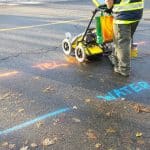
Technicians mark scan results directly on concrete surfaces using spray paint or temporary tape, designating green boxes indicating obstruction-free zones and red markings showing hazard locations. Digital documentation captures GPS coordinates, depth measurements, object classifications, and confidence levels. Final reports include 2D or 3D visualizations, written interpretations, and recommended safe drilling locations.
Standard Equipment and Scanning Techniques
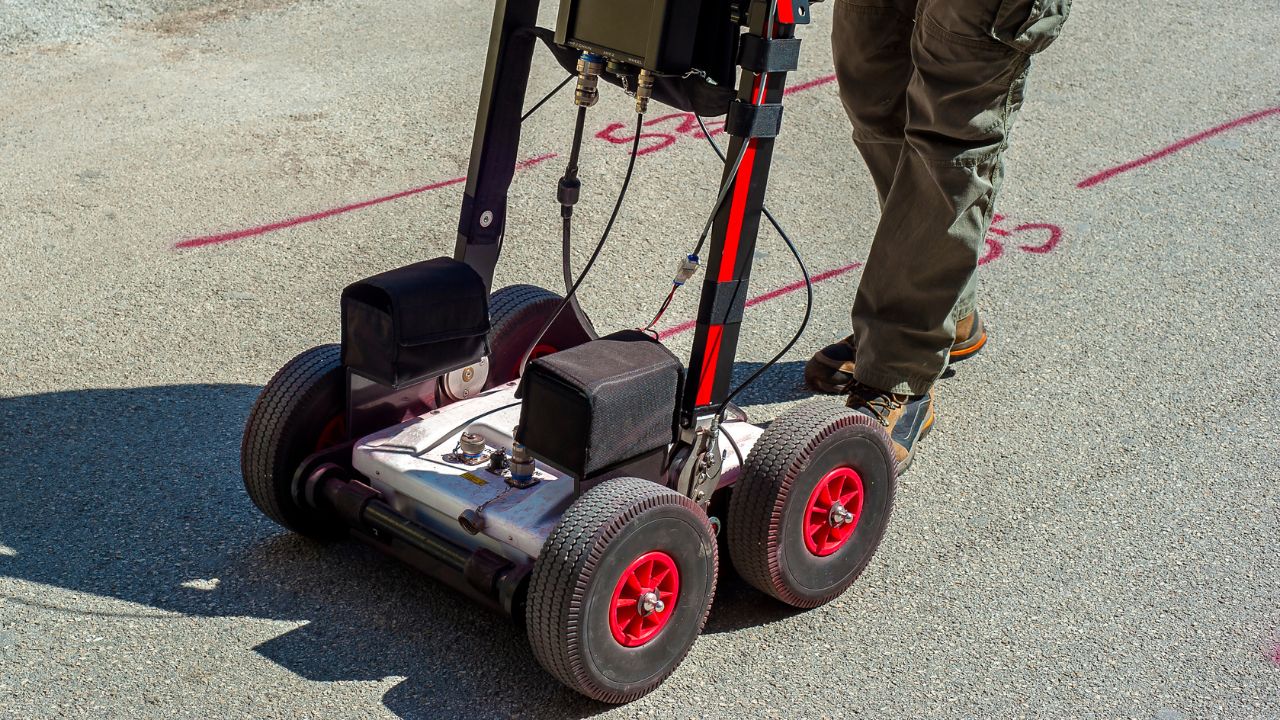
GSSI StructureScan Mini XT units and similar professional-grade GPR systems form the standard equipment for concrete scanning applications. Operators calibrate frequency settings based on target depth requirements, selecting higher frequencies for shallow rebar detection and lower frequencies for deeper penetration to post-tension cables. Systematic grid patterns ensure complete coverage, with technicians making multiple passes at perpendicular angles.
Electromagnetic scanners supplement GPR data by precisely measuring rebar cover depth and estimating reinforcement diameter. Ultrasonic testing provides thickness verification and delamination detection in specialized structural assessment applications.
Interpreting Scan Data and Reporting Formats
Raw GPR data appears as hyperbolic curves representing reflected signals from subsurface objects at varying depths. Professional interpretation distinguishes post-tension cables from rebar based on signal characteristics, including reflection strength, object diameter, and orientation patterns.
Report formats range from basic field markings with verbal explanations to comprehensive documents including CAD drawings, 3D renderings, and detailed written analyses. Digital reports integrate GPS coordinates, enabling Building Information Modeling compatibility and permanent documentation for future renovation work.
Coordination with Coring and Cutting Operations
Scanning occurs before equipment mobilization, allowing contractors to adjust cutting plans based on verified subsurface conditions. Green box markings designate approved zones where coring can proceed safely. Technicians remain available for consultation during cutting operations, verifying conditions if unexpected resistance suggests undetected features.
Coordination includes depth verification, ensuring diamond core bits won’t penetrate utilities located below the intended cutting planes. Post-tension cable locations receive special attention as even shallow cuts can sever cables, causing immediate structural failures.
What Economic Benefits Does Professional GPR Scanning Offer?
Professional GPR scanning delivers quantifiable economic benefits through damage prevention, project schedule maintenance, legal liability reduction, and insurance cost control. Preventing a single post-tension cable strike saves $10,000-$30,000 in immediate repair costs plus additional expenses for structural engineering assessments, temporary shoring, and schedule delays.
Long-term value accumulates through reputation protection, reduced insurance premiums, and repeat client relationships built on safe project execution. Documented scanning records provide legal defense against claims, satisfy regulatory requirements, and demonstrate professional standards.
Cost Implications of Utility and Structural Damage
Severing post-tension cables costs $10,000-$30,000 per cable for emergency repairs, including structural engineering oversight and temporary support systems. Utility strikes trigger additional consequences, including service restoration fees, regulatory fines, and legal liabilities. Environmental contamination from improper cutting releases silica dust, requiring specialized cleanup costing thousands of dollars.
Project delays cascade through construction schedules, idling trades waiting for structural repairs while incurring daily overhead costs. Insurance claims increase premiums and may trigger coverage limitations for contractors demonstrating inadequate damage prevention protocols.
Case Study Highlights and Risk Mitigation Outcomes
The Little Rock financial institution project exemplifies professional scanning value, where GPRS identified post-tension cables in all ten proposed coring locations throughout an elevated concrete slab. By discovering these hazards before cutting began, the contractor avoided $100,000+ in immediate repair costs plus additional expenses for schedule delays, structural engineering consultations, and potential building evacuation. GPRS’s completion of over 500,000 jobs with 99.8% accuracy demonstrates consistent risk mitigation across diverse project types and geographic regions.
Projects avoiding even one utility strike generate a positive return on scanning investment, while comprehensive subsurface documentation supports accurate bid preparation and eliminates costly change orders from unexpected conditions.
Long-Term Value for Contractors and Project Owners
Contractors establishing consistent scanning protocols build reputations for safe project execution that attract premium clients and repeat business. Insurance providers recognize documented damage prevention efforts through reduced premiums and expanded coverage terms.
Archived scanning records provide permanent subsurface documentation supporting future renovation planning and reducing investigation costs for subsequent projects. This historical data becomes increasingly valuable as buildings age and original construction records deteriorate or disappear.
Choosing the Best GPR Scanning Company in Los Angeles: Synthesis of Key Factors
Selecting the best GPR scanning company in Los Angeles requires evaluating accuracy guarantees, operator certification, equipment capabilities, response times, and pricing structures against project-specific requirements. Contractors should prioritize providers offering 99.8% accuracy rates backed by damage protection policies like the Green Box Guarantee that transfers financial risk for marking errors. Certification standards, including SIM training, verify operator expertise in data interpretation beyond basic equipment operation.
Technology quality matters significantly, with modern GSSI equipment delivering superior depth penetration, resolution, and reporting capabilities compared to aging systems. Response times become critical on fast-track projects where same-day availability prevents schedule delays. Contractors should compare total project costs, including scanning fees, potential damage repair scenarios, and delay risks, rather than selecting based solely on the lowest hourly rates.
Choosing among competing providers requires balancing accuracy guarantees, integrated service offerings, local expertise, and proven track records. GPRS’s national presence and proprietary Green Box Guarantee appeal to contractors prioritizing maximum accuracy and liability protection, while regional specialists offer rapid response times and personalized service for Los Angeles-area projects.
Protect Your Los Angeles Project with Util-Locate GPR Scanning
Before your crew cores, cuts, or drills, know exactly what sits inside the slab. Util-Locate has delivered precise subsurface scanning across Los Angeles for more than 20 years, with a 97% accuracy rate and over 11,000 locates completed each year. Our certified technicians find rebar, conduits, and post-tension cables before they become a costly strike, and keep your team safe. Schedule your scan online and contact us to get the clear, on-site data you need to break ground with confidence.