Utility Damage Risks Increase In Winter, Here’s How To Protect Your Project

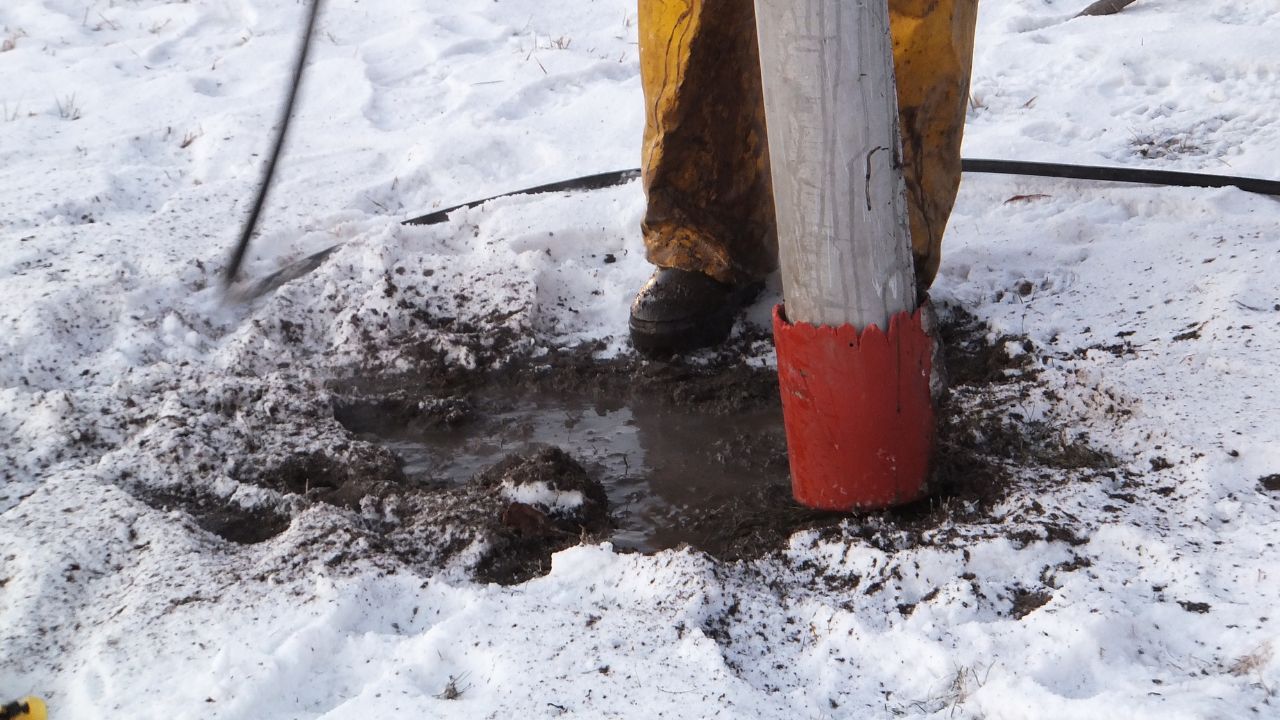
utility damages cost

Key Takeaways

  • Winter creates a damage cost paradox: While excavation activity drops 25-40%, each utility strike costs 65% more, ranging from $45,000 to $450,000 depending on severity.
  • Prevention delivers 50:1 ROI: Investing $2,500 in comprehensive locating prevents an average $125,000 strike, saving $18-$72 for every dollar spent on upfront protection.
  • Frozen ground requires specialized technology: Combine cold-weather calibrated GPR, EM locating with alternative grounding, and vacuum excavation with heated water systems for maximum effectiveness.
  • Critical timing windows demand attention: Implement frozen conditions protocols when soil freezes to 1-2 inches depth, and limit excavation pace to 24-72 hour cycles to prevent frozen spoil complications.
  • Regulatory compliance is non-negotiable: Call 811 a minimum 48-72 hours before excavation and maintain PHMSA compliance to avoid penalties up to $200,000 per day per violation.

Winter construction isn’t slowing down, if anything, it’s accelerating. As natural gas production expands across northern states and projects face compressed schedules to meet service deadlines, more contractors find themselves excavating in frozen conditions. The challenge? Winter doesn’t just make digging harder, it fundamentally changes how utilities can be located, how excavation must proceed, and what happens when something goes wrong. A utility strike that costs $75,000 to repair in July can balloon to $125,000 in January, with frozen ground adding 40-80% to emergency response costs. Yet many contractors approach winter excavation with summer protocols, discovering too late that frozen conditions demand entirely different strategies.

The data tells a sobering story: utility damages cost the United States $30 billion annually, with strikes occurring every 6 minutes. While overall excavation activity decreases by 25-40% in winter, the risk and cost per project actually increase. This paradox catches unprepared contractors off guard, turning what seemed like a routine project into a financial disaster. But it doesn’t have to be this way. 

Understanding winter-specific risks and implementing proven preventing utility strikes transforms frozen conditions from a liability into a manageable challenge, one that delivers exceptional returns when handled correctly.

What Are The Key Utility Damage Risks That Increase In Winter?

Winter excavation creates a paradox: fewer projects happen, but each faces higher risk. Understanding which hazards pose the greatest threat allows contractors to prioritize protection measures and allocate resources effectively. The following winter utility damage risks represent the primary challenges documented across northern climate construction projects.

Critical Winter Risk Factors

The Winter Paradox: While excavation activity decreases by 25-40% in winter, the risk and cost per project actually increase significantly. In the United States, utility damages cost approximately $30 billion annually, with 532,000 incidents occurring, roughly one utility strike every 6 minutes. Understanding these risks is essential whether you’re managing utility locating in California‘s occasional freezes or handling sustained frozen conditions in northern states.

List of Winter-Specific Utility Damage Risks:

  • Frozen Ground & Reduced Locating Accuracy – Impairs the effectiveness of locating technologies and makes digging more difficult
  • Snow Cover Hiding Utility Markers – Obscures vital utility markers and can prevent visual observation of the construction work area
  • Reduced Visibility & Shorter Daylight Hours – Forces work into less optimal times and increases risk during peak incident windows (10 a.m. to noon)
  • Saturated/Frozen Soil Conditions – Makes it harder to detect and expose utilities accurately
  • Equipment Performance Issues – Cold weather affects locating and excavation equipment, with hydraulic systems becoming sluggish
  • Higher Emergency Repair Costs – Winter utility damage repairs cost 40-80% more than summer repairs
  • Rushed Year-End Construction Schedules – Projects rushed to complete before year-end face compressed timelines
  • Reduced Staffing During Holiday Periods – May result in less experienced crews on site

Winter Risk Assessment Matrix

The matrix below plots each winter hazard by likelihood and severity, enabling data-driven decisions about where to focus mitigation efforts. High-priority risks demand immediate attention and specific countermeasures.

Risk Factor Likelihood (1-5) Severity (1-5) Risk Level Cost Impact
Frozen Ground & Reduced Accuracy 4 (Likely) 4 (Major) High 40-60% higher labor costs
Snow Cover & Hidden Markers 5 (Almost Certain) 3 (Moderate) Critical 2.17% of all strikes were due to “marks faded, lost or not maintained”
Reduced Visibility & Shorter Daylight 4 (Likely) 3 (Moderate) High Peak incidents 10am-noon; highest consequences 1-4am
Rushed Year-End Schedules 3 (Possible) 4 (Major) High Compressed timelines increase pressure
Saturated/Frozen Soil Conditions 4 (Likely) 3 (Moderate) High Requires advanced locating technologies
Higher Emergency Repair Costs 2 (Unlikely) 5 (Catastrophic) Medium 65% higher cost per incident than the annual average
Equipment Performance Issues 3 (Possible) 3 (Moderate) Medium Cold weather calibration required
Reduced Staffing & Holiday Periods 3 (Possible) 3 (Moderate) Medium Requires cross-training

Why Are Utility Damage Risks Higher In Winter?

Winter doesn’t just make excavation harder; it fundamentally changes how utility systems respond to disturbance and how effectively they can be located. Frozen conditions affect every stage of the excavation process, from initial detection through emergency repair, creating compounding risks that drive costs dramatically higher. The consequences of inadequate preparation can be severe, as illustrated by catastrophic failures that could have been prevented through proper locating protocols.

The Cost Reality: While winter sees 25% fewer strikes than the annual average, each incident costs 65% more due to frozen ground complexity, specialized equipment needs, and extended project delays. The average cost per utility damage is approximately $56,391, but winter emergency repairs can range from $45,000 to $450,000 depending on severity.

How Temperature And Conditions Affect Utility Systems

Different winter conditions create distinct challenges for utility detection and protection. The table below shows how specific environmental factors increase both the difficulty of safe excavation and the cost of repairs when damage occurs.

Environmental Condition Impact on Utilities Detection Challenges Average Repair Cost Increase
Sustained freezing (soil frozen 1-2″ or more) Frozen ground reduces locating accuracy; harder excavation GPR signal scattering from ice layers; EM locating requires alternative grounding 40-80% premium
Snow accumulation Obscures utility markers; prevents visual observation Markers not visible; delayed utility marking verification +67% for major repairs
Sub-zero temperatures (-10°F or below) Equipment performance issues: hydraulic systems sluggish Locating device accuracy compromised +80% for minor repairs
Freeze-thaw cycles Frost heave; ground movement poses additional risks to pipelines Depth measurements become unreliable +90% for emergency response

How Winter Conditions Create A “Perfect Storm” For Utility Strikes

Multiple risk factors converge during winter excavation, each amplifying the others. When compressed schedules meet equipment limitations and reduced visibility, the probability of a costly strike increases exponentially.

Contributing Factors:

  • Compressed Work Windows – Shorter daylight hours (peak incident window: 10 a.m. to noon) force rushed operations
  • Equipment Limitations – Cold weather affects both locating and excavation equipment performance
  • Human Factors – Nearly 31% of construction workers risk their lives by not following proper utility strike prevention protocols (UK data, 2020)
  • Natural Forces – Frost heave and ground movement pose additional threats to pipeline system integrity
  • Visibility Issues – Snow cover and reduced daylight create coordination challenges
  • Emergency Work Conditions – After-hours excavation (1-4 a.m.) involves reduced support access and higher consequences

How Can You Identify Utility Damage Risks Before Winter Hits?

Proactive risk identification prevents costly surprises. The most successful winter projects begin assessment months in advance, allowing time to address vulnerabilities, secure specialized equipment, and establish clear protocols before the first freeze.

Pre-Winter Assessment Checklist

Regulatory Compliance Foundation:

  • Call 811 a minimum of 2-3 days (48-72 hours) before beginning any excavation
  • Federal regulations require transmission pipelines buried at least 30 inches below surface in rural areas (deeper in populated areas)
  • PHMSA violations can result in penalties up to $200,000 per day per violation

Critical Pre-Planning Steps:

  • Conduct comprehensive private utility locating beyond the public 811 system
  • Deploy multiple locating technologies (GPR and EM) calibrated for cold conditions
  • Identify and mark high-visibility markers that will remain visible above anticipated snow line
  • Log GPS coordinates for all utility locations in digital project management systems
  • Schedule soil borings to evaluate site-specific frozen soil conditions
  • Review historical winter damage data for the project area
  • Assess accessibility for emergency repairs during frozen conditions

Timing Triggers For Implementing Winter Protocols

Clear thresholds eliminate guesswork about when to activate winter procedures. Implement the frozen conditions plan when any of these conditions occur:

  • Sustained cold temperatures result in soil freezing to a depth of 1 to 2 inches or more
  • Backfill material could freeze to the extent that adequate compaction becomes difficult
  • Topsoil stockpiles could freeze and cannot be uniformly redistributed
  • Snow accumulations are great enough to prevent visual observation of the construction work area
  • Historical conditions indicate that significant runoff from spring snow melt may require additional measures

What Are The Most Effective Ways To Protect Your Project From Utility Damage?

Prevention delivers massive returns compared to repair costs. The most effective protection combines advanced locating technology, proven excavation techniques, and rigorous planning, all adapted for frozen conditions. Projects that invest in comprehensive upfront measures consistently avoid the catastrophic costs and delays of utility strikes.

The ROI Case for Prevention: Investing $2,500 in comprehensive locating can prevent a catastrophic strike costing up to $125,000, a 50:1 return on investment. Every dollar spent on prevention saves $18-$72 in potential damages.

Advanced Locating Technologies For Frozen Conditions

Ground Penetrating Radar (GPR):

  • Advantage in frozen conditions: Frozen soil improves signal penetration (dielectric constant 3-4 vs. 5-30 when thawed)
  • Challenge: Ice layers and freeze-thaw zones cause signal scattering
  • Best practice: Requires specialized interpretation for accurate depth determination

Electromagnetic (EM) Locating:

  • Challenge in frozen ground: Prevents proper grounding for direct connection
  • Solution: Must use alternative grounding points (fire hydrants, street signs)
  • Equipment needed: Specialized ground rod with slide hammer for frozen soil

Vacuum Excavation (Hydrovac):

  • Industry consensus: Recognized as “very effective tools” with a low number of reported strikes (CGA and USAG data)
  • Winter capability: Heated water systems cut through frozen ground using warm water at high pressure
  • Effectiveness: Virtually eliminates utility strike risk when properly deployed
  • Compliance: Must meet CGA Best Practices requirements (Version 20, Section 5.32)

Winter-Safe Excavation Best Practices

Controlled pacing prevents the cascading problems that occur when excavated material freezes. Rushing creates voids in backfill, which cause subsidence during spring thaw, often requiring expensive rework and additional material. Professional gas line locating and water line locating services become even more critical in winter conditions.

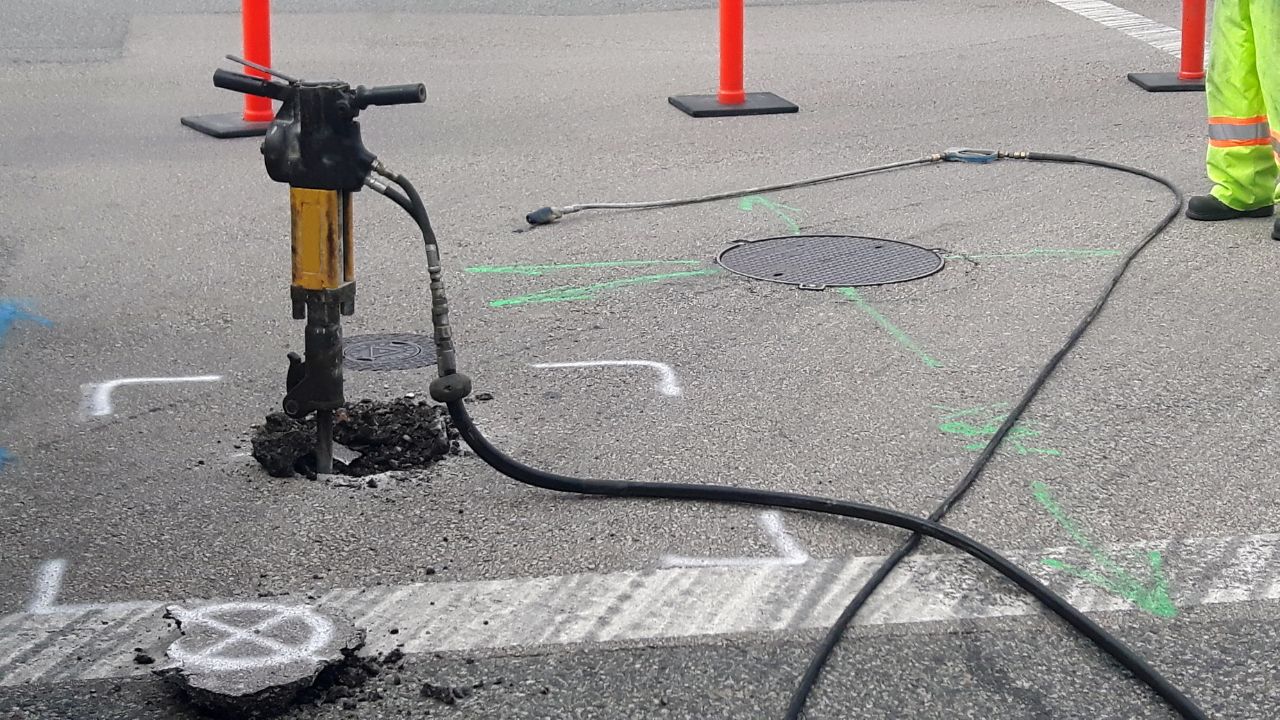
The 24-72 Hour Rule: Projects limit the pace of excavation to the length of ditch that can be excavated, pipe lowered in, and fully backfilled within 24 to 72 hours to reduce risk of freezing excavated spoil materials.

Key Preventive Measures:

  • Enhanced Pre-Dig Planning – Budget 20-30% additional time for winter projects
  • Daily Safety Briefings – Review weather conditions, equipment status, and emergency plans each day
  • Daytime Operations Focus – Schedule work during daylight hours to avoid high-consequence 1-4 a.m. window
  • Continuous Monitoring – Maintain vigilance throughout the excavation process, not just at start
  • Digital Integration – Incorporate utility maps and GPS coordinates into project management systems
  • Winter-Adapted Marking – Use high-visibility paint and elevated stakes above the anticipated snow line
  • Equipment Support – For a 36-inch-diameter pipeline, typically requires a minimum of 30 inches of compacted frost road

Specialized Equipment And Techniques

For Breaking Through Frozen Ground:

  • Hydrovac machines with heated water systems
  • Rock saws to cut through frost layers
  • Rotary wheel trenchers equipped with rock buckets
  • Shaker hoes, rippers, and padding equipment to break up frozen backfill
  • Ground thawing equipment for deep frost layers

For Maintaining Locating Accuracy:

  • Cold-weather calibrated GPR and EM equipment
  • Alternative grounding equipment for frozen soil
  • Comprehensive geotechnical surveys
  • Combination of technologies (GPR + EM + vacuum excavation)

What Are The Signs Of Utility Damage In Winter?

Early detection prevents minor damage from escalating into catastrophic failures. Winter conditions can mask the typical signs of utility compromise, making systematic monitoring essential. Crews trained to recognize subtle indicators can stop work before a small problem becomes a $450,000 emergency.

Warning Signs of Compromised Underground Utilities

Visual Indicators:

  • Frost forming on utility markers or exposed infrastructure
  • Snow melt patterns that differ from surrounding areas (may indicate heat from damaged lines)
  • Discoloration in snow or ice near utility locations
  • Unusual snow accumulation or melting patterns
  • Visible cracks or upheaval in frozen ground along utility routes

Operational Indicators:

  • Decrease in water pressure or flow
  • Flickering or dimming electrical systems
  • Unusual sounds (hissing, cracking) from underground
  • Changes in soil temperature at specific locations
  • Ice formation in unexpected areas

Early Detection Saves Money

The cost difference between immediate response and delayed detection grows exponentially in winter. Frozen conditions complicate every aspect of repair, from equipment mobilization to material performance. Minutes matter.

The Cost of Delayed Detection:

  • Minor winter repair: $45,000 (vs. $25,000 in summer)
  • Major winter repair: $125,000 (vs. $75,000 in summer)
  • Emergency response: $95,000 (vs. $50,000 in summer)
  • Multi-utility restoration: $450,000 (vs. $250,000 in summer)

Early Warning Systems:

  • Smart sensors for detecting pressure drops or temperature fluctuations
  • IoT devices for monitoring utility grid health
  • Remote-controlled monitoring with automated alarms
  • Regular probing of backfilled material to determine if frozen spoil persists
  • GPS-logged utility locations for quick reference and verification

What Should You Do If Utility Damage Occurs During Winter?

Immediate, correct action limits liability and prevents escalation. Federal regulations mandate specific response steps, and winter conditions require additional precautions. Having a pre-established protocol ensures crews respond appropriately under pressure.

Immediate Response Protocol

Regulatory Requirements:

  • Call 911 immediately if damage occurs
  • Notify pipeline company immediately
  • Federal law mandates damage reporting
  • Stop work immediately if utility markers not visible or if damage suspected

Step-by-Step Emergency Response:

  1. Secure the Site – Stop all work immediately and establish safety perimeter
  2. Contact Authorities – Call 911 and notify utility company
  3. Document Conditions – Take photos and GPS coordinates before conditions change
  4. Assess Severity – Determine if damage requires immediate evacuation or emergency response
  5. Preserve Evidence – Do not disturb the site until authorities and utility companies inspect

Winter-Specific Damage Management

Cold Weather Complications:

  • Frozen Materials – Large, angular frozen backfill material can create significant voids, causing subsidence ranging from a couple of inches to greater than a foot in depth
  • Access Limitations – Seasonal road restrictions and load limits may affect ability to mobilize repair equipment
  • Extended Timelines – Frozen ground extends repair timelines significantly
  • Equipment Requirements – May need specialized equipment like floatation (swamp) hoes for wetland areas
  • Material Thawing – Outer layers of frozen spoil pile may need to be stripped to access unfrozen material

Emergency Repair Cost Factors:

  • Specialized equipment mobilization
  • Extended labor hours in extreme conditions
  • Higher material costs for cold-weather compatible products
  • Service disruption costs (40-80% premium over summer)
  • Regulatory fines and penalties (up to $200,000 per day for violations)

When To Call Professional Help

Immediate Professional Response Required:

  • Any damage to high-pressure gas transmission lines
  • Electrical utility damage posing shock or fire hazards
  • Major water line breaks in frozen conditions
  • Damage requiring excavation beyond 30 inches depth
  • Multi-utility conflicts requiring coordination
  • Situations where frozen ground prevents proper repair
  • When trench subsidence exceeds 1 foot in depth

Professional Services Needed:

  • Comprehensive Private Utility Locating – Average investment $2,500, prevents $125,000 average strike
  • Vacuum Excavation ServicesFor safe potholing and utility exposure
  • Emergency Repair Contractors – Pre-identified and on standby
  • Environmental Inspectors – For monitoring during thaw periods
  • Geotechnical Engineers – For soil condition assessments

How Can You Build Winter Utility Risk Management Into Your Project Plan?

Reactive approaches fail in winter construction. Successful projects integrate winter risk management from the earliest planning stages, allocating appropriate budgets, scheduling realistic timelines, and establishing clear protocols before the first freeze. This systematic approach transforms winter from a liability into a manageable operational challenge.

Financial Planning For Winter Risk

Cost Buffer Requirements:

Base Cost Multipliers:

  • Add 40-80% contingency for potential winter emergency repairs
  • Include 20-30% time buffer for winter project schedules
  • Budget $2,500-$5,000 per project for comprehensive private utility locating
  • Allocate funds for specialized equipment (hydrovac, ground thawing)

Prevention vs. Damage Costs:

  • Prevention Investment: $2,500 (comprehensive locating)
  • Average Major Strike Cost: $125,000
  • ROI: 50:1
  • Per Dollar Savings: $18-$72 in potential damages prevented

Scheduling Considerations For Winter Projects

Timeline Adjustments:

  • Excavation Pace – Plan for 24-72 hour cycles from excavation to backfill completion
  • Weather Delays – Add 20-30% buffer to account for extreme weather shut-downs
  • Road Restrictions – Account for seasonal weight limits and access restrictions
  • Daylight Windows – Schedule critical work during 10 a.m. to noon optimal window
  • Inspection Frequency – Plan for additional inspections after extreme weather events
  • Equipment Mobilization – Allow extra time for cold-weather equipment setup
  • Material Thawing – Build in time for frozen material management

Critical Timing Windows:

  • 811 Notification – Minimum 48-72 hours advance notice required
  • Frost Road Development – Begins as soon as sustained freezing conditions occur
  • Topsoil Segregation – Should be completed before soil freezes to 1-2 inch depth
  • Erosion Control Installation – Must be completed before the ground freezes
  • Final Restoration – May need to be delayed until spring thaw for optimal results

Contingency Planning Elements

Winter-Specific Risk Management Plan:

Define Frozen Conditions Threshold:

  • Sustained cold temperatures resulting in soil freezing to 1-2 inches depth
  • Backfill material frozen enough to prevent adequate compaction
  • Snow accumulation preventing visual observation
  • Historical spring melt runoff patterns

Emergency Response Resources:

  • Pre-identified backup utility suppliers
  • Emergency repair contractors on standby
  • Environmental Inspector and labor crew on call through thaw periods
  • Stockpiles of materials suitably located for efficient repairs
  • Equipment capable of accessing soft soil conditions (all-terrain vehicles with oversized tires)

Compliance Framework:

  • PHMSA damage prevention program implementation (penalties up to $200,000/day)
  • 811 call-before-you-dig protocol (48-72 hours advance notice)
  • CGA Best Practices Version 20 compliance
  • Re-mark requirements if snow/ice obscures original marks

Monitoring and Documentation:

  • Daily pre-dig safety briefings
  • GPS logging of all utility locations
  • Photo documentation of conditions
  • Probing of backfilled material to determine if frozen spoil persists
  • Flyover inspections for inaccessible areas during thaw

How To Minimize Utility Damage Risks For A Successful Winter Project

Winter construction projects come with unique challenges, but with proper planning and an investment in prevention, they can yield exceptional returns. In the U.S., utility strikes occur every six minutes, costing the industry around $30 billion annually. With a 50:1 return on investment for comprehensive utility locating, it becomes clear that prevention is a wise financial move. 

Key success factors include investing in prevention, where a $2,500 investment can prevent an average $125,000 strike, and using multiple technologies such as Ground Penetrating Radar (GPR), Electromagnetic (EM) locating, and vacuum excavation to provide maximum protection. Additionally, planning for winter conditions by adding a 20-30% time buffer and a 40-80% cost contingency is essential. Compliance with regulations, such as calling 811 48-72 hours in advance, avoids costly penalties, which can reach up to $200,000 per day. 

It’s also important to work smart by scheduling excavations during optimal daylight hours and limiting excavation to 24-72 hour cycles. Ongoing monitoring during thaw periods with an Environmental Inspector and crews on call is crucial for maintaining safety and reducing risks. Remember, every dollar spent on prevention can save $18-$72 in potential damages. With the average utility damage costing $56,391, and winter incidents being 65% higher, comprehensive planning isn’t just smart, it’s essential for the success of any winter project. If you’re ready to protect your project from costly utility strikes, reach out to utility locating experts who can provide tailored solutions for frozen conditions.

Ready to protect your winter project from costly utility strikes? Contact our utility locating experts for comprehensive solutions tailored to frozen conditions.

Avoiding Project Delays: Why Utility Locating Matters More In December

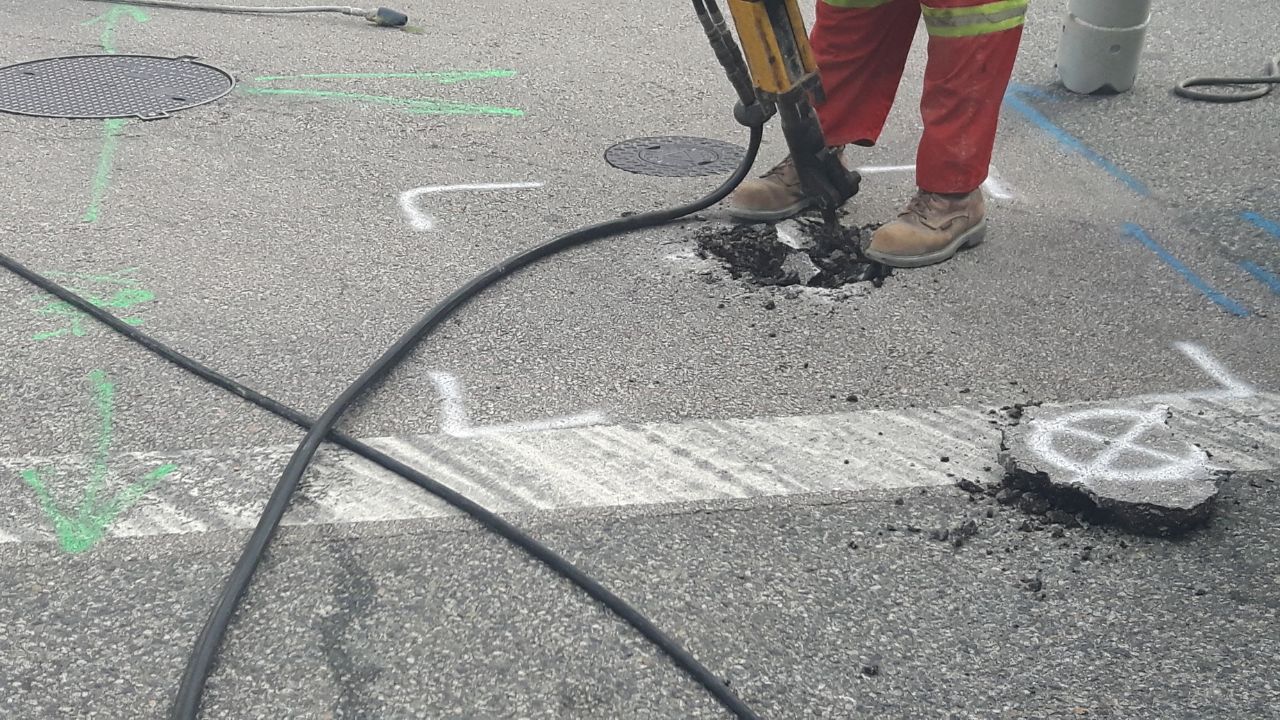
underground utility locating

Key Takeaways

  • Schedule in November/Early December: Complete utility locating before ground freezes to avoid a 30-50% winter repair cost premium
  • Expect 462-2,200% ROI: Multiple studies confirm $4.62 to $22.21 saved for every dollar spent on SUE services
  • Use Both Systems: Combine 811 public locating with private services for complete coverage, including depth data and private utilities
  • 96% Success Rate: Research on 71 projects shows nearly all properly executed utility locating delivers positive returns
  • Small Investment, Massive Protection: SUE costs only 1.65% of total project budget but prevents 6-8+ week delays and year-end deadline failures

December construction carries hidden risks that can destroy project timelines and budgets overnight. While most contractors understand utility strikes cause delays, few realize how dramatically winter conditions amplify every consequence. Frozen ground doesn’t just make repairs uncomfortable; it increases costs by 30-50%, transforms routine fixes into multi-week emergencies, and turns minor scheduling setbacks into year-end catastrophic December construction delays and cost overruns. 

Yet research across hundreds of projects reveals a clear solution: comprehensive underground utility locating completed before severe weather arrives delivers 462-2,200% return on investment while protecting against the cascading failures that winter strikes create. 

This guide examines why December demands more aggressive damage prevention planning strategies, what the research proves about ROI, and how to protect your project when the calendar and weather create a perfect storm of risk.

What Is Utility Locating And Why Is It Important?

Utility locating identifies and maps underground infrastructure before excavation begins, preventing costly strikes and dangerous accidents. This process has become essential as America’s 20+ million miles of buried utilities continue to grow more complex.

Key facts about utility locating:

  • Definition: Subsurface Utility Engineering (SUE) uses data processing and site characterization technologies to accurately locate and depict underground utilities in preliminary project stages
  • Purpose: Prevents catastrophic utility strikes that cause injuries, deaths, and massive financial losses
  • Industry impact:
    • $1.7 billion in property damage annually from utility strikes
    • 1,906 injuries per year
    • 421 deaths annually
    • $177.5 billion total annual U.S. cost for construction errors (includes utility strikes)
    • 60,000 accidental strikes in UK alone costing £2.4 billion ($3 billion USD)
  • Average strike cost: $5,717 per incident (excludes delay costs, redesign expenses, and downtime)
  • Real impact: An underground utility line is damaged approximately once every six minutes in the United States

How Do Utility Locating Services Work?

Effective utility locating combines multiple technologies and methods to build a comprehensive picture of subsurface infrastructure. Each technology serves specific purposes, and professional locators typically use multiple methods together for complete coverage.

Technology Cost Range Best For Key Advantages Winter Performance
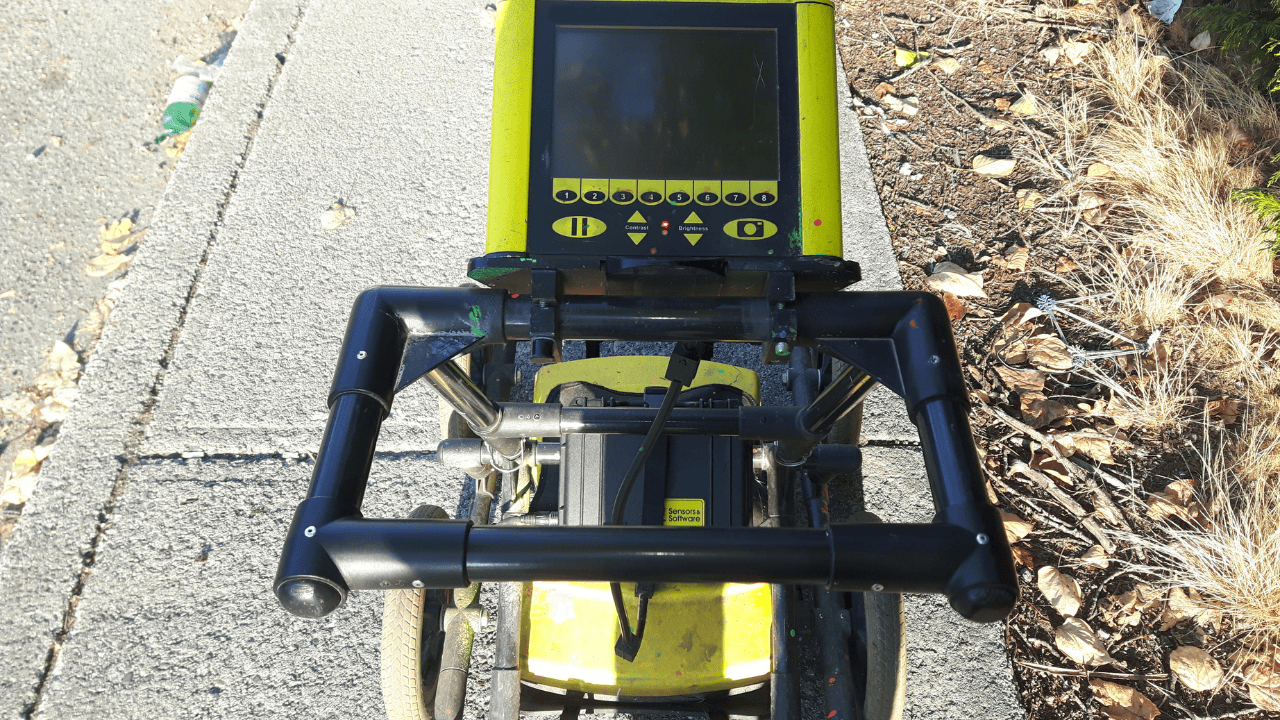
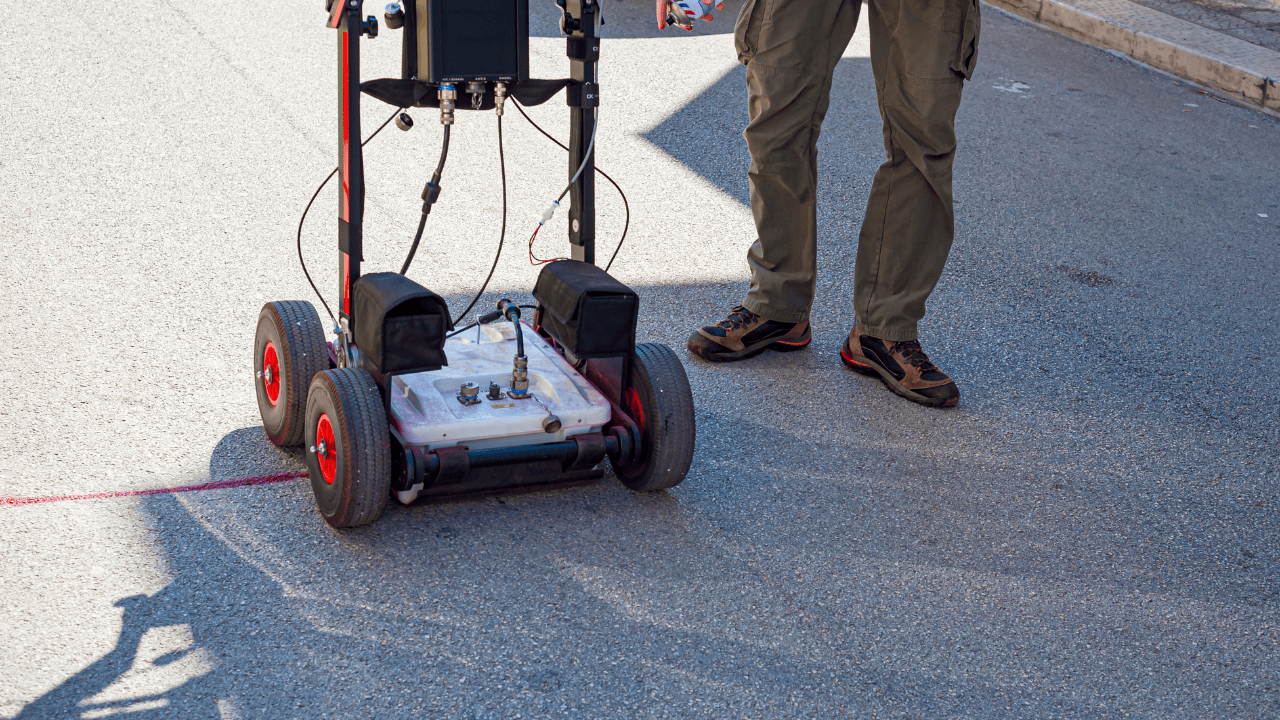
Ground Penetrating Radar (GPR) $14,000-$100,000 Non-metallic utilities (PVC, concrete, fiber optic) Provides depth information; no ground contact needed; works on multiple frequencies Can work through snow/ice with reduced accuracy
Electromagnetic (EM) Locating Lower than GPR Metallic utilities (gas, water, electric) Highly accurate for conductive lines; traces utility paths Requires creative grounding solutions in frozen conditions
Magnetic Locators Lowest cost Iron/steel utilities, manholes, valve boxes Works through any non-magnetic material including snow and water Excellent winter performance

Comparison of Utility Locating Technologies:The SUE Quality Level Process:

  1. Quality Level D (QLD): Review existing records and oral recollections for broad route selection decisions
  2. Quality Level C (QLC): Survey visible above-ground utility features; recommended for rural projects or areas with minimal utility conflicts
  3. Quality Level B (QLB): Use geophysical techniques to determine approximate horizontal position; recommended for urban projects or high-conflict areas
  4. Quality Level A (QLA): “Pothole” or “daylight” utilities for exact 3D mapping; required for final design in congested areas

How Does December Weather Affect Utility Locating?

December transforms routine utility locating into a technical challenge requiring specialized approaches and significantly more time. Cold weather doesn’t just make the work uncomfortable, it fundamentally changes how equipment functions and how accurately utilities can be marked, directly impacting winter project scheduling.

Weather-Related Challenges in December:

  • Frozen Ground: Earth becomes concrete-hard, making excavation, trenching, and ground rod insertion extremely difficult
  • Snow Cover: “Things that are deeper are typically harder to locate. If we’re adding another four feet of snow, your marks aren’t as accurate” (Michael Jensen, City of Austin Utilities)
  • Equipment Failures: Paint and locating equipment freeze in cold temperatures; locators must keep vehicles running and warm equipment between uses
  • Marking Destruction: “If I go and mark things and then the wind blows the snow over, all my paint is gone”, weather events unexpectedly destroy markings between locating and excavation
  • Compressed Daylight: Significantly reduced December daylight hours limit available time for outdoor locating work
  • Emergency Surge: Water main breaks spike during cold snaps, creating daily emergency locate requests, sometimes multiple per day
  • Year-End Pressure: Projects racing toward December 31st deadlines have zero flexibility for weather-related delays

Cold Weather Technical Risks:

  • Equipment accuracy degrades in extreme cold, leading to potential miscalculations and wider tolerance zones
  • Gloves reduce dexterity, making precise equipment operation and marking difficult
  • Ground rods can’t penetrate frozen earth using standard methods
  • Locators must find alternative grounding points (sign posts, fence posts, building foundations)
  • Alternative grounding requires running 50-100 feet of wire back to the locator
  • Marker flags won’t insert into frozen ground without pre-drilling pilot holes (must be done with extreme caution to avoid striking utilities)

What Are The Risks Of Delayed Utility Locating?

Delaying utility locating transforms manageable risks into guaranteed problems. Projects that postpone locating until construction begins face a cascade of consequences that grow exponentially worse in winter conditions.

Timeline Impact of Delayed Locating:

  • 6-8+ weeks added to the project schedule compared to proactive early locating
  • Construction teams and equipment sit idle until conflicts are resolved
  • Extended labor costs pile up while personnel wait
  • Equipment rental fees continue accruing during delays
  • New paperwork and permits required, further extending timelines
  • Project cash flow is disrupted, creating financial strain

Consequences of Failed or Inadequate Utility Locating:

  1. Worker and Public Safety: Exposure to hazardous materials, electrical shocks, and gas leaks, causing immediate injuries or long-term health issues
  2. Direct Repair Costs: Water main excavation and replacement, electrical cable splicing, specialized fiber optic repairs requiring expert technicians
  3. Cleanup and Remediation: Flooding containment, gas leak response, spill cleanup requiring specialized equipment and proper disposal
  4. Project Delays: Work stoppages until repairs complete and clearance obtained
  5. Penalties and Fines: SLA violations, milestone slippage penalties, time-limited permit violations
  6. Equipment Damage: Machinery repair or replacement costs plus additional delays waiting for repairs
  7. Reputation Damage: Client confidence erodes, negative industry word-of-mouth spreads, future business opportunities diminish
  8. Insurance Impacts: Premium increases from frequent claims, or complete inability to obtain coverage
  9. Legal Costs: Lawsuits from neighboring properties, affected businesses, and disrupted municipal services
  10. Environmental Damage: Water contamination, methane emissions, sewage spills, soil removal requirements
  11. Administrative Burden: Insurance paperwork, regulatory reporting, legal representation fees

Cost Comparison: Standard vs. Winter Utility Strikes

Cost Category Standard Conditions Winter Amplification December Impact
Emergency Repairs $10,000-$100,000+ 30-50% increase Frozen ground requires specialized equipment and longer repair times
Project Delays $85,000-$500,000+ Severe amplification Limited daylight compresses available work hours; year-end deadlines make delays catastrophic
Equipment Operation Standard rates 20-40% increase Cold weather operation costs more; equipment failures more frequent
Emergency Response Standard mobilization Significantly slower Weather complications delay response; harder to source materials and personnel during holidays
Schedule Penalties Contract-dependent Maximum impact Year-end deadline misses affect annual budgets, bonuses, and future contract opportunities


How Can You Avoid Utility Locating Delays In December?

Prevention requires planning weeks ahead of the first shovel in the ground. December’s narrow window of workable conditions demands aggressive early action and redundant backup systems.

Proactive Steps for On-Time December Locating:

  • Schedule Early: Complete utility locating in November and early December before severe weather arrives and the ground freezes solid
  • Dual-System Approach: Use both 811 public locating AND private utility locating services, public system covers main lines; private services find building laterals and provide depth data
  • Build Time Buffers: Add 25-50% additional time to schedules for weather-related delays and re-marking needs
  • Winter-Ready Equipment: Invest in cold-rated locating equipment, heated paint storage, and backup systems for frozen-equipment scenarios
  • Backup Systems: Maintain redundant equipment ready to deploy when primary systems fail in extreme cold

December Planning Timeline:

  1. Early November: Initiate 811 tickets and contract private locating services
  2. Mid-November: Complete initial field locating work while the ground remains workable
  3. After 811 Response (48 hours + weekends/holidays): Begin work immediately, “Wait your 48 hours, but not much more” (Michael Jensen)
  4. Before Excavation: Request “meet tickets” for large projects to ensure locators and excavators align on approach
  5. Site Preparation: Remove snow and clear access paths before locators arrive. Accuracy requires marks at ground level, not on snow
  6. Day of Excavation: Verify all markings remain visible; request immediate re-mark if the weather has obscured flags or paint
  7. During Work: Stop immediately and call for re-marking if any markings are unclear or missing

Cold Weather Best Practices:

  • Multiple Technology Strategy: Deploy GPR, EM locating, magnetic detection, AND records research together; no single method finds everything in winter
  • Creative Grounding: When frozen ground prevents standard ground rod insertion, locate alternative connection points (sign posts, fence posts, building foundations)
  • Modified Marking Methods: Use black paint on snow instead of white; employ black flags or painted wooden laths if snow exceeds standard flag height
  • Priority Triage: Emergency water main breaks require immediate response, but evaluate whether discretionary projects truly need winter timing given elevated risks
  • Advanced Technology: Leverage GPS mapping systems and modern ground-penetrating radar and aerial topography for maximum accuracy under challenging conditions

What Legal And Safety Considerations Should Be Factored Into Utility Locating?

Legal compliance and safety protocols become more complex in winter conditions. Understanding the requirements and limitations of different locating systems prevents both legal exposure and dangerous field conditions.

Legal Requirements and System Limitations:

811 “Call Before You Dig” System:

  • Cost: Free to excavators (utility companies fund the service)
  • Response Time: 3-5 business days (longer during peak periods)
  • Coverage: Public utilities ONLY, water, gas, electric, telecom owned by utilities
  • Critical Limitations:
    • Does NOT provide depth information (only horizontal location)
    • Does NOT cover private utilities (building service laterals, private lighting, secondary lines)
    • Accuracy depends on utility company records, which are often inaccurate or outdated
    • Many utilities are not members of One Call system
    • Winter response times may extend due to weather and staffing

Recommended Approach: Use 811 as a legally required baseline, then supplement with a private utility locating service for comprehensive coverage, including depth data and private utilities.

How Utility Locating Protects Worker and Public Safety:

  • Prevents exposure to hazardous materials, electrical shocks, and gas leaks that cause immediate and long-term harm
  • Directly reduces the 1,906 utility strike injuries occurring annually nationwide
  • Helps prevent the 421 deaths from utility strikes each year
  • Minimizes downstream health issues and maintains worker morale
  • Protects public from service disruptions, contamination, and infrastructure failures
  • Reduces third-party injury risk from gas explosions, electrical faults, and environmental releases

Winter-Specific Safety Protocols:

  • Cold Stress Management: Implement rotation schedules, warming stations, and cold stress monitoring for field crews
  • Ice Hazard Awareness: Train workers to identify and avoid icy patches, icicles, and ice dams, especially near building utility connections
  • Enhanced Training: Require cold-weather equipment operation certification and winter-specific hazard recognition
  • Visibility Protocols: Establish clear procedures for reduced-light conditions common in December’s short days
  • Emergency Response Plans: Pre-position winter emergency equipment and establish faster communication channels for cold-weather incidents
  • Equipment Safety: Inspect cold-weather equipment more frequently; cold stress accelerates equipment failure

How To Choose The Right Utility Locating Provider?

Not all utility locating providers deliver equal value, especially under December’s demanding conditions. The right provider combines advanced technology, winter expertise, and comprehensive service capabilities that extend beyond basic 811 coordination.

Essential Provider Capabilities:

  • Dual-Service Model: Coordinates 811 public locating AND performs private utility locating, single point of contact for complete coverage
  • Multi-Technology Approach: Deploys GPR, EM locating, magnetic detection, and records research together, with no reliance on a single method
  • Fast Response: Provides same-day or next-day service versus 811’s 3-5 business day standard
  • Complete Coverage: Locates both public utilities (mains) and private utilities (service laterals, building connections)
  • Depth Data: Provides vertical location information that 811 alone cannot deliver
  • Winter Specialization: Demonstrates experience with creative grounding solutions, alternative marking methods, and cold-weather equipment adaptations
  • Professional Equipment: Maintains cold-rated gear and heated storage systems

Provider Evaluation Criteria:

  • Equipment Investment: Verify provider owns professional-grade GPR systems ($14,000-$100,000 range), rental equipment indicates lower commitment to quality
  • Winter Infrastructure: Confirm heated storage facilities, backup equipment inventory, and experience with alternative grounding techniques
  • Complex Project Experience: Review track record with projects costing $3 million+ (Louisiana study shows these benefit most from SUE)
  • Quality Level Expertise: Assess provider’s understanding of all four SUE Quality Levels (D, C, B, A) and ability to recommend appropriate level for project conditions
  • Technology Currency: Ensure provider maintains current equipment with GPS integration and modern data processing capabilities
  • Emergency Response: Confirm 24/7 availability for winter emergency situations (water main breaks, gas leaks)

How Can Utility Locating Save You Money?

The financial case for utility locating is overwhelming: multiple independent studies across different states and project types consistently demonstrate 400-2,200% returns on investment. These aren’t theoretical projections; they’re actual cost savings measured on completed projects.

Return on Investment: Research-Backed Data

Study Projects Analyzed Success Rate ROI ($ Saved per $1 Spent) Total ROI % Key Finding
Louisiana State University (2021) 71 highway projects (3 states) 96% (68 of 71 positive ROI) $4.62 saved 462% Conservative baseline across diverse project types
FHWA – Purdue University North Carolina projects Not specified $6.63 saved 663% 12-15% project delivery time reduction
Pennsylvania State University 10 highway projects 100% positive ROI $11.39 saved 1,139% SUE cost only 1.65% of total project
Industry Range Multiple studies Consistently positive $4.62 – $22.21 saved 462% – 2,200% Higher returns on complex projects

Additional Cost Savings:

  • 40.33% reduction in project relocation costs when using SUE Quality Level A or B (GP-Radar Analysis)
  • 12-15% faster project delivery through systematic utility risk management
  • Prevents mid-project redesigns that typically cost 10-15% of the total project budget
  • Small investment requirement: SUE averages just 1.65% of the total project cost

Cost Consequences of Inadequate Locating:

  • Base Strike Cost: $5,717 average per utility strike (excludes delay and downtime costs)
  • Extended Timeline: 6-8+ weeks added to the schedule from the reactive approach
  • Redesign Expenses: 10-15% of the total project cost when conflicts are discovered mid-construction
  • Winter Cost Premium: 30-50% increase in repair costs due to frozen ground conditions
  • Emergency Response: Significantly higher costs for cold-weather mobilization and equipment operation
  • Schedule Penalties: Missed year-end deadlines impact annual budgets, performance bonuses, and future contract eligibility
  • Compound Delays: Initial strike creates cascading effects, permits extensions, crew demobilization/remobilization, material reordering, subcontractor rescheduling
  • Reputation Damage: Quantifiable impact on future bidding success and client relationships
  • Insurance Impact: Premium increases from claims can exceed the cost of strikes themselves

Winter amplifies every cost category. The $5,717 average strike cost can easily triple when frozen ground requires specialized excavation, limited daylight compresses repair windows, and year-end deadlines leave zero recovery time.

Why Early Utility Locating In December Prevents Delays And Protects Your Project

Conducting early utility locating, particularly in November or early December, is a critical investment that protects your project from delays, cost overruns, and safety risks. With proven financial benefits, including a 462-2,200% ROI and up to 40% cost reduction, utility locating offers significant value. Early utility locating also prevents costly winter repairs, delays, and emergency response issues, which can be exacerbated by frozen ground and limited staffing. 

By investing just 1.65% of your total project cost, you can avoid potential strikes, safety hazards, and budget impacts, ensuring your project stays on track. Early utility locating isn’t just a best practice; it’s essential insurance against the amplified risks of December weather. Don’t gamble with your project’s success; schedule your utility locating services before conditions worsen.

Don’t let December weather destroy your project timeline. Contact Util-Locate today to schedule utility locating services before the ground freezes, and your options disappear.

What to Expect During a Professional Gas Line Utility Locating Service in California

professional gas line utility locating service

Key Takeaways:

  1. Utility locating services use advanced technology like GPR and electromagnetic locators to safely locate gas lines.
  2. The process involves a site inspection, using non-invasive equipment, and marking the gas lines on the ground.
  3. Accurate documentation and reports are provided to ensure safety and compliance.
  4. Preparation includes clearing the area and providing detailed project information to the technician.
  5. Ongoing support is available for future projects or re-checks of utility locations.

When you’re working on a construction project or performing any kind of excavation work in California, it’s crucial to know exactly where underground utilities, including gas lines, are located. Damaging a gas line can lead to hazardous situations, fines, and costly repairs. This is where professional underground utility locating services come in.

Key points on What to Expect During a Professional Gas Line Utility Locating Service in California are:

  • Why Gas Line Locating is Important
  • Step-by-Step Guide
  • How to Prepare for the Service
  • Ensure Safe Excavation with Professional Utility Locating Services

These experts use advanced technologies to accurately locate underground gas lines, ensuring the safety of workers and preventing damage to existing infrastructure. If you’re planning any work that involves digging or excavation, it’s essential to understand the process of utility locating services. In this guide, we’ll explain what to expect during a professional gas line utility locating service and how to prepare for it.

Why Gas Line Locating is Important

Before diving into the specifics of the service, let’s first understand why it’s important to hire a professional underground utility locator. Gas lines are often buried several feet underground, and locating them can be a complicated process. Without proper locating, workers might accidentally hit a gas line, leading to gas leaks, fires, or explosions. Underground utility locating is necessary to ensure that construction, excavation, and other activities avoid these hazardous lines, promoting safety and preventing costly damages.

In California, with its mix of urban and rural areas, precise utility locating is even more critical. High population density means more complex utility networks, making it vital for projects to accurately mark where all the gas lines are.

Step-by-Step Guide: What to Expect During a Professional Gas Line Locating Service

Here’s a step-by-step look at the process of utility locating services for gas lines. Understanding these steps will help you prepare for the service and ensure everything goes smoothly.

Step 1: Initial Consultation and Scheduling

The first step in any underground utility locating service is to get in touch with a professional. During the initial consultation, you will discuss the scope of your project and provide the location where the work is to be done. Whether you’re working on a construction site, renovating a building, or doing a landscaping project, providing clear and accurate details will help the underground utility locator plan for the service.

  • What you’ll need to provide:
    • Project location and address.
    • Details of the planned excavation or digging work.
    • Information on any previous utility maps or known utility lines.

Once the details are confirmed, a professional will schedule a time to perform the service. Scheduling is typically done during regular working hours, but emergency services are also available.

Step 2: Site Inspection and Preparation

Once the service is scheduled, the underground utility locator will arrive at your project site. Before using any equipment, they will conduct a thorough site inspection. This step is crucial because it helps the technicians assess the best way to locate the gas lines, taking into account the terrain, existing infrastructure, and any potential hazards.

During this inspection, the team will:

  • Evaluate the area for safety.
  • Identify any visible surface markings (like prior utility installations).
  • Determine if the ground conditions (soil type, moisture levels) will affect the locating process.

The underground utility locator will then prepare the necessary equipment. This typically includes high-tech tools such as Ground Penetrating Radar (GPR) or electromagnetic locators. The preparation phase is critical for ensuring the correct method is chosen to locate the gas lines with high accuracy.

Step 3: Locating Gas Lines Using Advanced Technology

Once the site is prepped, the technicians will begin the actual locating process. The technology used in utility locating services is non-invasive, meaning it doesn’t disrupt the surrounding area or cause unnecessary digging. Here’s a closer look at the main technologies used:

  • Ground Penetrating Radar (GPR): This method sends high-frequency radio waves into the ground. The waves bounce back when they hit solid objects like gas lines. By analyzing these signals, GPR can detect the exact location and depth of the gas line.
  • Electromagnetic Locators: These devices detect conductive materials such as metal gas pipes. The equipment transmits an electromagnetic field into the ground, and the underground utility locator can pinpoint where the gas lines are located based on the signals received.

Both methods are highly effective and allow the technician to accurately pinpoint the gas lines without any disruption to the surrounding area. The underground utility locator will walk around the site with the equipment, taking measurements and marking the locations of gas lines on the surface.

Step 4: Marking the Gas Lines

After locating the gas lines, the next step is marking them clearly. Technicians will use spray paint, flags, or other visible markers to outline the paths of the gas lines. This is especially important for construction and excavation teams, as it helps avoid accidents during digging.

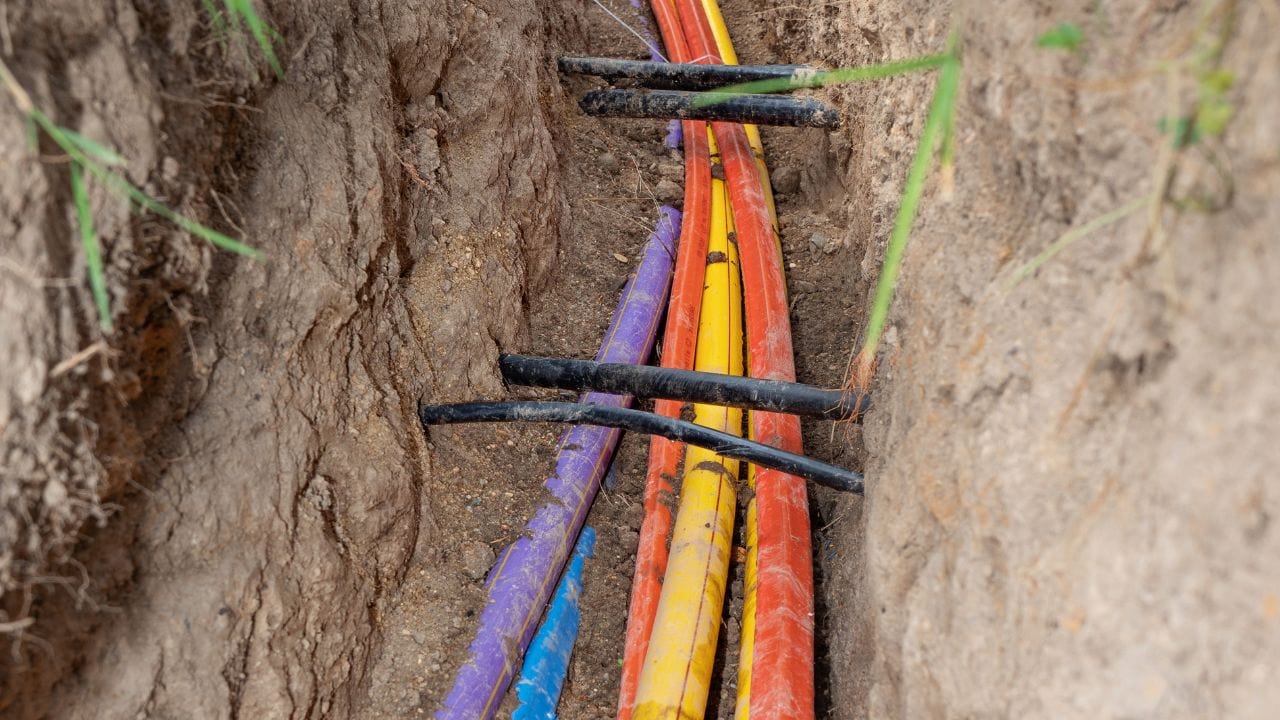
Typically, different colors of spray paint are used for different utilities:

  • Yellow for gas lines.
  • Red for electric lines.
  • Blue for water lines.

This marking process ensures that workers can see where the gas lines are and take appropriate precautions.

Step 5: Final Report and Documentation

After the gas lines are located and marked, the underground utility locator will provide you with a detailed report. This report typically includes:

  • A map or diagram showing the exact locations and depths of the gas lines.
  • Detailed documentation on the methods used during the locating process.
  • Recommendations for safe excavation if needed.

This report is valuable for ensuring that you have a clear understanding of the gas line locations and can proceed with your project safely.

Step 6: Ongoing Support

Even after the gas line locating service is completed, many professional utility locating services offer ongoing support. For instance, if any additional utilities need to be located in the future or if there’s a need for further excavation work, you can contact the underground utility locator again. Many service providers also offer updates and re-checks if there are any changes to the site or if additional permits or safety measures are required.

How to Prepare for the Service

Now that you know the step-by-step process, here are a few tips to ensure the utility locating service goes smoothly:

  • Clear the Work Area: Make sure the area is easily accessible for the technicians and their equipment. Remove any obstacles or debris that could hinder the locating process.
  • Provide Accurate Information: The more accurate details you provide about your project location and existing utilities, the smoother the service will go.
  • Be Available During the Service: Ensure that someone from your team is available to communicate with the technicians and answer any questions.
  • Understand the Marking Process: Be prepared for visible markings on your property. These markers will help protect the gas lines from accidental damage during excavation or digging.

Ensure Safe Excavation with Professional Utility Locating Services

In conclusion, a professional utility locating service is crucial for ensuring safe excavation and construction work, particularly when it comes to gas lines. By hiring a skilled underground utility locator, you can avoid costly mistakes, prevent safety hazards, and ensure that your project proceeds smoothly. Whether you are a contractor, a property owner, or someone undertaking a DIY excavation project, using a professional utility locating service is the best way to protect your investment and ensure the safety of everyone involved.

If you are in California and need reliable, non-invasive underground utility locating, Util-Locate is here to help. With advanced technology, expert technicians, and a commitment to safety, we offer comprehensive utility locating services that you can trust. Contact Util-Locate today to schedule your service and get peace of mind for your next project.

The Technology Behind Locating Underground Conduits: GPR, EMI, and More

detect and map various underground conduits

Key Takeaways

  • Different technologies like GPR, EMI, acoustic locating, and magnetic locating enable precise mapping of underground utilities, enhancing excavation accuracy.
  • Ground Penetrating Radar (GPR) is versatile, detecting both metallic and non-metallic materials, making it ideal for a variety of subsurface conditions.
  • Electromagnetic Induction (EMI) offers quick, real-time results, ideal for locating metallic utility lines without disrupting the surface.
  • Acoustic locating is particularly effective for water and sewer lines, providing a non-disruptive way to detect leaks and hollow spaces.
  • Magnetic locating is useful for older iron and steel pipelines, providing targeted detection in historical or outdated infrastructure projects.

Every successful excavation or construction project begins with a thorough understanding of what lies underground. 

Beneath the surface are unseen utility lines, such as electrical, water, and communication conduits. pose serious risks if struck accidentally. Fortunately, today’s advanced underground utility locating technologies, like ground penetrating radar (GPR) and electromagnetic induction (EMI), offer precise ways to map these hidden structures. 

By utilizing these tools, project teams can prevent costly damage, enhance safety, and streamline project planning. 

This article explores the key technologies used for locating underground utilities and the invaluable benefits they bring to modern excavation efforts.


Understanding Different Types of Technologies for Utility Location

Utility location relies on several sophisticated technologies that help detect and map various underground conduits. Each technology has unique applications and advantages, making them useful for specific types of projects. 

Here are some of the key tools used in underground utility locating:

1. Ground Penetrating Radar (GPR)

Ground Penetrating Radar (GPR) is one of the most widely used technologies for locating underground conduits. GPR works by emitting high-frequency radio waves into the ground. When these waves encounter an object, they bounce back to the surface, where a receiver picks them up and interprets the reflections to create an image. 

This allows utility locating services to detect underground utility lines, pipes, and other structures with remarkable accuracy.

Advantages of GPR include:

  • Versatile Detection: GPR can detect both metallic and non-metallic materials, such as concrete pipes and fiber optic cables.
  • Non-Invasive Method: Without any physical digging, GPR can locate underground conduits safely.
  • Clear Imaging: Detailed visual representations allow project planners to assess areas accurately before excavation.

Consider an urban construction project where GPR technology enables precise electrical line locating. By using GPR to visualize these lines, contractors can safely plan around electrical conduits, ensuring minimal disruptions to public areas.

2. Electromagnetic Induction (EMI)

Electromagnetic Induction (EMI) is another widely applied technique in utility locating services. EMI functions by generating a magnetic field that detects conductive materials, making it ideal for locating metallic structures like power lines and water pipes. 

This method is particularly useful for detecting power lines that may be buried deep underground.

Benefits of EMI include:

  • Effective for Metal Detection: EMI is specialized for detecting metal-based conduits, such as electrical and power lines.
  • Quick, Real-Time Results: EMI provides instant feedback, which is highly valuable for urgent projects.
  • Cost-Effective and Efficient: EMI minimizes the need for surface disruption and saves on excavation costs.

In cases where power line locating is crucial, EMI allows contractors to map these lines without any disturbance to the ground. The ability to obtain real-time data helps streamline projects while ensuring worker safety.

3. Acoustic Locating

Acoustic locating is an innovative technology that uses sound waves to detect underground utility lines, primarily those that contain fluids, like water and sewer pipes. Acoustic locators use sound to detect leaks or hollow spaces, making them a valuable tool for specific applications.

Advantages of acoustic locating:

  • Ideal for Detecting Water Lines: Sound waves help identify hollow or fluid-filled spaces, making them useful for water pipe and sewer line locating.
  • Leak Detection: Acoustic locating can pinpoint leaks in pipes, which is valuable for maintenance and repairs.
  • Non-Disruptive Technology: This method allows for detection without physical disruption of the landscape.

In projects that require identifying water lines, such as during a plumbing installation or repair, acoustic locating provides clarity without additional excavation. Its efficiency in locating leaks is also a great benefit for maintenance work.

4. Magnetic Locating

Magnetic locating technology relies on sensors to detect magnetic fields produced by underground metal structures. This approach is especially effective for locating ferrous metal pipes and markers, even if they are buried deep underground. Magnetic locating tools are simple yet effective for detecting iron and steel conduits.

Key benefits of magnetic locating include:

  • Precise for Ferrous Metals: Magnetic locators work best with iron or steel, which are common in older utility lines.
  • Non-Interference with Non-Metallic Structures: Magnetic locators ignore non-metallic objects, focusing only on metallic conduits.
  • Environmentally Friendly and Safe: With no emissions, magnetic locating is safe for both workers and the environment.

An example where magnetic locating is useful is in locating old, abandoned iron pipelines that may not appear in modern maps. This technology can prevent accidental hits and reduce project risks significantly.


Key Benefits of Utility Locating Services for Underground Projects

Using a combination of these utility locating technologies provides many advantages to contractors, builders, and utility companies. Here are some of the key benefits of using professional underground utility locating services:

  • Enhanced Accuracy: By leveraging technologies like GPR, EMI, and magnetic locating, utility locating services offer precise mapping of underground conduits. This reduces the chance of hitting vital infrastructure and enables safer digging.
  • Improved Safety: Locating underground conduits accurately minimizes the risk of hitting power lines or water pipes, protecting workers and equipment from potential hazards.
  • Cost Efficiency: With accurate utility locating, excavation projects can avoid costly repairs and unnecessary delays. Knowing the layout beforehand leads to better budgeting and planning.

In an office setting, these insights allow project managers to create detailed plans with clear safety protocols. Utility locating services provide a structured approach that benefits teams by ensuring efficient resource allocation and timeline accuracy, reducing the need for last-minute adjustments.


Practical Applications of Utility Locating Technologies

Utility locating technologies like GPR, EMI, acoustic locating, and magnetic locating are applicable to numerous project types. Below are some common scenarios where these technologies prove essential:

  • Urban Construction: Utility conduit locating helps contractors detect and avoid hidden conduits in busy city centers. This allows for safer construction with minimal impact on daily public activities.
  • Landscaping Projects: When installing landscapes, detecting underground utilities is essential to avoid damage to existing infrastructure. These tools help in precise planning and trenching.
  • Maintenance and Repairs: Technologies like acoustic locating are perfect for detecting leaks or blockages in water and sewer lines. Utility locating ensures smoother repair operations by avoiding unnecessary excavation.
  • Infrastructure Upgrades: When upgrading utilities in older areas, magnetic locating aids in finding old iron or steel conduits, making projects faster and safer.

These applications demonstrate the diverse ways in which utility locating technologies contribute to modern construction and maintenance. By applying these tools effectively, contractors and project teams can complete their tasks safely, efficiently, and within budget.


Unlock Greater Project Efficiency with Utility Locating Services

Achieve unmatched safety and precision in your excavation projects with Util-Locate. From electrical line locating to identifying power conduits, tools like GPR and EMI provide the insights you need to work confidently. 

Start your next project on the right foot and connect with us for trusted underground utility locating services in California to ensure a safe, accurate, and efficient excavation.

Common Mistakes to Avoid When Locating Underground Power Lines

right utility locating services

Key Takeaways

  • Thorough planning is essential to avoid common mistakes like inadequate size and poor location, which can affect the health and maintenance of a pond.
  • Avoid areas under trees and low-lying areas prone to flooding. A well-chosen location balances sunlight and accessibility, benefiting the pond’s health and aesthetics.
  • Ensuring correct installation techniques, including using suitable pond kits and following manufacturer guidelines, is vital for the longevity and functionality of a pond.
  • Regular testing and water quality maintenance are crucial. Using filtration systems and beneficial bacteria helps maintain a clean and balanced aquatic ecosystem.
  • Avoid overcrowding with plants and fish. Proper stocking densities and adequate planting ensure a healthy, manageable pond ecosystem.


Locating underground power lines is a critical task in construction and excavation projects. Striking buried utilities can lead to costly delays and, more importantly, create dangerous working conditions. 

Yet, even with modern tools and resources, errors often occur due to oversight or insufficient planning. To ensure a successful project, it’s vital to understand these common pitfalls and take steps to avoid them. 

From using the right utility locating services to understanding and using underground utility locator methods correctly, every step matters. Below, we break down the common errors and offer practical ways to avoid them for a seamless, efficient project.


Common Errors to Avoid in Electrical Power Line Locating

Locating underground power lines requires precision and expertise to prevent costly and dangerous errors. Here are some errors you need to know and avoid.

1. Overlooking Pre-Project Planning

One of the most frequent errors in underground power line locating is rushing into the field without a precise and thorough plan. Without a clear understanding of where utility conduits are situated, projects run the risk of interference with power lines. 

In worst-case scenarios, failure to properly plan can cause serious injuries and project delays. 

Before any digging begins, a well-planned excavation project should involve these essential steps:

  • Consult with utility locating services to gather expert insight and assistance in marking underground utilities.
  • Examine all available site data to verify where power lines and other conduits may be located.
  • Outline every step of the excavation carefully, ensuring that each phase considers utility locations and potential hazards.
  • Gather as much information as possible about the utility layout.
  • Account for the fact that not all locations follow a standardized layout.
  • Avoid a one-size-fits-all approach, as this can lead to serious issues.

Additionally, early coordination with local utilities is essential, as they can provide insights into potential power lines or utility conduit locating needs unique to your project site. A little extra time in the planning phase can save both time and money down the road.

2. Relying Solely on Maps or Outdated Records

Many project managers make the mistake of relying on old maps or records of utility lines, assuming they reflect all changes. However, utility networks are constantly changing. 

Recent modifications, additions, or repairs to underground power lines and conduits may not be updated in these documents. Relying on outdated information can lead to critical errors, including the misidentification of lines. 

To avoid this, pair traditional record-keeping with reliable underground electrical line locating tools. 

One particularly effective approach is to combine map data with advanced technology, such as ground-penetrating radar (GPR) and electromagnetic sensors. These tools allow for a comprehensive and up-to-date scan of the area, highlighting both marked and previously undocumented lines. 

This method provides a complete view of the underground layout, ensuring a safer and more accurate process of locating underground conduits that minimizes the chances of accidental line strikes.

3. Ignoring Marking Errors on Site

Accurate marking is essential in locating underground power lines. Even minor errors in marking can lead to significant issues during excavation, potentially resulting in power line damage and project setbacks. 

Common reasons for inaccurate marking include miscommunication, human error, or the use of unsuitable tools. Professional underground utility locating services offer precise marking services, which can be critical for success.

Another frequent issue is failing to double-check marking placements before excavation begins. Verifying marks multiple times and keeping open communication with the utility locator helps prevent errors and costly repairs. 

Teams should also use temporary paint or stakes in high-traffic areas to help everyone on site stay aware of power line locations. Taking these steps creates a safer work environment and helps keep the project timeline on track.

4. Failing to Use the Right Locating Equipment

Using improper or outdated locating equipment is another common pitfall. Many projects fail to leverage advanced underground utility locators, resulting in incorrect or incomplete readings.

Each line type—whether it’s electrical, water, or gas—requires specific locating tools for optimal accuracy. The risks of misidentifying lines or conduits increase significantly when the incorrect equipment is used. Knowing the appropriate equipment for each task is a crucial aspect of power line locating.

Investing in the latest technology, including GPR and electromagnetic sensors, can make a substantial difference. High-tech equipment provided by professional utility locating services offers greater accuracy and reliability, which helps avoid unexpected line strikes and costly repairs. 

Advanced tools also allow operators to detect deeply buried lines or conduits that might otherwise go unnoticed with conventional tools. These high-precision instruments are especially useful in areas with dense networks of underground utilities.

5. Not Understanding Local Utility Marking Standards

Inaccuracies often occur when project teams are unaware of local utility marking standards. Color-coded markings are commonly used to identify different types of utilities, but standards can vary between regions. 

Not recognizing these standards can lead to confusion and the misidentification of power lines or other utility conduits. Failing to adhere to these standards increases the risk of accidents and adds unnecessary complications to the project.

Before beginning any utility locating work, ensure your team understands and follows the local utility color-coding standards. Each color represents a different type of lifestyle, red for electrical, blue for water, yellow for gas, and so forth. 

Confirming these guidelines with a professional underground utility locating team will provide clarity and prevent dangerous mistakes. A small investment in understanding these local codes can make a big difference in project safety.

6. Misinterpreting Data from Locating Devices

A common issue in utility locating is misinterpreting data obtained from locating devices. Ground-penetrating radar (GPR) and electromagnetic sensors generate complex data that require expertise to interpret correctly. 

Misreading this data can result in excavation over incorrect spots, putting power lines and utility conduits at risk. Incorrect data interpretation is particularly risky for new or less experienced operators who may not yet fully understand how to handle certain readings.

Training operators on how to interpret GPR and other data is essential. Professional utility locating services employ trained technicians who are skilled in reading these devices, ensuring the accuracy of the information gathered. 

Additionally, thorough calibration of equipment before starting any project helps to avoid misreads and provides precise data. By employing trained professionals and consistently calibrating equipment, you increase the likelihood of accurate and efficient power line locating.

7. Overlooking Soil Conditions and Environmental Factors

Environmental factors can impact the accuracy of underground utility locating. Conditions such as wet soil, rocky terrain, or temperature variations can affect the performance of locating equipment. 

For instance, electromagnetic signals are often weaker in waterlogged areas, which can lead to inaccurate readings. Similarly, rocky terrain can interfere with GPR signals, obscuring the presence of utility conduits.

To counter these environmental challenges, plan for variable conditions and use equipment suited to the specific soil type. Teams should also account for environmental limitations during initial planning phases and consult with experienced utility locating services. 

Addressing these factors early on ensures a more accurate locating process, even in challenging environments, and prevents unexpected delays or issues during excavation.


Take Charge of Utility Locating with Professional Assistance

For a successful and safe project, avoid common mistakes in utility locating by reaching out to Util-Locate

Partner with us to access advanced tools, precise marking, and expert knowledge of environmental and local standards. 

This collaboration empowers your team to work confidently and efficiently. Take control of your power line locating needs with our expert support and state-of-the-art equipment, ensuring a streamlined and safe project every time. 

Methods for Underground Conduit Locating Services in California

power line locating

Key Takeaways

  • Accurate utility locating is vital for safety and compliance, preventing accidents and costly repairs during excavation projects.
  • Ground-penetrating radar (GPR) and Electromagnetic Locators (EM) are essential tools for detecting various underground utilities, including both metallic and non-metallic conduits.
  • Incorporating advanced technologies like Geographic Information Systems (GIS) and utility database research enhances the precision of underground utility mapping.
  • Collaboration with utility companies and pre-excavation planning are critical best practices that ensure a thorough understanding and identification of underground conduits.
  • Professional utility locating services improve safety, efficiency, and precision, reducing the likelihood of damaging utilities and keeping construction projects on schedule.

Underground conduits house essential utilities, such as electrical lines, power cables, and communication wires, making their accurate location a critical part of any construction or excavation project.

In California, where regulations prioritize safety and environmental responsibility, knowing how to locate underground conduits effectively can prevent accidents and ensure compliance with the law. Hiring professionals for electrical line locating and power line locating is a proactive way to keep your projects on track.

This article will explore the best methods for utility conduit locating in California and why working with an underground utility locator is essential for your next project.

The Importance of Accurate Utility Conduit Locating

Identifying the location of underground conduits before any digging or excavation work is crucial for safety and efficiency. Hitting a power line or utility conduit can cause severe injuries, disrupt essential services, and result in costly repairs.

This makes underground utility locating not just a matter of convenience but a legal and safety requirement for any construction project. California regulations require construction teams to ensure that buried utilities are mapped out before excavation begins.

Hiring utility locating services allows you to meet these safety standards while protecting your crew and property from unforeseen dangers. Accurate locating also minimizes delays and ensures that the project can proceed smoothly without unexpected interruptions.

Proven Methods for Locating Underground Conduits

There are several reliable techniques used by professionals to locate underground conduits accurately. Each method serves a specific purpose depending on the type of utility and the conditions of the site.

1. Ground-Penetrating Radar (GPR)

GPR is widely recognized for its effectiveness in detecting a variety of underground utilities.

Key Characteristics:

  • Can locate both metallic and non-metallic objects.
  • Provides real-time data, allowing for immediate decision-making.
  • Non-invasive, requiring no digging to detect utilities.
  • Effective even in complex environments, like construction sites.
  • Offers a visual map of underground infrastructure.

2. Electromagnetic Locating (EM Locators)

Electromagnetic locators are commonly used for detecting metallic utilities, like electrical or power lines.

Key Characteristics:

  • Ideal for locating metallic objects such as conduits and cables.
  • Provides accurate depth measurements for buried utilities.
  • Portable and easy to operate on-site.
  • Especially useful for electrical line and power line locating.
  • Delivers precise results in various terrain conditions.

3. Vacuum Excavation

Vacuum excavation is a safe and minimally invasive method, often used when more precision is needed.

Key Characteristics:

  • Uses suction to expose buried utilities without damaging them.
  • Best for confirming the exact location of underground conduits.
  • Minimizes risks associated with traditional digging methods.
  • Ideal for sensitive areas with a high density of utilities.
  • Offers a controlled, clean method of exposing utilities.

4. Acoustic Locating

Acoustic locating is particularly useful for identifying non-metallic utilities, such as plastic pipes.

Key Characteristics:

  • Effective for locating non-metallic materials like PVC conduits.
  • Uses sound waves to detect buried objects.
  • Provides a reliable alternative to electromagnetic methods.
  • Suitable for areas where traditional detection methods fall short.
  • Works well even in difficult soil conditions.

Advanced Technologies in Utility Locating

In modern utility locating, advanced technologies play a crucial role in enhancing accuracy and efficiency. Two key tools often used are Geographic Information Systems (GIS) and utility database research.

  • Geographic Information Systems (GIS): GIS technology allows for precise mapping of underground utilities by combining spatial data with existing utility records. It provides detailed geographic insights, enabling professionals to visualize underground infrastructures accurately and plan excavation projects with minimal risk.
  • Utility Database Research: Before any physical detection, utility database research involves reviewing existing records of underground utilities. This ensures that professionals have a comprehensive understanding of the infrastructure beneath the project site, reducing the chances of unexpected encounters with buried cables or pipes.

By incorporating these advanced methods, utility locating services can offer more accurate and thorough assessments of underground utilities, ensuring safer and more efficient project execution.

Best Practices for Conduit Locating

  • Pre-excavation Planning: Proper planning is the first step in effective conduit locating. This involves reviewing utility maps, assessing the site, and determining which areas are likely to contain underground conduits. A thorough pre-excavation plan helps identify potential risks and prevents delays.
  • Coordination with Utility Companies: Communicating with utility providers is essential. Utility companies can offer valuable data about underground infrastructure, including the location and type of conduits. This collaboration ensures that no vital lines are overlooked during excavation.
  • Use of Multiple Techniques: Combining different locating methods, such as ground-penetrating radar (GPR), electromagnetic (EM) locators, and utility database research, increases the accuracy of conduit detection. Multiple techniques provide a comprehensive picture of what lies underground, reducing the risk of errors.
  • Safety Considerations: Safety should always be a priority. Ensuring that workers follow established safety protocols, including marking utility locations and adhering to tolerance zones, is crucial to avoiding accidents and damage to conduits during excavation projects.

How Professional Utility Locating Prevents Costly Mistakes

Working with experienced utility locating services offers numerous benefits to your project:

  • Safety: Professional utility locators use specialized equipment to ensure the safety of the worksite. Accurately locating underground conduits prevents damage to utilities, reduces the risk of injury, and keeps your project compliant with California safety regulations.
  • Efficiency: By pinpointing the location of utilities before digging, you can avoid costly delays and ensure that the project stays on schedule. Professional utility locating ensures that you don’t run into unexpected obstacles, saving both time and money.
  • Precision: Utility locating services use advanced technology, such as GPR and EM locators, to provide accurate and reliable data. This precision minimizes the risk of damaging underground utilities and ensures that the construction process can proceed without complications.

Keep Your Excavation Safe with Expert Utility Detection

Avoid costly mistakes by ensuring all underground conduits are accurately detected before excavation. 

Our team of experts at Util-Locate uses advanced technology to provide precise utility mapping, keeping your project safe and efficient. 

Reach out to us today to schedule professional conduit locating services and safeguard your worksite from potential hazards.