Private Utility Locating vs. 811 in San Diego: What Property Owners Must Know

Private utility locating in San Diego CA

San Diego property owners planning excavation face a critical decision: which utility locating service protects their project? The answer isn’t either/or, it’s both. California law requires calling 811 before any digging, but this free service only marks public utilities to your property meter. Private utility locating in San Diego CA identifies the irrigation, pool lines, and sewer laterals you own beyond that point. A single utility strike averages $550,000 in damages. Prevention costs $200-$800. This guide explains exactly when and why you need each service.

Key Takeaways

  • 811 is legally required but limited – California law mandates 811 notification (penalties up to $100,000), but the free service only covers public utilities to your meter
  • Private locating protects your infrastructure – Irrigation, pools, landscape lighting, and private sewer laterals beyond the meter aren’t marked by 811, you’re fully liable for damage
  • Prevention delivers 1,100x ROI – $200-$800 private locating investment prevents $550,000 average strike costs
  • Use both services for complete coverage – 811 marks public utilities; private locating identifies beyond-meter infrastructure; dual approach eliminates blind spots
  • Pre-1980 properties need extra diligence – Older San Diego neighborhoods often lack utility documentation, making professional locating essential

What Is Private Utility Locating, And Why Does It Matter For Property Owners In San Diego?

Private utility locating identifies underground infrastructure beyond your property meter, lines that 811 won’t mark. San Diego property owners face significant liability for utilities they own: irrigation systems, pool lines, private sewer laterals, and landscape lighting. These lines aren’t documented in public records, especially in pre-1980 neighborhoods. A single utility strike averages $550,000 in damages. Private locating costs $200-$800 for residential properties, a 1,100x ROI compared to strike repair costs.

How Private Utility Locating Works:

  1. Contact a private utility locator
  2. Schedule the inspection (typically 1-3 days)
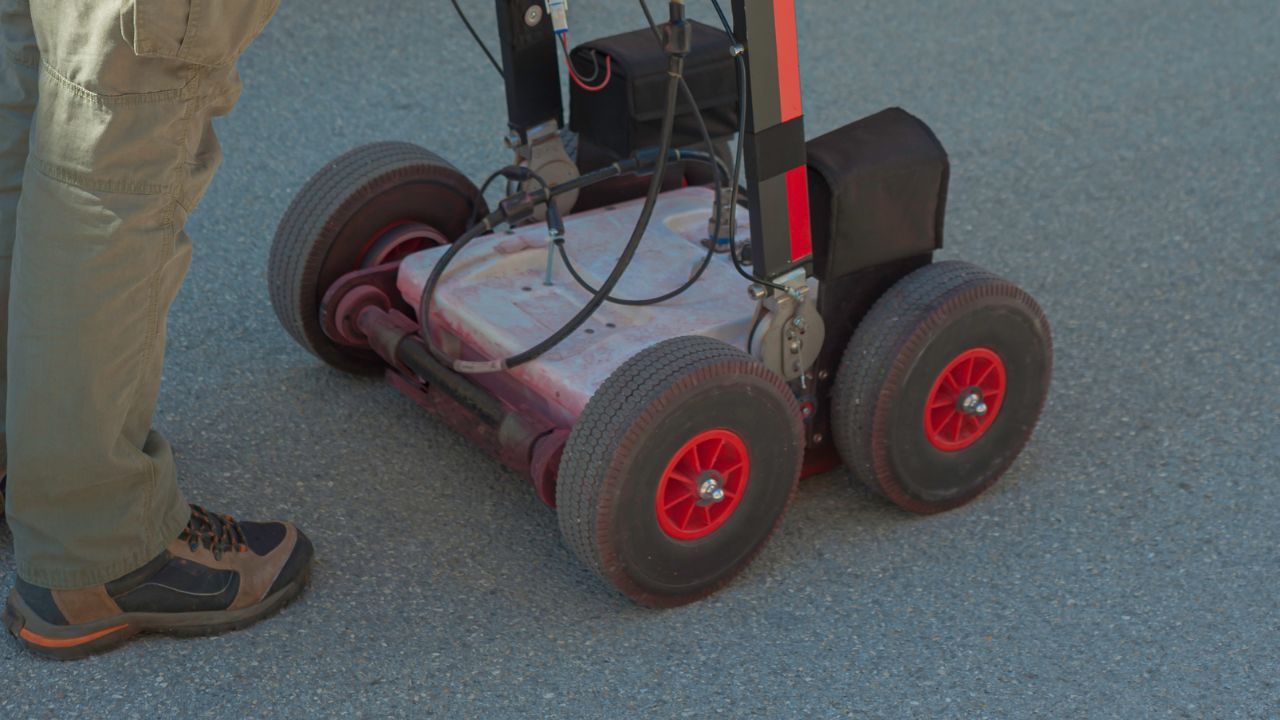
  3. Site assessment and utility detection using GPR and electromagnetic equipment
  4. Mark utilities on the property using color-coded flags and paint
  5. Receive documentation (maps, photos, GPS coordinates)

Additional potholing services verify exact depth when needed, ranging from $300-$3,000 per hole, depending on excavation complexity.

Benefits For Property Owners:

  • Locates private utilities beyond the meter – irrigation, pool lines, private sewer laterals, landscape lighting
  • Prevents costly damage – average utility strike costs $550,000; prevention investment provides 1,100x ROI
  • Advanced technology – GPR provides precise depth and location data
  • Faster scheduling – 1-3 days vs. 7-10 days recommended for 811
  • Covers utilities 811 doesn’t locate – 811 only covers public utilities to the meter
  • Essential for older neighborhoods – pre-1980 properties often have undocumented utilities

Choose private utility locating when:

  • Excavating beyond your property meter
  • Working in pre-1980 neighborhoods with limited utility records
  • Projects require exact depth verification
  • Tight timelines prevent waiting 7-10 days for 811 coordination

What Is 811, And How Does It Help Property Owners In San Diego?

811 is California’s free underground utility notification service. DigAlert, serving San Diego County and 8 other Southern California counties, coordinates with utility companies to mark public lines before excavation. The service is 100% free, funded by member utility companies. Property owners must call 811 before any digging project, California Government Code 4216 requires a minimum of 2 working days’ notice, though 7-10 days is recommended for complex projects.

811 Services In San Diego:

Service Type Description Availability Cost
Underground utility marking Mark’s public gas, electric, water, sewer, and telecommunications Statewide, DigAlert serves San Diego County Free
Notification coordination Notifies all relevant utility owners Available to all excavators Free
Emergency excavation 24-hour notification for emergencies 24/7 Free
Ticket renewal For projects extending beyond 28 days As needed Free

Steps to Use 811:

  1. Pre-mark the excavation area in white
  2. Call 811 or submit online (minimum 2 working days before digging; 7-10 days recommended for complex projects)
  3. Provide location and project details
  4. Receive ticket number
  5. Wait for utility companies to mark their lines
  6. Verify positive responses from all utility members
  7. Use hand tools within 24 inches of marked utilities (tolerance zone)

Key Requirements:

  • Tickets valid for 28 calendar days
  • Tolerance zone: 24 inches on each side of markings
  • California Government Code 4216 mandates 2 working days’ minimum notice

Choose 811 when:

  • Excavating near public utility lines
  • Working within the property’s meter or cleanout boundary
  • Projects allow 7-10 day lead time for utility coordination
  • Budget constraints require free locating services

What Are The Key Differences Between Private Utility Locating And 811 In San Diego?

The fundamental difference: jurisdiction. Understanding the legal limits of 811 is critical; the service marks public utilities up to your property meter; private locating identifies everything beyond that point. SDG&E provides electric and gas service to the property line or meter. The City of San Diego provides water and sewer to the meter. Everything beyond those demarcation points is the property owner’s responsibility, and 811 won’t locate it.

Utilities Covered:

Private Utility Locating 811/DigAlert Services
Private gas lines beyond meter SDG&E gas to meter
Private electrical beyond meter SDG&E electric to property line/meter
Private water lines, irrigation City of San Diego water to meter
Private sewer laterals beyond cleanout City of San Diego sewer to meter
Pool lines, landscape lighting, private wells Public telecommunications to property
Specialty utilities Not covered

What’s excluded from 811 coverage includes all irrigation systems, pool plumbing, private sewer laterals, landscape lighting, and specialty utilities on private property. These exclusions create significant liability exposure for property owners who skip professional private utility locating services.

Accuracy And Technology Comparison:

Aspect Private Locating 811
Technology Advanced GPR, acoustic detection Electromagnetic locators
Precision Exact depth and horizontal location Approximate location marked
Response time 1-3 days Minimum 2 days (recommend 7-10)
Documentation Maps, photos, GPS coordinates Color-coded surface markings
Verification Potholing available Depth not always verified

Real-World Accuracy Issues: A SeeScan case study in San Diego found a 30-inch SDG&E pipeline 7.8 feet west of its official map position, completely outside the tolerance zone. This demonstrates why verification matters, even for public utilities.

Decision Framework:

Choose private utility locating if:

  • Excavating beyond your property’s meter or cleanout
  • Project requires exact depth and location data
  • Working with irrigation, pools, or landscape systems
  • Property built before 1980 with limited utility documentation
  • Timeline allows 1-3 days for service

Choose 811 when:

  • Digging near public utility easements
  • Working within the property’s utility connection points
  • Timeline allows 7-10 days for coordination
  • Budget requires free services
  • Excavation depth is minimal (less than 12 inches)

Expected outcomes:

  • Private locating: Comprehensive documentation, exact measurements, liability protection for private infrastructure
  • 811: Free public utility marking, regulatory compliance, protection from public utility strikes

When you need both: Most San Diego excavation projects require both services. Call 811 for public utilities and hire private locators for everything beyond your meter. This dual approach provides complete coverage and maximum liability protection.

When Should Property Owners In San Diego Use Private Utility Locating vs. 811?

Use both services for comprehensive protection. 811 fulfills California’s legal requirement and marks public utilities. Private locating protects your infrastructure beyond the meter, the lines you own and are liable for. Understanding when private locating is required prevents catastrophic liability exposure and project delays.

Use Private Utility Locating When:

  • You have irrigation systems, pools, landscape lighting, or private wells
  • Utilities extend beyond the meter or property line
  • Working in older neighborhoods (pre-1980) with undocumented utilities
  • Need exact depth measurements for foundation or deep excavation work
  • Property is in coastal area (corrosion challenges)
  • Commercial properties with complex private utility networks

Pre-1980 San Diego neighborhoods carry higher undocumented utility locating risk. These properties often lack accurate records of private infrastructure installations, making professional locating essential before any excavation work.

Use 811 When:

  • Planning any excavation (legally required in California)
  • Working near public right-of-way utilities
  • Need coordination with multiple public utility providers
  • Applying for excavation permits (proof of 811 notification required)
  • Emergency excavations (24-hour notification available)
  • Budget-conscious projects (service is free)

California law mandates 811 notification for all excavation. Non-compliance penalties range from $10,000 for negligent violations to $100,000 for violations causing gas or hazardous liquid escape.

Decision Guidance:

  • Single-service approach: Use 811 alone only for shallow excavation (less than 12 inches) in newer properties (post-1980) with no private utilities
  • Dual-service approach: Use both for any project involving irrigation, pools, foundations, or work in pre-1980 neighborhoods
  • Expected outcome: Combined coverage eliminates blind spots and provides maximum liability protection

What Are The Legal Considerations For Property Owners Using Private Utility Locating vs. 811?

Property owners face full liability for damage to private utilities, lines beyond the meter that 811 won’t mark. Average utility strike costs reach $550,000, broken down as: emergency repair ($75,000), project delays ($120,000), legal liability ($85,000), equipment damage ($45,000), injuries ($150,000), fines ($25,000), and insurance increases ($50,000). Private locating creates documentation that protects against these costs.

Legal Risks:

  • Full liability for damage to private utilities
  • Contractor selection risk if locator is unqualified
  • Documentation requirements for insurance claims
  • Disclosure obligations to contractors
  • Property owner responsibility for private utilities per California law

Legal Protections With 811:

  • Free service for all excavators
  • State-regulated utility protection (California Government Code 4216)
  • Hand digging required within 24-inch tolerance zone
  • Graduated penalty structure for violations
  • Emergency notification procedures (911 if safety threatened)

California Government Code Penalties:

  • Negligent violations: Up to $10,000
  • Knowing/willful violations: Up to $50,000
  • Violations causing gas/hazardous liquid escape: Up to $100,000
  • Plus full repair costs for damaged facilities

Critical Requirements:

  • Ticket validity: 28 days; must renew for extended projects
  • Notification timeline: Minimum 2 working days, maximum 14 calendar days before excavation
  • Tolerance zone compliance: Hand tools only within 24 inches of marked utilities

When to prioritize legal protection:

  • High-value projects where strike costs would exceed project budgets
  • Commercial properties with complex liability exposure
  • Projects in public right-of-way requiring permit compliance
  • Any excavation where contractor insurance may not cover private utility damage

How Much Do Private Utility Locating And 811 Services Cost In San Diego?

811 costs nothing, 100% free for all users. Private locating ranges from $200-$800 for residential properties. This prevention investment delivers 1,100x ROI compared to the $550,000 average strike cost. SDG&E reported 250+ strike incidents in one year. Nationally, utility strikes cost $30 billion annually.

Private Utility Locating Costs:

Service Type Typical Cost Notes
Residential basic locate $200 – $500 Property size dependent
Residential comprehensive $500 – $800 Includes GPR, mapping
Commercial property $800 – $2,500+ Based on complexity
Emergency/rush service $400 – $1,000+ 50-100% premium
Potholing verification $300 – $3,000 per hole Depth and soil dependent

When evaluating quotes, watch for red flags in utility locating quotes, such as providers without proper insurance, unclear pricing structures, or a lack of GPR technology capabilities.

811 Service Costs:

  • Residential excavators: FREE
  • Commercial/contractor excavators: FREE
  • Emergency excavations: FREE
  • Ticket renewal/re-location: FREE
  • No hidden fees, registration costs, or charges
  • Service funded by member utility companies

Cost-Benefit Analysis:

  • Prevention investment: $200-$800
  • Average strike cost: $550,000
  • ROI: 1,100x or more
  • Single strike can exceed the entire project budget

Choose based on budget when:

  • Budget allows $200-$800: Use both services for complete protection
  • Budget constraints: Use free 811 for public utilities; assess private utility risk carefully
  • Commercial projects: Factor private locating into project costs, strike liability far exceeds service fees

How To Choose The Right Utility Locating Service For Your Property In San Diego?

Match the service to your excavation scope. Simple projects in newer properties may only need 811. Complex excavations, pre-1980 properties, or projects involving private utilities require both services. The combined investment prevents the $550,000 average strike cost.

Decision Checklist:

  • Cost: 811 free; private $200-$800
  • Accuracy needs: Deep excavation requires private locating
  • Legal protection: 811 mandatory; private covers beyond meter
  • Time sensitivity: Private 1-3 days; 811 minimum 2 days
  • Property age: Pre-1980 needs private service
  • Utility scope: Public only vs. private utilities present
  • Project complexity: Simple vs. foundation/pool installation

Service Comparison:

Aspect Private Utility Locating 811 Services
PROS Higher precision; faster service (1-3 days); covers private utilities; advanced technology; detailed documentation Free service; legally required; covers all public utilities; state-regulated standards; single call coordination
CONS Costs $200-$800+; not legally mandated; doesn’t replace 811 Minimum 2-day wait; only public utilities; approximate locations; doesn’t cover private utilities

Decision Framework:

Choose private utility locating if:

  • Property has irrigation, pools, or landscape lighting
  • Excavation exceeds 12 inches depth
  • Property built before 1980
  • Commercial property with complex infrastructure
  • Project budget justifies $200-$800 prevention cost

Choose 811 when:

  • Any excavation project (legally required)
  • Working near public utilities
  • Need permit approval documentation
  • Timeline allows 2+ days for coordination

Expected outcomes:

  • 811 only: Legal compliance, public utility protection, no cost, but zero coverage for private utilities
  • Private locating only: Detailed private utility mapping, but illegal without 811 notification and provides no public utility protection
  • Both services: Comprehensive coverage, maximum liability protection, regulatory compliance, documentation for insurance and permits

When you’re not a fit for a single-service approach: Most San Diego properties require both services. Single-service approaches only work for minimal excavation (less than 12 inches) in newer properties (post-1980) with no private utilities present. Otherwise, use both.

What Are The Risks Of Not Using Utility Locating Services In San Diego?

Skipping utility locating creates catastrophic liability. SDG&E reports 250+ strike incidents annually in San Diego. One car strike affected 326 circuits, cutting power to 43 customers. Fatal incidents include a 2016 worker electrocution in El Cajon and a 2024 woman electrocuted by a utility box. Nationally, utility strikes cost $30 billion annually. California penalties range from $10,000 for negligent violations to $100,000 for violations causing gas or hazardous liquid escape.

Consequences Of Skipping Utility Locating:

  • Risk of hitting underground utilities (public and private)
  • Damage to property and infrastructure
  • Full liability for accidents and repairs
  • Service disruptions to neighbors
  • Project delays and cost overruns
  • Legal penalties ($10,000-$100,000)
  • Personal injury or death (electrocution, gas explosions)

Prevention Benefits:

  • Prevents accidental utility cuts and strikes
  • Avoids service disruption to the community
  • Ensures safer excavation for workers
  • Enables proper planning and equipment selection
  • Provides legal documentation of due diligence
  • Maintains project schedules
  • Protects property value

The Economics of Prevention:

  • Prevention cost: $200-$800
  • Average strike cost: $550,000
  • Required safety measure: Hand digging within 24-inch tolerance zone
  • Ticket validity: 28 days (must renew for extended projects)

Avoid these risks by:

  • Calling 811 for all excavations (legally required)
  • Hiring private locators for beyond-meter utilities
  • Documenting all utility markings with date/time stamped photos
  • Following tolerance zone protocols
  • Budgeting for prevention rather than paying for strikes

What Property Owners In San Diego Should Know About Private Utility Locating And 811

Complete protection requires both services. 811 provides free, legally required marking of public utilities to your meter. Private locating identifies your infrastructure beyond that point, the lines you own and are liable for. Combined investment of $0 (811) plus $200-$800 (private) prevents $550,000 average strike costs. San Diego’s DigAlert serves the region; older neighborhoods demand extra diligence due to undocumented utilities.

Why Understanding Both Services Matters:

  • Safety and legal protection: California law requires 811; private locating adds comprehensive coverage
  • Service selection: 811 covers public utilities to the meter; private covers beyond-meter infrastructure
  • Cost prevention: $200-$800 investment prevents $550,000 average strike cost (1,100x ROI)
  • San Diego specifics: DigAlert serves the region; older neighborhoods need extra diligence

Best Practices Checklist:

  • Use certified, insured providers
  • Call 811 at least 2 working days before excavation (7-10 days recommended)
  • Pre-mark the excavation area in white
  • Verify positive responses from all utility members
  • Hand dig within a 24-inch tolerance zone
  • Photograph all utility markings with date/time stamps
  • Track ticket expiration (28 days) and re-locate as needed
  • Maintain utility maps and documentation
  • Use BOTH 811 and private locating services
  • Budget $200-$800 for private utility detection

Prevention is 1,100 times cheaper than repair. Use both 811 (free, legally required) and private locating ($200-$800) to avoid $550,000 average strike costs.

Ready to protect your San Diego property? Contact Util-Locate for professional private utility locating services that complement your 811 notification and provide complete underground infrastructure protection.

 

Protecting Your San Diego Property Investment With Accurate Utility Data

utility strike

San Diego’s competitive real estate market demands informed investment decisions. Subsurface utilities, invisible yet critical infrastructure, can make or break property value and development feasibility. A single utility strike costs between $75,000 and $500,000 to repair. Unexpected utility conflicts during construction drive 10-20% cost overruns. 

Yet most property investors overlook comprehensive utility due diligence until it’s too late. Understanding San Diego’s unique challenges, seismic fault zones, coastal soil conditions, water conservation mandates, and historical preservation requirements transforms utility data from a compliance checkbox into strategic asset protection. 

This guide shows property investors how accurate utility data prevents costly incidents, supports higher valuations, and enables smarter development decisions.


Key Takeaways

  • Accurate utility data prevents costly incidents, with utility strikes ranging from $75,000 to $500,000 per occurrence
  • Early conflict detection during the design phase saves 10-20% on overall project costs
  • Understanding San Diego’s unique regulatory requirements (water conservation, seismic zones, coastal conditions) protects long-term investment value
  • Advanced technology like BIM integration enables proactive utility conflict management
  • Proper due diligence on utility data impacts property valuations, development feasibility, and ongoing maintenance costs

Why Is Accurate Utility Data Crucial For Property Investments In San Diego?

Subsurface utility data directly impacts your bottom line. A single utility strike costs between $75,000 and $500,000 to repair. Identifying conflicts during design rather than construction saves 10-20% on total project costs. Field changes during construction run 3-5 times more expensive than design-phase modifications.

Beyond immediate cost avoidance, comprehensive utility documentation strengthens property value. Well-documented infrastructure attracts buyers, supports higher appraisals, and builds lender confidence. Professional utility locating for property owners San Diego provides essential data for future renovations and ongoing asset protection. In San Diego’s competitive market, properties with clear utility records close faster and command premium prices.

Impact Dimension With Accurate Data Without Accurate Data
Long-term Value Appraisal support, buyer confidence, market competitiveness Unclear infrastructure conditions, buyer hesitation, lower valuations
Maintenance Costs Predictable spending, efficient renovation planning Reactive emergency spending, project delays, budget overruns
Investment Risks Utility strike prevention, regulatory compliance, clear development feasibility High liability exposure, compliance failures, uncertain buildability

Choose comprehensive utility data if you’re planning major renovations, ADUs, or property improvements.
Choose basic utility verification if you’re acquiring turnkey properties with recent updates.

What Types Of Utility Data Should Property Investors In San Diego Be Aware Of?

The American Society of Civil Engineers (ASCE) defines four quality levels for subsurface utility data under standard ASCE 38-02. Quality Level D relies on existing records, the least accurate option. Quality Level C surveys visible above-ground features. Quality Level B designates approximate horizontal utility locations. Quality Level A provides precise horizontal and vertical positioning through physical excavation.

Property investors need five critical data categories: subsurface location data (horizontal and vertical positioning), utility capacity and condition assessments, easement and rights-of-way documentation, 3D data for BIM integration, and historical service records showing infrastructure age. For investment decisions, prioritize existing capacity evaluations, easement restrictions, infrastructure condition timelines, and Phase I ESA coordination requirements. These data points directly impact tenant safety and downtime during property improvements.

Choose Quality Level A data when planning significant excavation or foundation work.
Choose Quality Level B or C for surface improvements and initial feasibility analysis.

How Can Property Investors in San Diego Obtain Accurate Utility Data?

Comprehensive utility due diligence follows a systematic approach. Start by coordinating Phase I Environmental Site Assessments with utility mapping for a complete site risk assessment. Conduct title reviews to identify recorded easements restricting development or use. Independently verify seller disclosures; never rely solely on provided information.

Assess existing utility capacity to determine development potential and highest-best use. Finally, commission the appropriate SUE quality level (D through A) based on your project scope. Primary data sources include SUE firms providing ASCE 38-02 compliant surveys, utility providers (SDG&E, City of San Diego Public Utilities), Development Services departments, title companies for easement documentation, and environmental consultants for ESA coordination.

Invest in higher-quality data for properties in coastal plains with semi-consolidated sandstone or shale soils, sites near active fault zones (Rose Canyon, Elsinore), historical districts with preservation requirements, and steep terrain requiring specialized grading. These conditions elevate risk and justify precision mapping through professional San Diego County utility locator services.

What Are the Legal and Regulatory Considerations for Using Utility Data in San Diego?

San Diego’s regulatory framework directly impacts how you use utility data. The city enforces comprehensive stormwater regulations requiring Best Management Practices to control runoff. Permanent water conservation restrictions affect landscape design and irrigation systems. Properties near Rose Canyon and Elsinore fault zones must meet strict seismic design codes.

Development constraints add layers of complexity. Historical districts impose strict design guidelines. Steep hillside regulations minimize geologic hazards on sloped terrain. Coastal properties face unique requirements due to semi-consolidated sandstone and shale conditions. Title-reviewed easements and rights-of-way may restrict property modifications and require utility provider coordination for relocations.

Utility Type California State Regulations City of San Diego Ordinances Coastal Commission Historic Preservation
Water Conservation mandates, quality standards Permanent water restrictions, landscape requirements Coastal zone water quality protection N/A
Energy Utility undergrounding policies SDG&E coordination requirements Coastal visual impact mitigation Overhead line restrictions in historic districts
Waste/Stormwater Regional water quality control BMP implementation, pollution prevention Ocean discharge standards Infrastructure modifications require approval
Subsurface Infrastructure Environmental protection standards Excavation permits, geotechnical requirements Erosion control in coastal zones Archaeological monitoring required

Misusing utility data triggers serious consequences: construction delays, stop-work orders, fines for violating water or stormwater regulations, liability for utility damage or environmental violations, and failed inspections leading to permit denials.

How Can Utility Data Help Property Investors Make Smarter Investment Decisions?

Utility availability and capacity determine development potential. Accurate data enables highest-and-best use analysis. Capacity assessments reveal whether existing infrastructure supports planned improvements, critical intelligence for feasibility decisions.

The financial impact is measurable. Early conflict detection saves 10-20% on project costs versus discovering issues during construction. Design changes made in the field cost 3-5 times more than planning-phase modifications. Each utility strike avoids $75,000-$500,000 in damages.

For property improvements, utility data optimizes ADU placement to reduce connection costs, ensures safe pool and hardscape installation, and prevents landscape excavation from damaging utilities. Track five key metrics: utility capacity versus development needs, connection distance and costs, easement restrictions, infrastructure age and replacement schedules, and historical billing patterns indicating system efficiency.

When it makes sense: Properties with development potential, major renovations planned, or ADU construction.

How we compare: Comprehensive utility due diligence delivers accurate budget forecasting and optimized site design versus basic record review that leaves critical unknowns.

Expected outcomes: Reduced risk, precise cost projections, maximized property use.

How Can Utility Data Prevent Environmental And Maintenance Issues For Property Investors?

Identifying utility conflicts during design saves 10-20% on overall project costs. This proactive approach enables redesign option analysis before construction begins and accurate cost estimation for necessary relocations. Prevention beats remediation across every metric.

Accurate subsurface mapping prevents $75,000-$500,000 utility strike incidents. It eliminates construction delays from unexpected conflicts. Informed foundation design avoids accidental strikes during excavation.

In San Diego’s coastal plains, semi-consolidated sandstone and shale require geotechnical evaluations to prevent destabilization. Properties near Rose Canyon and Elsinore faults need special utility protection measures. Steep terrain demands careful utility planning to prevent erosion. Utility data enables early identification of aging infrastructure before failure, spots inefficiencies signaling upcoming maintenance needs, ensures ADA-compliant pathways remain free from utility hazards, and integrates with 3D BIM platforms for virtual conflict detection before breaking ground.

How Can Property Investors Use Technology To Analyze And Utilize Utility Data?

Building Information Modeling platforms deliver clash detection and visualization before construction. Stakeholders resolve conflicts virtually, eliminating costly field surprises. The University of California, San Diego, developed comprehensive BIM guidelines for capital projects, ensuring data-centric processes throughout facility lifecycles, a model worth following.

SUE quality levels integrate seamlessly with technology. Quality Level A provides precise 3D coordinates for BIM clash detection. Levels B-C supply horizontal location data for preliminary design. Level D offers existing records for initial assessment.

Tool Category Primary Features Best Use Case
BIM Platforms 3D visualization, clash detection, multi-discipline coordination Complex projects requiring stakeholder collaboration
SUE Survey Software ASCE 38-02 compliance, quality level documentation Professional utility mapping and verification
GIS Mapping Tools Utility layer management, easement tracking Property portfolio management and planning
Property Management Platforms Maintenance scheduling, utility cost tracking Ongoing facility operations and budgeting

Predictive analytics transform utility data into strategic intelligence. Forecast maintenance needs based on infrastructure age and condition. Predict capacity constraints before development planning. Identify cost-saving opportunities through efficiency improvements. Align utility upgrades with property improvement schedules to minimize disruption and maximize value.

How To Leverage Accurate Utility Data To Protect And Maximize Your Property Investment In San Diego

Investing in accurate utility data is crucial for protecting and maximizing property investments in San Diego. Tailor Subsurface Utility Engineering (SUE) quality levels to your project needs, Level A for excavation and B-C for feasibility studies. Budget for utility due diligence to prevent costly overruns and strikes. Coordinate utility mapping with Phase I Environmental Site Assessments and integrate BIM for major developments. Account for local factors like seismic risks, water conservation mandates, and soil instability.

Follow these five steps to use utility data effectively: review titles and easements, verify disclosures, commission appropriate SUE surveys, assess utility capacity, and integrate data early into your design. Stay proactive by monitoring utility trends and maintaining updated records.

For complex sites or developments, invest in Quality Level A or B SUE surveys to protect your investment and avoid costly surprises. Contact Util-Locate for expert utility mapping services. 

Ready to protect your San Diego property investment with professional utility locating and mapping services? Contact Util-Locate for ASCE 38-02 compliant subsurface utility engineering services.

How Subsurface Utility Data Improves Building And Site Design In San Diego

how accurate utility information improves building and site design

San Diego’s construction landscape demands precision. Beneath the city’s streets lies a complex network of utilities, water mains, gas lines, electrical conduits, and telecommunications infrastructure, installed over decades without consistent documentation. This subsurface maze creates significant risks for developers, designers, and property owners. A single misplaced foundation or undetected utility conflict can derail projects, drain budgets, and endanger lives. As regulations tighten and technology advances, subsurface utility data San Diego has evolved from an optional investigation to an essential project requirement. 

This comprehensive guide explores how accurate utility information improves building and site design while delivering measurable economic and safety benefits.


Key Takeaways

  • Subsurface utility data prevents costly construction conflicts by identifying underground infrastructure before design decisions are finalized, saving 10-20% on project budgets
  • ASCE 38-02 quality levels provide standardized accuracy frameworks, with Quality Level A (vacuum excavation) offering the highest precision for critical projects
  • Advanced technologies like GPR, BIM integration, and machine learning transform utility detection, visualization, and predictive analysis capabilities
  • San Diego’s unique challenges, seismic risks, coastal soils, and dense urban development make comprehensive utility mapping essential for regulatory compliance and safety
  • Early stakeholder collaboration and cloud-based coordination platforms maximize the value of utility data throughout design, permitting, and construction phases


What Is Subsurface Utility Data, And Why Is It Important For Building And Site Design?

Subsurface utility data identifies and maps underground infrastructure before construction begins. This information prevents costly conflicts, protects workers, and streamlines design decisions. In San Diego’s dense urban environment, knowing what lies beneath saves time and money while reducing risk.

Types of Subsurface Utility Data

Data Type Description
Utility Locations Horizontal positioning of pipes, cables, and conduits (coordinates and offsets)
Depths Vertical measurements from surface to utilities (invert elevations and burial depths)
Conditions Material type, age, diameter, and structural integrity of utilities
Ownership Information Jurisdictional control, maintenance responsibility, and easement details

Key Challenges in San Diego

  • Seismic Activity: Rose Canyon and Elsinore fault zones require enhanced design considerations for utility protection
  • Urban Density: Congested underground infrastructure in downtown and coastal areas limits available space
  • Coastal Soil Conditions: Semi-consolidated sandstone and shale complicate excavation and utility placement
  • Environmental Compliance: Strict stormwater management regulations and coastal protection requirements
  • Historical Districts: Development restrictions in areas like Old Town and Gaslamp Quarter
  • Water Conservation Mandates: Permanent restrictions impact landscape irrigation and utility design

Comparison with Other Site Data

Data Type Primary Purpose Impact on Design Timing in Process
Subsurface Utility Data Identify underground infrastructure conflicts Prevents utility strikes and enables optimal building placement Preliminary design phase
Topographic Data Surface elevation and drainage analysis Determines grading, site access, and stormwater flow Site planning phase
Geotechnical Data Soil composition and bearing capacity Informs foundation design and excavation methods Design development
Planning Considerations Zoning, land use, and regulatory compliance Establishes permitted uses and development intensity Pre-design phase

How Does Subsurface Utility Data Improve Site Design And Prevent Common Pitfalls?

Accurate utility mapping transforms design efficiency by identifying conflicts before construction. Early detection allows designers to adjust building footprints, optimize foundation systems, and coordinate grading plans. This proactive approach eliminates expensive field changes and keeps projects on schedule.

Key Risks Prevented by Utility Data

  • Utility Strikes: Damage costs range from $75,000 to $500,000 per incident, plus potential injuries and service disruptions
  • Design Errors: Prevents placement of foundations, piles, or structural elements over active utilities
  • Construction Delays: Eliminates unexpected utility discoveries that halt work and require redesign
  • Cost Overruns: Avoids emergency relocations and change orders that run 3-5 times the cost of planned modifications
  • Safety Hazards: Protects workers from electrocution, gas leaks, and underground explosions
  • Legal Liability: Reduces exposure to damage claims, regulatory violations, and third-party lawsuits

Ways Utility Data Prevents Delays

  • Early Conflict Detection: Identifies utility conflicts during the design phase, saving 10-20% on overall project costs
  • Streamlined Permitting: Complete utility documentation accelerates city review and approval processes
  • Coordination Efficiency: Enables utility companies to plan relocations or shutdowns in advance
  • Accurate Cost Estimation: Provides contractors with reliable information for bidding and scheduling
  • Reduced Change Orders: Minimizes field surprises that trigger costly work stoppages
  • Smoother Utility Coordination: Facilitates communication between multiple utility providers and jurisdictions

Professional utility locating services ensure ASCE 38-02 compliance while delivering the accuracy needed for complex San Diego projects.

Benefits of Utility Mapping in Design

Benefit Category Specific Advantages
Decision-Making Speed Real-time clash detection in 3D models, immediate redesign options when conflicts arise
Stakeholder Collaboration Shared visualization for architects, engineers, and contractors; earlier input from utility companies
Technology Integration Direct import into CAD and BIM platforms, automated clash detection, GIS-based asset management
Cost Control Accurate quantity takeoffs, reliable contractor estimates, reduced contingency requirements
Risk Reduction Virtual conflict resolution before construction, documented conditions for future reference

Better site layouts emerge when designers have complete subsurface information from project inception, enabling optimal building orientation and infrastructure placement.

What Are The Main Challenges Of Using Subsurface Utility Data In San Diego?

San Diego’s infrastructure complexity creates unique data challenges. Legacy systems, incomplete records, and dense urban development make utility mapping difficult. Understanding these obstacles helps project teams plan appropriate investigation strategies.

Common Obstacles

  • Missing Historical Records: Many utilities installed decades ago lack accurate as-built documentation
  • Outdated Information: Existing maps may not reflect modifications, repairs, or abandoned infrastructure
  • Multiple Jurisdictions: Overlapping utility providers (SDG&E, City of San Diego, private companies) maintain separate records
  • Access Restrictions: Dense urban areas, active traffic corridors, and private property limit survey access
  • Conflicting Data Sources: Discrepancies between utility company records, city maps, and field conditions
  • Unknown Private Utilities: Older buildings may have undocumented private lines and service laterals

Solutions to Overcome Data Challenges

  • Advanced Surveying Technologies: Ground Penetrating Radar (GPR) and electromagnetic locators verify utility positions without excavation
  • ASCE 38-02 Quality Levels: Implement appropriate SUE levels (A through D) based on project risk and complexity
  • Utility Company Verification: Coordinate directly with providers to validate record accuracy and request field markings
  • Test Pit Investigations: Strategic excavations confirm depth, condition, and exact positioning of critical utilities
  • 3D BIM Integration: Combine multiple data sources into coordinated models for comprehensive visualization
  • Professional SUE Services: Engage qualified subsurface utility engineers for complex projects requiring Quality Level A or B data

Specialized San Diego County utility locator services provide local expertise and established relationships with regional utility providers.

Impacts of Poor Data Accuracy

Impact Category Consequences
Construction Costs Emergency utility relocations, extended equipment rental, overtime labor charges, contractor claims
Safety Hazards Worker injuries from utility strikes, public endangerment from gas or electrical damage, environmental contamination
Project Timelines Work stoppages during investigations, permit resubmissions, redesign delays, extended project duration
Legal Exposure Third-party damage claims, regulatory fines, contractor disputes, insurance premium increases
Property Value Development restrictions from undiscovered easements, reduced marketability, buyer skepticism

How Subsurface Utility Data Improves Compliance And Safety In San Diego’s Building Projects

Comprehensive utility documentation ensures regulatory compliance while protecting workers and the public. San Diego’s strict codes and environmental regulations make accurate subsurface data essential for project approval and safe construction.

Compliance Benefits

  • Zoning Conformance: Utility easements and setback requirements inform buildable area calculations and density limitations
  • Seismic Code Adherence: Proper utility protection details meet San Diego County’s earthquake safety standards
  • Stormwater Regulations: Accurate utility locations enable compliant BMP placement and drainage system design
  • Environmental Permits: Documented conditions support CEQA review and California Coastal Commission approvals
  • Historic Preservation: Utility data prevents damage to resources in protected districts during construction
  • ADA Compliance: Ensures accessible pathways avoid utility conflicts and maintain required grades

Understanding utility locating risk in San Diego helps project teams develop comprehensive risk mitigation strategies.

Safety Benefits of Utility Data

Safety Improvement Specific Outcome
Accident Prevention Eliminates 95% of utility-related construction incidents through pre-identification of hazards
Contractor Coordination Clear communication protocols between excavators and utility owners reduce emergency responses
Hazard Zone Identification Maps high-pressure gas lines, high-voltage electrical, and other critical infrastructure before work begins
Worker Protection Enables proper safety equipment, clearance distances, and protective measures during excavation
Public Safety Prevents service disruptions, gas releases, and electrical outages that endanger surrounding areas
Emergency Response Planning Provides first responders with utility locations for incident management and evacuation planning

What Tools And Technologies Are Used For Collecting And Analyzing Subsurface Utility Data?

Modern technology enables precise utility detection and documentation. Advanced surveying equipment, specialized software platforms, and emerging AI applications transform how engineers collect and analyze subsurface data. These tools deliver the accuracy levels required by ASCE 38-02 standards.

Most Common Data Collection Tools

Tool Category Technology Application Quality Level Achieved
Ground Penetrating Radar (GPR) High-frequency electromagnetic waves Detects non-metallic utilities, maps depth and size, identifies voids Quality Level B
Electromagnetic Locators Active/passive signal detection Traces metallic utilities, verifies horizontal positioning Quality Level B-C
Acoustic Methods Sound wave transmission Locates active water/sewer lines, detects leaks Quality Level C
Vacuum Excavation Hydro or air excavation Exposes utilities for visual verification and measurement Quality Level A
Utility Mapping Cameras CCTV and laser scanning Inspects pipe interiors, documents conditions Quality Level A-B
GPS/Total Station Precision positioning Records exact coordinates and elevations Supports all levels

Popular Software for Utility Data Visualization

Software Platform Primary Function Key Features Integration Capabilities
ArcGIS/QGIS GIS mapping and spatial analysis Asset management, network analysis, web-based sharing CAD import, database connectivity, cloud services
AutoCAD Civil 3D 2D/3D CAD design Utility corridor modeling, clash detection, alignment design GIS integration, data exchange formats
Revit Building Information Modeling 3D utility coordination, parametric modeling, documentation BIM 360, Navisworks, project collaboration
Navisworks BIM coordination and clash detection 4D simulation, multi-discipline coordination, constructability review Revit, AutoCAD, point cloud data
BIM 360 Cloud-based project management Real-time collaboration, mobile access, version control Autodesk products, third-party integrations
Bentley MicroStation Infrastructure design Subsurface utility engineering, reality modeling OpenBIM standards, GIS platforms

Professional utility mapping AutoCAD integration services ensure seamless data transfer between field survey equipment and design platforms.

Applications Of Machine Learning In Utility Data

  • Automated Data Cleaning: AI algorithms identify inconsistencies, remove duplicates, and standardize formats across multiple data sources
  • Predictive Utility Lifespan Analysis: Machine learning models forecast failure risks based on age, material, soil conditions, and maintenance history
  • Pattern Recognition: Neural networks detect utility installation patterns to predict locations where documentation is missing
  • Real-Time Data Processing: On-site systems process GPR scans instantly, highlighting anomalies for immediate investigation
  • Conflict Probability Mapping: Algorithms calculate the likelihood of utility conflicts based on historical project data and site characteristics
  • Automated Classification: Image recognition categorizes utility types, materials, and conditions from visual inspection data

What Are The Economic And Environmental Benefits Of Using Subsurface Utility Data In San Diego?

Investing in accurate utility data generates measurable returns through cost avoidance and environmental protection. Projects that implement comprehensive SUE programs consistently deliver better financial outcomes while reducing ecological impact. These benefits compound over a project’s lifecycle.

Ways Utility Data Saves Money

  • Eliminates Redesign Costs: Preventing mid-construction design changes saves 3-5 times the cost of initial planning modifications
  • Reduces Rework: Accurate placement eliminates excavation mistakes, trench relocations, and foundation adjustments
  • Minimizes Delay Costs: Avoiding utility conflicts saves 10-20% on overall project budgets through schedule maintenance
  • Lowers Contingency Requirements: Reliable data reduces risk reserves and improves project financing terms
  • Prevents Damage Claims: Avoiding utility strikes eliminates $75,000-$500,000 repair costs per incident
  • Streamlines Procurement: Accurate quantities reduce material waste and improve contractor bidding accuracy
  • Decreases Insurance Premiums: Documented risk mitigation lowers builder’s risk and liability insurance costs
  • Improves Property Values: Well-documented infrastructure enhances marketability and supports higher appraisals

Fewer RFIs and redesigns result from comprehensive utility documentation, reducing administrative burden and accelerating project timelines.

Environmental Benefits Of Utility Data

  • Reduces Land Disturbance: Precise excavation limits soil disruption, preserves vegetation, and protects sensitive habitats
  • Minimizes Construction Waste: Accurate planning reduces excess excavation, demolished materials, and landfill disposal
  • Lowers Carbon Footprint: Efficient construction sequencing decreases equipment runtime and fuel consumption
  • Protects Water Quality: Strategic utility placement prevents damage to stormwater BMPs and drainage systems
  • Prevents Contamination Events: Avoiding utility strikes eliminates soil and groundwater pollution from leaks or spills
  • Conserves Energy: Reduced rework and shorter project timelines lower overall energy consumption during construction
  • Supports Sustainable Development: Integration with green building practices enables LEED certification and sustainability goals
  • Preserves Urban Trees: Accurate utility mapping protects root systems and prevents unnecessary tree removal

What Are The Key Trends In Subsurface Utility Data For Building And Site Design In San Diego?

Technology advancement and smart city initiatives drive rapid evolution in utility data management. San Diego’s infrastructure modernization programs embrace these innovations to improve project outcomes and operational efficiency. Understanding emerging trends helps stakeholders prepare for future requirements.

Key Trends In Utility Data

  • IoT Sensor Networks: Real-time monitoring systems track utility conditions, detect leaks, and provide continuous location verification
  • Augmented Reality (AR) Visualization: Field crews view underground utilities through mobile devices overlaid on live camera feeds
  • Machine Learning Analytics: Predictive algorithms anticipate utility conflicts and recommend optimal design solutions
  • Digital Twin Technology: Virtual replicas of underground infrastructure enable scenario testing and lifecycle planning
  • Drone-Based Surveying: Aerial platforms integrate surface conditions with subsurface data for comprehensive site analysis
  • Blockchain Documentation: Distributed ledger systems create tamper-proof records of utility locations and modifications
  • 5G-Enabled Data Transfer: High-speed networks support instant field-to-office data transmission and real-time collaboration
  • Crowdsourced Verification: Construction teams contribute utility discoveries to centralized databases for continuous improvement

Future Developments

  • Smart City Integration: San Diego’s infrastructure initiatives will require standardized utility data formats and open-access platforms
  • Stricter Regulatory Requirements: California may mandate Quality Level B SUE for all public projects and high-risk private developments
  • Automated Utility Mapping: Self-driving survey vehicles equipped with GPR and LiDAR will accelerate data collection citywide
  • AI-Powered Design Optimization: Generative design algorithms will automatically route utilities and resolve conflicts in BIM models
  • Enhanced Collaboration Platforms: Cloud-based Common Data Environments will enable seamless multi-party access and version control
  • Advanced Material Tracking: RFID and GPS tags embedded in new utilities will eliminate future documentation gaps
  • Regional Data Repositories: County-wide utility databases will consolidate information from all providers into single-source systems
  • Climate Adaptation Planning: Utility data will integrate sea-level rise projections and flood risk mapping for resilient design

What Are The Best Practices For Integrating Subsurface Utility Data Into Building And Site Design?

Successful utility data integration requires systematic approaches and cross-disciplinary coordination. Following established protocols ensures data accuracy while maximizing value throughout the project lifecycle. These practices align with ASCE 38-02 standards and San Diego’s regulatory environment.

Best Practices For Data Accuracy

  • Cross-Reference Multiple Sources: Verify utility company records against city infrastructure maps, as-built drawings, and historical documentation
  • Employ Multiple Detection Methods: Combine GPR, electromagnetic location, and test pits to confirm findings and eliminate false positives
  • Engage Certified SUE Professionals: Use qualified engineers experienced with ASCE 38-02 protocols and local San Diego conditions
  • Conduct Regular Updates: Re-verify utility data if design changes occur or more than six months pass before construction
  • Document Field Conditions: Photograph and precisely measure all exposed utilities during test pit investigations
  • Validate with Utility Providers: Request field verification from SDG&E, City of San Diego, and private utility owners
  • Maintain Quality Control: Implement peer review processes and independent verification for critical utility conflicts
  • Archive Digital Records: Preserve native file formats, metadata, and survey notes for future reference and project handover

Steps For Efficient Integration

  • Initiate SUE During Pre-Design: Begin utility investigations before site planning to inform building placement and orientation decisions
  • Establish Data Standards Early: Define coordinate systems, file formats, and quality requirements in project kick-off meetings
  • Create Comprehensive 3D Models: Import utility data into BIM platforms alongside architectural, structural, and MEP systems
  • Conduct Iterative Clash Detection: Run automated conflict checks after each design iteration to catch issues immediately
  • Develop Coordination Drawings: Produce composite plans showing all utilities, proposed construction, and required clearances
  • Schedule Design Team Workshops: Hold regular coordination sessions where architects, engineers, and contractors review utility impacts
  • Implement Change Management Protocols: Track modifications to utility data and communicate updates to all team members
  • Prepare Construction Documentation: Include utility conflict matrices, protection details, and relocation sequences in bid packages

Improved coordination across disciplines reduces conflicts and streamlines the construction process when all stakeholders access current utility information.

Collaboration Strategies

  • Early Stakeholder Engagement: Invite utility companies, permit reviewers, and contractors to preliminary design meetings
  • Establish Communication Protocols: Define contact procedures, response timeframes, and escalation paths for utility-related questions
  • Use Cloud-Based Project Platforms: Deploy BIM 360, Procore, or similar tools for centralized document access and real-time updates
  • Conduct Pre-Construction Meetings: Review utility data, protection requirements, and emergency procedures with all field personnel
  • Assign Dedicated Coordinators: Designate specific team members responsible for utility liaison and conflict resolution
  • Create Shared Responsibility Matrices: Document which parties own data verification, design coordination, and construction protection tasks
  • Maintain Open Communication Channels: Establish project-specific communication channels for immediate utility-related issue resolution
  • Schedule Regular Coordination Reviews: Hold weekly or biweekly meetings during design and construction to address emerging utility challenges

The Importance Of Subsurface Utility Data For Building And Site Design In San Diego

Subsurface utility data transforms construction risk into manageable certainty. San Diego’s complex infrastructure, seismic requirements, and regulatory environment make accurate utility information essential for project success. Investment in comprehensive SUE programs delivers measurable returns while protecting workers, properties, and the public.

Long-Term Impacts

  • Streamlined Regulatory Processes: Standardized utility documentation will accelerate city review timelines and reduce permit resubmissions
  • Sustainable Building Practices: Precise utility mapping minimizes excavation waste, reduces carbon footprint, and supports LEED certification goals
  • Smart City Infrastructure: Real-time utility data feeds will integrate with San Diego’s digital infrastructure management systems
  • Enhanced Property Values: Well-documented subsurface conditions improve marketability, support higher appraisals, and reduce buyer due diligence concerns
  • Predictive Maintenance: Machine learning analytics will forecast utility failures and enable proactive infrastructure replacement
  • Climate Resilience: Utility data integration with sea-level rise and flood mapping will inform adaptive design strategies
  • Regional Data Consolidation: County-wide utility repositories will eliminate information gaps and improve multi-jurisdictional coordination
  • Technology Advancement: AR visualization, IoT sensors, and automated conflict detection will become standard practice in San Diego construction

Explore More About How Subsurface Utility Data Can Benefit Your Next Project

Protect your investment and streamline your next San Diego development with professional subsurface utility engineering services. Our experienced team delivers ASCE 38-02 compliant investigations using advanced GPR technology, electromagnetic detection, and vacuum excavation. We integrate seamlessly with your design team through BIM coordination, GIS mapping, and comprehensive documentation.

Ready to protect your next San Diego project with professional subsurface utility engineering? Contact us today for expert SUE services that reduce risk and streamline your design process.

Integrating Utility Locating Into Your San Diego Pre-Construction Process

pre-construction utility locating San Diego

San Diego construction projects face unique underground infrastructure challenges. With SDG&E reporting over 250 gas and electric line strikes annually, the consequences of inadequate utility locating extend far beyond budget overruns. A single strike averages $56,000 in direct costs, triggers 8-12 week delays, and exposes contractors to penalties reaching $100,000. California’s dense utility networks, where 60% of infrastructure exists beyond public meters, demand comprehensive pre-construction utility locating San Diego strategies.

This guide provides actionable frameworks for integrating utility locating into your pre-construction process, protecting both your project timeline and your bottom line.


Key Takeaways

  • Utility strikes cost $56,000+ and cause 8-12 week delays, private locating at $200-$800 delivers 100:1 ROI
  • 60% of utilities are private and require specialized locating beyond the free 811 service
  • California law mandates 2-day minimum notice, but complex projects need 7-10 days
  • Hand-digging within 24-inch tolerance zones is legally required regardless of technology
  • 28-day ticket validity demands active tracking and renewal before expiration

Why Is Utility Locating Critical in the San Diego Pre-Construction Process?

Utility locating prevents catastrophic project failures. San Diego contractors face $56,000 average strike costs, 8-12 week delays, and penalties up to $100,000. SDG&E documented over 250 gas and electric line strikes in a single year, each incident averaging $53,900 in emergency response alone. Beyond dollars, worker safety depends on accurate locating. Electrocution risks, gas explosions requiring site evacuations, and power outages affecting hundreds of customers result from skipped or inadequate utility detection.

Risks Of Not Locating Utilities Before Construction

  • Infrastructure Damage: A single utility strike costs $56,000 on average. Gas line strikes escalate to $73,900 plus $53,900 emergency response. SDG&E reported 250+ annual strikes causing measurable damage. One documented incident left 43 customers without power across 326 circuits.
  • Project Delays: Work stoppages average 8-12 weeks per strike. Nationally, these delays contribute $185 million annually in lost productivity. San Diego’s dense underground infrastructure compounds the risk.
  • Financial Penalties: California enforces strict liability. Negligent violations: $10,000. Knowing violations: $50,000. Hazardous material escapes: $100,000. Excavators pay all repair costs regardless of penalty tier.
  • Safety Hazards: Worker electrocution, gas leak evacuations, and 911 emergency responses create liability exposure. Documented SDG&E incidents demonstrate real-world consequences, lives endangered, communities disrupted.

How Utility Locating Prevents Delays And Mitigates Damage

Cost Prevention: 811/DigAlert is free for public utilities. Private locating costs $200-$800, 1% of average strike damage. GPR technology achieves 99.8%+ accuracy. Industry analysis shows comprehensive programs could save $40 billion annually.

Timeline Protection: California requires 2-day minimum notice; 7-10 days recommended for complex sites. Tickets remain valid 28 days, allowing scheduled work without rush decisions. Understanding when to locate utilities, ideally 30+ days before excavation, eliminates 8-12 week delay scenarios entirely.

What Are The Key Steps In The Utility Locating Process For Pre-Construction?

Success demands methodical execution across six phases. Start 30+ days before excavation with research and SDG&E coordination. Execute 811 calls 7-10 days out, not the 2-day minimum. Verify Electronic Positive Responses from all members. Engage private locators for beyond-meter infrastructure (60% of utilities). Document everything with timestamped photos and GPS coordinates. Renew tickets every 28 days without exception.

Key Steps To Begin Utility Locating In San Diego

  • Preliminary Research (30+ Days Before): Review geotechnical reports and utility maps. Contact SDG&E Design and Construction: 858-636-6805 (southern San Diego) or 760-480-7603 (northern). Identify all public and private utility responsibilities early.
  • Delineate Excavation Area: Pre-mark boundaries in white paint, flags, or stakes before calling 811. Accuracy here determines accuracy in responses.
  • Contact 811/DigAlert: Call minimum 2 working days before, 7-10 days recommended for complex projects. DigAlert processes 653 staff tickets plus 5,852 online requests daily. Your ticket remains valid for 28 calendar days.
  • Verify Responses: Confirm Electronic Positive Response (EPR) from every utility member. High-priority installations within 10 feet require onsite coordination meetings.
  • Engage Private Locators: Required for 60% of utilities, all beyond-meter lines. Budget $200-$800 per service. Public 811 doesn’t cover private infrastructure.
  • Document Everything: Photograph markings with timestamps and GPS coordinates. Stores locate ticket numbers and expiration dates. Learning how to use data in bids starts with comprehensive documentation that reduces contingencies and changes orders through accurate utility mapping. Renew every 28 days if work continues.

Tool Comparison

Tool Description Pros Cons
Ground-Penetrating Radar (GPR) Detects subsurface utilities via radar waves 99.8%+ accuracy, detects all utility types, determines depth Expensive ($400/month rental), requires training
Electromagnetic Locator Detects metallic utilities via signals Affordable, easy to use, portable Limited to metallic utilities, signal interference in urban areas
Vacuum Excavation (Potholing) Non-destructive exposure using air/water Visual confirmation, safe for all types $200-$600 per hole, slower process

Methods To Verify Utility Location Data Accuracy

  • Cross-Reference with Existing Maps: Compare 811 markings against utility company records. Review SDG&E underground construction standards and City water facility guidelines for discrepancies.
  • GPR Verification: Deploy for depth and precise location confirmation. Case documented: 30-inch SDG&E pipeline found 7.8 feet from mapped position, catastrophic if assumed accurate.
  • Potholing/Vacuum Excavation: Visual confirmation before mechanical excavation. California law requires hand-digging within 24-inch tolerance zones. Potholing provides certainty GPR cannot.
  • Electronic Positive Response (EPR): Verify all utility members responded to your ticket. Confirm either no utilities present or complete field markings. Missing responses = incomplete protection.

What Legal And Regulatory Requirements Must Be Considered For Utility Locating In San Diego?

California Government Code 4216 governs all excavation. Call 811 minimum 2 working days before, no exceptions. Delineate areas in white. Hand-dig within 24-inch tolerance zones. Maintain active 28-day tickets throughout projects. Cal-OSHA Title 8 Section 1541 requires qualified personnel and proper equipment. San Diego Municipal Code Chapter 6 adds excavation permits, markout removal protocols, and 3’×3′ exploratory limits. Electronic Positive Response became mandatory statewide; every utility must acknowledge every ticket.

Key Regulations

Regulation Description Requirements
California Government Code 4216 Statewide “Dig Safe” law Call 811 minimum 2 working days before excavation

Delineate area in white

Hand-dig within 24-inch tolerance zone

Maintain active 28-day tickets

California Code of Regulations Title 8, Section 1541 Cal-OSHA subsurface locating requirements Only qualified persons perform locating

Minimum single-frequency locating device required

San Diego Municipal Code Chapter 6, Article 2, Division 12 Public Right-of-Way excavations Excavation permits required

Markout removal with pavement restoration

Exploratory excavation limited to 3 ft × 3 ft

Electronic Positive Response (EPR) System Mandatory communication in California Utility members must respond to every ticket

Mark facilities or confirm absence

Penalties For Failing To Properly Locate Utilities

  • Civil Penalties: Negligent violations reach $10,000. Knowing or willful violations escalate to $50,000. Violations causing hazardous material escape hit $100,000 maximum.
  • Additional Liability: Excavators pay all repair costs and damages regardless of penalty assessment. Emergency response averages $53,900 for gas incidents. Project delays average 8-12 weeks, compounding financial exposure beyond statutory fines.

How Does Utility Locating Impact Project Cost And Timeline In San Diego?

Utility locating delivers 100:1 ROI minimum. Invest $200-$800 in private locating to avoid $56,000+ strike costs. Free 811 service covers public utilities, zero cost for baseline protection. Strategic timeline integration prevents the 8-12 week delays that destroy project schedules. Early assessment and proper ticket management eliminate costly surprises.

Cost Savings From Proper Utility Locating

Prevented Costs: Strike repairs average $56,000, escalating to $73,900 for gas lines. Work stoppages contribute $185 million annually nationwide. Legal penalties range $10,000-$100,000. Insurance claims reach $50,000-$500,000+ for severe incidents.

Investment vs. Risk: 811/DigAlert is free. Private locating costs $200-$800. GPR rental runs $400/month. Potholing costs $200-$600 per hole. Compare these figures against a $56,000 minimum strike exposure, the math is decisive. Subsurface utility engineering provides comprehensive data that supports accurate bidding and reduces project risk.

Cost Breakdown

Type Description Example
Direct Cost Pre-construction utility locating Private locating: $200-$800

Potholing: $200-$600/hole

Indirect Cost Consequences of utility strikes Strike repairs: $56,000+

Work delays: 8-12 weeks

Penalties: $10,000-$100,000

Timeline Integration Best Practices

  • Early Assessment: Start preliminary research 30+ days before excavation. Identify utility conflicts during the design phase, not field operations.
  • Advance Notice: Submit 811 requests 7-10 days out for complex projects. The 2-day minimum creates unnecessary risk.
  • Active Management: Track 28-day ticket validity religiously. Renew before expiration; expired tickets equal zero legal protection.
  • Coordination: Schedule onsite meetings for high-priority installations within 10 feet of work zones.
  • Buffer Planning: Build contingency time for re-marks and verification. Assume nothing; confirm everything.

Who Is Responsible For Utility Locating In The San Diego Pre-Construction Process?

Responsibility cascades across four key roles. General contractors initiate 811 calls and obtain permits. Subcontractors secure individual tickets and maintain insurance. Property owners locate private utilities, 60% of the total infrastructure. Civil engineers identify conflicts during design. Confusion about responsibility creates liability gaps. Clear role definition prevents costly mistakes.

Roles And Responsibilities

  • General Contractors: Initiate 811 calls minimum 2 working days before excavation. Pre-mark areas in white. Obtain City of San Diego excavation permits. Use hand tools within 24-inch tolerance zones. Report utility damage immediately to 811 and operators.
  • Subcontractors: Each excavator obtains their own DigAlert ticket, no exceptions. Maintain minimum $1 million General Liability Insurance. Follow identical 811 compliance requirements as general contractors.
  • Property Owners: Locate private utilities representing 60% of all underground infrastructure. Private lines include irrigation, landscape lighting, pool equipment, sewer laterals, septic systems. Engage private locators for beyond-meter lines. Verify contractor compliance.
  • Civil Engineers: Identify utility conflicts during design phase. Integrate utility data into project plans. Coordinate between contractors and utility companies before ground breaks.

Utility Locating Services – When And How To Subcontract

  • When to Use Private Locators: All utilities beyond public meters (60% of total). Complex sites requiring GPR or advanced technology. Sites with incomplete or outdated records. Private water, irrigation, lighting, pool, and sewer systems.
  • Choosing Reliable Subcontractors: Verify Cal-OSHA Title 8 Section 1541 compliance, qualified personnel only. Confirm minimum $1 million General Liability Insurance. Require advanced technology: GPR, EM locators, CCTV, vacuum excavation. Validate local San Diego experience and CSLB license. Target 99.8%+ documented accuracy rates.
  • Recommended Providers: GPRS: (619) 536-1219 – 99.8%+ accuracy. Util-Locate: (866) 421-5325 – Full service. AirX Utility Surveyors: (760) 480-2347.

How Can Technology Improve Utility Locating In Pre-Construction Projects In San Diego?

Technology transforms guesswork into precision. GPR achieves 99.8%+ accuracy detecting both metallic and non-metallic utilities. GIS integration provides real-time digital access, California mandates mapping for all new installations beginning January 2023. AI-powered signal processing differentiates utilities in complex environments. Investment in technology costs hundreds; mistakes cost tens of thousands.

Ground-Penetrating Radar (GPR) Benefits

  • Accuracy: 99.8%+ detection rate for subsurface utilities. 
  • Versatility: Detects metallic and non-metallic infrastructure, PVC, fiber optics, concrete. 
  • Depth Detection: Provides precise depth measurements for excavation planning. 
  • Case Example: Found SDG&E pipeline 7.8 feet from the mapped position, preventing a catastrophic strike.
  • Cost: $400/month rental versus $56,000+ strike exposure.

Geographic Information Systems (GIS) Improvements

  • California Requirement: New installations mapped in GIS since January 1, 2023.
  • Real-Time Access: Digital utility data available during planning phases.
  • Coordination: Integration with City of San Diego databases streamlines permitting.
  • Documentation: GPS-coordinated as-built records eliminate historical mapping errors.

AI And Machine Learning Enhancement

  • Signal Processing: Differentiates utilities in dense underground environments.
  • Predictive Analytics: Identifies probable utility locations based on infrastructure patterns. 
  • Pattern Recognition: Analyzes San Diego-specific utility configurations for improved accuracy.
  • Precision: Enhances detection beyond standard electromagnetic methods.

What Are The Common Challenges In Utility Locating During Pre-Construction?

Even professional locating faces obstacles. Signal bleed energizes adjacent conductors, flagging wrong utilities. Sixty percent of utilities are private, invisible to 811 systems. Documentation gaps plague older developments where as-built records don’t exist. Technology has limits: GPR costs $400/month and struggles in high-clay soils. EM locators miss non-metallic utilities entirely. Success demands multiple verification methods, not single-source reliance.

Common Errors And Impact

Misidentified Utilities: Signal bleed energizes nearby conductors. Cross-utility interference occurs in dense urban areas. Impact: Wrong utility flagged, potential damage to actual target.

Missed Utilities: 60% of utilities are private, uncovered by 811. Undocumented lines common in older developments. Impact: Direct strikes, safety hazards, 8-12 week delays. Case: SDG&E pipeline found 7.8 feet from map position.

Documentation Issues: Inaccurate or outdated maps don’t reflect current conditions. Markings fade during 28-day ticket validity periods. Impact: Confusion during excavation, potential code violations.

Technology Limitations

  • Ground-Penetrating Radar: High cost, $400/month rental to $14,000-$100,000 purchase. Requires certified operator training. Performance degrades in high-clay soils common in San Diego.
  • Electromagnetic Locators: Cannot detect non-metallic utilities like PVC pipes or fiber optics. Signal interference prevalent in urban environments. Depth accuracy decreases for utilities beyond 8 feet.
  • General Limitations: Exact depth is difficult without physical verification. The 24-inch tolerance zone legally requires hand-digging confirmation regardless of technology used.

Addressing Misidentified Utilities

  • Re-Surveys: Request free re-marks from 811/DigAlert if markings appear unclear or contradictory.
  • Multiple Technologies: Combine GPR, EM locators, and potholing for cross-verification. Single-method reliance creates blind spots.
  • Utility Company Contact: Direct communication with SDG&E at 1-800-411-7343 for clarification on specific installations.
  • Physical Verification: Vacuum excavation at $200-$600 per hole provides visual confirmation before mechanical excavation begins.

What Are The Best Practices For Effective Utility Locating In San Diego’s Pre-Construction Process?

Comprehensive surveys demand layered verification. Start 30+ days before excavation, not the 2-day legal minimum. Use both free 811 service and paid private locators covering 60% of infrastructure. Deploy multiple technologies: GPR for comprehensive coverage at 99.8%+ accuracy, potholing for depth confirmation at $200-$600 per hole. Photograph everything with GPS coordinates. Track 28-day ticket validity obsessively. When conflicts emerge between data and plans, stop work immediately and re-verify before proceeding.

Best Practices For Comprehensive Surveys

  • Early Assessment: Begin 30+ days before excavation versus 2-day legal minimum. Early detection prevents late-stage conflicts.
  • Dual-Service Approach: Free 811/DigAlert covers public utilities. Private locators ($200-$800) handle beyond-meter lines representing 60% of total utilities.
  • Multiple Verification Methods: GPR provides 99.8%+ accuracy for comprehensive coverage. Potholing confirms depth at $200-$600 per hole. Photographic documentation with GPS coordinates creates permanent records.
  • Active Ticket Management: Track 28-day validity periods. Renew before expiration, no exceptions. Expired tickets offer zero legal protection.

Essential Tools

Tool Function Recommended Use
Ground-Penetrating Radar (GPR) Detects all subsurface utilities, determines depth Deep utilities, complex sites, verification (~$400/month rental)
Electromagnetic Locator Detects metallic utilities via signals Shallow metallic utilities, quick scans
Vacuum Excavation Non-destructive utility exposure Depth verification, tolerance zone exposure ($200-$600/hole)

Resolving Conflicts Between Data And Plans

  • Stop Work: Immediately halt when conflicts are identified. Proceeding creates liability exposure.
  • Re-Verify Location: Request 811 re-mark. Deploy GPR for independent verification. Use potholing for visual confirmation.
  • Update Plans: Work with civil engineers to revise drawings reflecting actual conditions.
  • Coordinate Stakeholders: Contact SDG&E, City Engineer, contractors. Unified communication prevents duplicate efforts.
  • Document Changes: Update GIS records, required since January 1, 2023 for all new installations.

How Do You Choose The Right Utility Locating Service Provider In San Diego?

Provider selection determines project success. Verify Cal-OSHA Title 8 Section 1541 compliance and minimum $1 million General Liability Insurance. Require GPR capability, EM locators, and vacuum excavation equipment. Demand San Diego-specific experience, knowledge of SDG&E configurations and City systems matters. Request client references and verify accuracy rates targeting 99.8%+. Standard pricing ranges $200-$800 per service; beware outliers on either extreme.

Key Qualifications

  • Certifications: Cal-OSHA Title 8 Section 1541 compliance with qualified personnel. NASSCO certification for video pipe inspection. California contractor license verified through CSLB. Minimum $1 million General Liability Insurance.
  • Technology: Ground-Penetrating Radar (GPR) capability. Electromagnetic (EM) locators. Vacuum excavation equipment. GPS mapping and GIS integration.
  • San Diego Experience: Knowledge of SDG&E configurations. City water/sewer system familiarity. Local soil conditions understanding. Municipal permitting process expertise.

Evaluating Reputation

  • Verification Methods: Request San Diego County client references. Review case studies and documented project outcomes. Confirm accuracy rates, target 99.8%+ like industry leaders. Verify response time guarantees.
  • Pricing Transparency: Standard range $200-$800 per service. Potholing costs $200-$600 per hole. Written proposals with a detailed scope. Clear payment terms and warranties.
  • Recommended Providers: GPRS: (619) 536-1219 – 99.8%+ accuracy. Util-Locate: (866) 421-5325 – Full service. AirX Utility Surveyors: (760) 480-2347.

How Does Effective Utility Locating Enhance Your Pre-Construction Process In San Diego?

Effective utility locating transforms risk into certainty. Invest $200-$800 to avoid $56,000+ strike costs, a 100:1 ROI minimum. Prevent 8-12 week delays destroying project schedules. Eliminate penalties ranging from $10,000 to $100,000. Protect workers from documented electrocution and explosion hazards. Understanding utility locating risk in San Diego enables contractors to build accurate bids while reducing contingencies and changing orders through comprehensive pre-construction planning. The industry could save $40 billion annually through comprehensive programs.

Minimizing Risks And Costs

  • Risk Prevention: Avoids utility strikes costing $56,000+ per incident. Prevents 8-12 week work stoppages. Eliminates penalties of $10,000-$100,000. Protects workers from safety hazards, including documented SDG&E electrocution incidents.
  • Cost Savings: Investment of $200-$800 private locating versus $56,000+ strike costs. ROI approximately 20:1 to 100:1 depending on project complexity. Industry potential of $40 billion annual savings from comprehensive programs.

Final Integration Steps

  • Schedule Final Survey (2-7 Days Before Excavation): Submit 811/DigAlert request valid 28 days. Engage private locators for utilities beyond meters. Verify Electronic Positive Response from all utility members.
  • Document Findings: Photograph all markings with timestamps and GPS coordinates. Maintain 811 tickets and positive response records. Prepare GIS mapping for as-builts, required since January 1, 2023.
  • Conduct Pre-Construction Meeting: Review markings with contractors and City Resident Engineer (858-627-3200). Confirm hand-digging procedures within 24-inch tolerance zone. Establish emergency response protocols: 911 for hazmat, SDG&E 1-800-411-7343.
  • Monitor Throughout Project: Renew 28-day tickets before expiration. Request re-marks if visibility compromised. Maintain active communication with utility companies.

Final Checklist

  • 811/DigAlert notification (minimum 2 days, recommended 7-10 for complex projects)
  • Private locating for utilities beyond meters (60% of total)
  • Electronic Positive Response verified from all members
  • Excavation permits obtained from City of San Diego
  • Hand-digging tools ready for 24-inch tolerance zone
  • Emergency contacts distributed: 911, 811, SDG&E (1-800-411-7343)
  • 28-day ticket tracking system established
  • $1 million liability insurance confirmed

Ready to protect your San Diego project from costly utility strikes? Contact Util-Locate’s certified experts today for comprehensive utility locating services delivering 99.8%+ accuracy.