
Key Takeaways
- Winter utility strikes cost 30-50% more than summer incidents due to frozen ground, equipment challenges, emergency response complications, and compressed year-end schedules that amplify delay penalties.
- Utility locating delivers 462% to 2,200% ROI across multiple independent studies, with 96% of projects showing positive returns. SUE costs only 1-2% of the project budget but prevents losses of 10-15% or more.
- The 811 system alone is insufficient protection. Public locating misses private utilities, building laterals, and doesn’t provide depth information. Combining 811 with private professional locating closes critical gaps where most strikes occur.
- November and early December are critical timing windows. Schedule comprehensive utility locating before severe winter weather eliminates access and before ground freezes, preventing proper equipment operation and accurate marking.
- Complex projects costing $3 million or more see the highest returns from utility locating investment. These projects face elevated strike risk due to urban locations, higher traffic volumes, deeper excavation, and greater utility congestion.
Winter construction projects face a hidden threat that can destroy budgets, trigger cascading delays, and expose contractors to significant legal liability. Underground utilities, over 20 million miles of pipes, cables, and conduits beneath U.S. soil, become exponentially more dangerous when frozen ground, snow cover, and compressed year-end schedules eliminate the margin for error. A utility strike that costs $5,717 in summer can escalate to $85,000 or more when repair crews must excavate frozen earth under emergency conditions while project deadlines loom.
The construction industry documents the scale of this problem: utility lines suffer damage every six minutes, resulting in $1.7 billion in annual property damage, nearly 2,000 injuries, and over 400 deaths. Winter amplifies all these costs by 30-50%. Yet multiple independent studies demonstrate that comprehensive underground utility locating, costing just 1-2% of project budget, delivers returns ranging from $2.73 to $22.21 for every dollar invested. The evidence is clear, the returns are proven, and the winter timeline is unforgiving.
Understanding the true cost of proceeding without proper utility location is essential for protecting both project profitability and contractor reputation during the challenging winter construction season.
Why Winter Excavation Without Utility Location Is A High-Risk Gamble
Winter construction transforms utility strikes from expensive problems into budget-destroying catastrophes. The combination of frozen ground, obscured markers, and compressed schedules creates conditions where every miscalculation carries amplified consequences.
The Staggering Industry Impact
Every utility strike triggers cascading costs across the entire construction ecosystem. Industry data reveals the scale: utility lines suffer damage every six minutes in the United States, resulting in $1.7 billion in annual property damage, 1,906 injuries, and 421 deaths. Winter conditions amplify all repair and delay costs by 30-50%. The total annual cost of construction errors, including utility strikes, reaches $177.5 billion in the U.S. alone. The Murrieta explosion demonstrates how catastrophic these failures can become when utility damage prevention protocols are inadequate.
Winter’s Perfect Storm Of Risk Factors
Frozen ground becomes hard as concrete, preventing standard locating equipment from functioning properly. Snow cover obscures surface markers and access points. Limited December daylight compresses work windows while year-end deadlines eliminate schedule flexibility. Equipment failures increase as batteries drain and components freeze. As one veteran utility locator warns, excavators are “at a lot higher risk for damages during the winter.”
Over 20 million miles of underground infrastructure exists nationwide, often documented with inaccurate or outdated records that become even less reliable under winter conditions. These winter excavation risks compound quickly, transforming routine projects into high-stakes operations.
The True Cost Of Utility Strikes: Beyond The Obvious
Utility strikes generate costs far beyond immediate repair bills. Direct expenses combine with indirect consequences, legal penalties, schedule delays, insurance increases, and reputational damage, to create financial impacts that can exceed the original project budget.
Immediate Financial Impact
| Cost Category | Description | Base Cost Range | Winter Multiplier |
| Water Main Repair | Excavation, pipe replacement, resealing | $10,000 – $100,000+ | +30-50% |
| Electrical Cable | Splicing, insulation, safety checks | $18,000 – $75,000 | +30-50% |
| Gas/Oil Lines | Leak detection, replacement, compliance | $35,000 – $250,000+ | +30-50% |
| Fiber Optic | Specialized splicing, testing | Substantial | +30-50% |
| Equipment Damage | Machinery repair/replacement | $18,000 – $75,000 | Higher in cold |
| Average Strike | Excluding delays and redesign | $5,717 | Base only |
| Project Delays | Idle crews, extended rentals | $85,000 – $500,000+ | Amplified by year-end pressure |
Legal And Long-Term Consequences
Immediate Legal Penalties:
- SLA violations triggering contractual penalties
- Time-limited permit violations and associated fines
- Utility company fines for damaged infrastructure
- Municipal penalties for disrupted services
Insurance Impact:
- Premium increases of 30-50% following damage claims
- Potential complete loss of coverage for repeat offenders
- Higher deductibles and reduced coverage limits
Lawsuits:
- Claims from neighboring properties experiencing service disruption
- Business interruption lawsuits from affected commercial entities
- Municipal liability for disrupted public services (traffic management, emergency response, sewage treatment)
Reputational Damage:
- Loss of client confidence affecting contract renewals
- Difficulty securing future bids due to documented failures
- Negative word-of-mouth within the construction industry
- Strained relationships with utility companies and municipal partners
Environmental Costs:
- Soil and groundwater contamination cleanup expenses
- Regulatory compliance and reporting requirements
- Ecosystem restoration for chemical or oil spills (often permanent damage)
- Long-term environmental monitoring obligations
How Winter Conditions Multiply Excavation Risks
Winter creates a compounding series of technical and operational challenges. Each obstacle increases the probability of strikes while simultaneously raising the cost of addressing them. Understanding these specific winter factors is essential for accurate risk assessment and budget planning.
The Frozen Ground Challenge
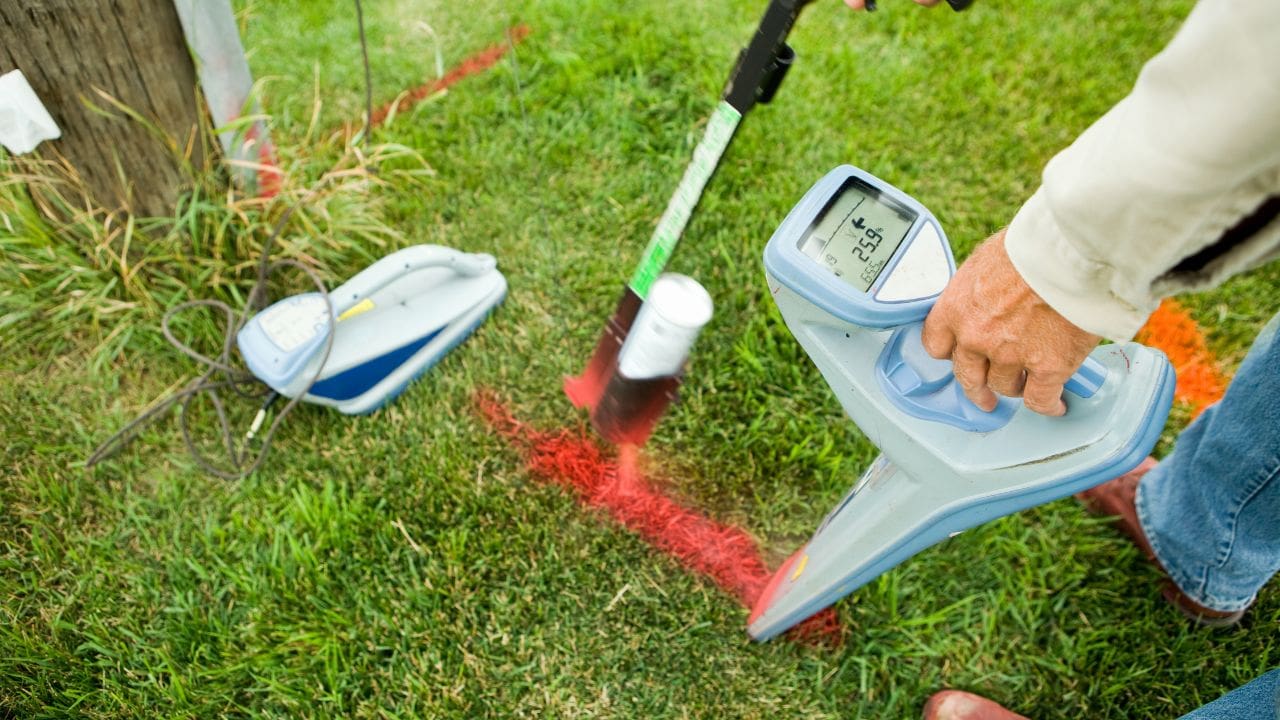
Ground Rod Failure: EM locating equipment requires ground rod insertion to complete electrical circuits. Frozen soil makes this impossible, forcing locators to run 50-100 feet of wire to alternative grounding points like fence posts or building foundations.
Equipment Complications: Cold temperatures drain batteries faster, causing unexpected equipment shutdowns mid-task. Marking paint freezes in cans. LCD screens fail or become unreadable. Equipment requires heated storage between uses, adding logistical complexity.
Reduced Accuracy: Frozen ground and ice create unpredictable dielectric environments that scatter radar waves and electromagnetic signals. This reduces detection clarity and depth penetration for GPR systems.
Slower Work Speed: Hard, frozen earth dramatically extends excavation time. What takes hours in normal conditions can require days in winter, multiplying labor costs while crews and equipment sit idle.
Marking Destruction: Paint marks disappear quickly as wind blows snow over them or snowplows scrape them away. Weather events between marking and excavation frequently necessitate re-marking, adding time and expense.
Safety Hazards: Ice dams near buildings threaten workers checking utility meters. Wearing insulated gloves reduces dexterity for precise equipment operation. Cold stress injuries increase as workers spend extended periods outdoors in freezing conditions.
Snow Cover Complications
Snow accumulation creates accuracy problems that cannot be solved without extensive site preparation. When snow piles several feet high between the ground surface and marking flags, accuracy suffers significantly. As utility locator Michael Jensen explains: “If we’re adding another four feet of snow, your marks aren’t as accurate.”
Excavators and property owners must clear snow before locating work begins, not just for safety, but for accuracy. Marks placed on snow rather than actual ground level introduce vertical error that increases strike risk. Visibility presents another challenge: standard marking techniques use white or light-colored materials that disappear against snow backgrounds. Locators must adapt by using black paint or black flags, or painting wooden laths black before insertion.
The ROI of Proper Utility Location: Proven Returns
Multiple independent studies demonstrate that utility locating delivers exceptional returns on investment. The data is clear: investing 1-2% of the project budget in comprehensive utility location prevents catastrophic cost overruns while accelerating project delivery.
The Compelling Financial Evidence
| Study | ROI per $1 Spent | Number of Projects | Key Finding |
| Louisiana State University | $4.62 | 71 projects | 96% showed positive ROI |
| Penn State | $22.21 | 10 projects | Highest documented return |
| Toronto Study | $3.41 – $6.59 | 9 projects | All showed positive ROI |
| Louisiana (construction phase) | $2.73 | 3 projects | Even late SUE application saves money |
Additional Documented Benefits:
- 12-15% reduction in project delivery time
- 40%+ reduction in relocation and change order costs
- SUE typically costs only 1-2% of the total project budget
These returns hold even when SUE is applied reactively during construction rather than during design, though early application maximizes savings. The Louisiana construction-phase study demonstrates that $2.73 can be saved for every dollar spent on SUE even after utility conflicts emerge.
Early application during project planning delivers the higher returns documented in other studies, as conflicts are resolved before excavation begins rather than through emergency response. Understanding when to call a private utility locator can mean the difference between a smooth project and a costly disaster.
Technologies That Deliver Results
| Technology | Best Used For | Winter Performance | Cost Range |
| Ground Penetrating Radar (GPR) | Non-metallic utilities, depth data | Works through snow with reduced accuracy | $14,000 – $100,000 |
| Electromagnetic (EM) | Metal pipes, cables | Requires creative grounding in frozen soil | Lower than GPR |
| Magnetic Locators | Iron/steel utilities, manholes | Works equally well through snow | Cost-effective |
| GPS Systems | Precise mapping, documentation | Improves accuracy in all conditions | Integrated cost |
| Vacuum Excavation | Visual verification in critical areas | More difficult/expensive in frozen ground | Premium service |
No single technology detects all utility types or works optimally in all conditions. Professional locators combine multiple technologies: GPR for non-metallic lines and depth information, EM for metallic utilities, and magnetic detection for ferrous materials. GPS integration provides precise coordinates for permanent documentation. Vacuum excavation verifies findings at critical conflict points before mechanical digging begins.
This multi-technology approach overcomes the limitations of any single method and delivers the comprehensive coverage that drives documented ROI. For projects in regions with diverse utility infrastructure, utility locating in California often requires this comprehensive multi-technology approach due to the complexity of urban and suburban development.
Your Winter Excavation Protection Checklist
Successful winter excavation requires proactive planning and systematic execution. These actionable steps reduce strike risk while maintaining project schedules despite challenging conditions.
Essential Planning Steps
Timing (November – Early December):
- Schedule SUE Quality Level A & B services before ground freezes
- Call 811 for public utilities (legally required, 3-5 day response time)
- Engage private utility locating services for complete coverage, including private utilities and depth data
Preparation:
- Review utility company records and as-built drawings for known infrastructure
- Integrate utility data into project plans and BIM models
- Build weather contingencies and buffer time into the schedule
- Plan snow removal procedures to keep marks at ground level
- Establish a re-marking protocol for weather-destroyed marks
Execution:
- Verify mark visibility immediately before excavation begins
- Use vacuum excavation within 18-24 inches of marked utilities
- Maintain continuous communication between excavators and locators
- Document everything with photos and GPS coordinates
- Create an emergency response plan with utility shutdown protocols and contact lists
The Dual-System Advantage
The 811 system provides free public utility marking with 3-5 day response time. It covers only utilities owned by member companies and provides approximate horizontal location without depth information. Private utility locating operates on a fee basis, offers same-day or next-day service, and covers both public and private utilities using advanced multi-technology methods. Critically, private utility locating provides the depth data essential for excavation planning, information that 811 cannot supply.
Recommendation: Use both systems. The 811 call is legally required but insufficient alone. Most utility strikes occur on private laterals and building services that 811 doesn’t cover. Private locating closes these gaps while adding the depth information that enables safe excavation. The combined investment, typically 1-2% of project budget, delivers the documented 462% to 2,200% returns while providing maximum liability protection. This dual approach represents industry best practice for utility damage prevention.
The Clear Financial Advantage Of Utility Locating
The financial benefits of utility locating are clear, backed by decades of industry data. The real question is whether project managers will act on the evidence or risk project budgets and timelines.
SUE services, costing 1-2% of the total budget, offer returns of $2.73 to $22.21 for every dollar spent. Utility strikes can cost a minimum of $5,717, with total impacts ranging from $85,000 to $500,000. Studies show that 96% of projects with utility locating yielded positive returns. Utility locating isn’t an expense—it’s a high-yield investment that protects profitability.
Scheduling utility locating before winter, ideally in November or December, is crucial. Winter conditions elevate the risk and financial impact of utility strikes. With frozen ground and compressed schedules, the consequences of skipping locating can be devastating, often surpassing annual profits.
The math is clear. Utility locating costs 1-2% but can save 10-15% or more. The real question is: can you afford not to invest in it?
Protect your winter projects from costly utility strikes. Contact Util-Locate today to schedule comprehensive utility locating services before severe weather arrives.
