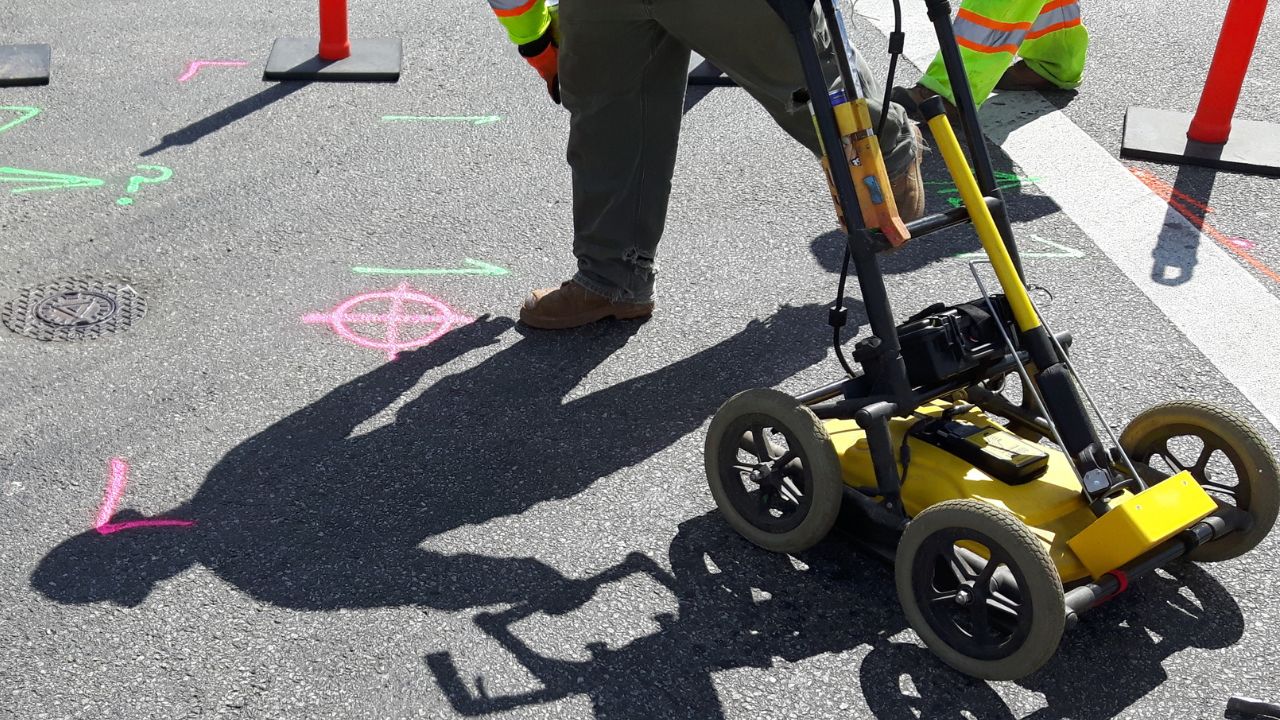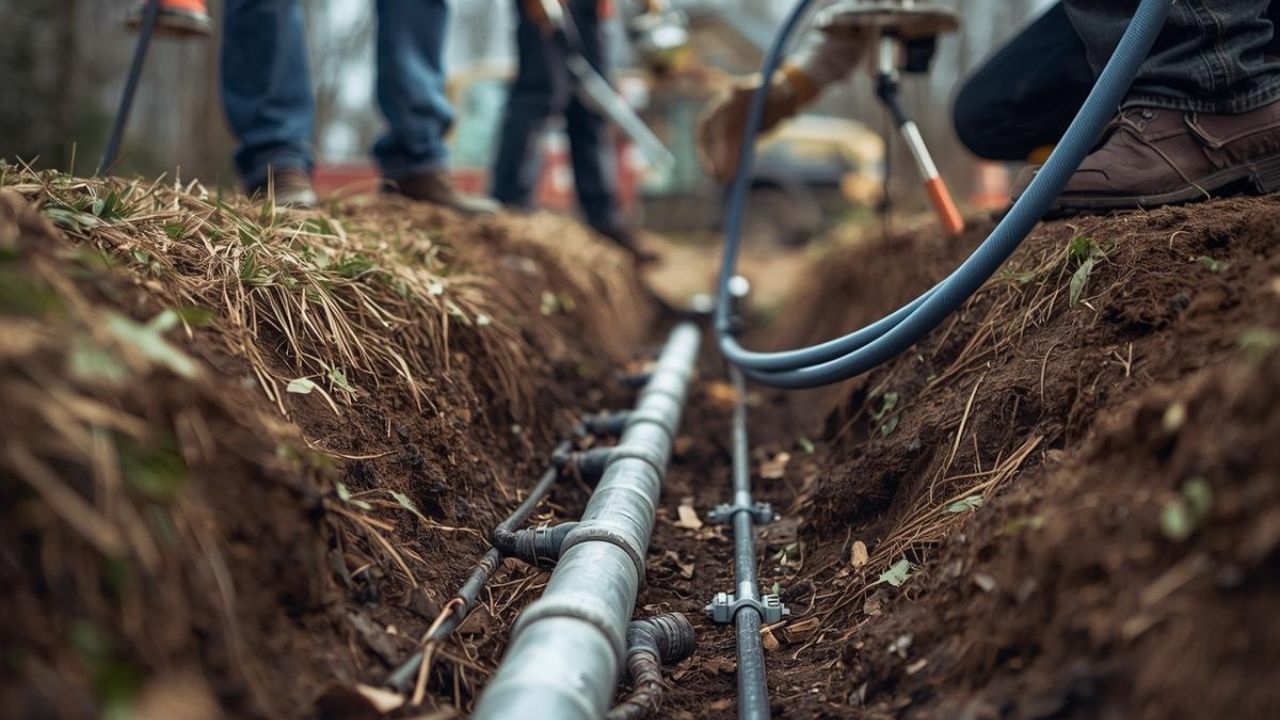
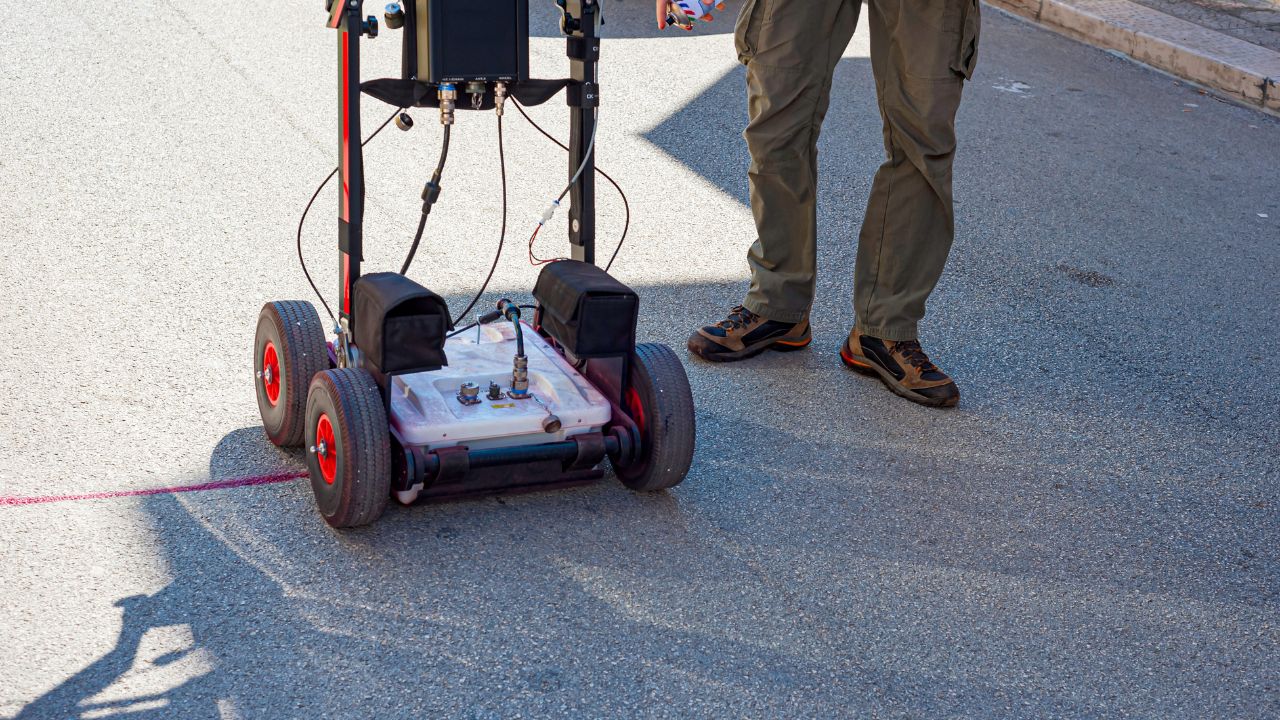
Key Takeaways
- .No single technology is sufficient: San Diego’s coastal clay soils (GPR rated 2/5), extensive PVC infrastructure (EM rated 30% accuracy), and urban congestion (EM rated 2/5) require a combined approach as industry standard
- Soil conditions determine technology effectiveness: East County’s dry, sandy soils favor GPR (rated 5/5); coastal areas favor EM (rated 4/5) for metallic utilities; downtown concrete-heavy zones require GPR for scanning but EM for deep metallic tracing
- Detection accuracy varies by utility type and depth: GPR achieves 98% PVC accuracy but drops to 40% at 15-20 feet depth; EM achieves 98% metallic accuracy and maintains 85% at 15-20 feet but only 30% PVC accuracy
- Combined approach costs 20-30% more but eliminates blind spots: A single utility strike costs $50,000 to over $1 million, far exceeding the premium for dual-technology services that provide comprehensive detection
- Local market confirms combined standard: San Diego contractors (GPRS, Util-Locate, CPL Detection, ART Locating) all offer both technologies; SDG&E requires EM-detectable markers on PVC conduits because EM alone is insufficient
San Diego’s utility infrastructure presents a unique challenge: coastal clay soils that limit Ground Penetrating Radar effectiveness, extensive PVC conduit networks invisible to Electromagnetic locators, and dense urban congestion where signal interference creates blind spots. The question isn’t whether GPR or EM is “better”, it’s which technology fits your specific site conditions, and when you need both to eliminate strike risk.
This guide provides the technical specifications, cost analysis, and soil-specific performance data you need to make informed decisions for San Diego County projects. Whether you’re planning downtown excavation, East County development, or coastal infrastructure work, understanding how these technologies perform in local conditions determines whether you detect every utility or face a costly strike.
What Does “Utility Locating” Actually Mean On A San Diego Jobsite?
Utility locating identifies the position and depth of underground infrastructure before excavation. In San Diego, this process is critical due to the region’s dense urban utility networks, mix of legacy and modern infrastructure, and variable soil conditions from coast to inland. The stakes are high: utility strikes cost $50,000 to over $1 million, depending on the type of utility damaged and the project disruption.
The two primary technologies are Electromagnetic (EM) locator and Ground Penetrating Radar (GPR). Each technology detects different utility types with varying accuracy depending on material, depth, and soil conditions.
What Utilities You Should Expect in San Diego and How They’re Typically Detected
| Utility Type | Common Material | Detectable by EM? | Detectable by GPR? | Detection Accuracy |
| Metal pipes/cables | Steel, copper, cast iron | Yes (98% accuracy) | Yes (95% accuracy) | Excellent for both |
| PVC pipes | PVC, HDPE | Only with tracer wire (30% accuracy) | Yes (98% accuracy) | GPR required |
| Fiber optic cables | Glass fiber, non-metallic | Only with tracer wire (25% accuracy) | Yes (95% accuracy) | GPR required |
| Concrete-embedded utilities | Varies | Limited (40% accuracy) | Yes (90% accuracy, penetrates up to 18″) | GPR superior |
| Mixed/congested areas | Multiple materials | Moderate (60% accuracy, signal bleed-over) | Good (85% accuracy) | Combined approach best |
Note: San Diego Gas & Electric (SDG&E) requires EM-detectable marker balls on non-metallic PVC conduits as a workaround, confirming that EM alone cannot detect these utilities.
Why Records And Surface Clues Can Still Be Wrong
Case Example: 1401 Imperial Avenue, Downtown San Diego During a Phase II Environmental Site Assessment at this downtown redevelopment site, EM successfully identified eight metallic anomalies but could not determine their nature or depth. GPR was then deployed, providing critical depth data (approximately 4 feet) and imaging that identified one anomaly as a probable Underground Storage Tank (UST). This demonstrates the standard workflow: EM for broad metallic screening, GPR for detailed characterization and non-metallic detection.
Common reasons utility records fail:
- As-built drift – Construction deviates from design drawings
- Undocumented repairs – Emergency fixes bypass formal documentation
- Abandoned lines – Old utilities left in place without record updates
- Missing tracer wire – Non-metallic lines installed without detectable markers
- Utility congestion – Overlapping infrastructure creates confusion and increases the risk of false positives and missed utilities
What Is EM (Electromagnetic) Locating, And What Is It Best At?
EM locating excels at tracing metallic utilities quickly and cost-effectively, particularly at significant depths. It’s the go-to technology for known metal pipes and cables where depth capability matters more than precision.
How EM Locating Works In Plain Language
EM locators detect magnetic fields generated by alternating current (AC) flowing through conductive utilities. This current can be passive (naturally present in live electrical cables) or actively induced by a transmitter, either directly connected to the utility or inductively applied from the surface.
The technology requires a conductive path, making it primarily effective for metallic pipes and cables. Non-metallic lines can only be traced if they have tracer wire installed or if a detectable sonde is pushed through them. EM’s major advantage is depth capability: it can detect utilities up to 50 feet deep with a magnetometer and maintains 85% accuracy at 15-20 feet depth.
EM Strengths And Limitations
| Strength | Limitation |
| 98% accuracy on metal utilities | Cannot detect non-metallic without tracer wire (30% PVC, 25% fiber optic) |
| Excellent depth capability (up to 50 ft, maintains 85% accuracy at 15-20 ft) | Signal bleed-over in congested urban areas (rated 2/5) |
| Cost-effective equipment (<$10,000) | Depth measurements are estimates (rated 3/5 vs GPR’s 5/5) |
| Easier operation and training (rated 4/5, ~$500 certification) | Ineffective for concrete scanning (rated 2/5) |
| Less affected by soil moisture (rated 4/5 for clay, 4/5 for coastal conditions) | Poor performance in mixed/congested areas (60% accuracy) |
What Is GPR (Ground Penetrating Radar) Locating, And What Is It Best At?
GPR utility locating San Diego projects is essential for detecting non-metallic utilities and scanning concrete structures. It provides superior depth accuracy and performs best in dry, sandy, or rocky soils, making it ideal for San Diego’s inland and East County areas.
How GPR “Sees” Subsurface Targets
GPR transmits high-frequency radio waves into the ground and analyzes the reflected signals. Reflections occur when the radio waves encounter changes in dielectric properties between subsurface materials, allowing GPR to detect both metallic and non-metallic objects, soil layers, and voids.
The technology involves a critical trade-off: lower frequencies penetrate deeper but offer lower resolution, while higher frequencies provide high-resolution detail at shallower depths. GPR’s depth accuracy is often within inches (rated 5/5) compared to EM’s estimates (rated 3/5). However, GPR does not inherently identify utility type without additional context or confirmation.
GPR Strengths and Limitations
| Strength | Limitation |
| 98% PVC accuracy, 95% fiber optic accuracy, 90% concrete-embedded accuracy | Severely limited in coastal clay soils (rated 2/5) |
| Superior depth accuracy (rated 5/5, often within inches) | Poor coastal/high-moisture performance (rated 2/5) |
| Excellent in dry/sandy/rocky soils (rated 5/5 for sandy soil) | Depth penetration is limited to “as little as a few feet” in high-conductivity clay |
| Concrete penetration up to 18 inches (rated 5/5) | Accuracy drops significantly at depth (70% at 8-15 ft, 40% at 15-20 ft) |
| Better urban congestion handling (rated 4/5) | Higher equipment cost ($14,000-$100,000+) |
| Detects non-metallic utilities invisible to EM | Requires skilled interpretation (training $795-$1,295) |
How Do San Diego Ground Conditions Change GPR vs EM Outcomes?
San Diego County’s diverse geology creates distinct performance zones for utility locating technologies. Soil and site condition considerations are paramount: coastal areas with high-conductivity clay soils severely limit GPR effectiveness, while dry inland areas provide ideal conditions. Urban congestion and concrete-heavy environments add further complexity.
The USDA Ground-Penetrating Radar Soil Suitability Map of California shows that the urbanized coastal strip of San Diego has low to moderate GPR potential due to high-conductivity clay and moisture content. These conditions cause rapid signal attenuation, limiting GPR depth penetration to just a few feet. Conversely, EM performance remains relatively stable across soil types, though it faces challenges in very dry, non-conductive soils and can experience accuracy distortion in heterogeneous ground.
Technology Effectiveness Across San Diego Soil Zones
| Zone | GPR Effectiveness | EM Effectiveness | Recommendation |
| Coastal (High Moisture Clay) | 2/5 | 4/5 | EM Primary + GPR for non-metallic
High-conductivity clay severely limits GPR depth penetration per USDA Soil Suitability Map |
| Downtown Urban (Concrete Heavy) | 4/5 | 3/5 | Combined GPR + EM
GPR superior for concrete scanning; EM experiences signal interference from congestion |
| Central Valley (Mixed Soil) | 3/5 | 4/5 | EM Primary + GPR as needed
Balanced soil conditions; EM cost-effective for initial screening |
| East County (Dry Sandy) | 5/5 | 3/5 | GPR Primary
Ideal conditions for GPR; EM signal weakens in dry, non-conductive soils |
| North County (Rocky Terrain) | 4/5 | 2/5 | GPR Primary
GPR works well in rocky conditions; EM challenged by geological heterogeneity |
How Do You Choose GPR, EM, Or Both For A San Diego Project?
Technology selection depends on utility type, soil conditions, project depth, and site congestion. The decision tree is straightforward: if you know the utility material and soil type, you can select the optimal technology. If either is unknown, default to a combined approach.
Technology Selection By Scenario
| Scenario | Recommended Technology | Detection Accuracy | Why |
| Metal utilities in dry/sandy soil | EM Only | 98% | Cost-effective with excellent depth capability |
| PVC/fiber optic utilities | GPR Required | 98% PVC, 95% fiber | EM achieves only 30% PVC and 25% fiber optic accuracy |
| Coastal/high-moisture areas | EM Primary + GPR for non-metallic | EM 4/5 in clay, GPR 2/5 | GPR severely limited in high-conductivity coastal clay |
| Downtown/congested zones | Combined GPR + EM | GPR 85%, EM 60% in congestion | GPR handles congestion better; EM needed for deep metallic utilities |
| Concrete scanning/coring | GPR Only | 90% concrete-embedded | Penetrates up to 18 inches; EM ineffective in concrete |
| Unknown/mixed utilities | Combined GPR + EM | Comprehensive detection | Industry best practice per local San Diego market |
| Deep utilities (>15 ft) | EM Primary | 85% at 15-20 ft | GPR achieves only 40% accuracy at very deep range |
When Combining Both Is The Default Best Practice
The San Diego utility locating market has converged on a combined dual-technology approach as the industry standard. Local contractors, including GPRS, Util-Locate, CPL Detection, and ART Locating all offer both technologies, reflecting market recognition that neither alone is sufficient. The multi-method approach benefits are clear when analyzing real-world project outcomes.
Why is combined standard:
- Cost-benefit analysis: The initial premium of 20-30% for combined services is minimal compared to single utility strike costs of $50,000 to over $1 million
- San Diego-specific challenges: Coastal clay soils with low GPR potential, urban congestion affecting EM accuracy, and SDG&E’s PVC infrastructure requiring GPR detection
- Proven workflow: The 1401 Imperial Avenue case demonstrates the standard approach, EM for broad metallic screening, then GPR for depth characterization and non-metallic detection
- High-risk scenarios: Utility crossings, mixed materials, tight clearances, directional drilling, and unknown utility configurations all require comprehensive detection
What Are The Cost Differences Between GPR And EM In San Diego?
GPR represents a significantly higher capital investment but provides capabilities that EM cannot match. EM is more cost-effective for known metallic utilities at depth. The decision between purchasing, renting, or outsourcing depends on project volume and frequency.
Equipment And Service Cost Comparison
| Cost Category | GPR | EM | Combined |
| Equipment Purchase | $14,000–$100,000+ | <$10,000 | Both technologies required |
| Daily Rental | $190 | $50 | N/A |
| Training per Operator | $795–$1,295 | ~$500 | N/A |
| San Diego Service Rates (per hour) | $250–$285/hr | Lower rates | Premium 20-30% over single technology |
| Small Project (1-2 hours) | $500 | $285 | $650 |
| Full Day (8 hours) | $2,500 | $1,200 | $3,200 |
| Cost per Linear Foot (2000 ft project) | $2.20 | $0.90 | $2.80 |
| ROI Timeline | 2-3 years for high-volume users | 2-3 years for high-volume users | N/A |
Equipment purchase is cost-effective when: Projects require frequent utility locating (2-3+ times per month). For occasional users, rental or third-party services remain more economical.
What Are The Most Common Mistakes When Choosing GPR vs EM?
The three most costly mistakes are: (1) using EM alone for non-metallic infrastructure, (2) using GPR alone in coastal areas or at depth, and (3) assuming a “clean scan” means zero risk. Each mistake significantly increases strike probability. Recognizing these red flags in utility locating helps avoid costly errors.
EM-Only Mistakes That Increase Strike Risk
Using EM alone misses the majority of non-metallic utilities and creates dangerous blind spots in San Diego’s infrastructure:
- Cannot detect non-metallic utilities: Only 30% PVC accuracy and 25% fiber optic accuracy without tracer wire
- Missing SDG&E infrastructure: PVC conduits and polymer concrete handholes are invisible to EM without marker balls
- Signal bleed-over in congestion: Rated 2/5 for urban congestion handling where EM signals inductively couple to adjacent lines
- Poor mixed-area performance: Only 60% accuracy in mixed/congested areas compared to GPR’s 85%
GPR-Only Mistakes That Increase Strike Risk
Using GPR alone creates blind spots in coastal areas and at significant depths:
- Severely limited in coastal clay: Rated 2/5 effectiveness with penetration limited to “as little as a few feet” in high-conductivity soils
- Missing deep utilities: Only 40% accuracy at 15-20 feet compared to EM’s 85%
- No continuous route tracing: GPR provides cross-sectional views but cannot continuously trace metallic utility routes like EM
- 1401 Imperial Avenue example: GPR alone could not have detected all eight metallic anomalies that EM found during initial screening
“Clean Scan” Mistakes
A “clean scan” report does not eliminate utility strike risk:
- Overconfidence without verification: No technology is 100% accurate; critical points require redundant verification
- Skipping 811/private coordination: Public utility locates (811) and private locating services complement each other, but don’t overlap completely
- Not verifying critical conflict zones: Crossings, tie-ins, and known congestion areas require focused attention and often multiple passes
- Cost of single strike: $50,000 to over $1 million,depending on utility type and project disruption, far exceeding the cost of thorough verification
What Are The Most Common San Diego Questions About GPR And EM?
Can GPR Locate Plastic Gas Lines And Conduits?
Yes—GPR can detect PVC at ~98% accuracy (vs. ~30% for EM without tracer wire). For non-invasive gas line detection, the limiting factor is soil: East County dry soils (5/5) are ideal, while coastal clay (2/5) can restrict penetration to only a few feet.
Recommendation: Use GPR inland/East County; in coastal zones, combine GPR + EM (and EM markers where present, like SDG&E marker balls) to avoid blind spots.
Can EM locate a utility with no tracer wire?
Only if it’s metallic. EM is ~98% accurate on conductive utilities, but drops to ~30% for PVC and ~25% for fiber without tracer wire/markers. SDG&E’s use of EM-detectable markers on PVC is a workaround for this limitation.
Alternative: In favorable soils, GPR can locate untraced non-metallic lines (PVC/fiber) reliably.
How accurate is depth?
GPR provides the most precise depth readings (often within inches) but loses accuracy at depth (~70% at 8–15 ft; ~40% at 15–20 ft) and performs poorly in coastal clay. EM depth is more “estimated” but holds up better deeper (~85% at 15–20 ft).
Recommendation: Verify depth at critical points (crossings, drill entry/exit, minimum cover). Use GPR for shallow-to-mid depth precision, EM for deep metallic tracing.
What Should You Do Next To Reduce Utility Strike Risk?
Good results start with good inputs. Before you book a locate, gather the basics so the provider can match the right technology to your site.
What to gather before requesting services
Site conditions
- Soil zone: coastal clay (GPR limited), downtown concrete/congestion, central valley mixed soils, East County dry sand (best for GPR), North County rocky.
- Likely utility materials: SDG&E PVC/non-metallic (plan on GPR) vs mostly metallic (EM may be sufficient).
- Depth needs: GPR is best ~0–8 ft; EM performs better deeper, staying strong at 15–20 ft.
Project details
- Records/as-builts (assume drift and missing updates)
- A scope map with excavation limits and conflict areas
- Excavation method (trenching, coring, directional drilling)
- List of high-consequence utilities (gas, high-voltage, major fiber)
When to default to combined GPR + EM (and extra verification)
Use both when any of the following apply:
- High consequences: one strike can cost $50,000 to $1M+
- Coastal clay: GPR limited, EM needed for metallic + GPR for non-metallic where possible
- Downtown congestion: EM interference risk; GPR helps, but EM still needed for deep metallic tracing
- Mixed/unknown utilities: PVC + metallic lines in the same corridor
- Complex work: crossings/tie-ins, directional drilling entry/exit zones, poor documentation
San Diego providers offering both: GPRS Southern California, Util-Locate, CPL Detection, ART Locating, Sentry Mapping.
Making The Right Choice For San Diego Utility Locating
San Diego’s mix of coastal clay, widespread PVC infrastructure, and dense urban corridors means no single locating method covers everything. GPR is essential for non-metallic lines and concrete scanning, but it loses performance in coastal clay and at deeper depths. EM excels at tracing metallic utilities—especially deep—but can’t reliably find PVC without tracer wire/markers and can struggle in congested areas.
That’s why most San Diego projects are best served by a combined GPR + EM approach: it closes the blind spots for a 20–30% premium that’s small compared to the $50,000 to $1M+ cost of a single strike. Use single-method locating only when conditions clearly support it (e.g., GPR in dry East County soils or EM for deep metallic utilities). When utilities are mixed, unknown, or the consequences are high, dual-technology locating is the safest standard.
Request A Utility Locating Quote
Ready to eliminate utility strike risk on your San Diego project? Contact Util-Locate for expert combined GPR and EM services tailored to your site conditions.